Artwork
Ecce Homo
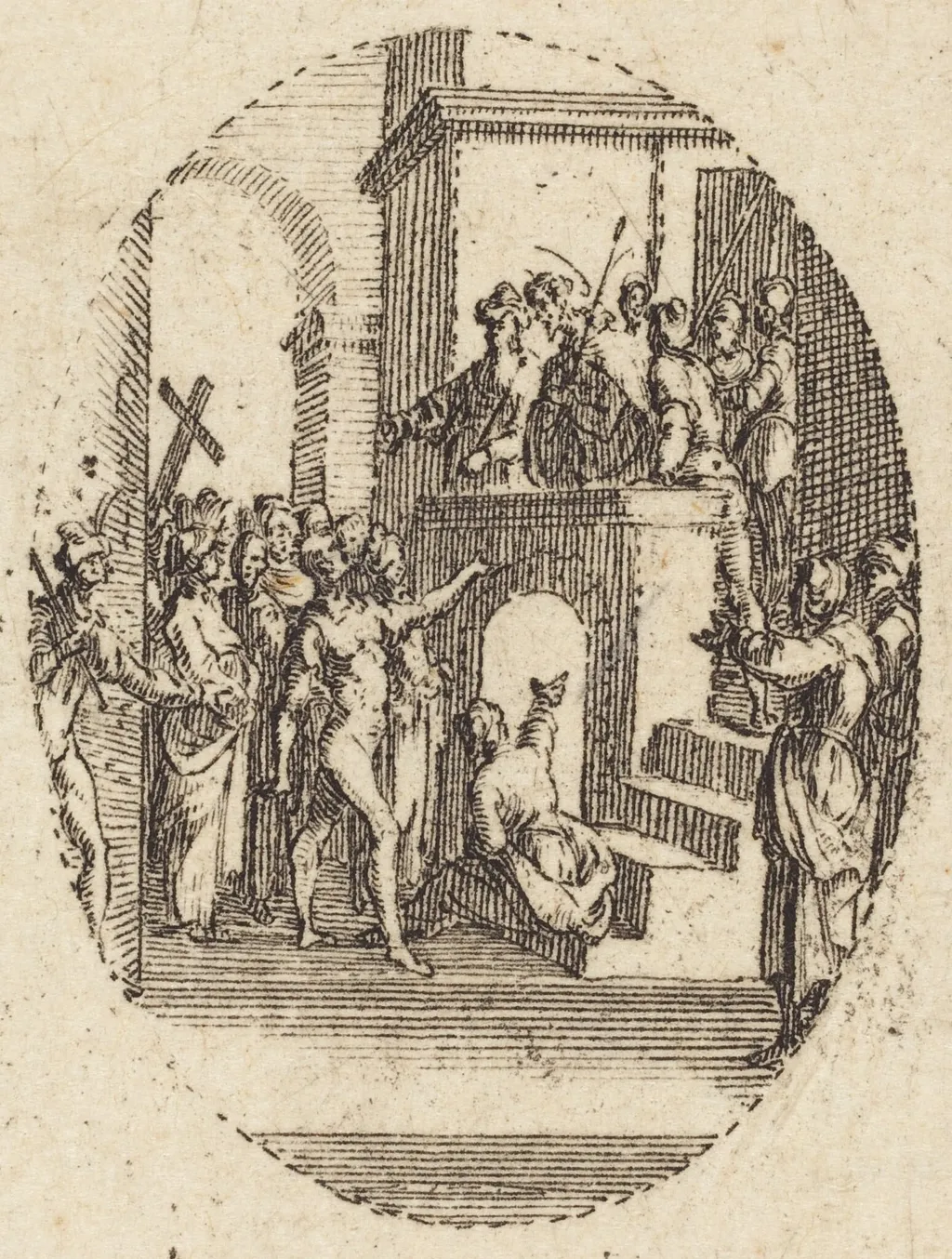
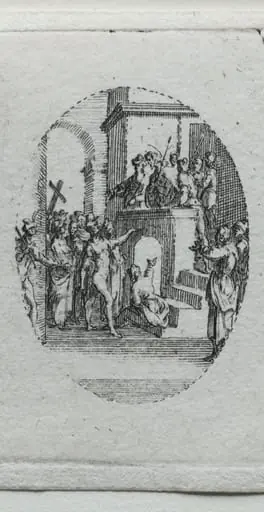
Ecce Homo is an ink print by the Baroque artist Jacques Callot. It dates from 1631 and is held in the collection of the National Gallery of Art.
About this work
Overview
Jacques Callot, a French printmaker active in the early 17th century, produced the etching *Ecce Homo* around 1631. Executed on laid paper, the work belongs to his extensive series of more than a thousand prints that document both sacred and secular subjects. The image presents a crowded, somber scene centered on a figure bearing a crown of thorns, rendered entirely in black ink.
Subject & Meaning
The arrangement underscores the emotional contrast between the exposed vulnerability of the crowned man and the aggressive posture of the surrounding masses.
The composition depicts the biblical moment when Christ is presented to the public, surrounded by a hostile crowd. Figures brandish spears and crosses, point, or stare downward, emphasizing the tension between the suffering central figure and the mocking onlookers. The arrangement underscores the emotional contrast between the exposed vulnerability of the crowned man and the aggressive posture of the surrounding masses.
Technique & Style
Callot employed the traditional etching process, incising lines into a copper plate with acid before printing onto paper. His handling of line is vigorous, creating a dense, textured surface that conveys both the crowd’s agitation and the bleak atmosphere. The lack of tonal shading and reliance on stark black-and-white contrasts heighten the dramatic intensity of the scene.
History & Provenance
Created in the early 1630s, the print reflects Callot’s mature period when he was producing works for both devotional and documentary purposes. While specific ownership records for this particular impression are scarce, it is representative of the artist’s output that circulated widely among collectors and patrons across Europe during the Baroque era.
Context
*Ecce Homo* belongs to a broader Baroque interest in dramatizing religious narratives with heightened emotional realism. Callot, hailing from the Duchy of Lorraine, was known for integrating detailed human figures into expansive, often landscape‑filled backgrounds—a practice that distinguished his prints from those of his contemporaries.
Artist & collection
Artist
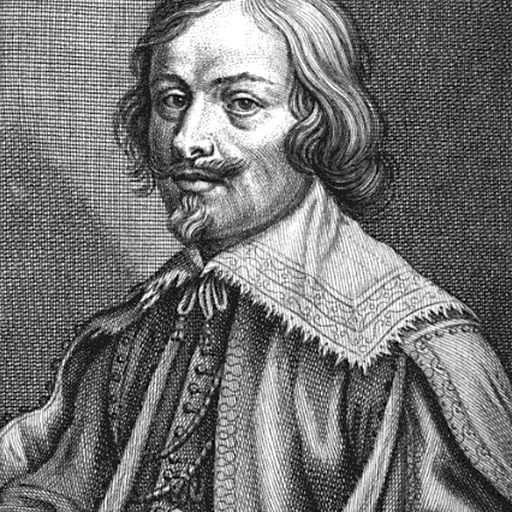
Jacques Callot was a baroque printmaker and draftsman from the Duchy of Lorraine.

 Holy Family at supper
 Restoration of the Aqueduct at Pisa
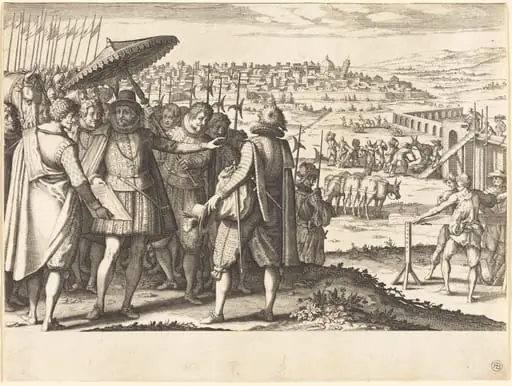 Restoration of the Aqueduct at Pisa
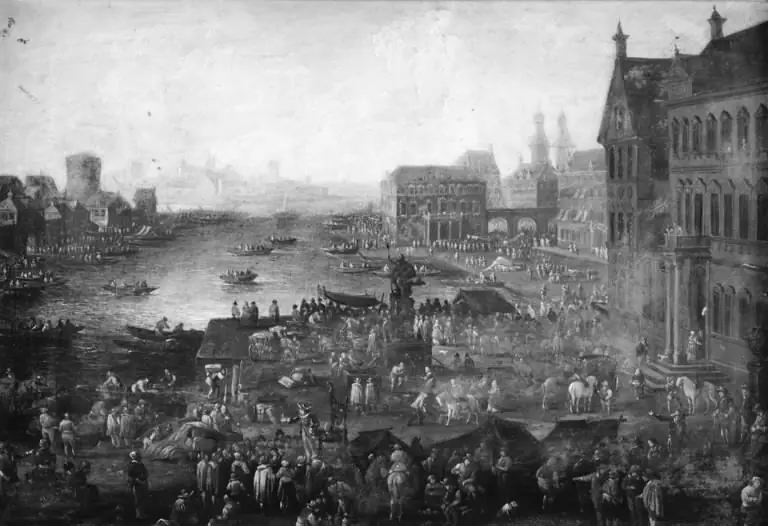 Square in Paris with Many Figures
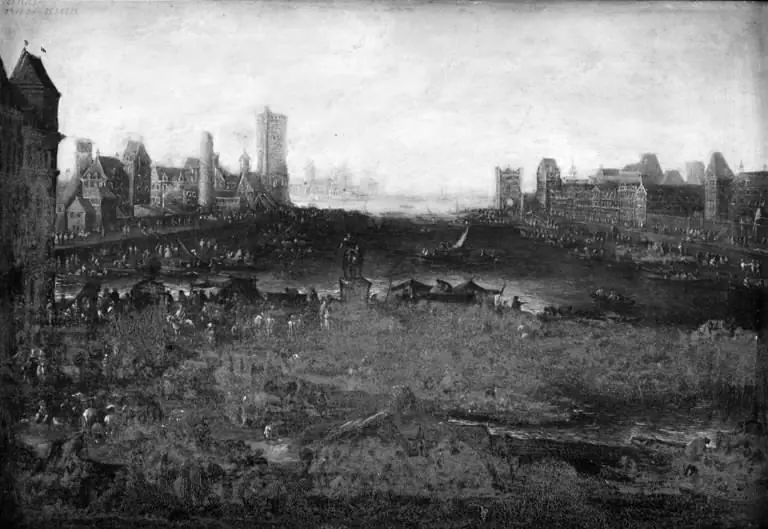 Square in Paris with Many Figures
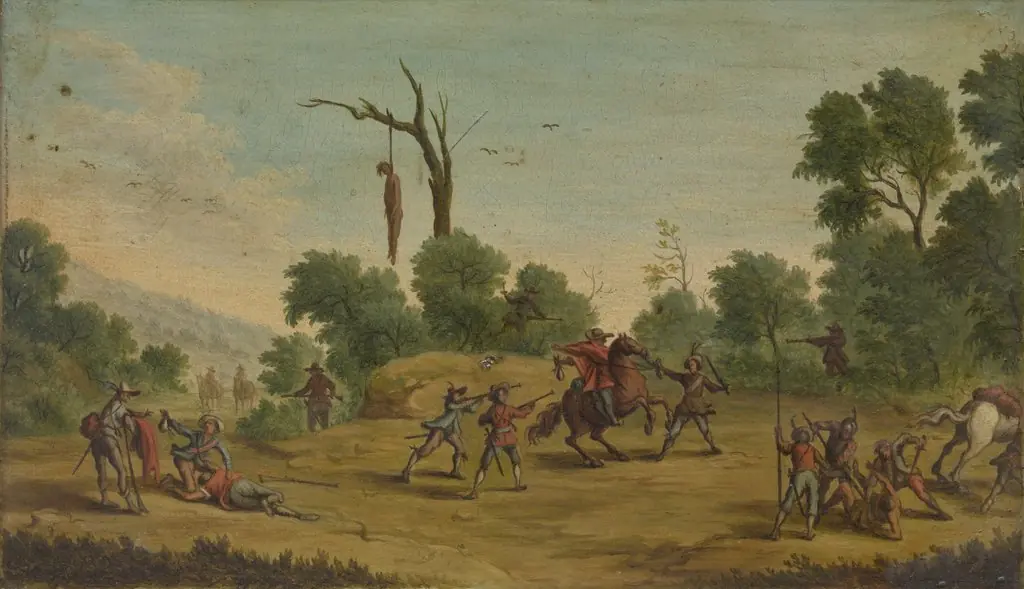 Horsemen Attacked by Robbers
 HOW WILL A COVERED PART BE CORRECTED?HOW WIKA A COVERED HEART DEED CORRECTED?
![Christ Walking on the Water [second plate], by Jacques Callot](https://artifactworldgallery.com/img/jacques-callot--christ-walking-on-the-water-second-plate--2069f3bfe4cb2126-w320.webp) Christ Walking on the Water [second plate]
Christ Walking on the Water [second plate]
 The Mysteries of the Passion: Christ Presented to the People
 Crowning with Thorns
 The Flagellation
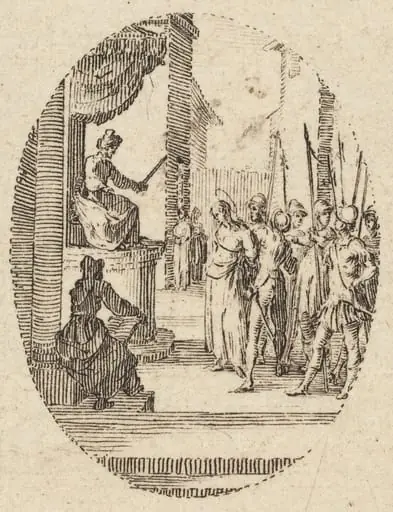 Christ before Pilate
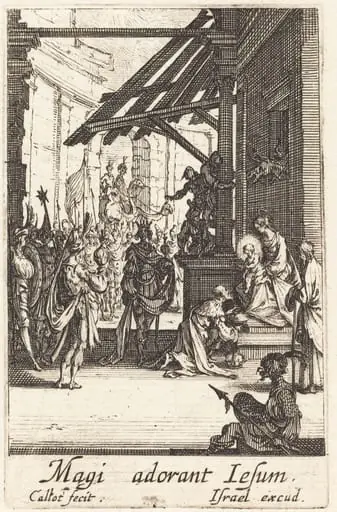 The Adoration of the Magi
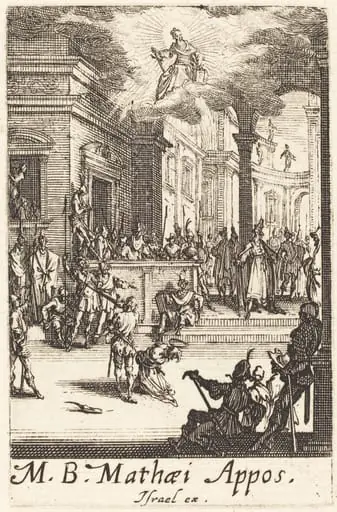 The Martyrdom of Saint Matthew
 The Martyrdom of Saint Matthew
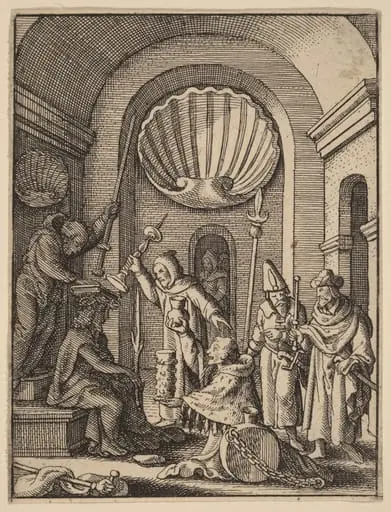 The Mocking
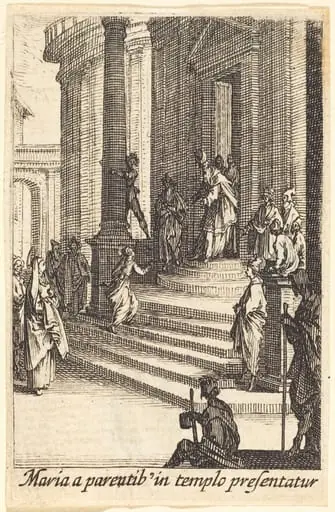 The Presentation of the Virgin
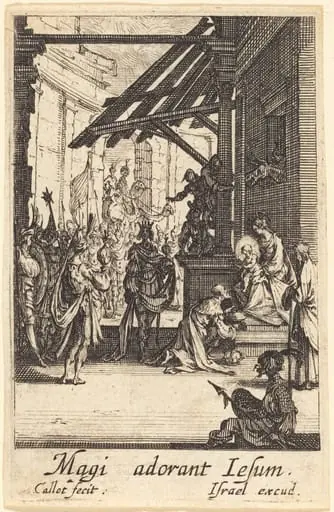 The Adoration of the Magi
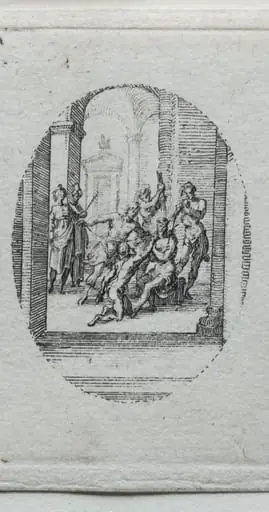 The Mysteries of the Passion: Christ Crowned with Thorns
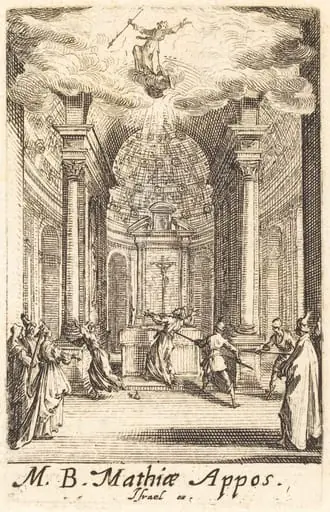 The Martyrdom of Saint Matthias