Artwork
Entry of Monseigneur Henry de Lorraine, Marquis de Moy, under the Name of Pirandre
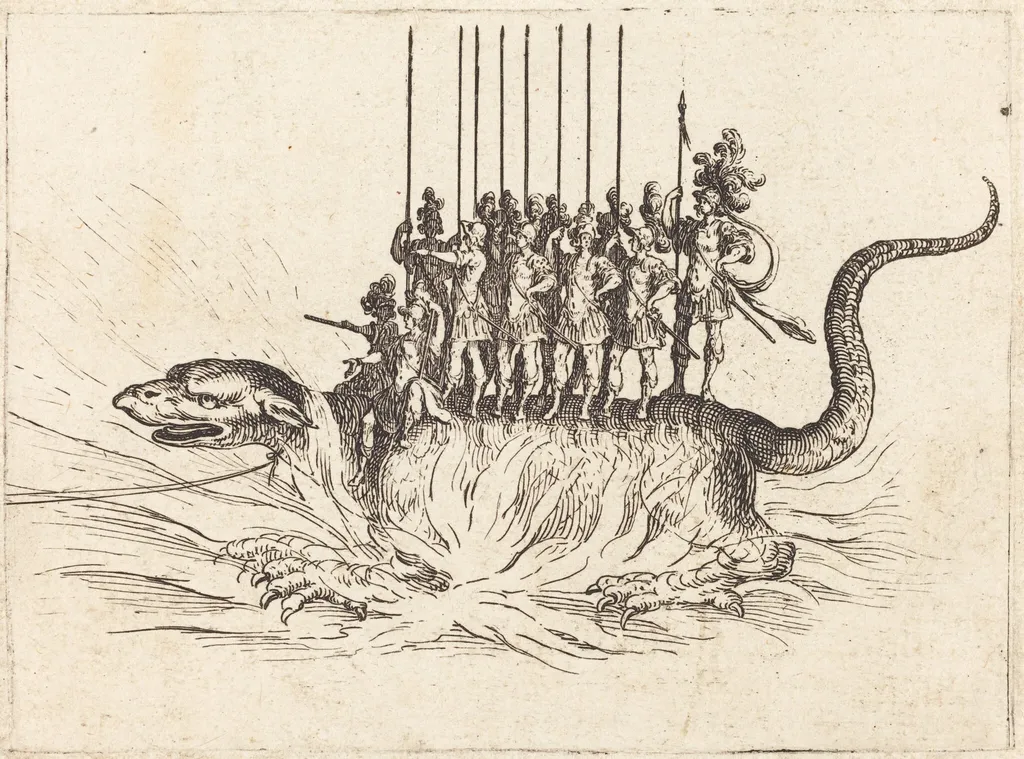
Entry of Monseigneur Henry de Lorraine, Marquis de Moy, under the Name of Pirandre is an ink print by the Baroque artist Jacques Callot. It dates from 1627 and is held in the collection of the National Gallery of Art.
About this work
Overview
This etching, created in 1627 by Jacques Callot, is the third of six fragments from a single copper plate depicting a ceremonial procession.
This etching, created in 1627 by Jacques Callot, is the third of six fragments from a single copper plate depicting a ceremonial procession. Though originally conceived as a unified composition, the plate was later divided, likely for distribution or sale. Callot, a Lorrainer artist renowned for his technical precision, rendered the scene with fine, controlled lines characteristic of his mature style, blending spectacle with narrative complexity.
Subject & Meaning
The scene portrays a fictionalized entry of Henry de Lorraine, Marquis de Moy, disguised as the mythical figure Pirandre, riding atop a serpentine, dragon-like beast. The imagery blends courtly pageantry with allegorical fantasy, possibly referencing chivalric romance or political symbolism. The riders, adorned in elaborate attire and bearing spears and banners, suggest a theatrical reenactment of power, where myth and aristocratic identity converge in a performative display.
Technique & Style
Callot employed fine-line etching to achieve extraordinary detail, rendering textures of fabric, scale, and weaponry with microscopic precision. The composition uses layered lines to suggest depth and motion, while the dragon’s sinuous form anchors the scene’s dynamism. Background elements, including vertical poles, create rhythmic tension and spatial ambiguity, enhancing the surreal atmosphere without compromising the clarity of individual figures.
History & Provenance
The original six-part plate was cut apart after its initial printing, a practice not uncommon in the 17th century to maximize profit or accommodate collectors’ preferences. This fragment, cataloged as 1969.15.98, was acquired by the museum as part of a dispersed set. Its survival as a standalone piece reflects the enduring interest in Callot’s narrative prints, even when divorced from their original context.
Context
Callot’s work often documented both real and imagined events at the Lorraine court, where spectacle served political ends. This print aligns with broader European traditions of allegorical processions, particularly those commissioned by nobility to assert legitimacy or cultural sophistication. His engagement with theatrical and fantastical subjects distinguished him from contemporaries focused solely on religious or military themes.
Legacy
Though fragmented, this etching exemplifies Callot’s influence on the development of narrative printmaking. His ability to fuse intricate detail with imaginative storytelling inspired later artists across Europe, particularly in the depiction of processions and allegorical scenes. The survival of individual plates underscores the transitional nature of print circulation in the early modern period.
Artist & collection
Artist
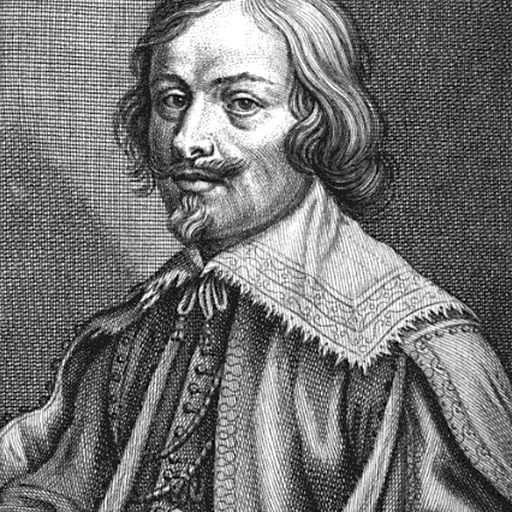
Jacques Callot was a baroque printmaker and draftsman from the Duchy of Lorraine.

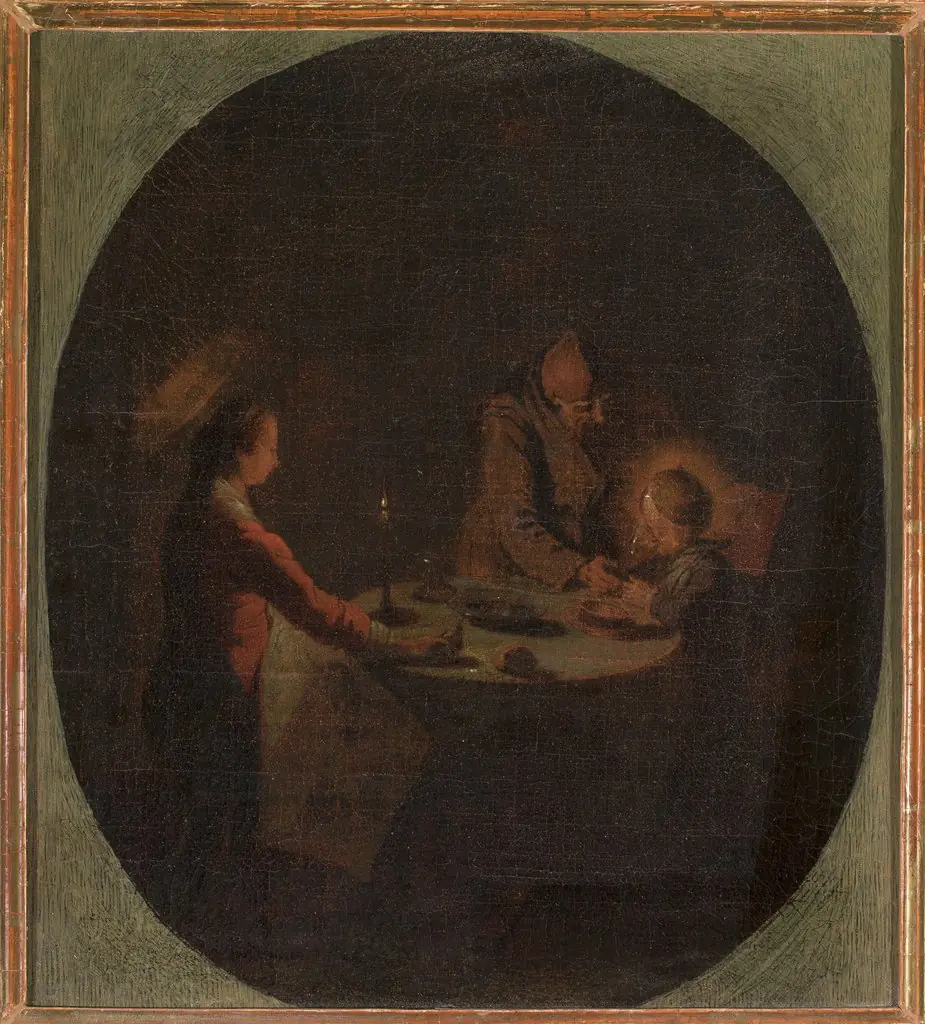 Holy Family at supper
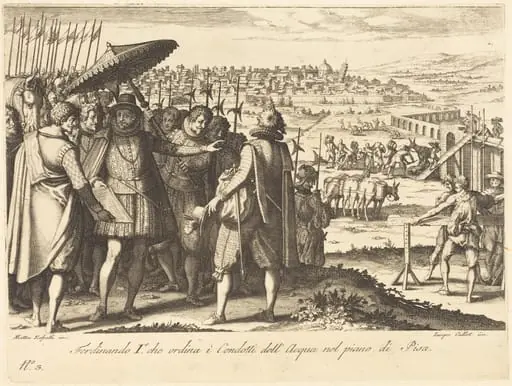 Restoration of the Aqueduct at Pisa
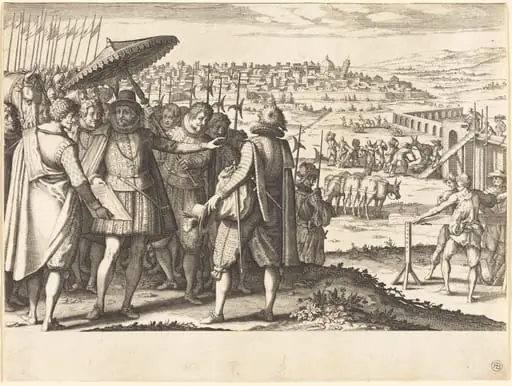 Restoration of the Aqueduct at Pisa
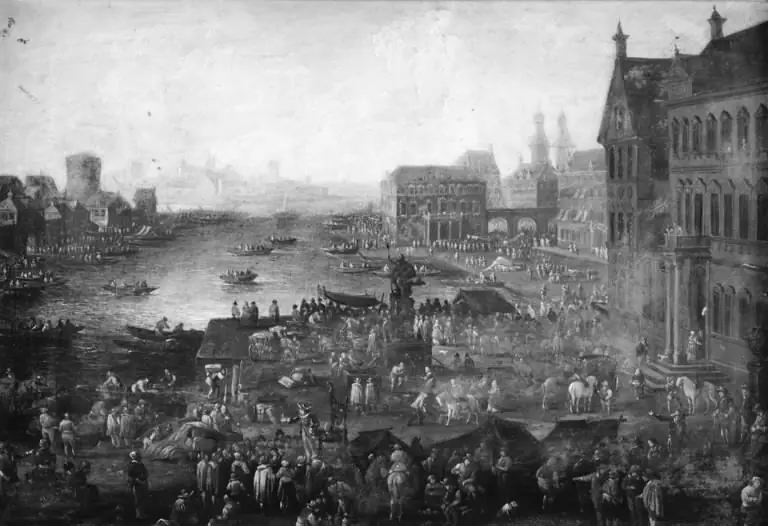 Square in Paris with Many Figures
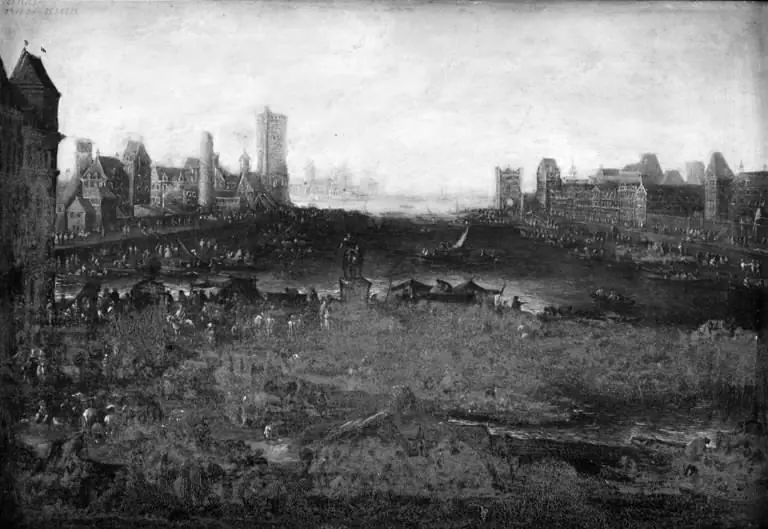 Square in Paris with Many Figures
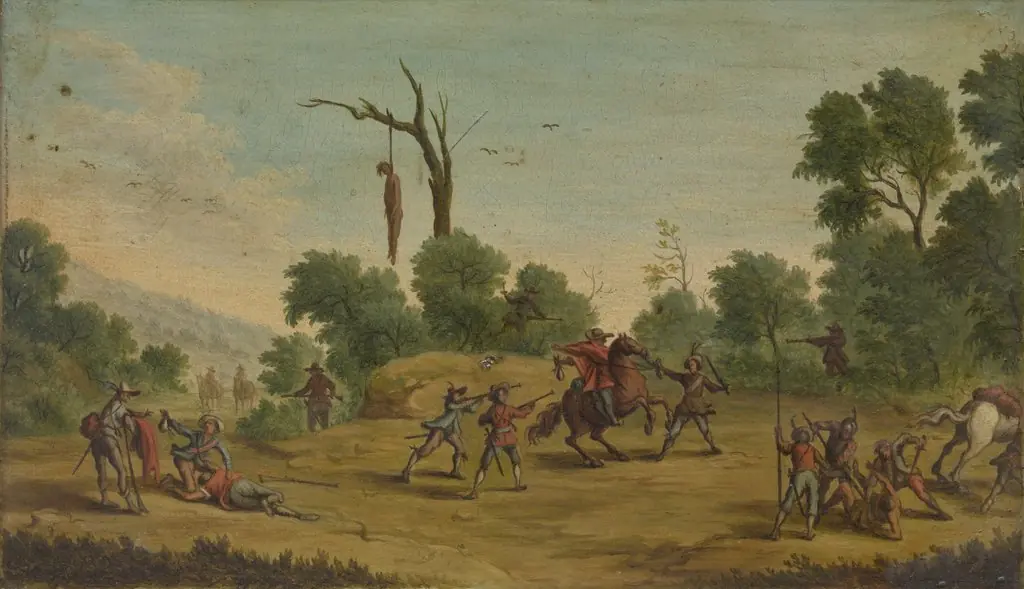 Horsemen Attacked by Robbers
 HOW WILL A COVERED PART BE CORRECTED?HOW WIKA A COVERED HEART DEED CORRECTED?
![Christ Walking on the Water [second plate], by Jacques Callot](https://artifactworldgallery.com/img/jacques-callot--christ-walking-on-the-water-second-plate--2069f3bfe4cb2126-w320.webp) Christ Walking on the Water [second plate]
Christ Walking on the Water [second plate]