Artwork
Frontispiece for "Gloriosissimae"
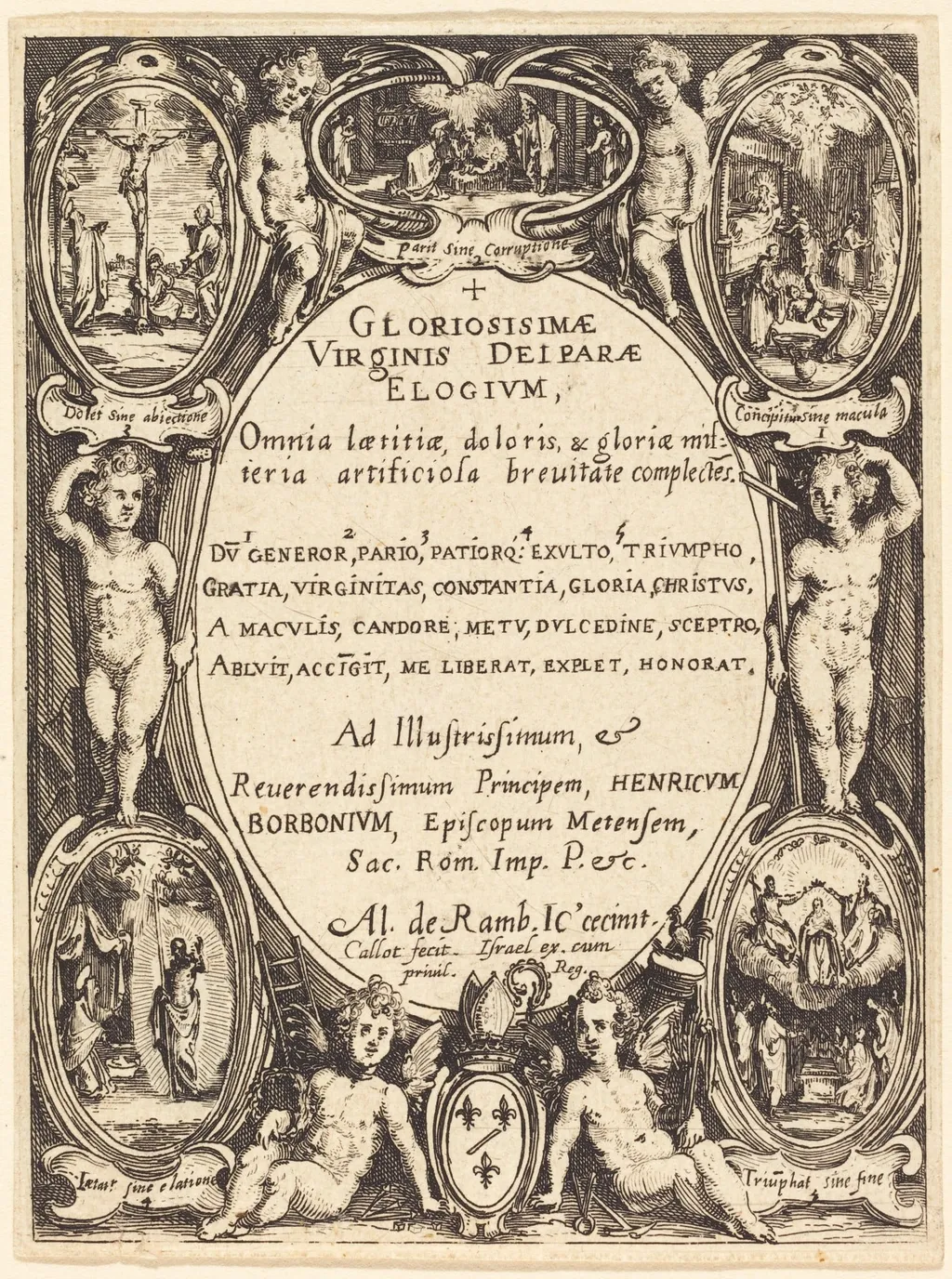
Frontispiece for "Gloriosissimae" is an ink print by the Renaissance artist Jacques Callot. It dates from 1614 and is held in the collection of the National Gallery of Art.
About this work
Overview
As one of over 1,400 prints he created, it reflects his role in documenting early 17th-century visual culture through religious and ceremonial imagery.
Jacques Callot, a printmaker from the Duchy of Lorraine, produced this etching in 1614 as the frontispiece for the devotional text Gloriosissimae. Executed on laid paper, the work exemplifies his mastery of fine-line etching, a technique that allowed intricate detail within a compact format. As one of over 1,400 prints he created, it reflects his role in documenting early 17th-century visual culture through religious and ceremonial imagery.
Subject & Meaning
The image depicts a monumental arched portal adorned with fluttering banners, suggesting a sacred threshold or triumphal entry. Within the arch, minuscule figures move in procession, reinforcing the devotional theme of the accompanying text. The architecture implies celestial grandeur, aligning the book’s content with themes of glorification and divine honor. Callot’s inclusion of small human elements within vast space invites contemplation of individual piety within larger spiritual narratives.
Technique & Style
Callot employed fine, controlled etching lines to render architectural detail and atmospheric depth. His use of densely packed, precise strokes captures texture in stone, fabric, and flag surfaces with remarkable clarity. Unlike broader washes used by contemporaries, his approach emphasizes linear precision, enabling microscopic figures to remain legible at scale. This method allowed him to compress complex scenes into a single, densely populated frame without sacrificing legibility.
History & Provenance
Created for the 1614 publication Gloriosissimae, the print was part of a devotional series intended for ecclesiastical or aristocratic audiences. As a frontispiece, it served both decorative and symbolic functions, framing the text with visual authority. The etching circulated in limited numbers, primarily among collectors and religious institutions in Lorraine and neighboring regions. No known original bindings survive, but individual impressions are held in major print collections.
Context
In early 17th-century Europe, etching emerged as a preferred medium for book illustration due to its adaptability and reproducibility. Callot’s work intersected with religious publishing trends in Catholic regions, where imagery reinforced doctrinal themes. His focus on architectural grandeur and minute human activity aligned with broader Baroque interests in spectacle and detail, distinguishing his prints from the more expressive styles of Dutch contemporaries.
Legacy
Callot’s technical innovations in etching influenced generations of printmakers, particularly in his ability to render complex scenes with microscopic precision. While his religious prints like this one are less widely studied than his genre scenes, they demonstrate his versatility and command of narrative compression. His approach to integrating small-scale figures within monumental architecture became a reference point for later illustrators of sacred texts.
Artist & collection
Artist
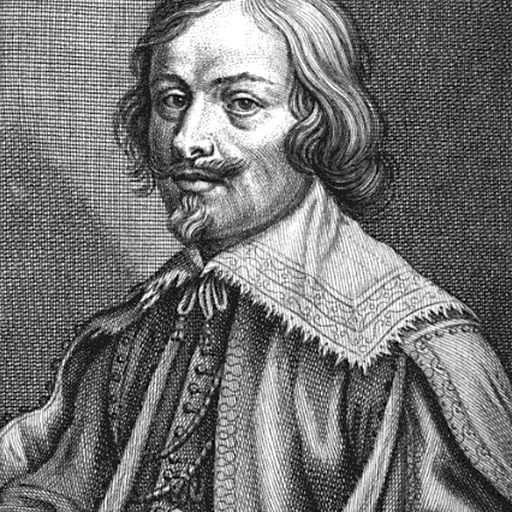
Jacques Callot was a baroque printmaker and draftsman from the Duchy of Lorraine.

 Holy Family at supper
 Restoration of the Aqueduct at Pisa
 Restoration of the Aqueduct at Pisa
 Square in Paris with Many Figures
 Square in Paris with Many Figures
 Horsemen Attacked by Robbers
 HOW WILL A COVERED PART BE CORRECTED?HOW WIKA A COVERED HEART DEED CORRECTED?
![Christ Walking on the Water [second plate], by Jacques Callot](https://artifactworldgallery.com/img/jacques-callot--christ-walking-on-the-water-second-plate--2069f3bfe4cb2126-w320.webp) Christ Walking on the Water [second plate]
Christ Walking on the Water [second plate]
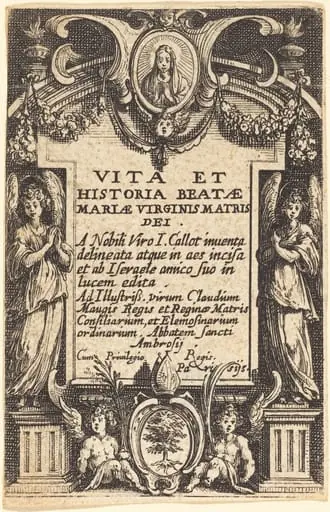 Frontispiece for "The Life of the Virgin"
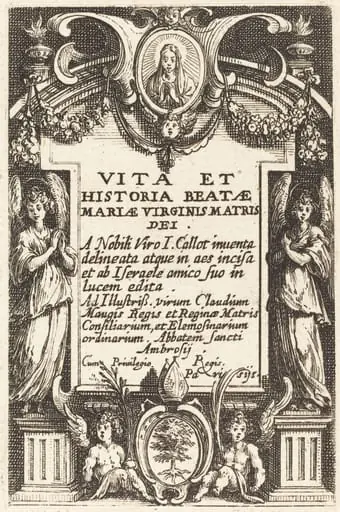 Frontispiece for "The Life of the Virgin"
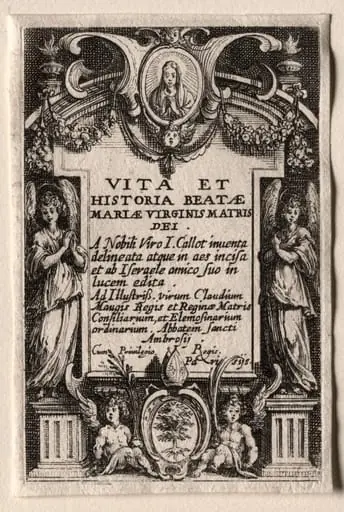 The Life of the Virgin
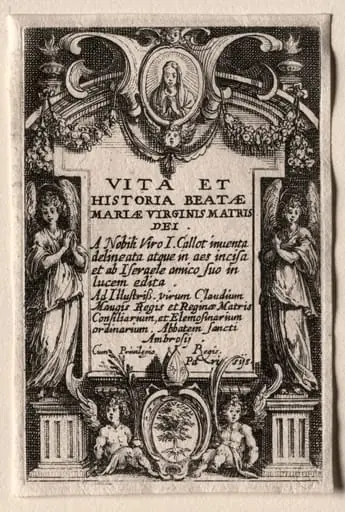 The Life of the Virgin: Frontispiece
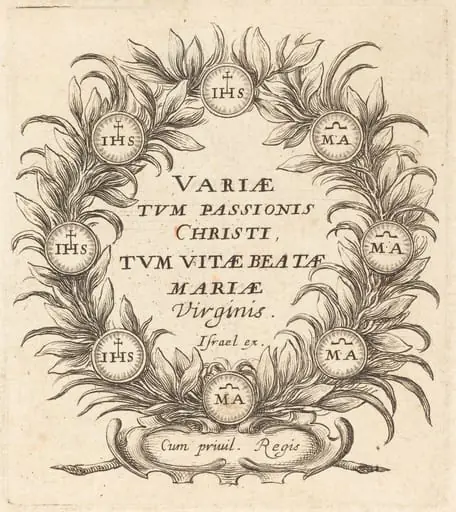 Frontispiece for Callot's "The Mysteries of the Passion"
!["Always Have the Bedclothes Folded up" [fol. 41 recto], by French early 16th Century](https://artifactworldgallery.com/img/french-early-16th-century--always-have-the-bedclothes-folded-up-fol-41-recto--bad18c2c732bca78-w320.webp) "Always Have the Bedclothes Folded up" [fol. 41 recto]
"Always Have the Bedclothes Folded up" [fol. 41 recto] Grotesque with Strapwork in the Form of a Cartouche
 Title Page
 Hercules