Artwork
Hercules
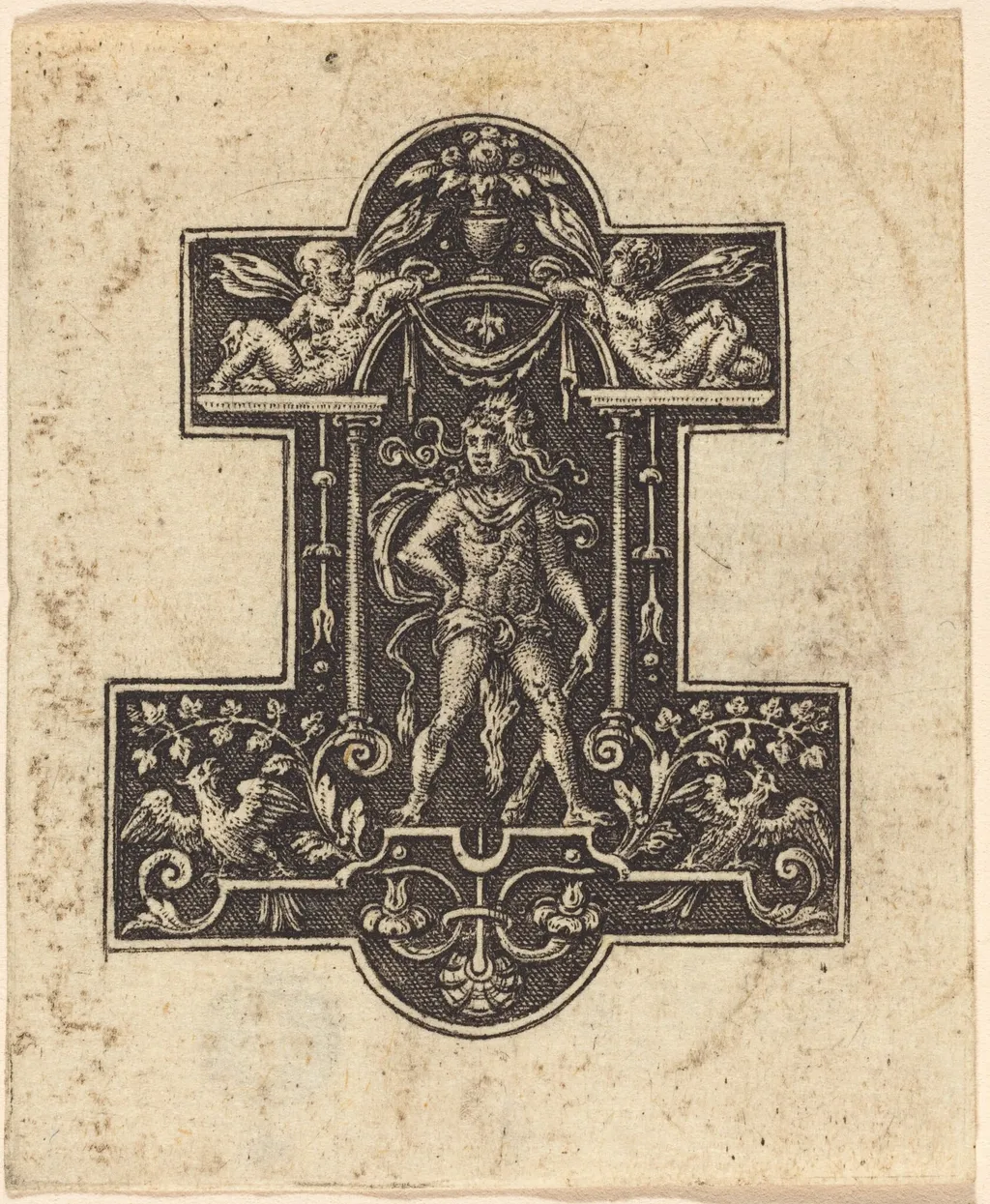
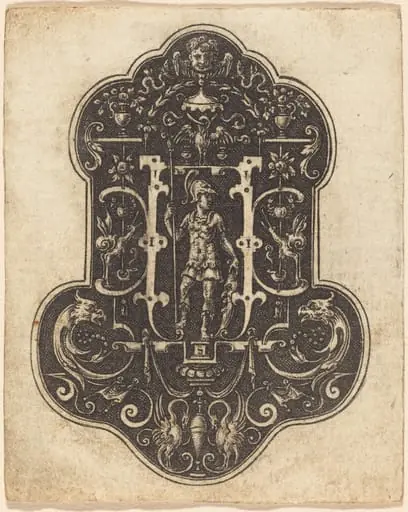
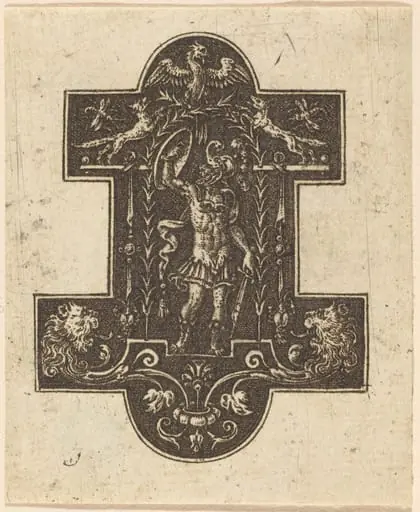
Hercules is an ink print by the Renaissance artist Etienne Delaune. It dates from 1551 and is held in the collection of the National Gallery of Art.
About this work
Overview
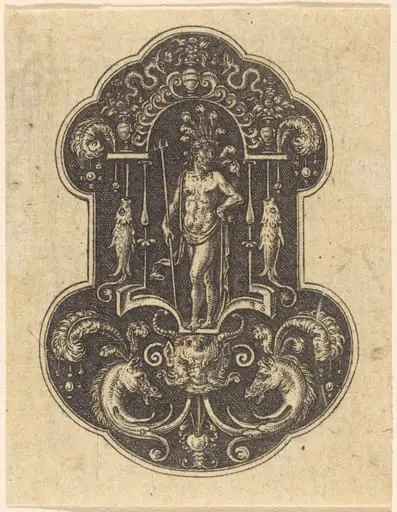
Etienne Delaune’s engraving titled *Hercules* dates from 1551. Executed as a black‑and‑white print, the work depicts a nude, muscular figure grappling with a lion, his cloak draped over his shoulders. Above the central action, two small winged figures support a curved ornamental frame, while a surrounding border is filled with swirling motifs and diminutive figures.
Subject & Meaning
The image draws on the classical myth of Hercules’ first labor, the slaying of the Nemean lion. By portraying the hero in the act of subduing the beast, Delaune emphasizes physical strength and triumph over chaos, themes commonly explored in Renaissance interpretations of antiquity.
Technique & Style
Rendered through fine line engraving on a metal plate, the print relies on delicate hatching and cross‑hatching to model the hero’s musculature and convey movement. The careful modulation of light and shadow reflects the period’s interest in chiaroscuro, while the decorative border and cherubic figures illustrate the ornamental tendencies of mid‑16th‑century French printmaking.
History & Provenance
Created in 1551, the engraving belongs to Delaune’s early output, a period when he was active in Paris producing both religious and mythological subjects. Surviving copies have appeared in several European collections, indicating the work’s circulation among collectors of Renaissance prints during the late 16th and 17th centuries.
Artist & collection