Artwork
Frontispiece for Callot's "The Mysteries of the Passion"
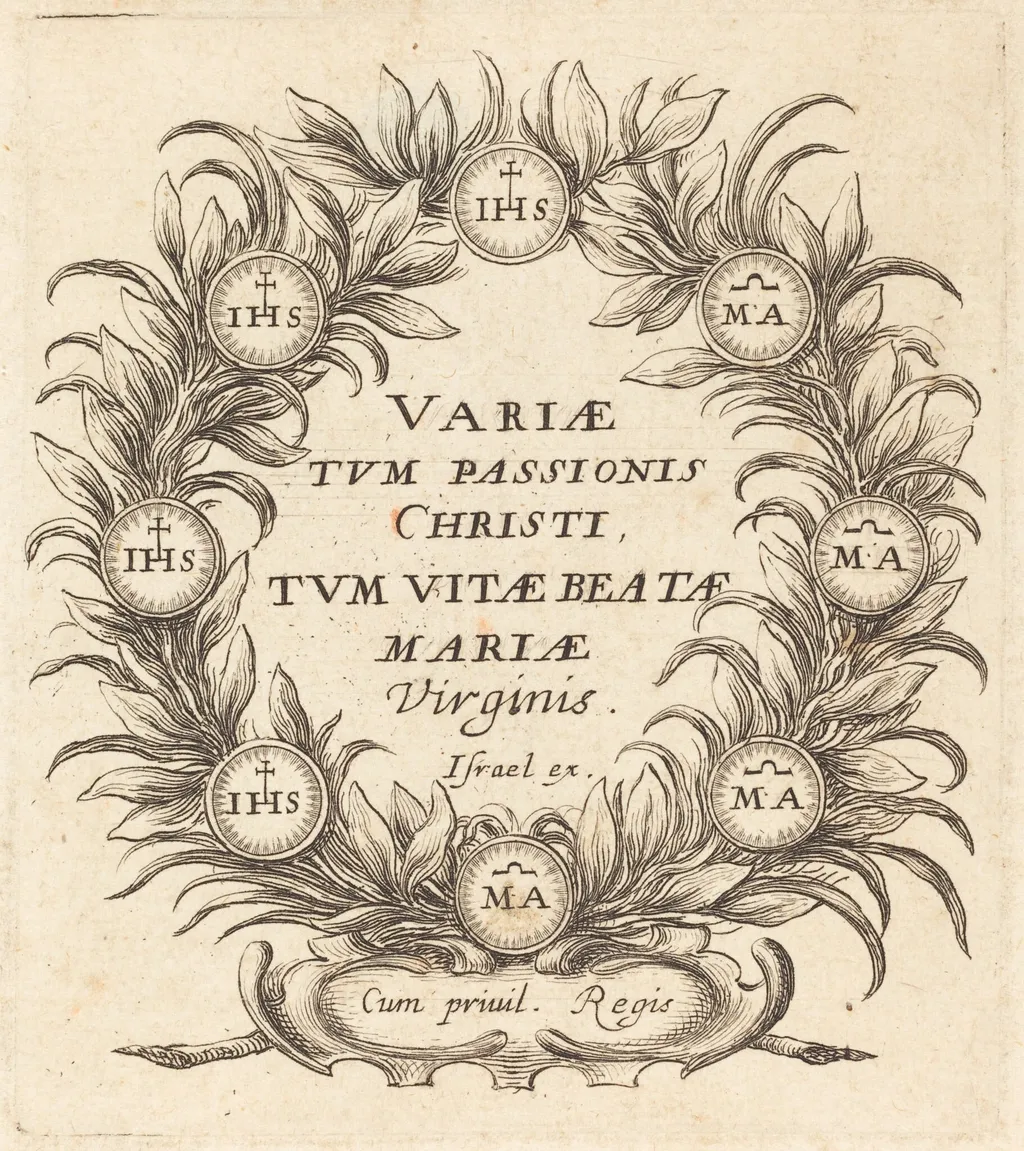
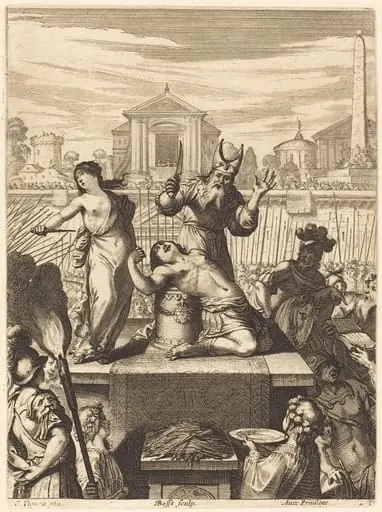
Frontispiece for Callot's "The Mysteries of the Passion" is an ink print by the Baroque artist Abraham Bosse. It dates from 1631 and is held in the collection of the National Gallery of Art.
About this work
Overview
The frontispiece for Jacques Callot’s 'The Mysteries of the Passion,' created around 1631, is an etching on laid paper attributed to Abraham Bosse.
The frontispiece for Jacques Callot’s 'The Mysteries of the Passion,' created around 1631, is an etching on laid paper attributed to Abraham Bosse. It functions as the introductory plate for a series illustrating scenes from the Passion of Christ and the life of the Virgin Mary. The design is ornamental, blending textual and symbolic elements in a decorative frame typical of early 17th-century book publishing.
Subject & Meaning
The central inscription, 'Variæ Tum Passionis Christi, Tum Vitæ Beatæ Mariæ Virginis,' announces the dual focus of the series: Christ’s suffering and Mary’s life. Surrounding the text are symbolic monograms—IHS for Jesus and MA for Mary—common in Catholic devotional imagery. These markers reinforce the devotional purpose of the publication, guiding the viewer toward contemplation of sacred narratives.
Technique & Style
Executed in etching, the design features fine, intricate lines that create dense patterns of foliage and floral motifs. The swirling vegetal forms frame the title without overwhelming it, reflecting a Mannerist sensibility in decorative printing. The black-and-white tonality and precise line work are characteristic of Bosse’s mastery of the etching medium, emphasizing clarity and elegance over dramatic contrast.
History & Provenance
Produced in France during the early 1630s, this frontispiece accompanied Callot’s widely circulated series on the Passion. As a collaborative effort between artist and publisher, it reflects the norms of print production at the time, where illustrators like Bosse often designed title pages for series by other artists. Its survival in multiple institutional collections suggests its use in both private and scholarly contexts.
Context
In early 17th-century France, religious prints were vital tools for devotion and education, especially amid the Counter-Reformation. The use of Latin inscriptions and symbolic monograms catered to literate, devout audiences. Bosse’s design aligns with broader trends in book illustration, where ornamental frames and heraldic motifs lent authority and sacred weight to printed texts.
Legacy
Though not a standalone image of religious significance, this frontispiece exemplifies the collaborative nature of print production and the integration of typography with ornamentation in devotional books. It remains a reference point for understanding how visual design supported theological messaging in early modern printed culture, influencing later book arts in both Catholic and Protestant traditions.
Artist & collection

Artist
Abraham Bosse (c. 1604 – 14 February 1676) was a French artist, mainly as a printmaker in etching, but also in watercolour.

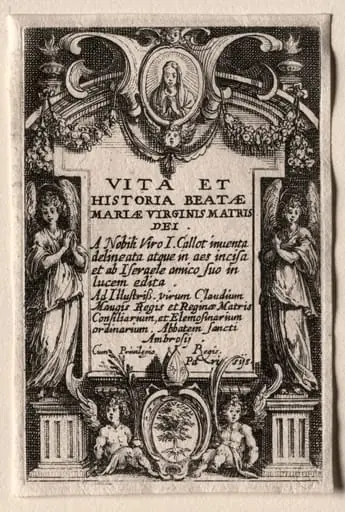 The Life of the Virgin: Frontispiece
 The Life of the Virgin
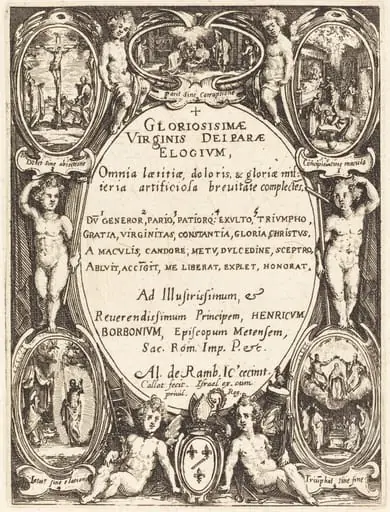 Frontispiece for "Gloriosissimae"
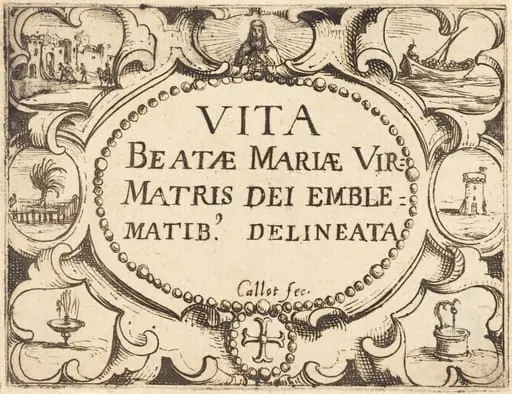 Title Page for "The Life of the Virgin in Emblems"
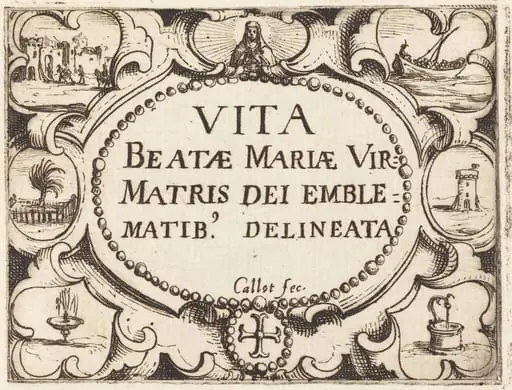 Title Page for "The Life of the Virgin in Emblems"
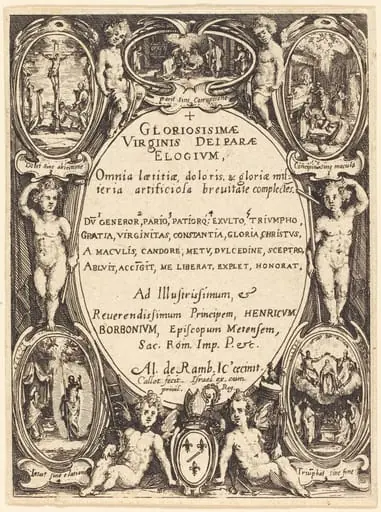 Frontispiece for "Gloriosissimae"
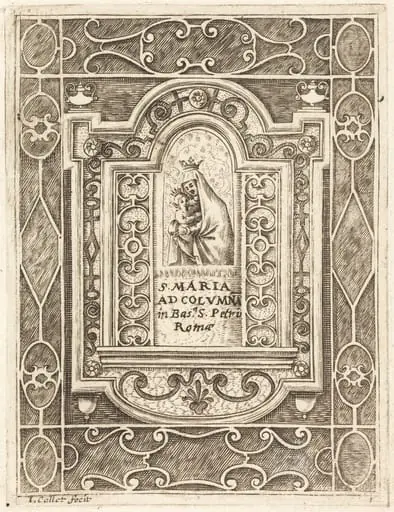 The Virgin at the Column (La Vierge à la colonne)
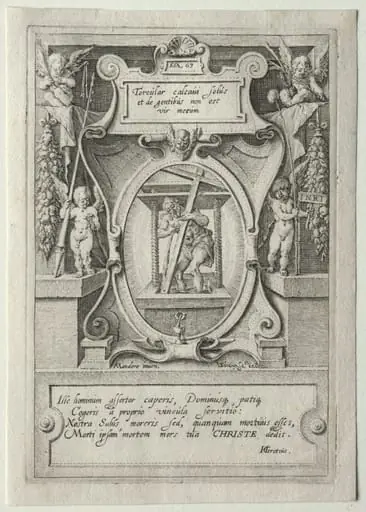 Passion Set: Title Page
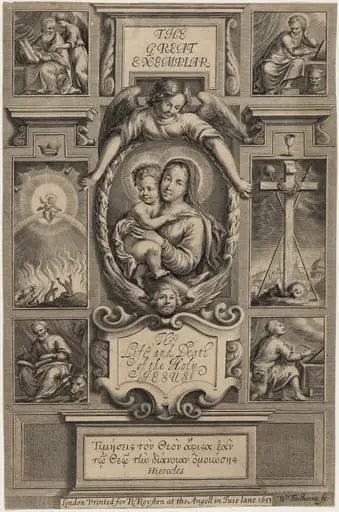 Title Page to Jeremy Taylor, The Great Exemplar