Artwork
Frontispiece for "The Calendar of Saints"
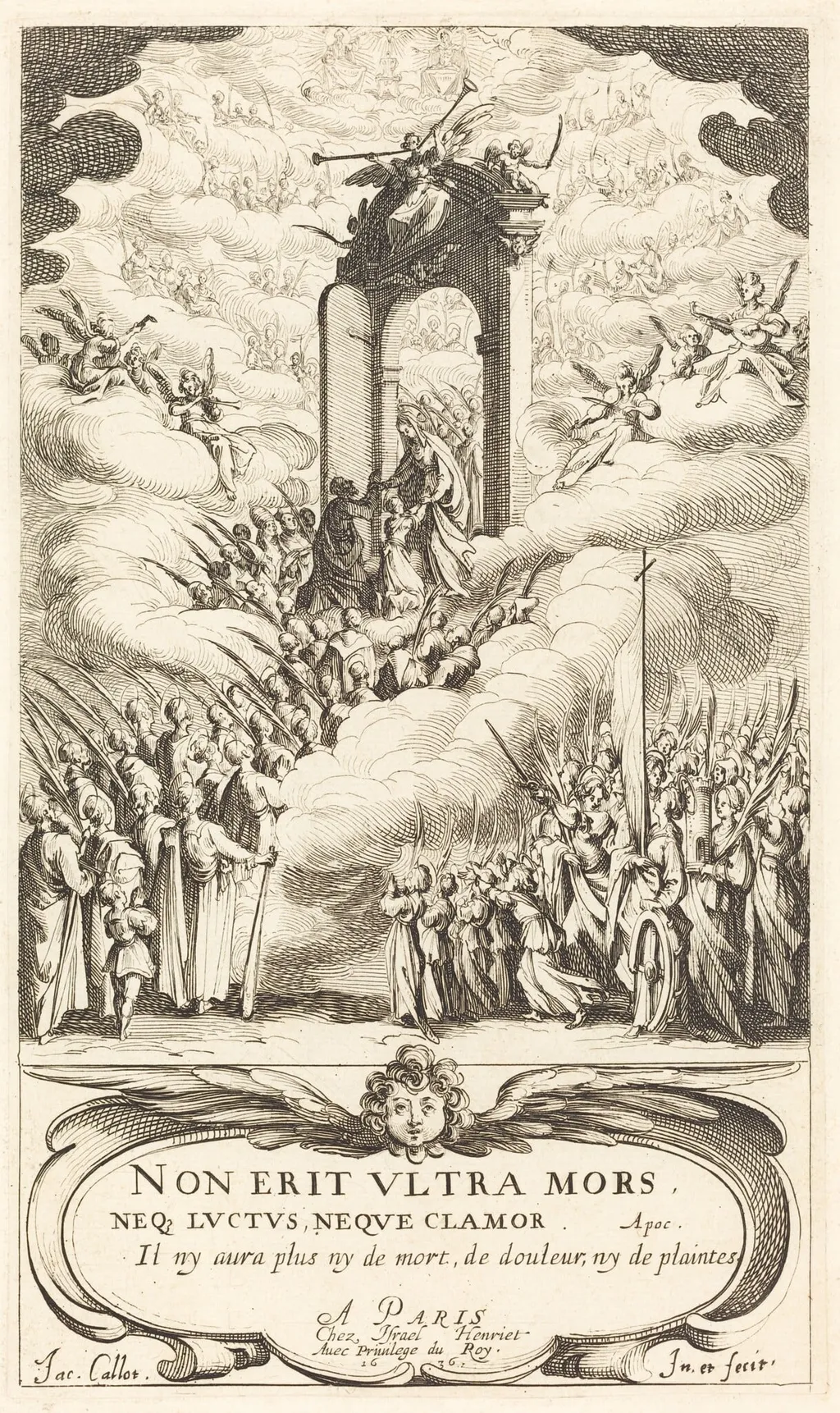
Frontispiece for "The Calendar of Saints" is an ink print by the Baroque artist Jacques Callot. It is held in the collection of the National Gallery of Art.
About this work
Overview
Frontispiece for 'The Calendar of Saints' is a 1636 etching on laid paper by French Baroque printmaker Jacques Callot, showcasing his mastery of detailed figures set against expansive backgrounds.
Subject & Meaning
The etching depicts a dynamic scene of judgment or victory, with crowds surrounding a tall cross, angels with trumpets and banners, and a cherub holding a scroll inscribed 'Non erit ultra mors' (There will be no more death). While associated with a book on saints, the image conveys a broader theme of dramatic, possibly apocalyptic, triumph.
Technique & Style
Callot employed etching techniques that emphasized sharp, busy lines, achieving a controlled chaotic effect. The use of ink to capture shadows and texture gives the lines a carved appearance, characteristic of his printmaking style.
History & Provenance
Created in 1636 as part of a series, this etching is one of over 1,400 works by Callot, documenting various scenes of his era. It was printed on laid paper, a standard medium for 17th-century printmaking.
Context
This work reflects Callot's broader practice of capturing religious, military, and landscape themes, common in Baroque printmaking. Its inclusion in 'The Calendar of Saints' suggests a religious or devotional context.
Legacy
As part of Callot's extensive oeuvre, 'Frontispiece for The Calendar of Saints' contributes to his reputation as a prolific and skilled old master printmaker, influencing subsequent generations of artists in etching techniques and composition.
Artist & collection
Artist
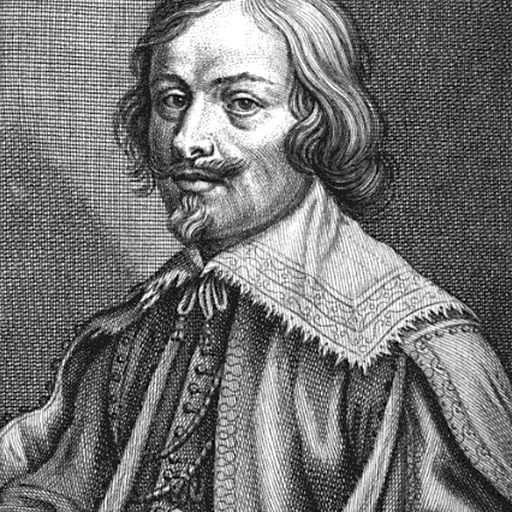
Jacques Callot was a baroque printmaker and draftsman from the Duchy of Lorraine.

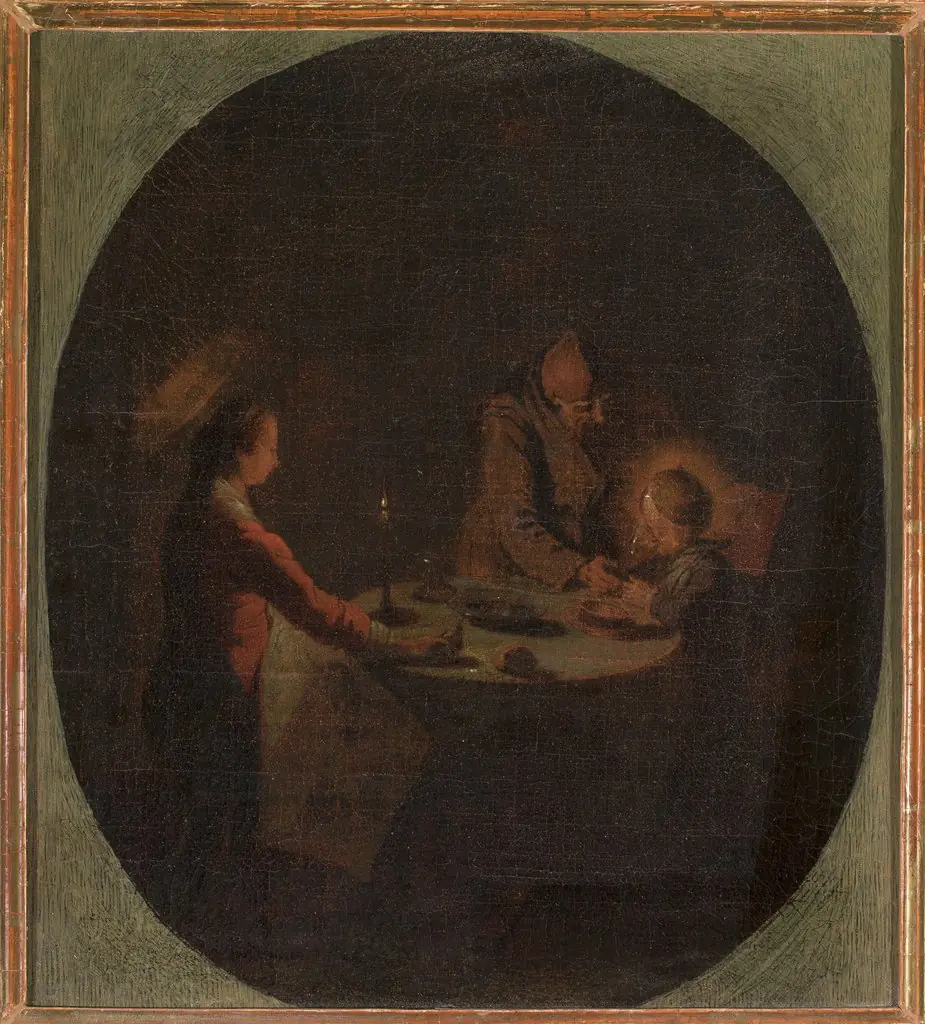 Holy Family at supper
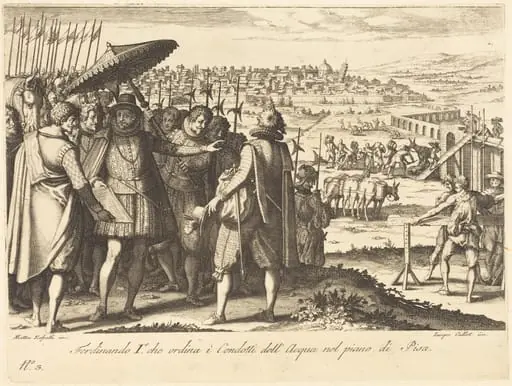 Restoration of the Aqueduct at Pisa
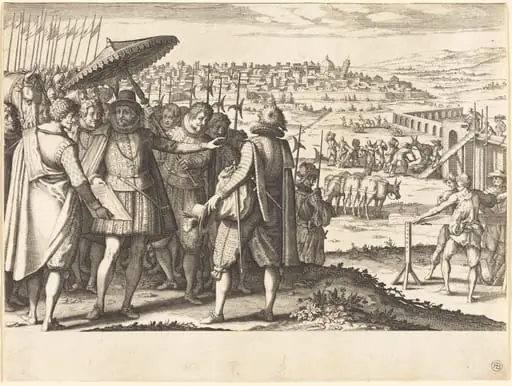 Restoration of the Aqueduct at Pisa
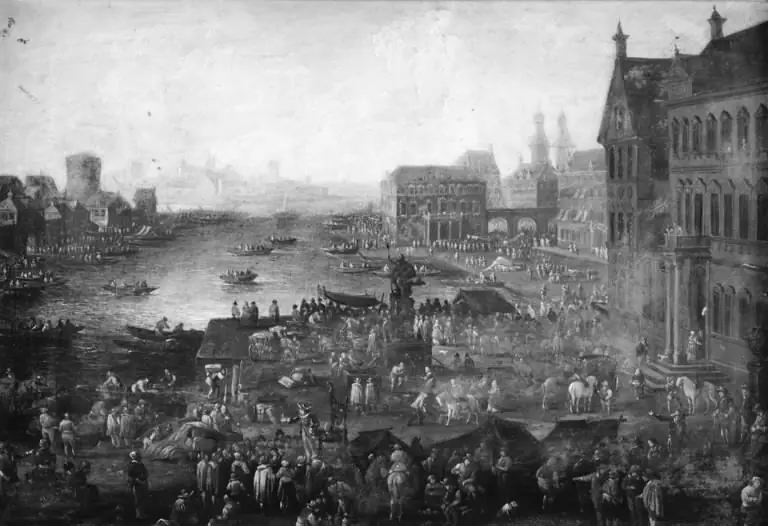 Square in Paris with Many Figures
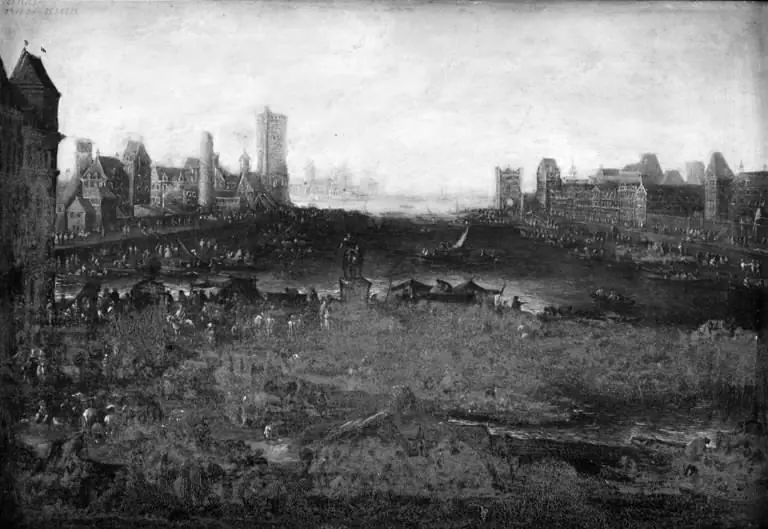 Square in Paris with Many Figures
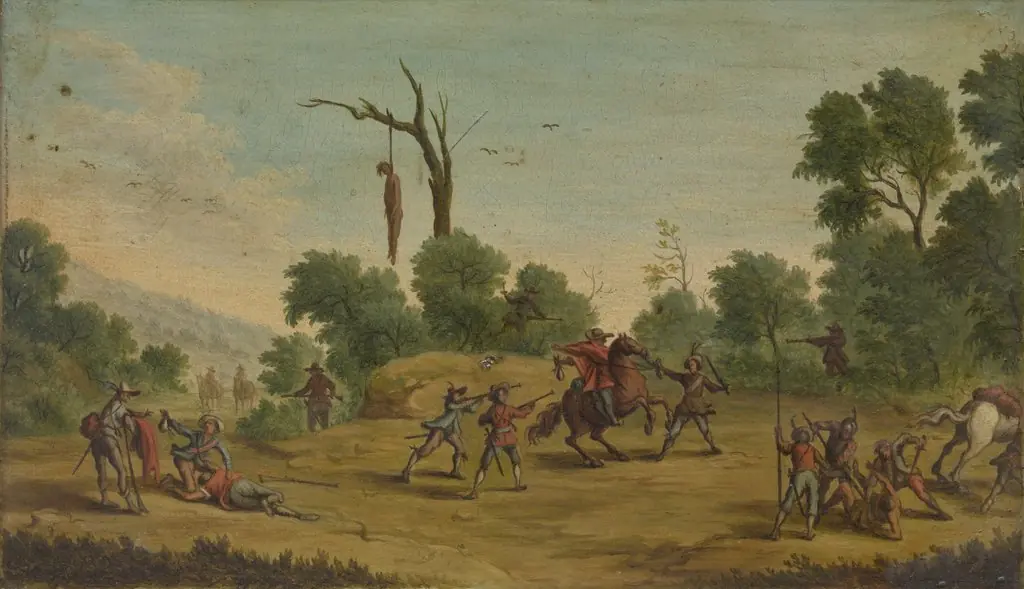 Horsemen Attacked by Robbers
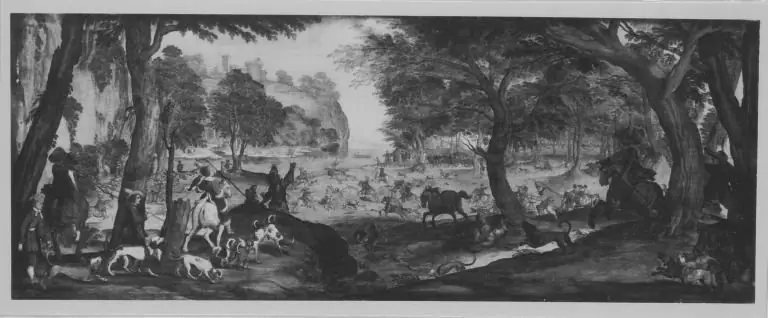 HOW WILL A COVERED PART BE CORRECTED?HOW WIKA A COVERED HEART DEED CORRECTED?
![Christ Walking on the Water [second plate], by Jacques Callot](https://artifactworldgallery.com/img/jacques-callot--christ-walking-on-the-water-second-plate--2069f3bfe4cb2126-w320.webp) Christ Walking on the Water [second plate]
Christ Walking on the Water [second plate]
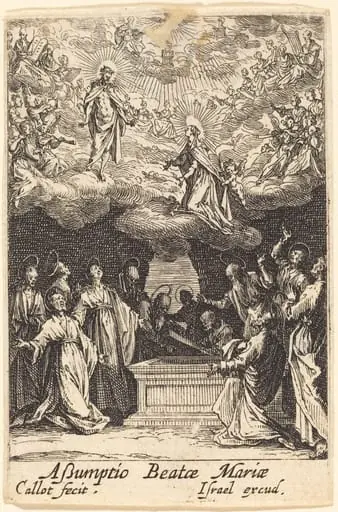 The Assumption of the Virgin
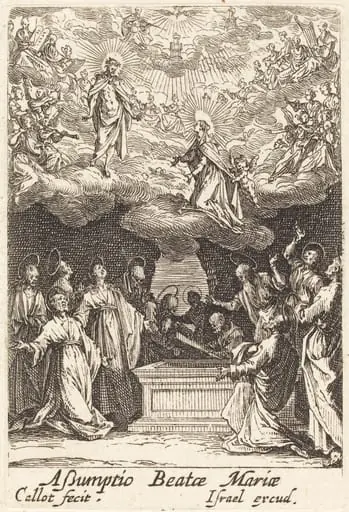 The Assumption of the Virgin
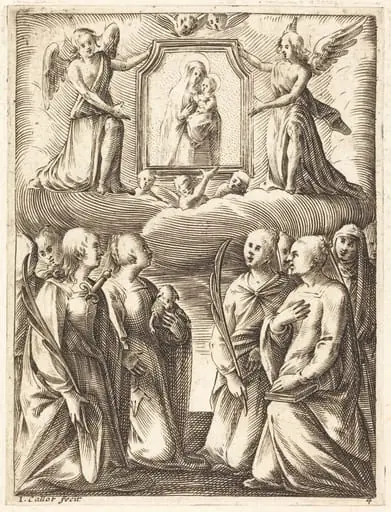 The Adoration of the Virgin and Child
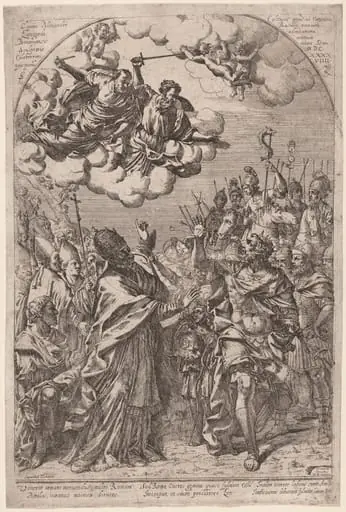 Attila at the Gates of Rome
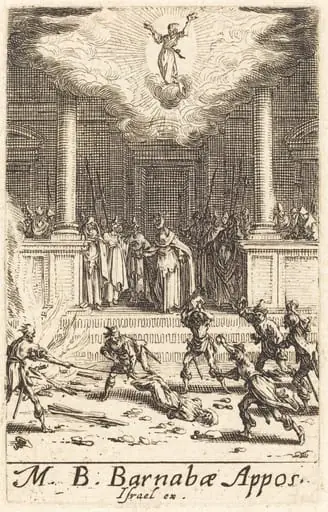 The Martyrdom of Saint Barnabas
 The Martyrdom of Saint Barnabas
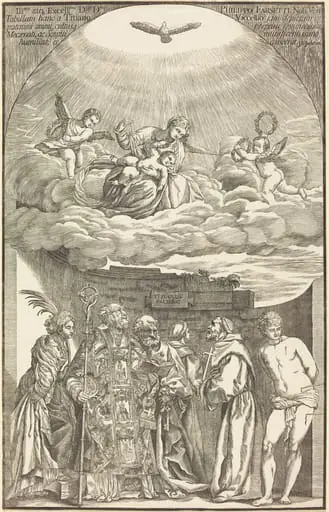 The Virgin in Clouds and Six Saints
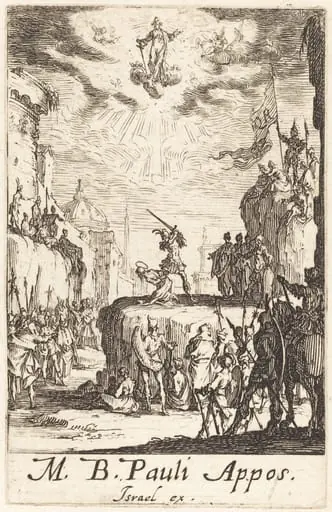 The Martyrdom of Saint Paul
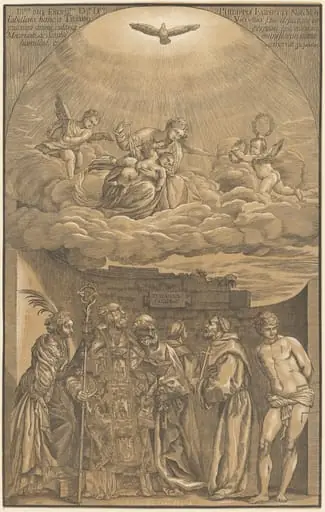 The Virgin and Child in the Clouds with Six Saints
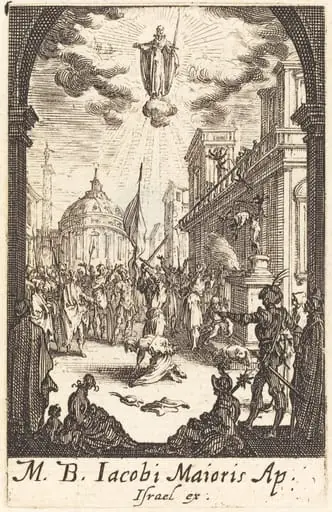 The Martyrdom of Saint James Major
 The Martyrdom of Saint James Major
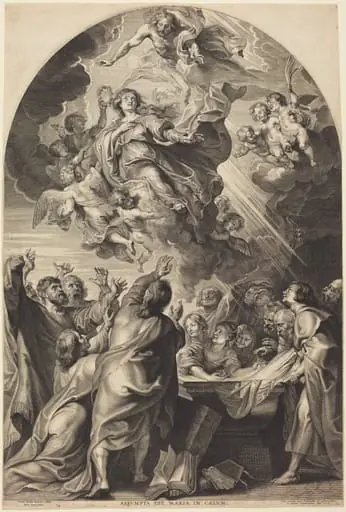 The Assumption of the Virgin