Artwork
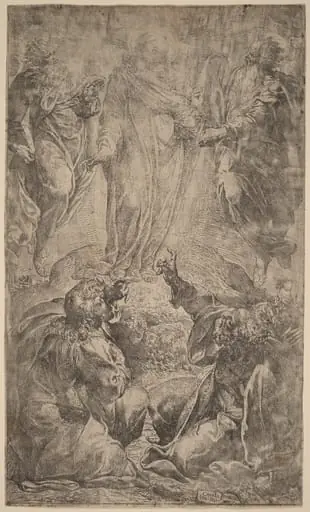
Attila at the Gates of Rome
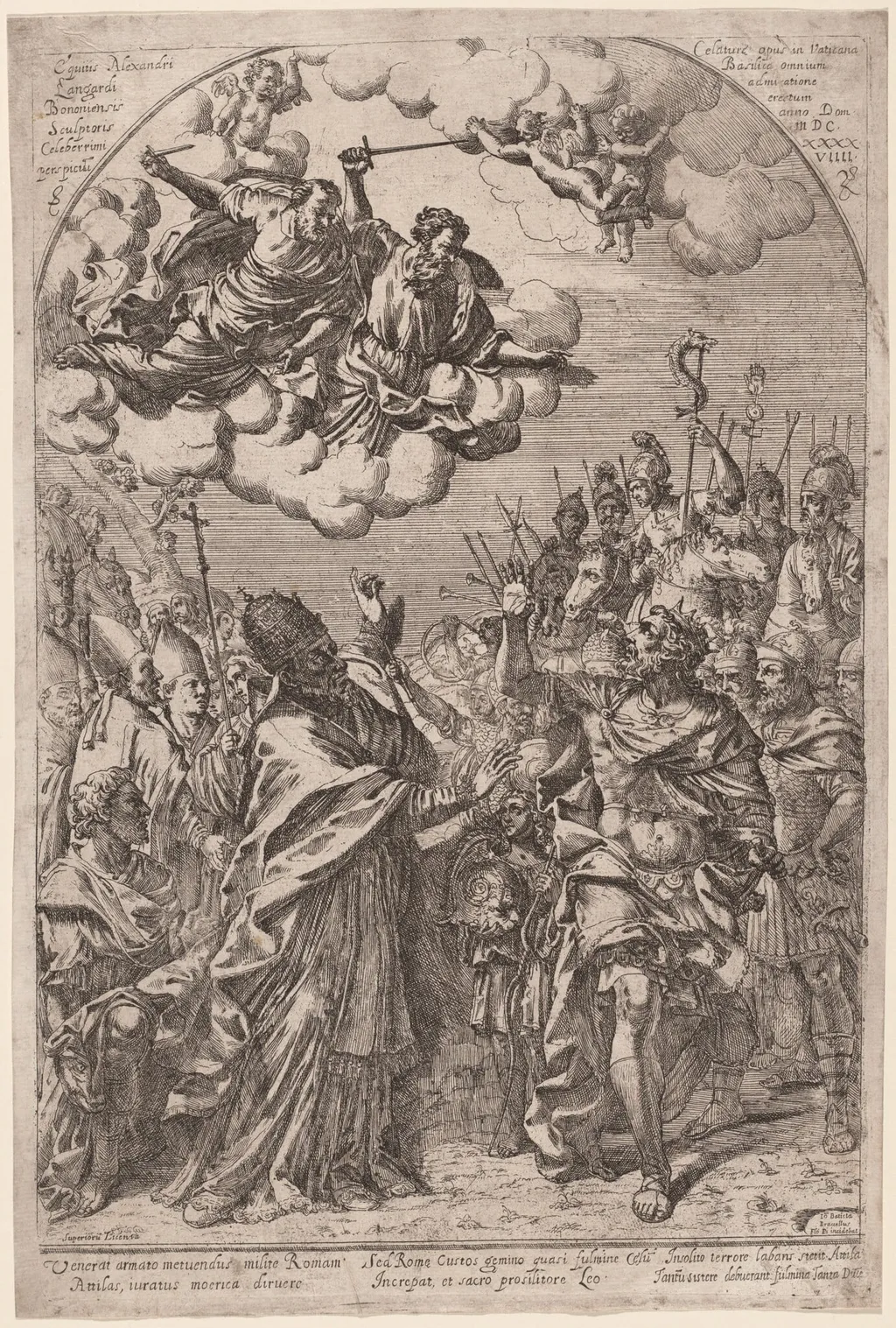
Attila at the Gates of Rome is an ink print by the Baroque artist Giovanni Battista Bracelli. It dates from 1649 and is held in the collection of the National Gallery of Art.
About this work
Overview
Giovanni Battista Bracelli, an Italian printmaker active in the mid-17th century, produced this etching in 1649 as a proof on laid paper.
Giovanni Battista Bracelli, an Italian printmaker active in the mid-17th century, produced this etching in 1649 as a proof on laid paper. The work captures a moment of impending crisis as Attila the Hun approaches Rome, rendered with meticulous line work and tonal gradation typical of Baroque printmaking. Its status as a proof suggests it was an early impression, possibly used to assess composition before final printing.
Subject & Meaning
The scene portrays Attila’s advance not as a literal battle but as a divine confrontation. A robed figure in the foreground, likely a pope or emissary, gestures toward the heavens, while celestial beings above hold a sword and scepter—symbols of divine judgment and authority. The allegory implies Rome’s survival hinges on spiritual intervention rather than military strength, reflecting contemporary religious interpretations of historical crisis.
Technique & Style
Bracelli employed fine, controlled etching lines to model figures and architecture with subtle shading, creating depth without heavy chiaroscuro. The detailed cityscape behind the central group anchors the scene in tangible space, while the floating celestial figures are rendered with lighter, more fluid strokes, distinguishing the divine from the earthly. The composition channels dramatic tension through directional gaze and spatial hierarchy.
History & Provenance
Bracelli worked primarily in central Italy, with ties to Genoa and Florence, where print culture flourished amid religious and political upheaval. This proof likely circulated among collectors or patrons interested in historical allegory. No definitive record of its early ownership survives, but its technical precision suggests it was made for a discerning audience familiar with contemporary print traditions.
Context
In 1649, Europe remained wary of invasions and divine retribution, decades after the Thirty Years’ War. Depictions of Attila’s siege tapped into anxieties about Rome’s vulnerability and the role of faith in national survival. Bracelli’s image aligns with a broader trend in Baroque printmaking that fused historical narrative with moral and theological commentary, often commissioned by ecclesiastical patrons.
Legacy
Though Bracelli is not widely known today, this etching exemplifies the quiet sophistication of mid-17th-century Italian printmaking. It preserves a moment when historical events were interpreted through allegorical frameworks, reflecting how visual culture mediated collective fears. The work remains a testament to the printmaker’s role in shaping public perception of power, faith, and empire.
Artist & collection

Artist
Giovanni Battista Bracelli or Braccelli is the name of more than one engraver and painter active in central Italy in the Baroque period, between about 1616 and 1649.

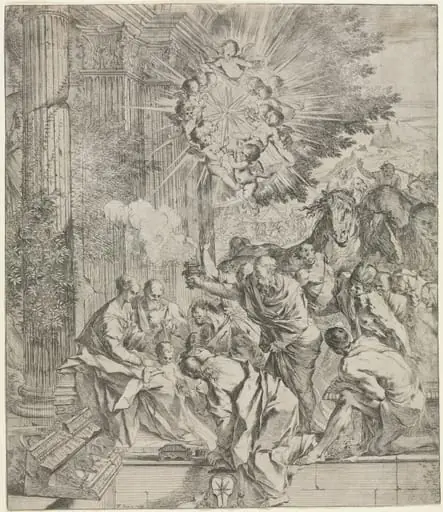 Adoration of the Magi
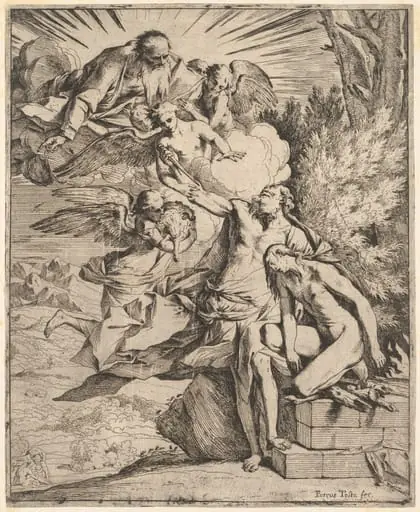 The Sacrifice of Abraham
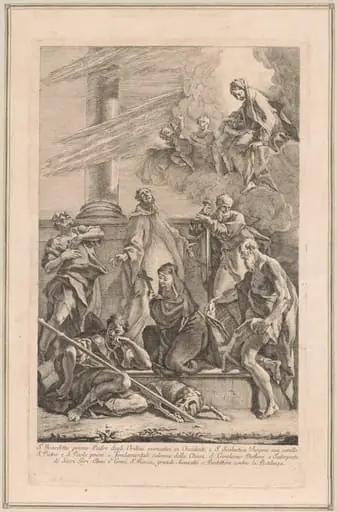 The Madonna and Child with Two Angels and Saints Scholastica, Benedict, Roch, Peter, Paul and Jerome
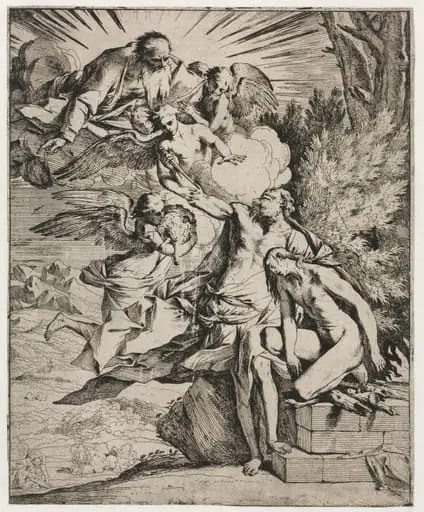 The Sacrifice of Abraham
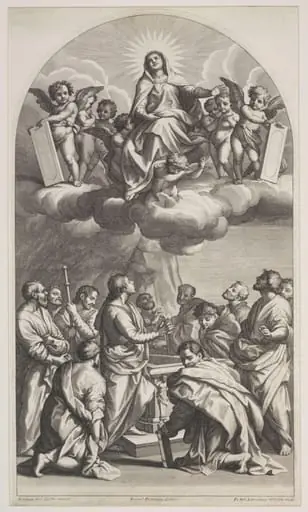 Assumption of the Virgin
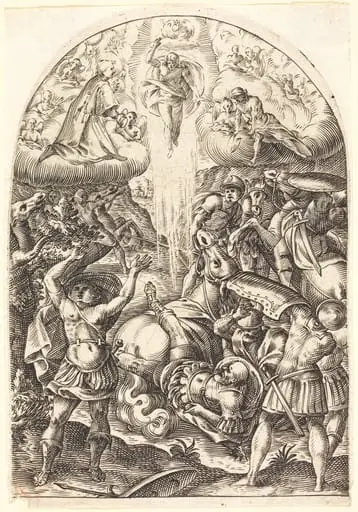 The Conversion of Saint Paul
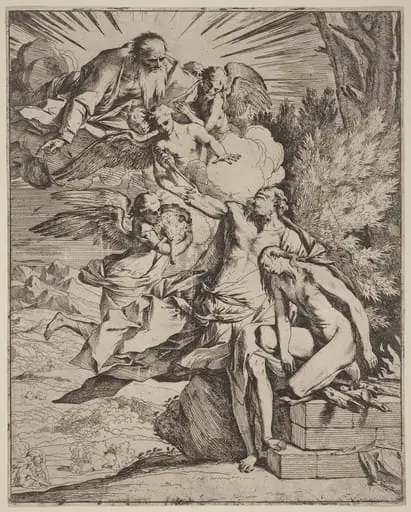 The Sacrifice of Abraham
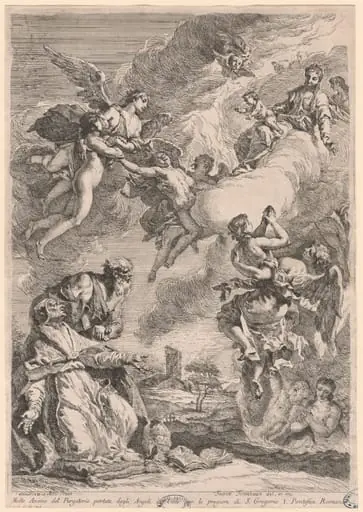 Pope Gregory the Great and Saint Vitale Interceding for the Souls in Purgatory
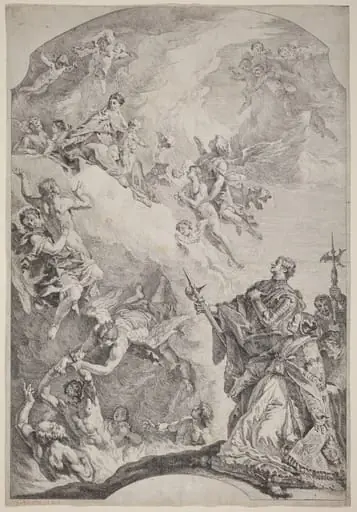 Saint Gregoire I Delivering Souls from Purgatory
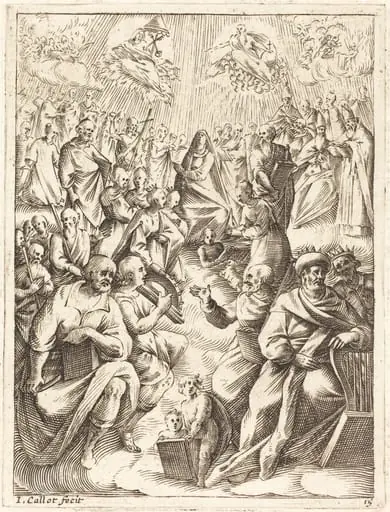 Paradise
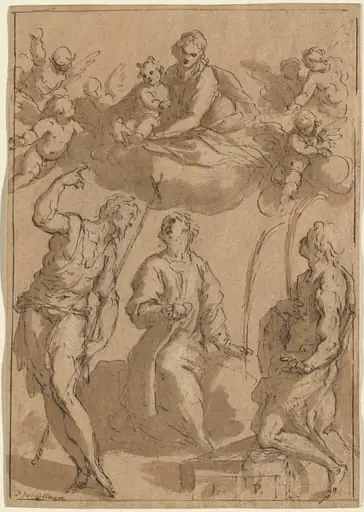 Madonna and Child in Glory with Saints John the Baptist, Stephen, and Lawrence
 The Transfiguration