Artwork
Frontispiece for the Miracles and Graces of Our Lady of "Bon-Secours-les-Nancy"
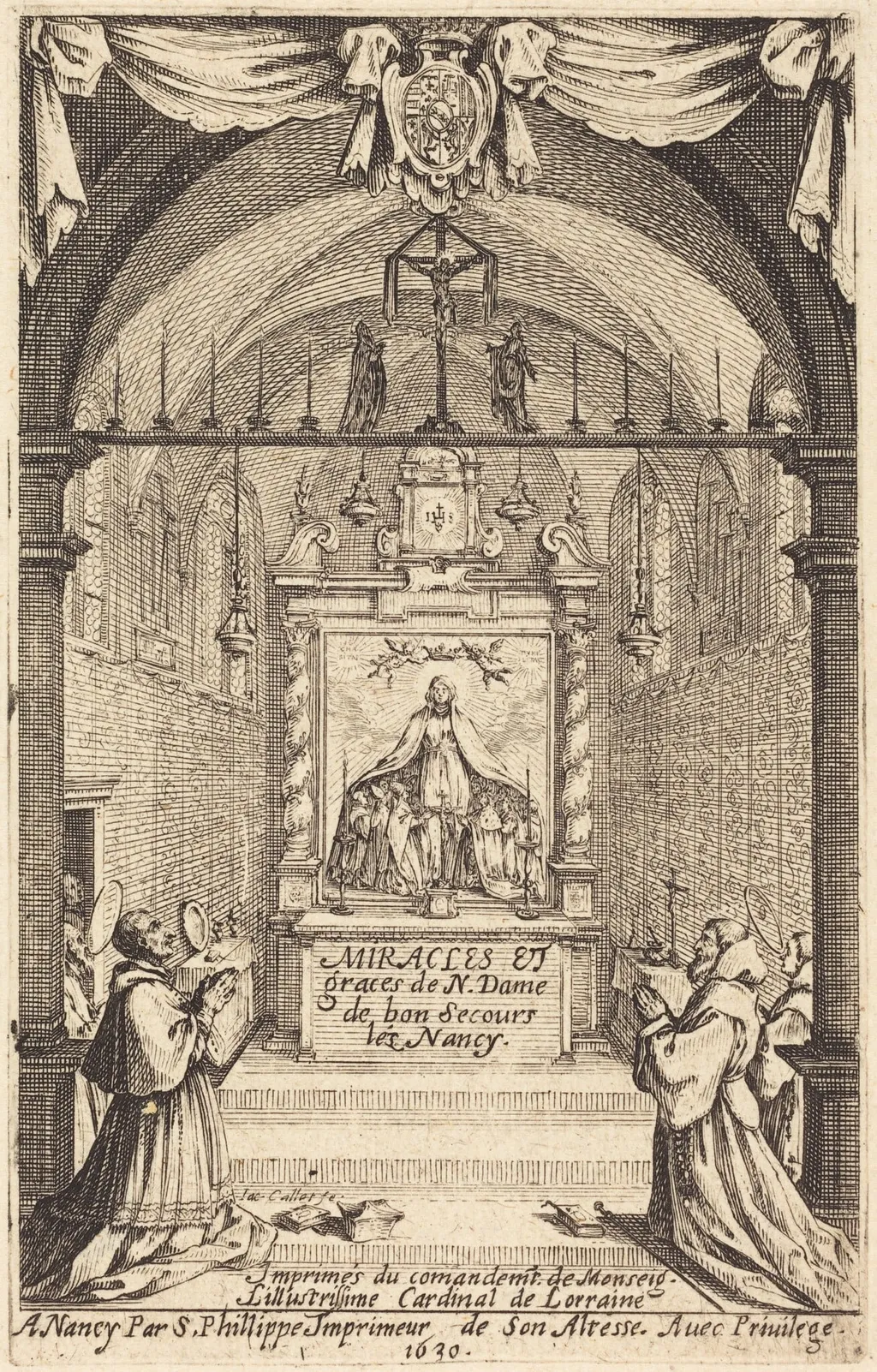
Frontispiece for the Miracles and Graces of Our Lady of "Bon-Secours-les-Nancy" is an ink print by the Renaissance artist Jacques Callot. It dates from 1630 and is held in the collection of the National Gallery of Art.
About this work
Overview
Created in 1630 by Jacques Callot, a prolific printmaker from the Duchy of Lorraine, this etching on laid paper serves as the frontispiece for a devotional volume titled *Miracles and Graces of Our Lady of Bon‑Secours‑les‑Nancy*. The image functions as a visual introduction, framing a series of religious scenes within an ornamental border that resembles an altar setting.
Subject & Meaning
Above her, a cross crowned with thorns hovers, flanked by two diminutive figures, while two monks on either side clasp their hands in prayerful gesture.
The central panel presents a robed female figure, identified as the Virgin Mary, cradling the infant Christ, surrounded by kneeling supplicants. Above her, a cross crowned with thorns hovers, flanked by two diminutive figures, while two monks on either side clasp their hands in prayerful gesture. The composition emphasizes intercession and gratitude, reflecting the local cult of the Marian shrine.
Technique & Style
Callot employed the etching technique, incising lines into a copper plate before printing onto laid paper, which retains a faint ribbed texture. His characteristic precision is evident in the intricate borders and the delicate rendering of drapery, facial expressions, and architectural elements. The work balances densely populated figures with an expansive background, a hallmark of his baroque visual language.
History & Provenance
The print was produced as part of a printed pamphlet documenting reported miracles at the Bon‑Secours shrine in Nancy. While the original pamphlet was likely distributed locally, the etching has survived in several museum collections, illustrating Callot’s role in disseminating religious propaganda through print media in early 17th‑century France.
Context
During the early 1630s, Lorraine was a contested border region where Catholic devotion was reinforced through visual culture. Callot’s output, exceeding 1,400 plates, included military, courtly, and sacred subjects, positioning him as a key figure in the spread of baroque iconography across Europe via affordable prints.
Artist & collection
Artist
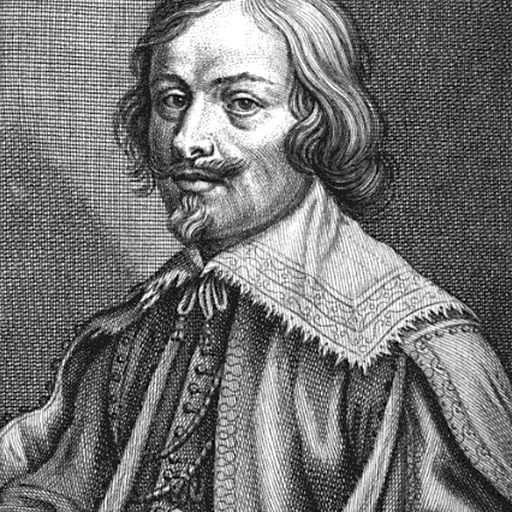
Jacques Callot was a baroque printmaker and draftsman from the Duchy of Lorraine.

 Holy Family at supper
 Restoration of the Aqueduct at Pisa
 Restoration of the Aqueduct at Pisa
 Square in Paris with Many Figures
 Square in Paris with Many Figures
 Horsemen Attacked by Robbers
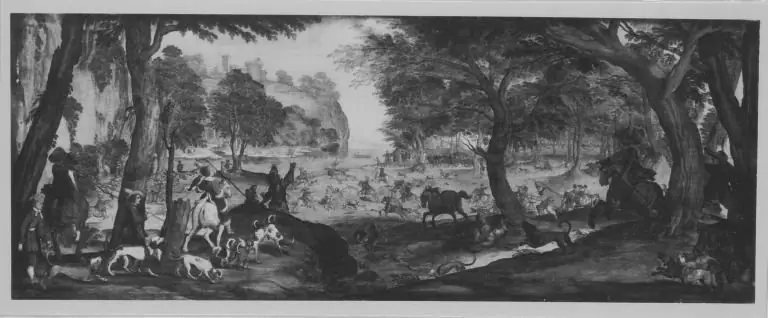 HOW WILL A COVERED PART BE CORRECTED?HOW WIKA A COVERED HEART DEED CORRECTED?
![Christ Walking on the Water [second plate], by Jacques Callot](https://artifactworldgallery.com/img/jacques-callot--christ-walking-on-the-water-second-plate--2069f3bfe4cb2126-w320.webp) Christ Walking on the Water [second plate]
Christ Walking on the Water [second plate]
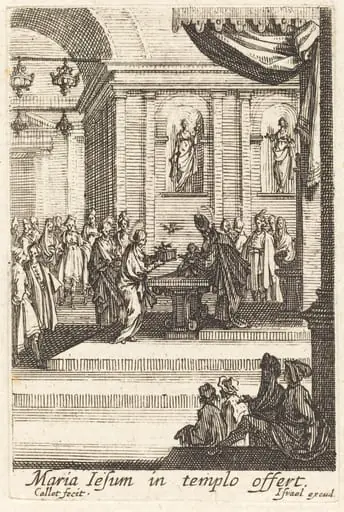 The Virgin Presents Jesus at the Temple
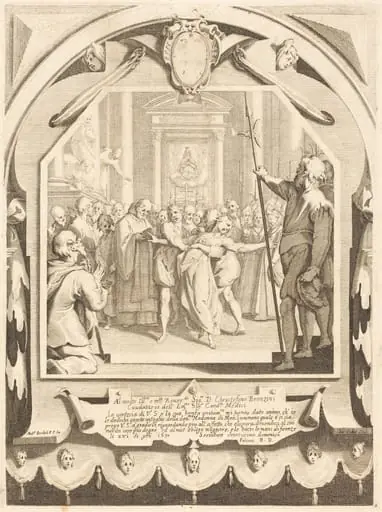 The Possessed
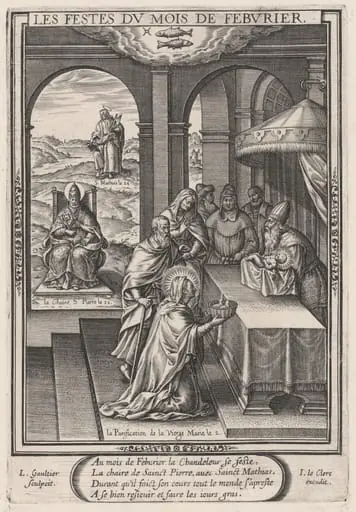 Les Festes du mois de Feburier (February: the Purification of the Virgin)
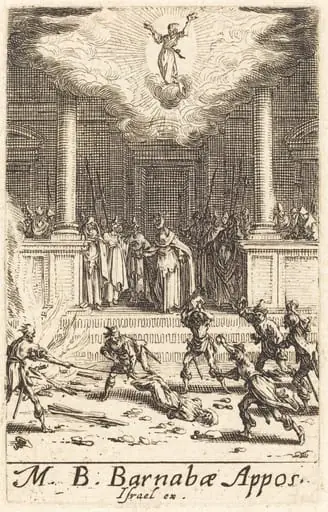 The Martyrdom of Saint Barnabas
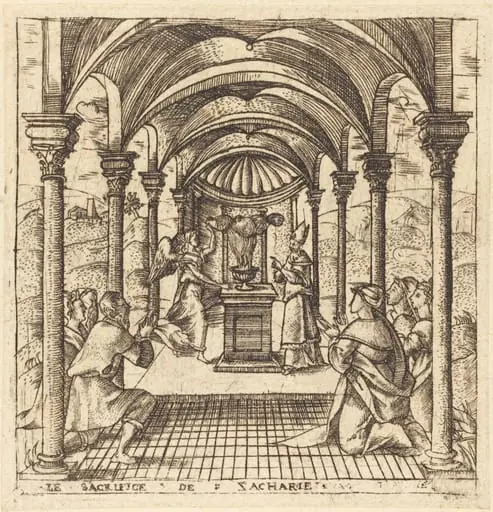 Zacharias and the Angel of the Lord
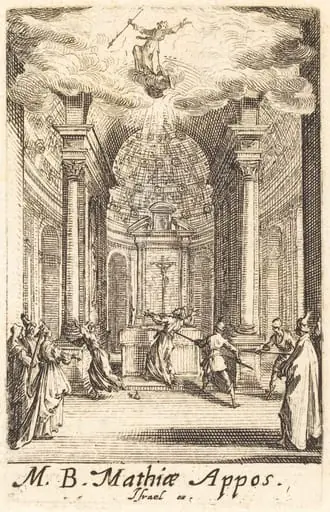 The Martyrdom of Saint Matthias
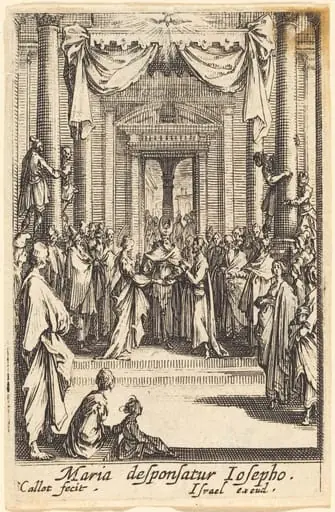 The Marriage of the Virgin
![Church of the Stigmata (Chiesa delle Stimmate) [plate M], by Jacopo Ligozzi](https://artifactworldgallery.com/img/jacopo-ligozzi--church-of-the-stigmata-chiesa-delle-stimmate-plate-m--255dd75981bd30e3-w320.webp) Church of the Stigmata (Chiesa delle Stimmate) [plate M]
Church of the Stigmata (Chiesa delle Stimmate) [plate M]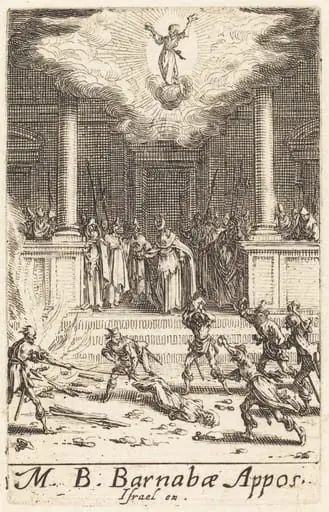 The Martyrdom of Saint Barnabas