Artwork
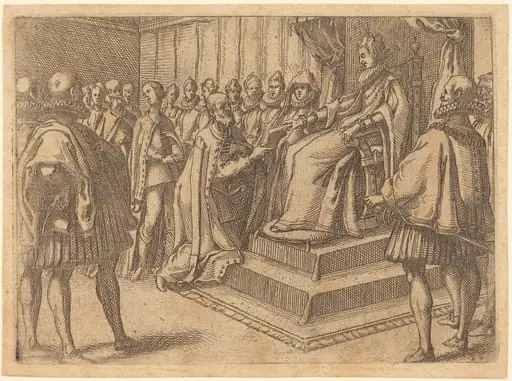
Reception of the Envoy of Poland
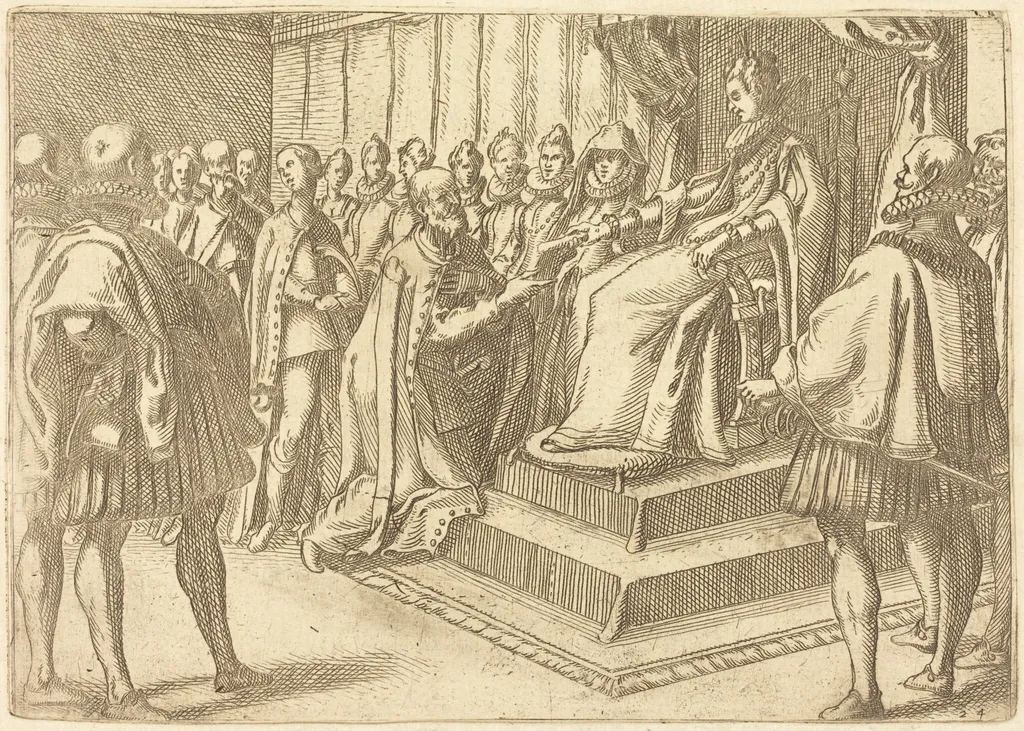
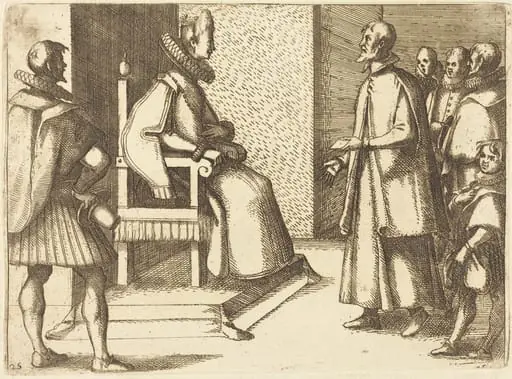
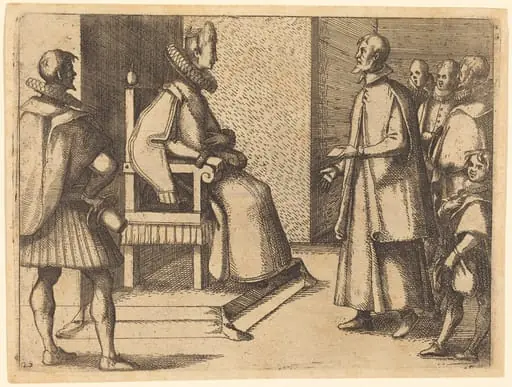
Reception of the Envoy of Poland is an ink print by the Baroque artist Jacques Callot. It dates from 1612 and is held in the collection of the National Gallery of Art.
About this work
Overview
Callot, a native of the Duchy of Lorraine, produced over 1,400 prints during his career, many capturing the rituals and customs of European courts.
Created in 1612 by Jacques Callot, this etching on laid paper is a restrike of an original work from the early Baroque period. Callot, a native of the Duchy of Lorraine, produced over 1,400 prints during his career, many capturing the rituals and customs of European courts. This piece belongs to a series documenting diplomatic encounters, reflecting his interest in the visual language of power and protocol.
Subject & Meaning
The scene depicts a formal audience in which a crowned woman, likely a royal figure, receives a Polish envoy. Her elevated position and elaborate attire signify authority, while the attendants and visitors wear garments indicative of high status. The composition emphasizes hierarchy and ceremonial exchange, illustrating the diplomatic customs of early 17th-century Europe without overt narrative or symbolism.
Technique & Style
Callot employed fine, controlled etching lines to render textures in fabric, hair, and architecture with precision. The use of cross-hatching and delicate tonal gradations creates a sense of volume and spatial depth despite the minimal background. His technique prioritizes clarity and detail over dramatic lighting, aligning with Northern European print traditions rather than the theatricality often associated with Italian Baroque.
History & Provenance
The original etching was made in 1612, likely for circulation among collectors and diplomats. This version is a later restrike, produced from the original plate after Callot’s death. Such restrikes were common in the 17th and 18th centuries to meet continued demand. The work’s survival in multiple impressions attests to its enduring interest among connoisseurs of courtly imagery.
Context
In the early 1600s, European courts maintained complex diplomatic networks, and visual records of such encounters served both as documentation and propaganda. Callot’s prints, including this one, were part of a broader trend among printmakers to record contemporary events with accuracy. His work offers insight into the visual culture of diplomacy during the Thirty Years’ War era.
Legacy
Callot’s detailed etchings influenced generations of printmakers across Europe, particularly in their treatment of crowd scenes and costume. While not widely exhibited today, this work remains a valuable record of early modern courtly ritual. Its technical precision and observational clarity continue to inform studies of Baroque printmaking and diplomatic visual culture.
Artist & collection
Artist
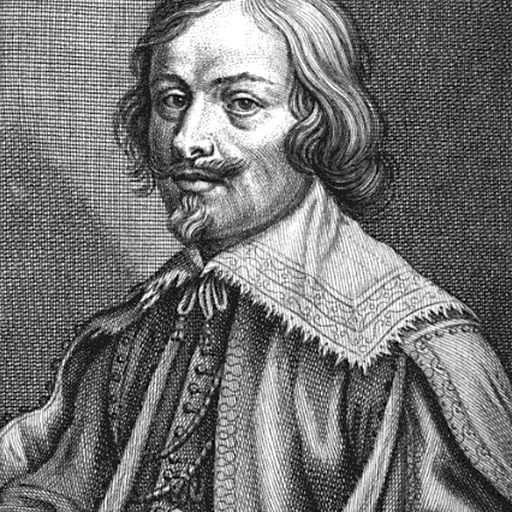
Jacques Callot was a baroque printmaker and draftsman from the Duchy of Lorraine.

 Holy Family at supper
 Restoration of the Aqueduct at Pisa
 Restoration of the Aqueduct at Pisa
 Square in Paris with Many Figures
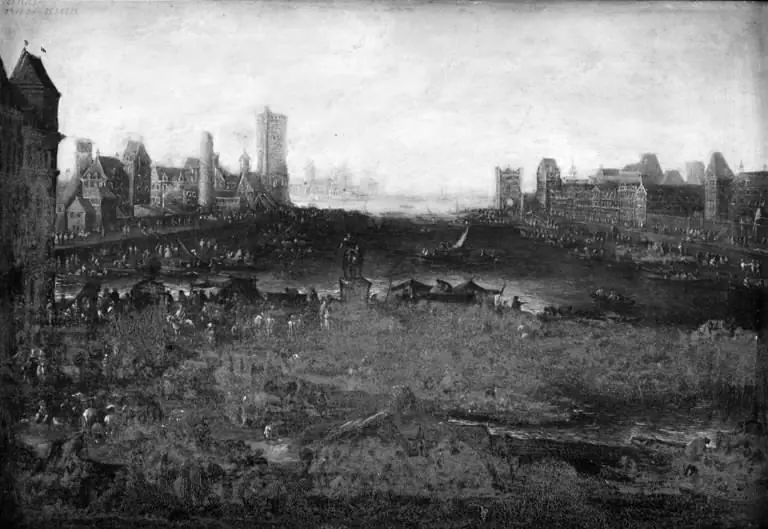 Square in Paris with Many Figures
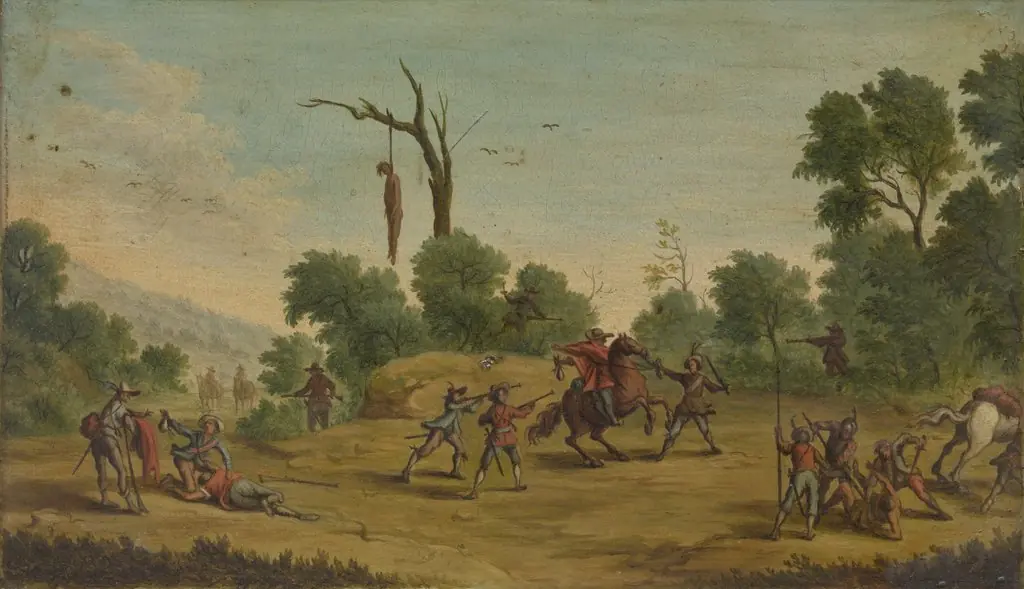 Horsemen Attacked by Robbers
 HOW WILL A COVERED PART BE CORRECTED?HOW WIKA A COVERED HEART DEED CORRECTED?
![Christ Walking on the Water [second plate], by Jacques Callot](https://artifactworldgallery.com/img/jacques-callot--christ-walking-on-the-water-second-plate--2069f3bfe4cb2126-w320.webp) Christ Walking on the Water [second plate]
Christ Walking on the Water [second plate]
![Reception of the Envoy of Poland [recto], by Jacques Callot](https://artifactworldgallery.com/img/jacques-callot--reception-of-the-envoy-of-poland-recto--b391a89639ee42f8-w320.webp)
![The Envoy of Tuscany thanking the Queen [verso], by Jacques Callot](https://artifactworldgallery.com/img/jacques-callot--the-envoy-of-tuscany-thanking-the-queen-verso--d1096c23bbbd576f-w320.webp)
![Margaret of Austria Giving Audience to a Nobleman [verso], by Raffaello Schiaminossi](https://artifactworldgallery.com/img/raffaello-schiaminossi--margaret-of-austria-giving-audience-to-a-nobleman-verso--86ac2347af277f00-w320.webp)