Artwork
Lionardo
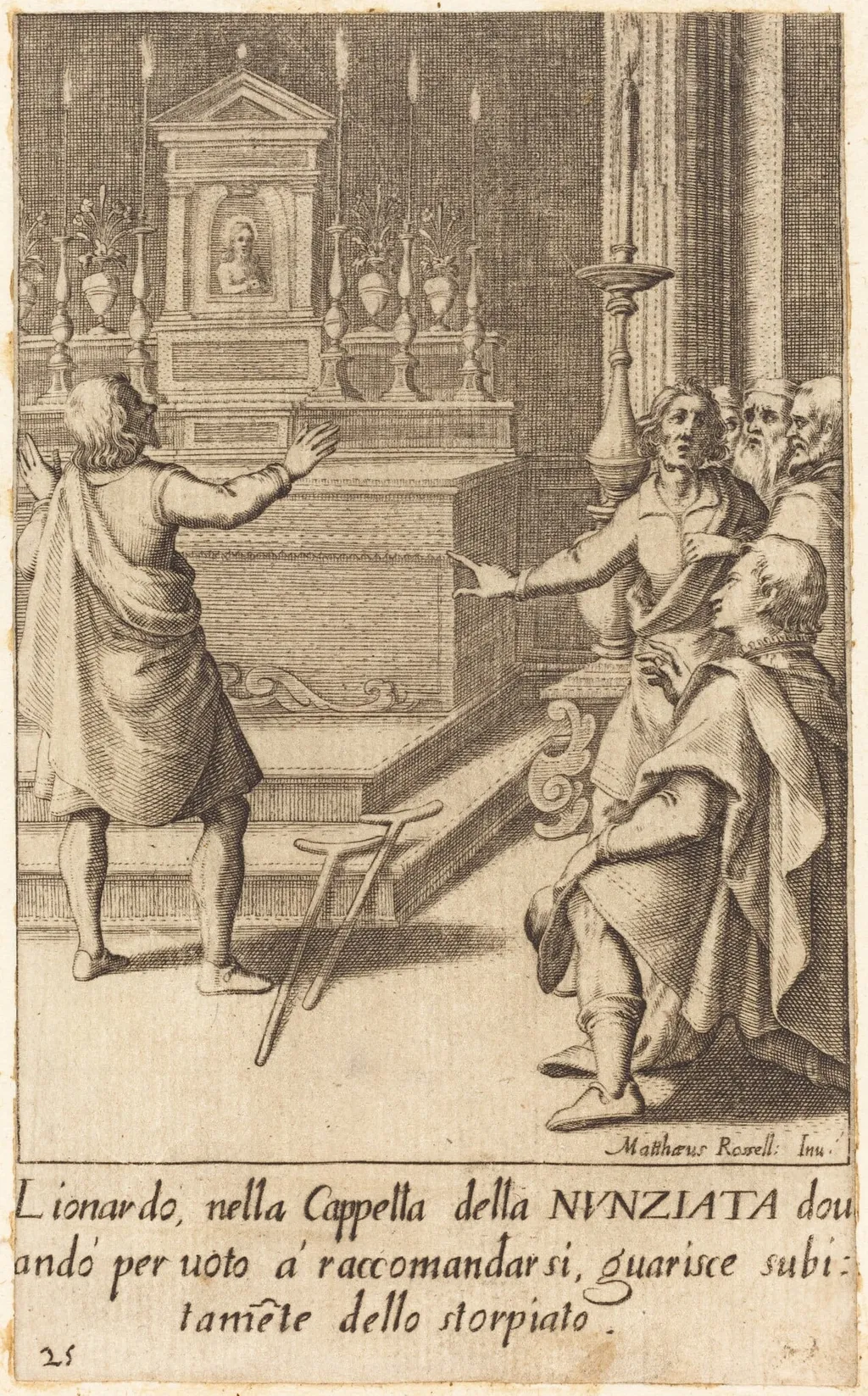
Lionardo is an ink print by the Baroque artist Jacques Callot. It dates from 1619 and is held in the collection of the National Gallery of Art.
About this work
Overview
Created in 1619, *Lionardo* is an engraving on laid paper by Jacques Callot, a prolific Baroque printmaker from the Duchy of Lorraine. The work exemplifies Callot’s extensive production of prints that combine narrative detail with a keen observation of contemporary life.
Subject & Meaning
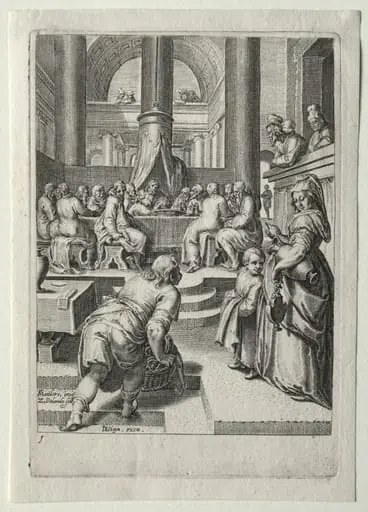
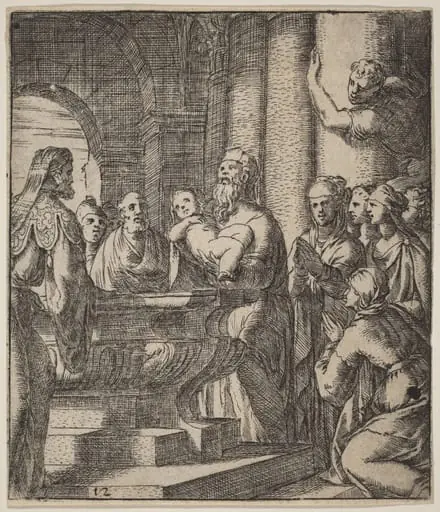
The composition presents a solitary figure in a long robe gesturing toward a pedestal that holds a bust, while three seated men observe the monument. The arrangement suggests a moment of quiet contemplation, perhaps evoking reverence for the represented individual or the act of memorialization.
Technique & Style
Callot employs a high‑contrast, finely incised line that renders intricate shading and texture. The engraving’s meticulous hatching creates depth in the darkened background, a large column, and decorative elements, demonstrating the artist’s command of line to model space and surface.
Context
During the early seventeenth century, Callot documented a wide range of social scenes, often including figures from marginalised groups. *Lionardo* reflects this broader interest, situating a dignified, possibly elite, gathering within a setting rendered with the same detailed attention he gave to more everyday subjects.
Legacy
The print stands as a representative example of Callot’s influence on later printmakers, particularly in the use of elaborate line work to convey complex interiors and group dynamics. Its preservation on laid paper offers insight into the technical standards of Baroque engraving in Lorraine.
Artist & collection
Artist
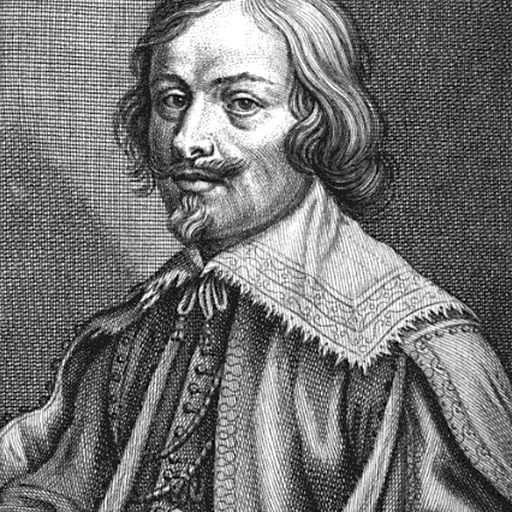
Jacques Callot was a baroque printmaker and draftsman from the Duchy of Lorraine.

 Holy Family at supper
 Restoration of the Aqueduct at Pisa
 Restoration of the Aqueduct at Pisa
 Square in Paris with Many Figures
 Square in Paris with Many Figures
 Horsemen Attacked by Robbers
 HOW WILL A COVERED PART BE CORRECTED?HOW WIKA A COVERED HEART DEED CORRECTED?
![Christ Walking on the Water [second plate], by Jacques Callot](https://artifactworldgallery.com/img/jacques-callot--christ-walking-on-the-water-second-plate--2069f3bfe4cb2126-w320.webp) Christ Walking on the Water [second plate]
Christ Walking on the Water [second plate]