Artwork
Life of Christ: The Last Supper
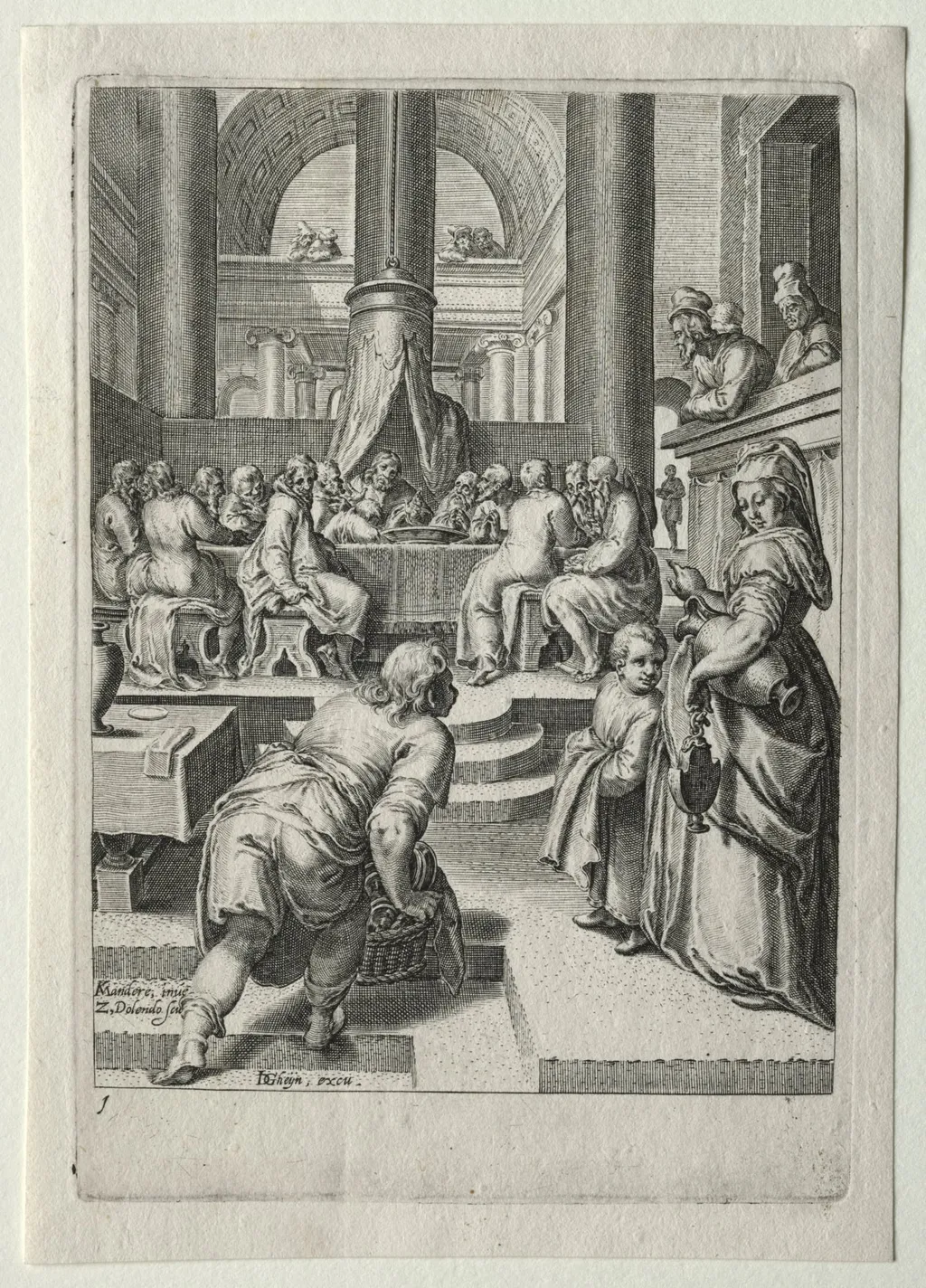
Life of Christ: The Last Supper is a print by the Renaissance artist Zacharias Dolendo. It dates from 1597 and is held in the collection of the Cleveland Museum of Art.
About this work
Overview
Zacharias Dolendo, a Dutch engraver active in the late 1500s, produced this religious print in 1597 as part of a series illustrating the Life of Christ.
Zacharias Dolendo, a Dutch engraver active in the late 1500s, produced this religious print in 1597 as part of a series illustrating the Life of Christ. Known for his meticulous line work, Dolendo worked within a tradition of Northern European printmaking that emphasized clarity and detail. The piece is currently held in the collection of The Cleveland Museum of Art, where it serves as an example of late Renaissance devotional imagery rendered in intaglio technique.
Subject & Meaning
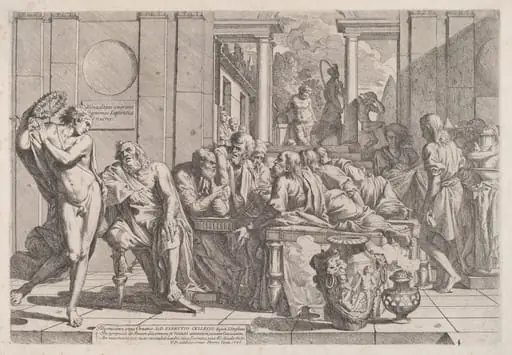
The scene depicts the Last Supper, the biblical moment when Jesus shares a final meal with his disciples before his crucifixion. Dolendo captures not only the central act of communion but also the varied responses of those present—some in contemplation, others in motion. The inclusion of bystanders, such as a child and a woman with a jug, suggests a broader narrative context beyond the apostles, reinforcing the event’s communal and sacred significance.
Technique & Style
Dolendo employed fine, controlled engraving lines to define forms and textures, with sharp contrasts between light and shadow to model figures and architecture. The chiaroscuro effect draws attention to facial expressions and drapery, enhancing emotional depth. The composition is tightly packed, yet each figure is individually rendered, demonstrating the artist’s skill in managing complexity within a small, flat surface.
History & Provenance
Created in 1597, the print emerged during a period of flourishing religious print production in the Netherlands. Dolendo, possibly trained by Jacob De Ghein and brother to fellow engraver Bartholomeus Dolendo, contributed to a network of artists producing devotional imagery for private and institutional use. The work entered the Cleveland Museum of Art’s collection as part of its broader holdings in early modern European prints.
Context
In the late 16th century, Protestant regions like the Netherlands saw a decline in large-scale religious painting but an increase in small-scale prints for domestic devotion. Dolendo’s work reflects this shift, offering a detailed, accessible version of a key biblical scene. The inclusion of everyday figures and architectural detail aligns with Northern Renaissance tendencies to ground sacred narratives in recognizable, lived environments.
Legacy
Dolendo’s engraving exemplifies the technical precision and narrative clarity valued in late Renaissance printmaking. While not widely known today, his works contributed to the dissemination of biblical imagery across Europe. This print remains a representative artifact of how religious stories were visually communicated to a literate, middle-class audience during a time of religious transformation.
Artist & collection
Artist
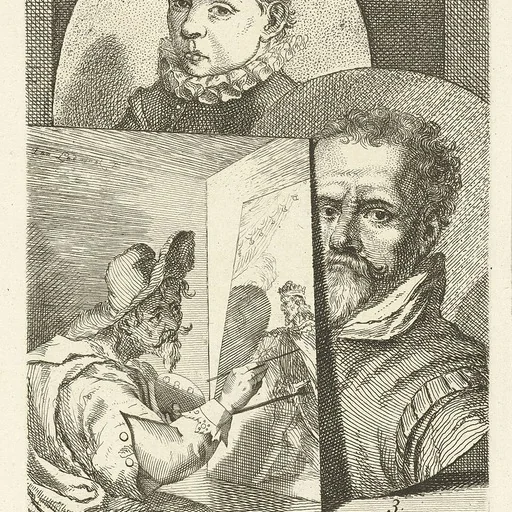
Zacharias Dolendo (1561–1601) was a Dutch engraver. He was the brother of Bartholomeus Dolendo, whom he surpassed both in style and in correctness. He was born at Leyden in 1561, and is said by Huber to have been a…

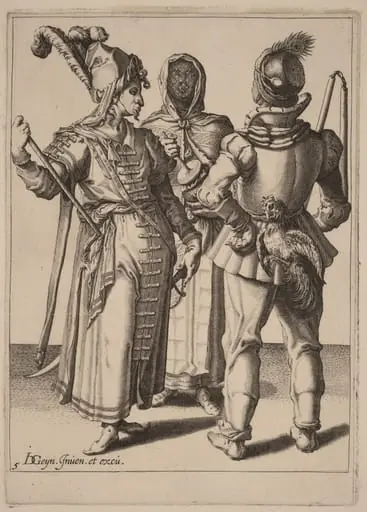 A Grandee, a Peasant, and a Veiled Woman
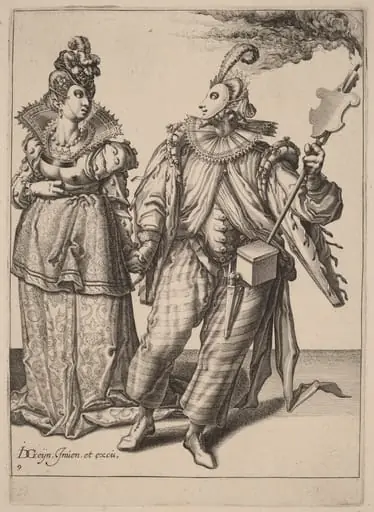 A Woman Led by a Player Holding a Torch
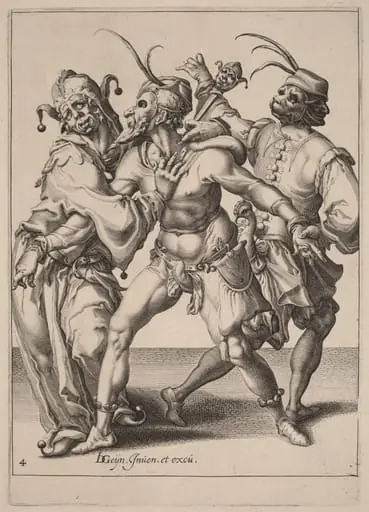 Three Dancing Mummers, Including a Jester
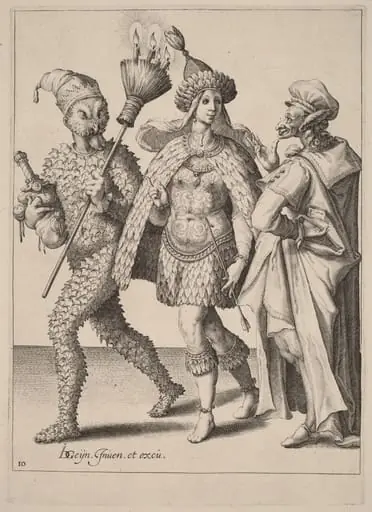 An Old Mummer Addressing a Couple Dressed in Feathers
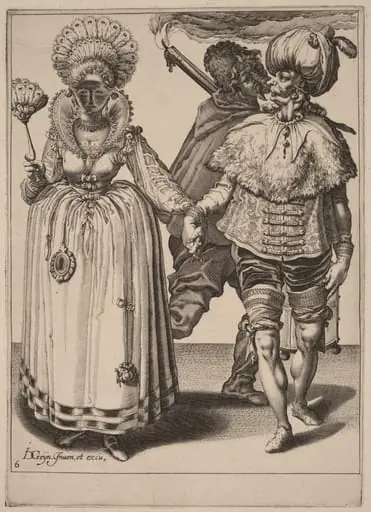 A Man with a Turban Leading a Woman Wearing Peacock Feathers
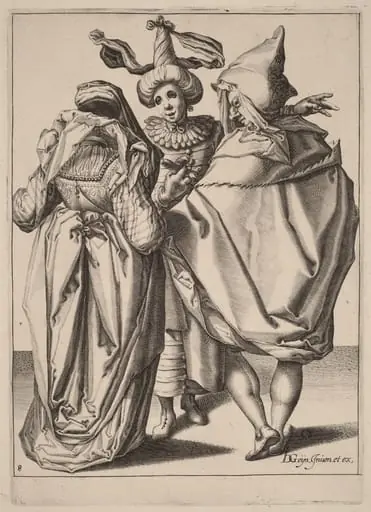 A Couple Addressing a Gesticulating Young Man
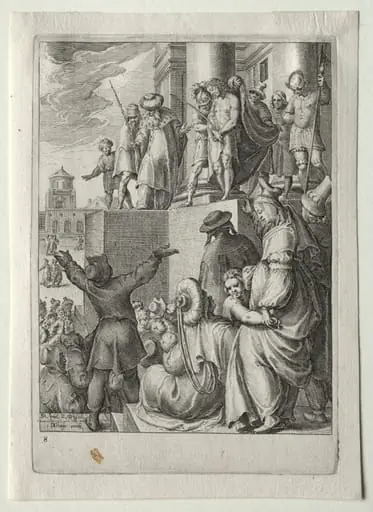 Passion Set: Ecce Homo
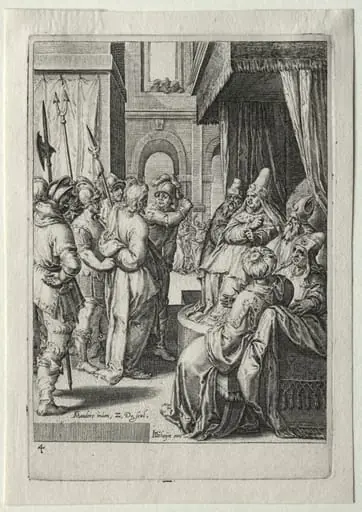 Passion Set: Christ before Herod