Artwork
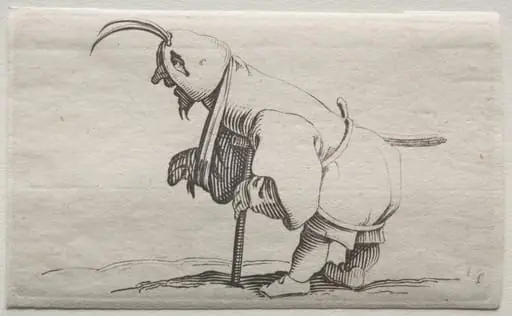
The Hooded Cripple
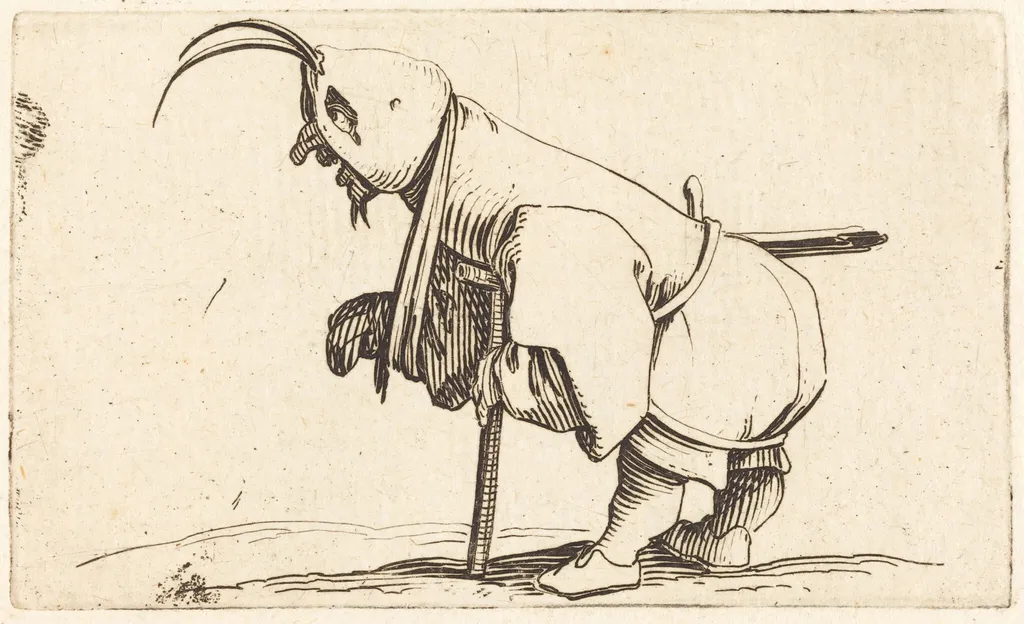
The Hooded Cripple is an ink print by the Baroque artist Jacques Callot. It dates from 1622 and is held in the collection of the National Gallery of Art.
About this work
Overview
The Hooded Cripple, created by French Baroque printmaker Jacques Callot around 1622, is an etching and engraving on laid paper. It exemplifies Callot's prolific output, which exceeds 1,400 etchings, and his focus on documenting contemporary life.
Subject & Meaning
The print depicts a marginalized figure: a hunched, hooded cripple leaning on a cane and staff, conveying weight and exhaustion through posture. This subject aligns with Callot's practice of portraying society's underprivileged, alongside soldiers, beggars, and everyday street life.
Technique & Style
Callot employed sharp, purposeful linework, characteristic of Baroque etchings, to capture the figure's struggle and emotional state. The precise technique emphasizes the figure's physical and possibly emotional burden.
History & Provenance
While specific provenance details for *The Hooded Cripple* are not provided, it is part of Callot's broader thematic output that includes religious and genre scenes, reflecting his observational approach to 17th-century life.
Context
Produced in the early 17th century, the work reflects the Baroque era's artistic tendencies and Callot's Lorraine origins, though his style and subjects were widely appreciated across Europe.
Legacy
As part of Callot's vast and influential body of work, *The Hooded Cripple* contributes to the artist's lasting impact on printmaking, particularly in the detailed, observant depiction of everyday and marginalized lives.
Artist & collection
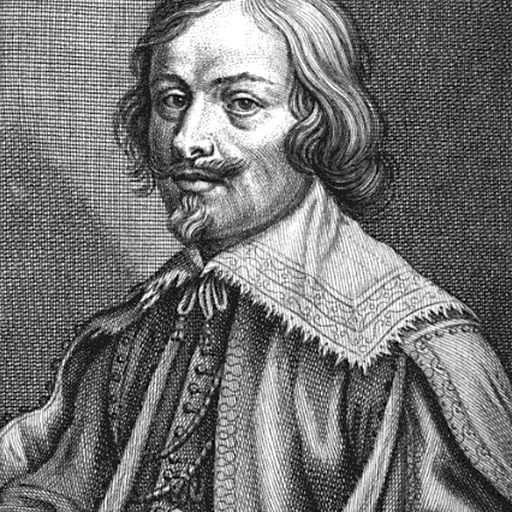
Artist
Jacques Callot was a baroque printmaker and draftsman from the Duchy of Lorraine.

 Holy Family at supper
 Restoration of the Aqueduct at Pisa
 Restoration of the Aqueduct at Pisa
 Square in Paris with Many Figures
 Square in Paris with Many Figures
 Horsemen Attacked by Robbers
 HOW WILL A COVERED PART BE CORRECTED?HOW WIKA A COVERED HEART DEED CORRECTED?
![Christ Walking on the Water [second plate], by Jacques Callot](https://artifactworldgallery.com/img/jacques-callot--christ-walking-on-the-water-second-plate--2069f3bfe4cb2126-w320.webp) Christ Walking on the Water [second plate]
Christ Walking on the Water [second plate]