Artwork
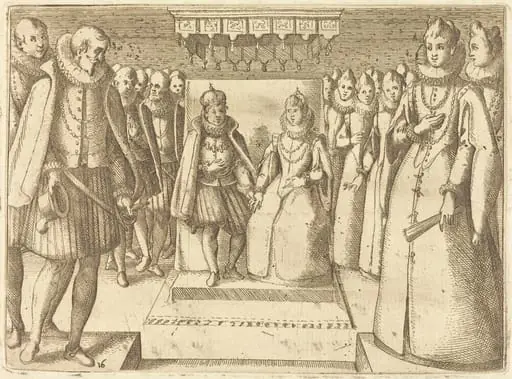
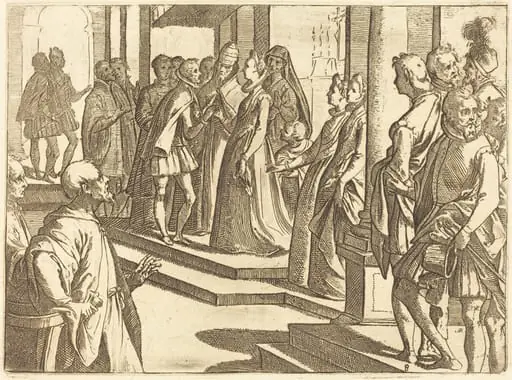
Meeting of Margaret of Austria and Philip III
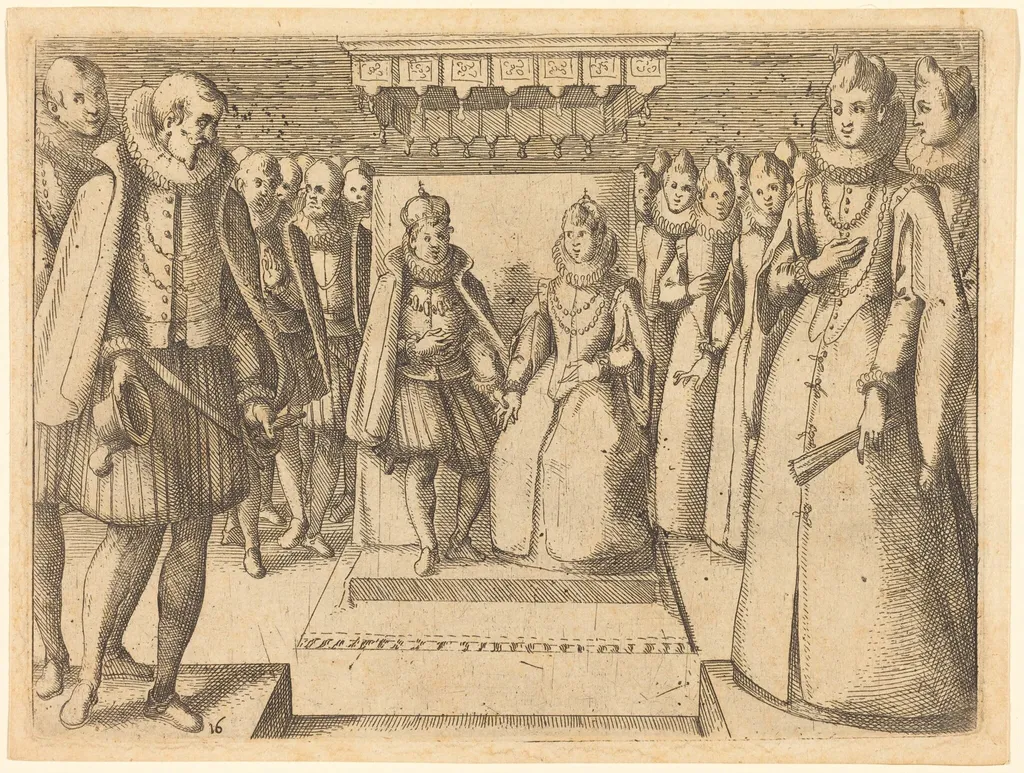
Meeting of Margaret of Austria and Philip III is an ink print by the Baroque artist Jacques Callot. It dates from 1612 and is held in the collection of the National Gallery of Art.
About this work
Overview
Executed on laid paper, the work exemplifies his mastery of fine-line etching and his interest in capturing ceremonial moments.
Jacques Callot, a French printmaker from the Duchy of Lorraine, produced this etching in 1612 as part of his extensive series documenting courtly and historical scenes. Executed on laid paper, the work exemplifies his mastery of fine-line etching and his interest in capturing ceremonial moments. With over 1,400 prints to his name, Callot’s output spanned military, religious, and aristocratic subjects, often rendered with meticulous attention to detail and spatial depth.
Subject & Meaning
The scene portrays a formal diplomatic meeting between Margaret of Austria, regent of the Spanish Netherlands, and King Philip III of Spain. Their encounter likely symbolized political alliance and continuity within the Habsburg dynasty. The rigid posture and spatial separation of the figures emphasize protocol over intimacy, reflecting the ceremonial nature of such audiences. The setting reinforces the gravity of the moment through architectural grandeur and restrained gesture.
Technique & Style
Callot employed fine, controlled etching lines to render textures in fabric, armor, and stone with remarkable clarity. Delicate cross-hatching and subtle tonal gradations create volume without heavy shading, characteristic of early Baroque printmaking. The composition is symmetrical, with figures aligned along a central axis, enhancing formality. The high ceiling and architectural details suggest depth, achieved through precise perspective and linear economy rather than dramatic lighting.
History & Provenance
Created during Callot’s early career in Nancy and Paris, the print likely circulated among noble and scholarly circles as a record of Habsburg diplomacy. No specific early ownership records are widely documented, but its technical refinement suggests it was intended for collectors familiar with courtly imagery. The work survives in multiple institutional collections, indicating its early recognition among connoisseurs of printmaking.
Context
In 1612, Europe was navigating complex dynastic alliances, with the Habsburgs consolidating power across Spain, the Low Countries, and the Holy Roman Empire. Margaret, as regent, acted as a key political figure in the Spanish Netherlands, while Philip III represented centralized Spanish authority. Callot’s depiction aligns with a broader trend of using prints to visualize statecraft, making political events accessible to a literate, non-courtly audience.
Legacy
This etching contributes to Callot’s reputation as a chronicler of early 17th-century European court life. While less famous than his military scenes or grotesques, it demonstrates his ability to convey political nuance through restrained composition and technical precision. His influence on later printmakers, particularly in the use of fine line and narrative clarity, helped shape the evolution of documentary printmaking in the Baroque era.
Artist & collection
Artist
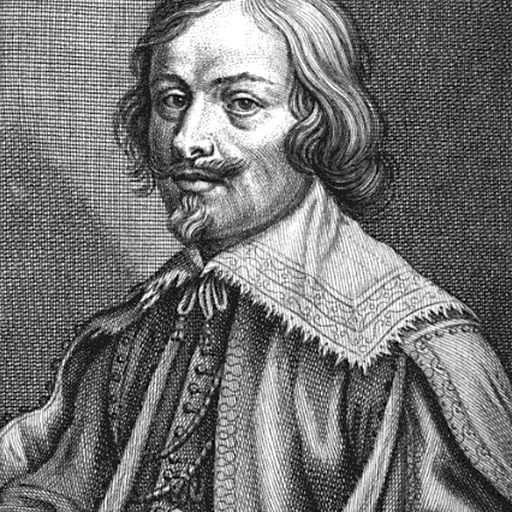
Jacques Callot was a baroque printmaker and draftsman from the Duchy of Lorraine.

 Holy Family at supper
 Restoration of the Aqueduct at Pisa
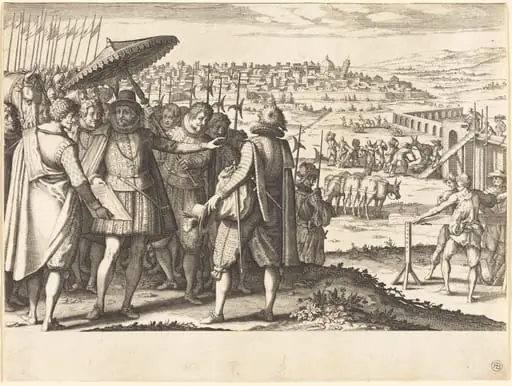 Restoration of the Aqueduct at Pisa
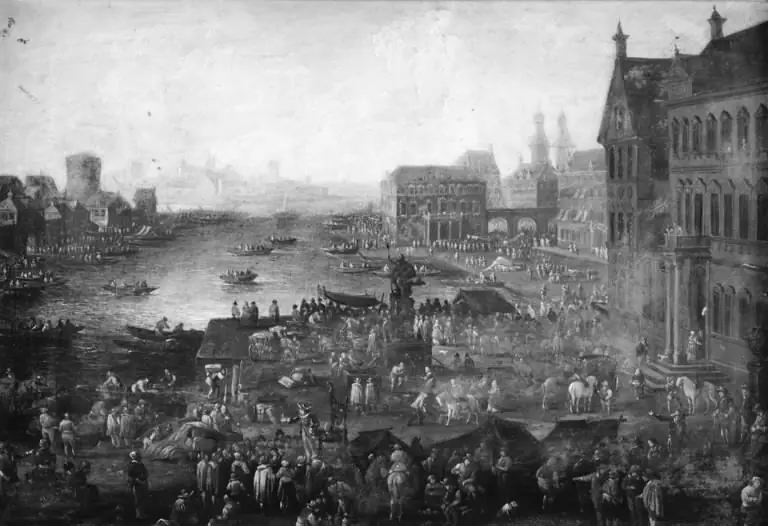 Square in Paris with Many Figures
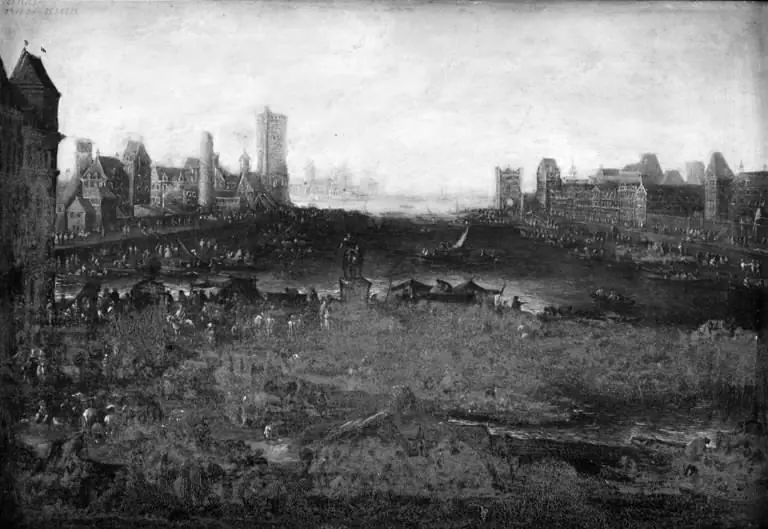 Square in Paris with Many Figures
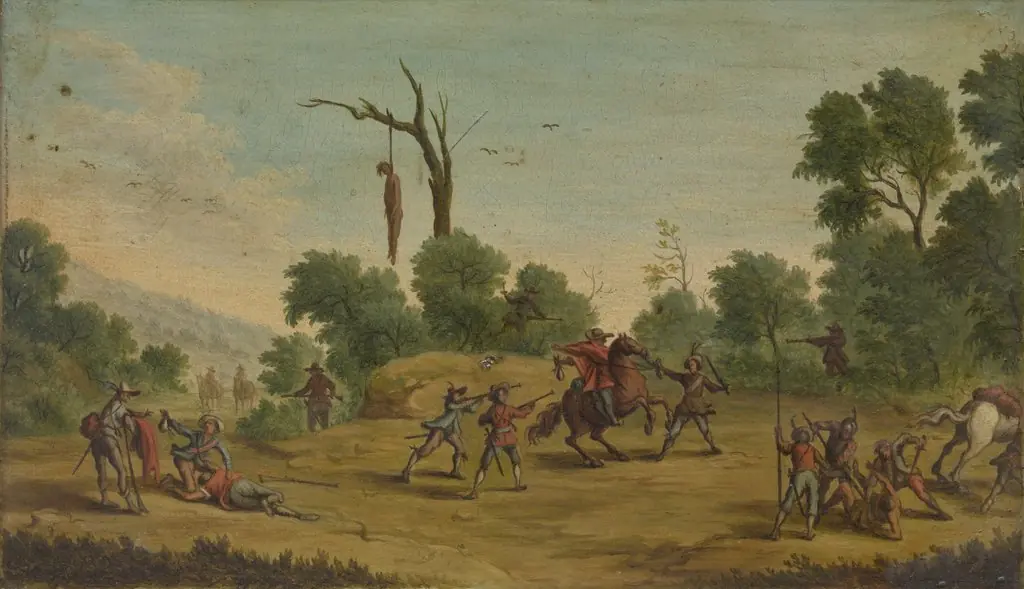 Horsemen Attacked by Robbers
 HOW WILL A COVERED PART BE CORRECTED?HOW WIKA A COVERED HEART DEED CORRECTED?
![Christ Walking on the Water [second plate], by Jacques Callot](https://artifactworldgallery.com/img/jacques-callot--christ-walking-on-the-water-second-plate--2069f3bfe4cb2126-w320.webp) Christ Walking on the Water [second plate]
Christ Walking on the Water [second plate]
 Meeting of Margaret of Austria and Philip III
![Meeting of Margaret of Austria and Philip III [recto], by Jacques Callot](https://artifactworldgallery.com/img/jacques-callot--meeting-of-margaret-of-austria-and-philip-iii-recto--2aafd0c5f9d0b247-w320.webp) Meeting of Margaret of Austria and Philip III [recto]
Meeting of Margaret of Austria and Philip III [recto]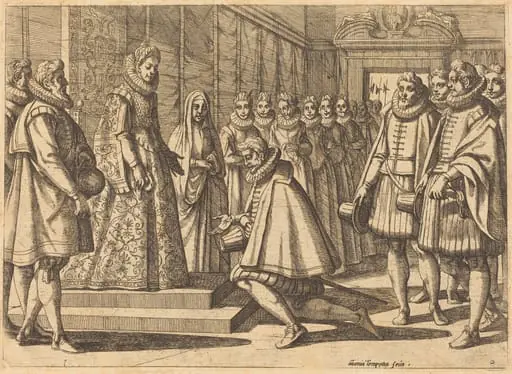 Philip of Spain before Margaret of Austria
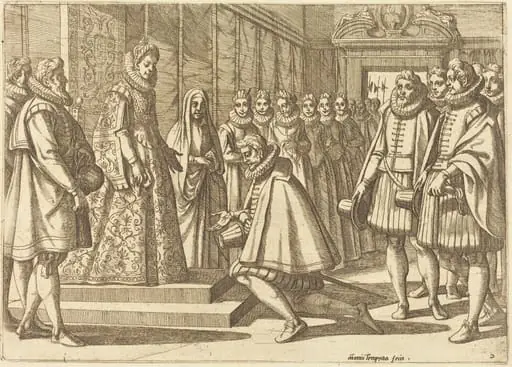 Philip of Spain Before Margaret of Austria
![Margaret of Austria Giving Audience to a Nobleman [verso], by Raffaello Schiaminossi](https://artifactworldgallery.com/img/raffaello-schiaminossi--margaret-of-austria-giving-audience-to-a-nobleman-verso--86ac2347af277f00-w320.webp) Margaret of Austria Giving Audience to a Nobleman [verso]
Margaret of Austria Giving Audience to a Nobleman [verso]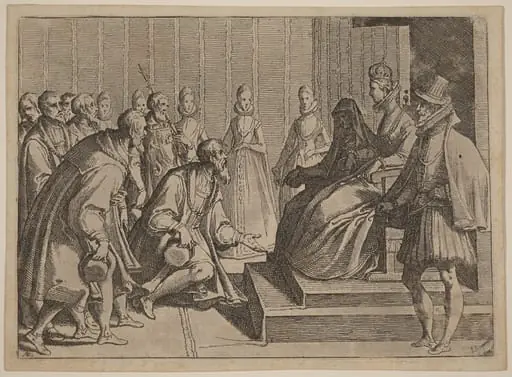 Margaret of Austria Giving Audience to a Nobleman
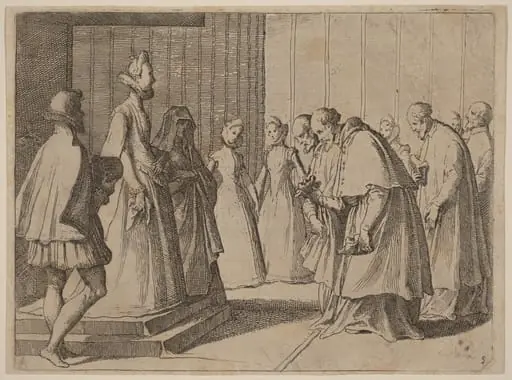 Margaret of Austria Receiving the Homage of Cardinals and Prelates
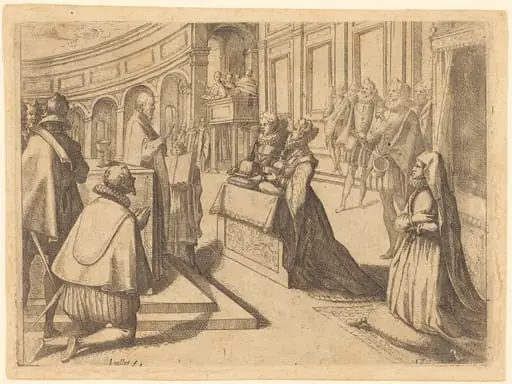 Marriage of Margaret of Austria and Philip III
![Spanish Duke Before Margaret of Austria [verso], by Antonio Tempesta](https://artifactworldgallery.com/img/antonio-tempesta--spanish-duke-before-margaret-of-austria-verso--9bdf15ebc4e5a042-w320.webp) Spanish Duke Before Margaret of Austria [verso]
Spanish Duke Before Margaret of Austria [verso]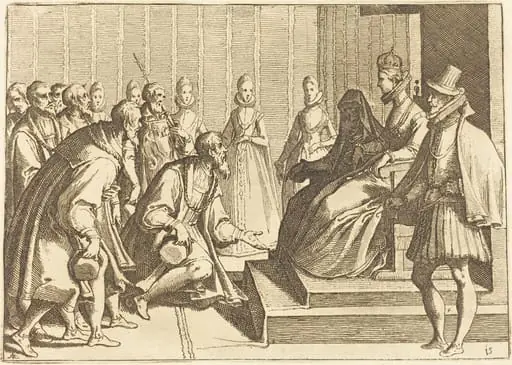 Margaret of Austria Giving Audience to a Nobleman
 The Betrothal of Margaret of Austria to Philip III, King of Spain