Artwork
The Betrothal of Margaret of Austria to Philip III, King of Spain
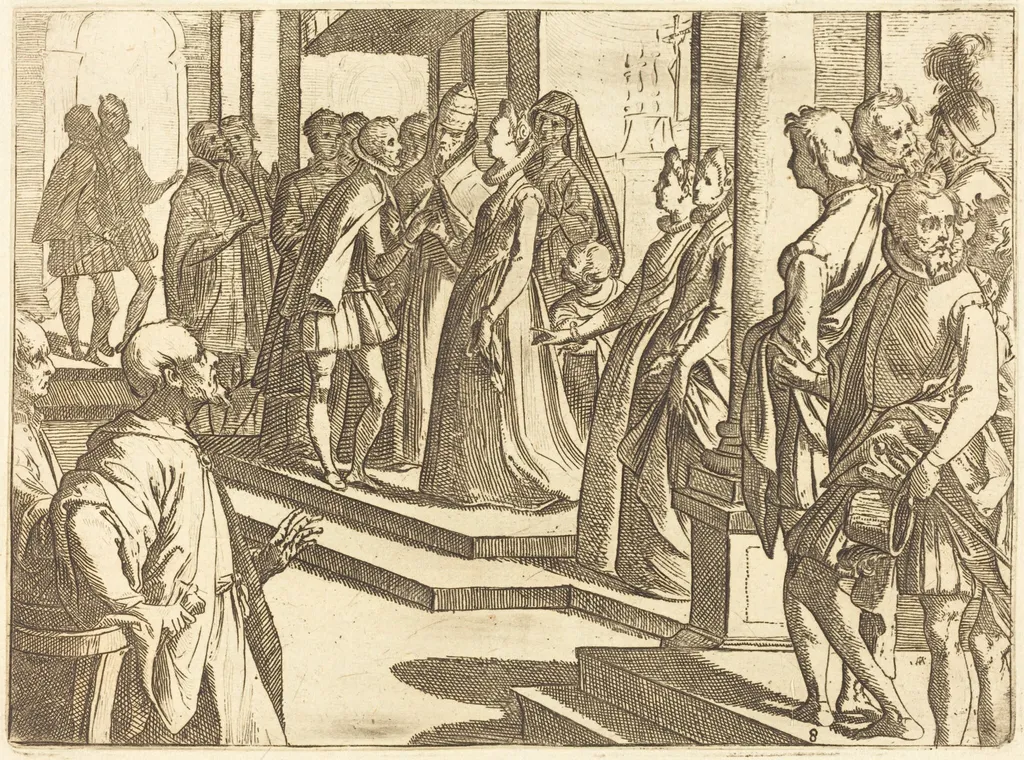
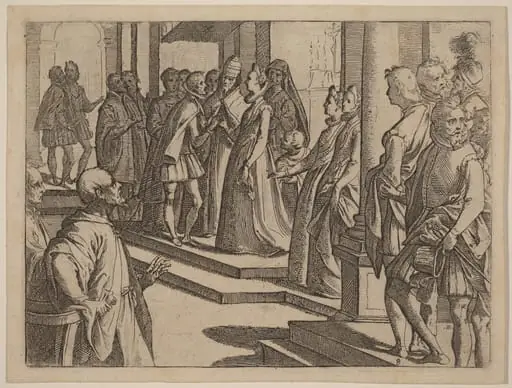
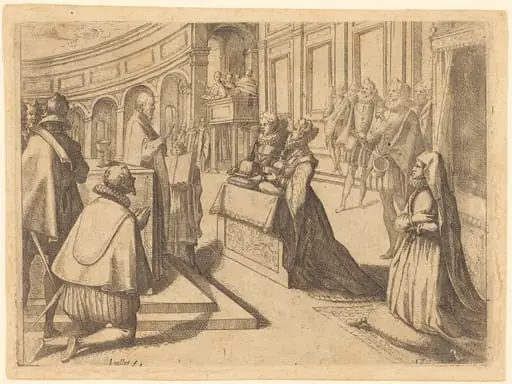
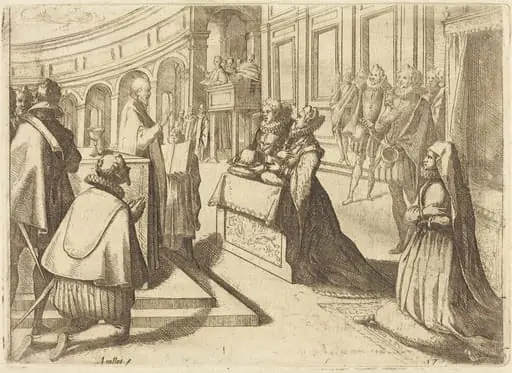
The Betrothal of Margaret of Austria to Philip III, King of Spain is an ink print by the Baroque artist Raffaello Schiaminossi. It dates from 1612 and is held in the collection of the National Gallery of Art.
About this work
Overview
This etching, produced in 1612 by Raffaello Schiaminossi, depicts the formal betrothal of Margaret of Austria to Philip III of Spain. Created as a restrike on laid paper, it belongs to the printmaking tradition of early 17th-century Europe. The work serves as a documentary record of a dynastic union, rendered with precision typical of courtly portraiture in the period.
Subject & Meaning
The scene captures the moment of engagement between two Habsburg heirs, symbolizing the consolidation of political alliances between Austrian and Spanish branches of the family. Their rigid posture and elaborate attire emphasize status over intimacy. The composition avoids emotional expression, instead reinforcing the ceremonial nature of royal marriages as instruments of statecraft.
Technique & Style
Schiaminossi employed etching to achieve fine linear detail, particularly in the textures of fabric, jewelry, and architectural elements. The use of cross-hatching and delicate line work conveys the richness of court dress without color. The style reflects Northern European printmaking conventions, prioritizing clarity and ornamentation over atmospheric depth.
History & Provenance
The original plate was likely commissioned by the Habsburg court to commemorate the 1611 betrothal. This impression is a later restrike, indicating continued interest in the image beyond its initial circulation. Its survival suggests it was preserved in royal or aristocratic collections, possibly used as a diplomatic gift or archival record.
Context
The betrothal occurred during a period of intense Habsburg dynastic strategy, as Spain and Austria sought to strengthen their joint influence across Europe. Such prints were circulated among noble households to affirm alliances and project imperial unity. The emphasis on costume and setting aligns with broader trends in courtly visual propaganda of the time.
Legacy
Though not widely known today, the print contributes to the visual record of early modern European diplomacy. It exemplifies how print media functioned as a tool for political communication, preserving the imagery of royal unions for posterity. Its technical execution reflects the skill of specialist engravers serving aristocratic patrons.
Artist & collection


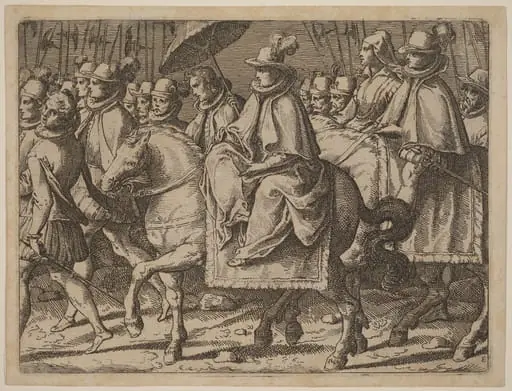 Margaret of Austria on Horseback
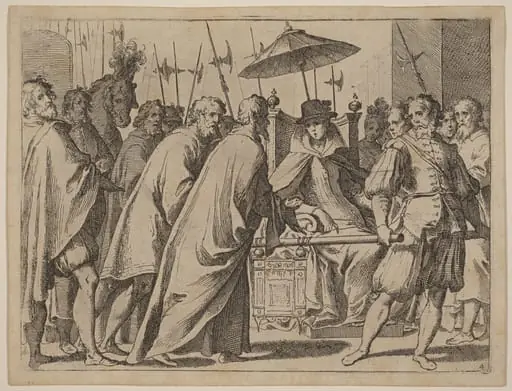 Margaret of Austria Being Carried in a Chaise
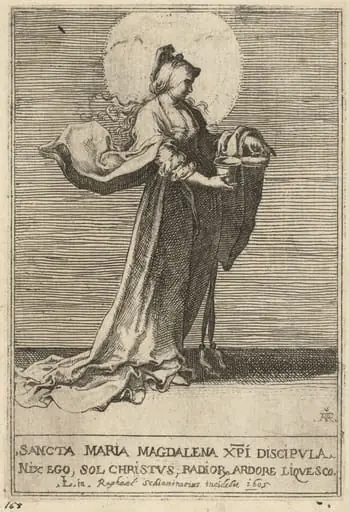 Saint Mary Magdalene
 The Betrothal of Margaret of Austria to Philip III, King of Spain
![The Betrothal of Margaret of Austria to Philip III, King of Spain [verso], by Raffaello Schiaminossi](https://artifactworldgallery.com/img/raffaello-schiaminossi--the-betrothal-of-margaret-of-austria-to-philip-iii-king-of-s--509229b9feb3b80f-w320.webp) The Betrothal of Margaret of Austria to Philip III, King of Spain [verso]
The Betrothal of Margaret of Austria to Philip III, King of Spain [verso]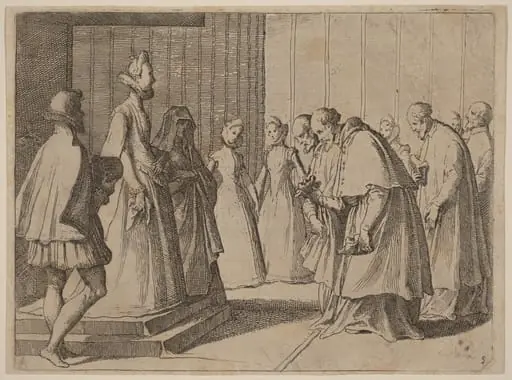 Margaret of Austria Receiving the Homage of Cardinals and Prelates
 Bust of the Virgin
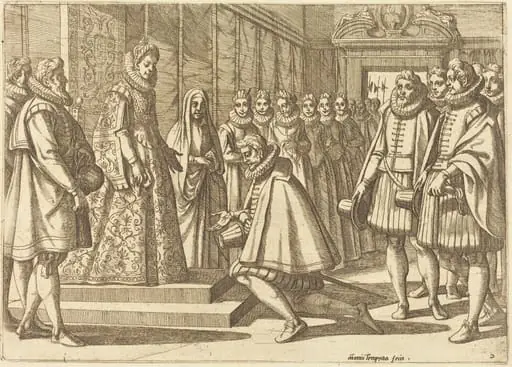
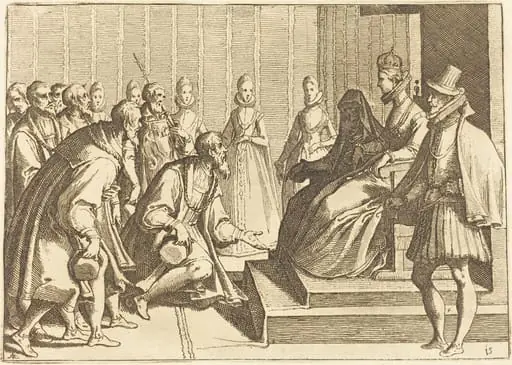 Margaret of Austria Giving Audience to a Nobleman
![Marriage of Margaret of Austria and Philip III [verso], by Jacques Callot](https://artifactworldgallery.com/img/jacques-callot--marriage-of-margaret-of-austria-and-philip-iii-verso--865d26b5b3dbf236-w320.webp)
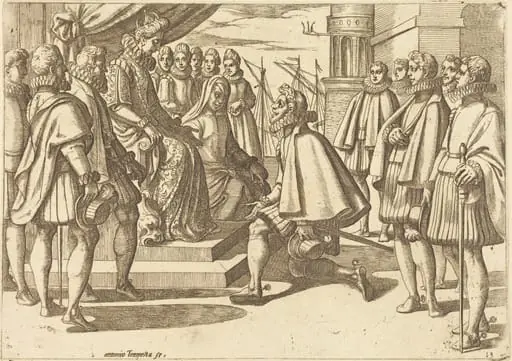
![Spanish Duke Before Margaret of Austria [verso], by Antonio Tempesta](https://artifactworldgallery.com/img/antonio-tempesta--spanish-duke-before-margaret-of-austria-verso--9bdf15ebc4e5a042-w320.webp)