Artwork
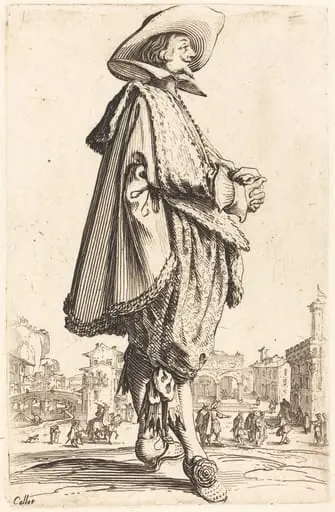
Noble Man with Fur Plastron
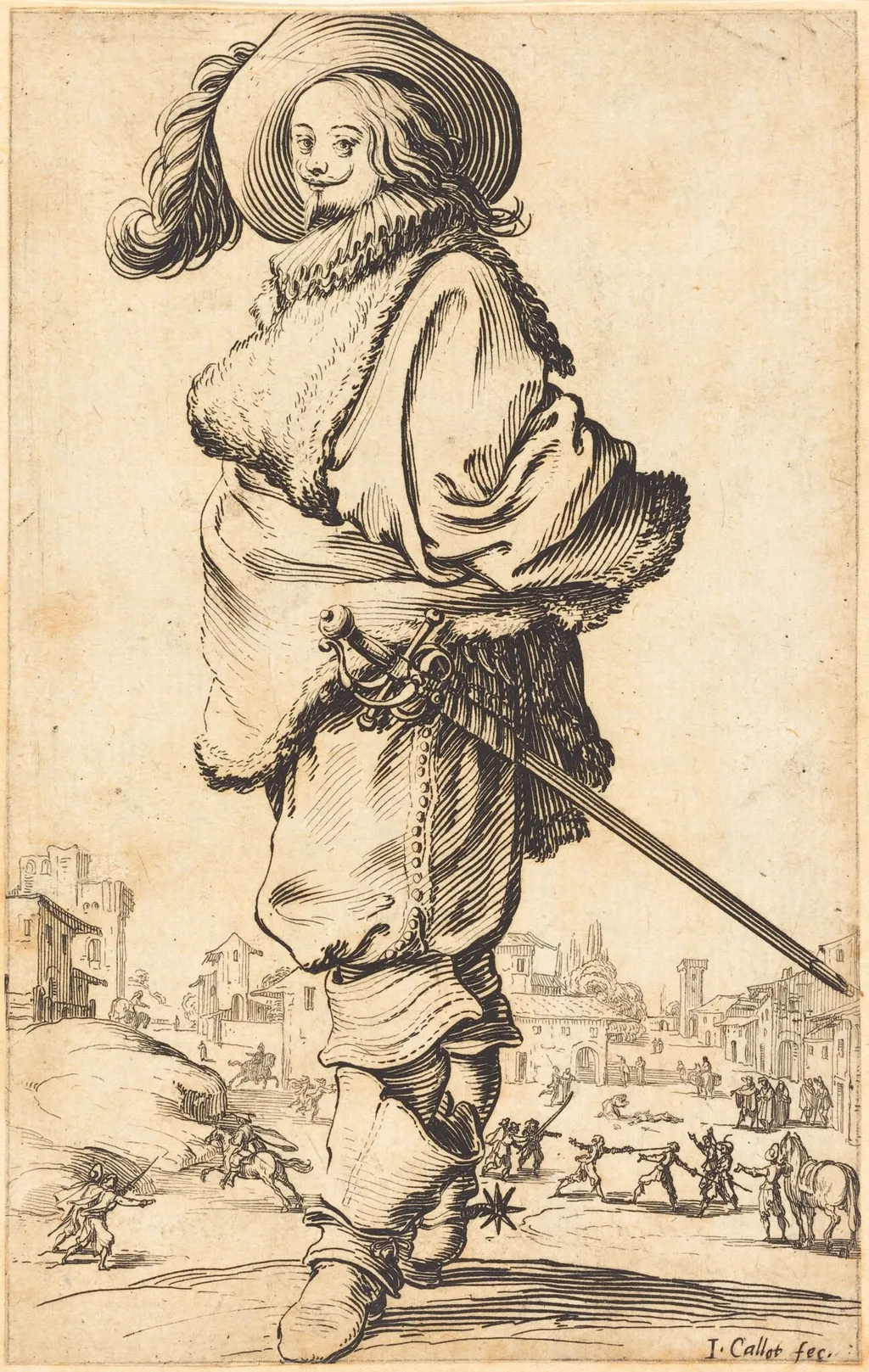
Noble Man with Fur Plastron is an ink print by the Baroque artist Jacques Callot. It dates from 1622 and is held in the collection of the National Gallery of Art.
About this work
Overview
This work exemplifies his precision in rendering costume and environment through the etching technique, emphasizing observation over idealization.
Created around 1622 by Jacques Callot, this etching on laid paper portrays a nobleman in formal attire, standing in a quiet urban setting. Callot, a Lorrainer artist active in the early 17th century, produced over a thousand prints, many capturing the social fabric of his era. This work exemplifies his precision in rendering costume and environment through the etching technique, emphasizing observation over idealization.
Subject & Meaning
The figure is depicted in rich, fur-trimmed garments, a sword at his hip, suggesting aristocratic status. His gaze, directed away from the viewer, implies contemplation or engagement with the scene beyond the frame. The bustling town square behind him anchors the subject within a lived social world, reinforcing the print’s documentary character rather than serving as a symbolic or allegorical portrait.
Technique & Style
Callot employed fine, controlled lines to build texture in the fur, fabric, and architecture, using etching’s capacity for detail. Shading is achieved through cross-hatching and varying line density, creating spatial depth without heavy ink washes. The composition balances the solitary figure against a crowded background, demonstrating his mastery in managing complexity within a small format.
History & Provenance
The print emerged during Callot’s most productive period, when he worked in Florence and Paris, gaining recognition for his technical innovation. While no specific early ownership is documented, such prints circulated among collectors and artists, influencing later generations. Its survival in multiple institutional collections attests to its enduring value as a study in 17th-century printmaking.
Context
In early 17th-century Europe, etching became a favored medium for recording daily life, especially among Northern and French artists. Callot’s work responded to growing interest in portraiture and urban scenes, distinct from religious or mythological themes dominant in painting. This print reflects the rising visibility of the nobility in public spaces, a phenomenon tied to courtly culture and urban expansion.
Legacy
Callot’s detailed etchings set new standards for narrative clarity and technical refinement in printmaking. His approach to capturing ordinary and elite figures alike influenced later artists, including Rembrandt. Though not widely exhibited as a standalone work, this etching remains a representative example of his contribution to the evolution of the medium as a tool for social observation.
Own this work as a print
Artist & collection

Artist
Jacques Callot was a baroque printmaker and draftsman from the Duchy of Lorraine.

 Holy Family at supper
 Restoration of the Aqueduct at Pisa
 Restoration of the Aqueduct at Pisa
 Square in Paris with Many Figures
 Square in Paris with Many Figures
 Horsemen Attacked by Robbers
 HOW WILL A COVERED PART BE CORRECTED?HOW WIKA A COVERED HEART DEED CORRECTED?
![Christ Walking on the Water [second plate], by Jacques Callot](https://artifactworldgallery.com/img/jacques-callot--christ-walking-on-the-water-second-plate--2069f3bfe4cb2126-w320.webp) Christ Walking on the Water [second plate]
Christ Walking on the Water [second plate]
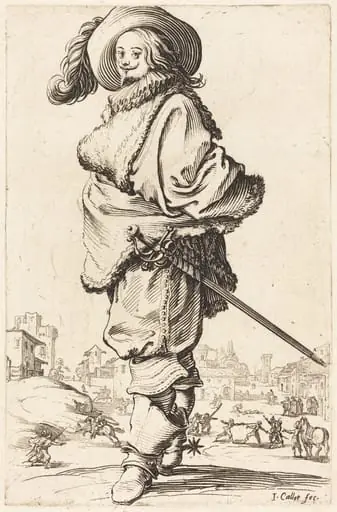 Noble Man with Fur Plastron
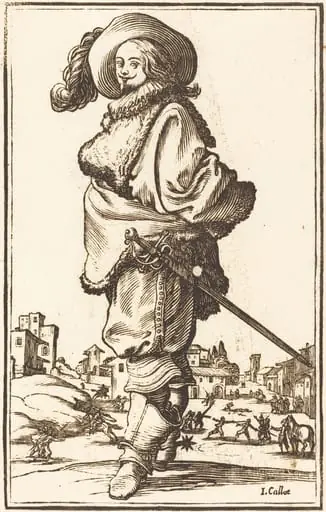 Noble Man with Fur Plastron
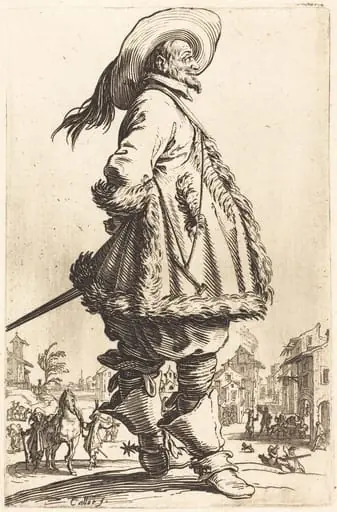 Noble Man with Mantle Trimmed in Fur, Holding his Hands Behind his Back
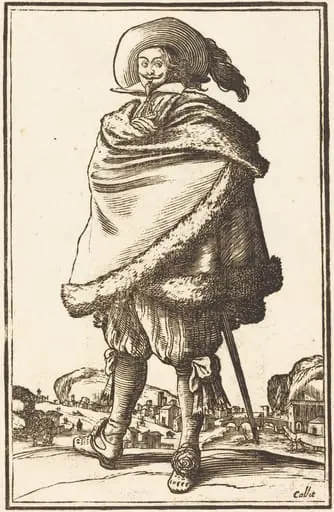 Noble Man Wrapped in a Mantle Trimmed with Fur
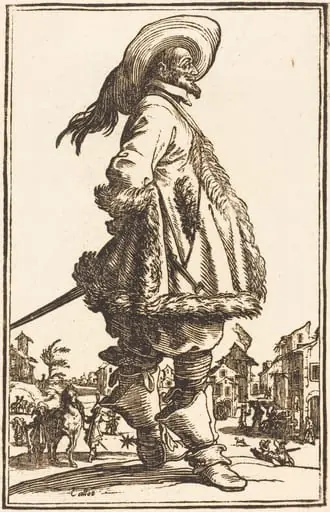 Noble Man with Mantle Trimmed in Fur, Holding his Hands Behind his Back
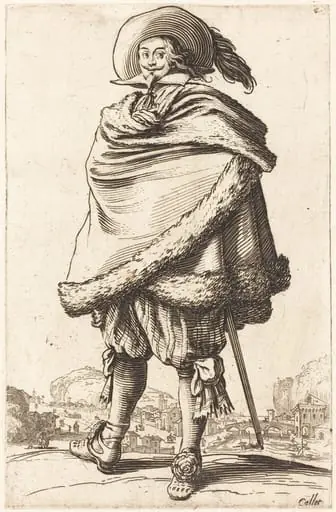 Noble Man Wrapped in a Mantle Trimmed with Fur
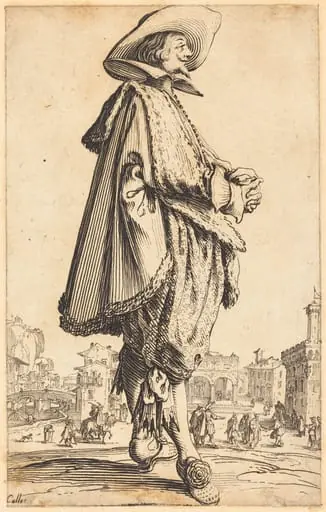 Noble Man with Folded Hands
 Noble Man with Folded Hands