Artwork
Noble Man with Folded Hands
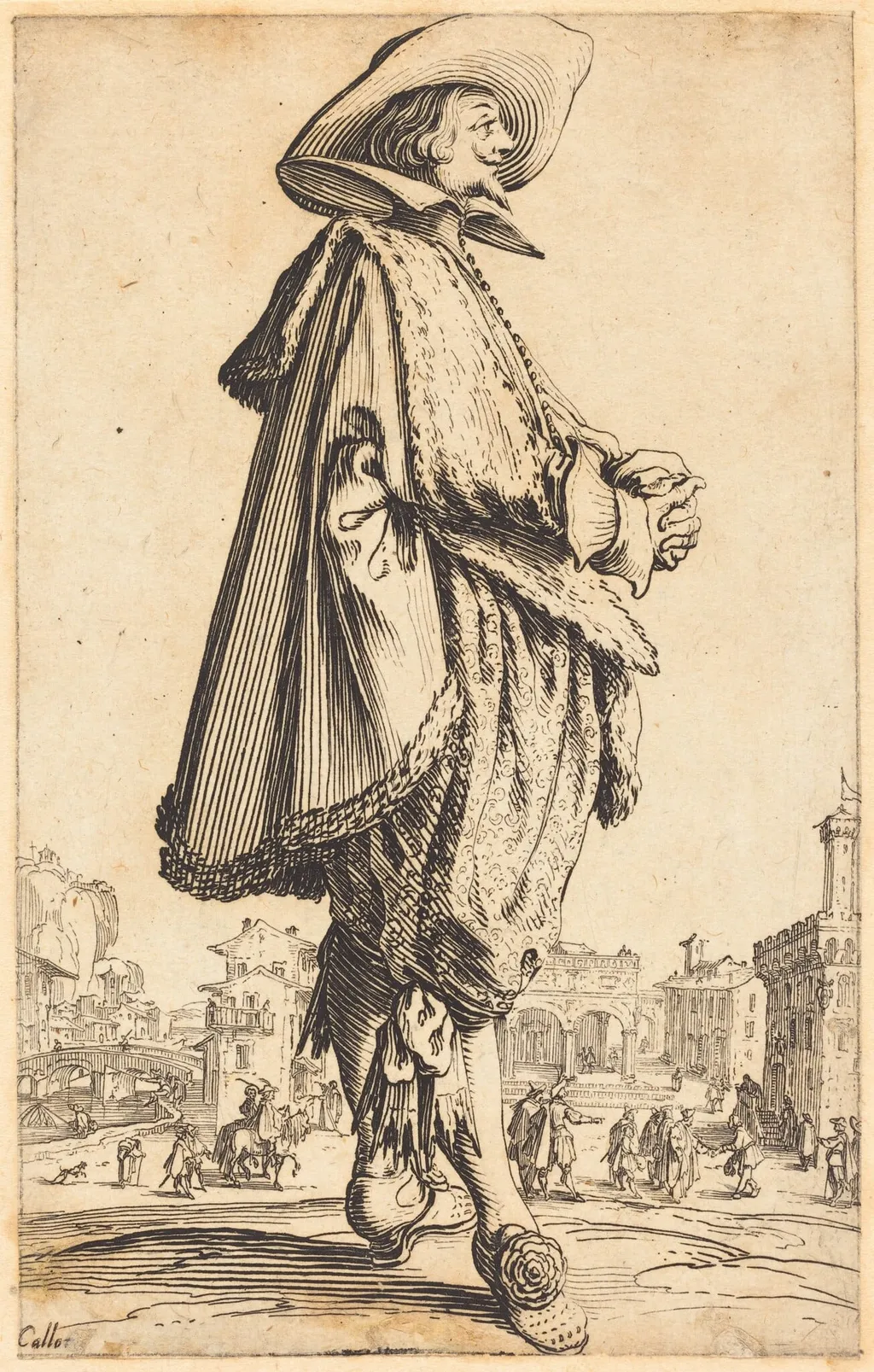
Noble Man with Folded Hands is an ink print by the Baroque artist Jacques Callot. It dates from 1622 and is held in the collection of the National Gallery of Art.
About this work
Overview
Executed in fine lines on laid paper, the work exemplifies Callot’s precision in capturing individual portraiture within a broader social landscape.
Created around 1622, this etching by Jacques Callot depicts a solitary nobleman standing rigidly on an urban street. Executed in fine lines on laid paper, the work exemplifies Callot’s precision in capturing individual portraiture within a broader social landscape. As one of over 1,400 prints he produced, it reflects his focus on the visual language of class and demeanor in early 17th-century Europe.
Subject & Meaning
The figure, dressed in a long, patterned coat and wide-brimmed hat, holds his hands folded within his sleeves—a gesture associated with composure and social restraint. His stiff posture and isolated position suggest a man aware of his status, yet detached from the bustling world behind him. The image conveys quiet dignity rather than action, aligning with ideals of aristocratic self-possession in Baroque society.
Technique & Style
Callot employed etching to achieve fine, controlled lines that define the texture of fabric and the brim of the hat with sharp clarity. The coat’s folds are rendered with deliberate precision, while the background cityscape is simplified into loose, atmospheric strokes. This contrast between detailed foreground and sparse setting directs focus to the figure, enhancing the sense of stillness and formality.
History & Provenance
The print originates from Callot’s prolific period in Nancy, where he worked under the patronage of the Dukes of Lorraine. Though specific early ownership records are sparse, the work aligns with his broader practice of documenting urban life and social types. It was likely circulated among collectors and artists familiar with his reputation for technical mastery and observational depth.
Context
In the early 1600s, etching emerged as a favored medium for capturing the nuances of daily life across Europe. Callot’s work responded to growing interest in portraiture beyond royalty, extending to minor nobility and civic figures. This print reflects a trend toward intimate, character-driven imagery, distinct from grand historical or religious themes dominant in painting of the era.
Legacy
Callot’s attention to individual presence within urban environments influenced later printmakers across France and the Netherlands. His ability to merge precise portraiture with suggestive backgrounds set a precedent for genre scenes in printmaking. While not widely reproduced, this etching remains a quiet example of his contribution to the visual documentation of social hierarchy in the Baroque period.
Artist & collection

Artist
Jacques Callot was a baroque printmaker and draftsman from the Duchy of Lorraine.

 Holy Family at supper
 Restoration of the Aqueduct at Pisa
 Restoration of the Aqueduct at Pisa
 Square in Paris with Many Figures
 Square in Paris with Many Figures
 Horsemen Attacked by Robbers
 HOW WILL A COVERED PART BE CORRECTED?HOW WIKA A COVERED HEART DEED CORRECTED?
![Christ Walking on the Water [second plate], by Jacques Callot](https://artifactworldgallery.com/img/jacques-callot--christ-walking-on-the-water-second-plate--2069f3bfe4cb2126-w320.webp) Christ Walking on the Water [second plate]
Christ Walking on the Water [second plate]
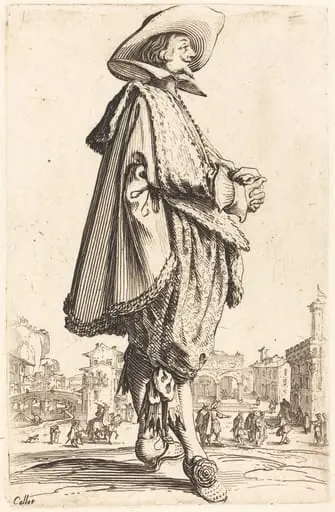 Noble Man with Folded Hands
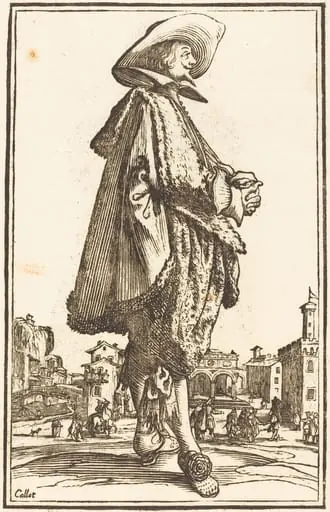 Noble Man with Folded Hands
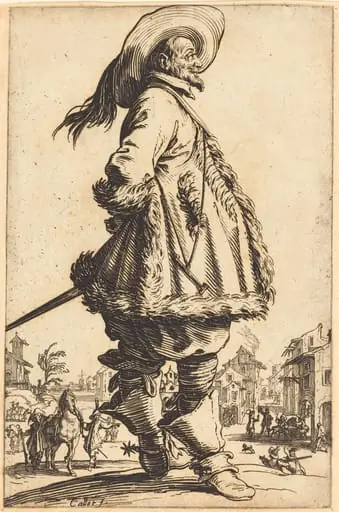 Noble Man with Mantle Trimmed in Fur, Holding his Hands Behind his Back
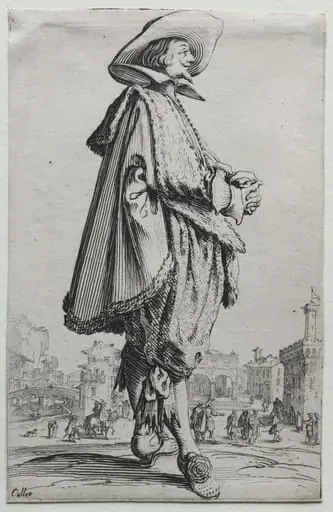 La Noblesse: Gentleman Standing in Profile with Clasped Hands
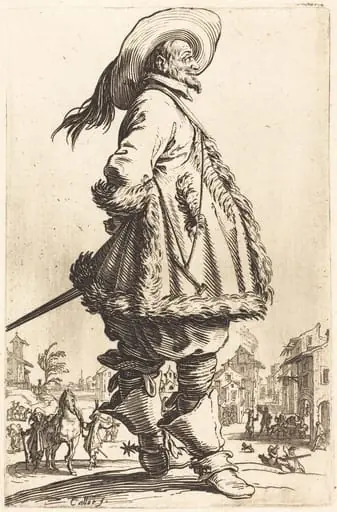 Noble Man with Mantle Trimmed in Fur, Holding his Hands Behind his Back
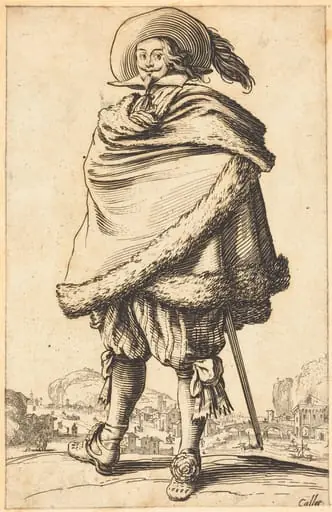 Noble Man Wrapped in a Mantle Trimmed with Fur
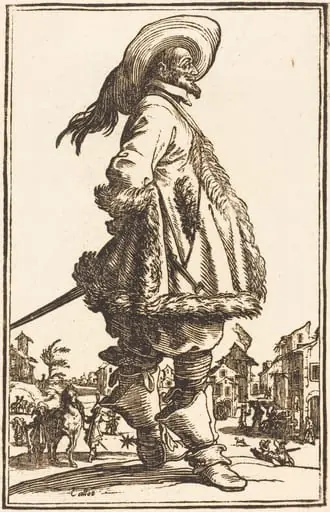 Noble Man with Mantle Trimmed in Fur, Holding his Hands Behind his Back
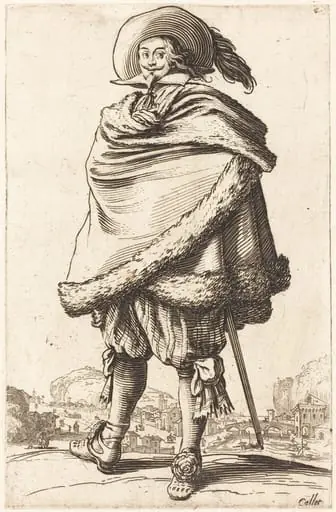 Noble Man Wrapped in a Mantle Trimmed with Fur
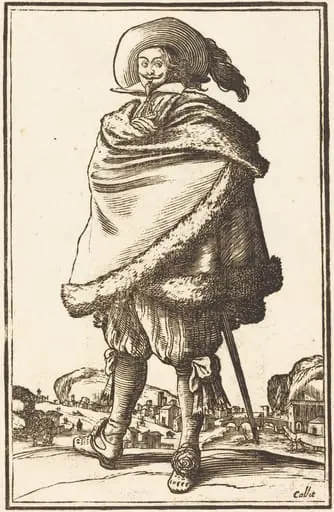 Noble Man Wrapped in a Mantle Trimmed with Fur