Artwork
Noble Man Wrapped in a Mantle Trimmed with Fur
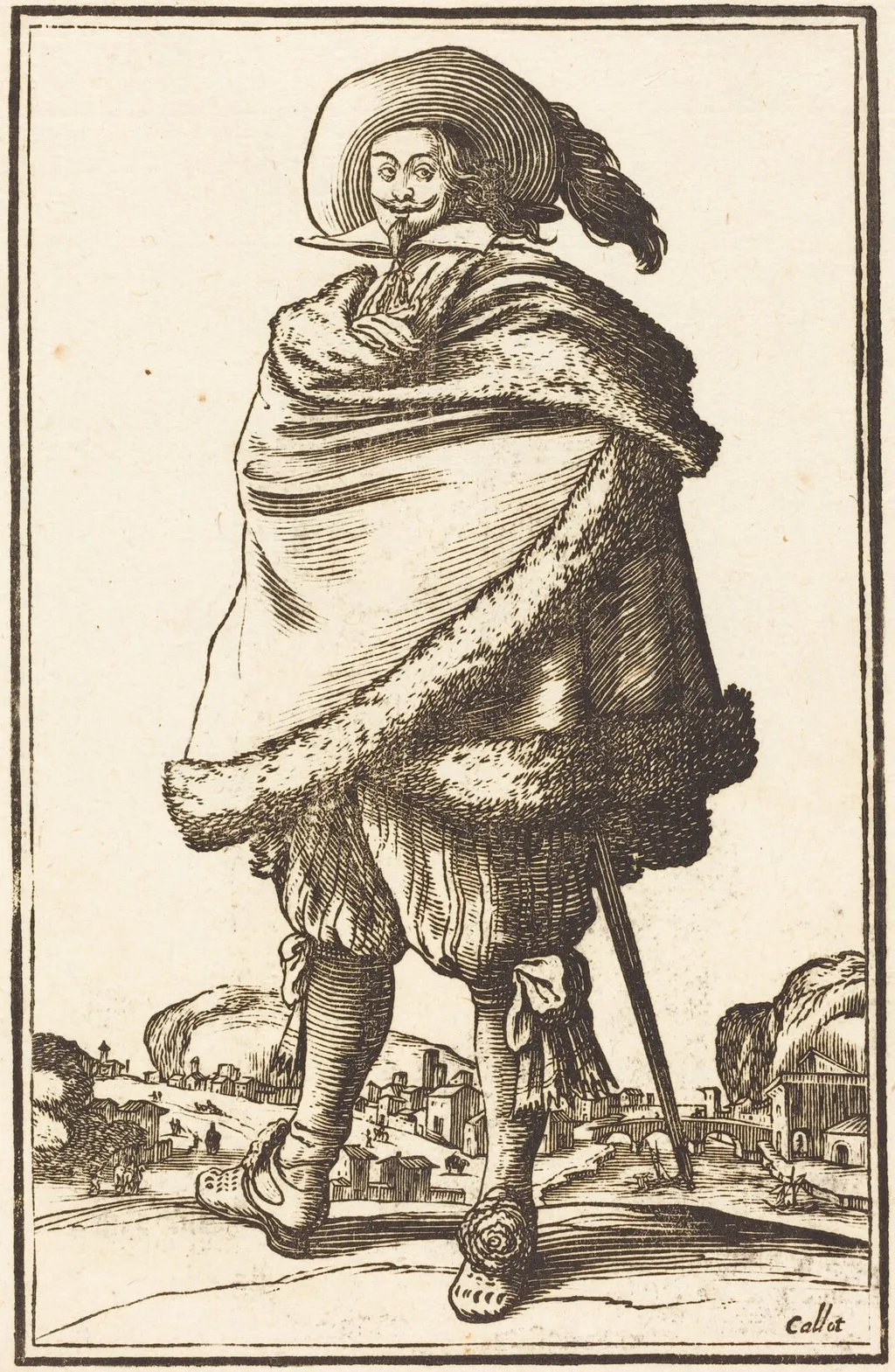
Noble Man Wrapped in a Mantle Trimmed with Fur is an ink print by the Baroque artist French 17th Century. It dates from 1623 and is held in the collection of the National Gallery of Art.
About this work
Overview
The work is a woodcut print on laid paper depicting a solitary figure clad in a fur‑trimmed mantle, standing atop a rise that looks over a modest settlement. The composition is framed by a light beige field edged with a darker border, and the figure gazes directly at the viewer, his facial hair and hat clearly rendered.
Subject & Meaning
The central character is presented as a noble or military figure, indicated by his wide‑brimmed hat, sword at his side, and elaborate footwear adorned with rose motifs. His elevated position above the town may suggest authority or guardianship, while the direct eye contact invites a personal engagement with the viewer.
Technique & Style
Executed with the woodcut method, the image shows the characteristic bold lines and high contrast of the medium. The fine detailing of the mantle’s fur trim, the facial features, and the stylized townscape demonstrates a skilled hand, typical of Baroque‑period printmaking that emphasized dramatic presence within a relatively flat plane.
History & Provenance
The print belongs to the broader corpus of Baroque woodcuts, a period when the technique was widely employed for both illustrative and decorative purposes. While specific ownership records are not provided, its format and subject align with prints circulated among aristocratic or courtly audiences in the 17th‑century European market.
Context
During the Baroque era, prints often served to disseminate images of power, chivalry, and courtly fashion. The inclusion of luxurious elements such as fur, a sword, and ornamented shoes reflects contemporary tastes for opulent attire and the visual language of status.
Legacy
Woodcuts like this one illustrate the technical possibilities of the medium before the rise of engraving and etching, offering insight into how artists conveyed narrative and social cues through line work. The piece remains a reference point for studying the intersection of portraiture and landscape in early modern print culture.
Artist & collection

Artist
Seventeenth-century French printmakers turned ink into story. Their tools were burin and acid, paper their stage. Look at the Beggar Woman with Rosary (1622), etched on laid paper, her hands folded around faith, or The…

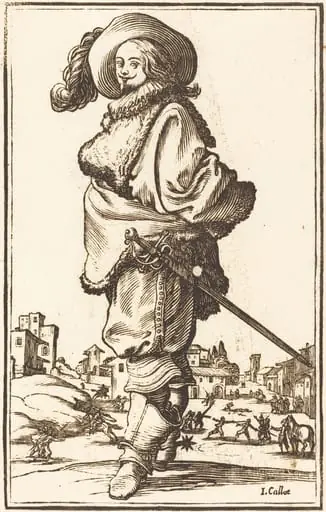 Noble Man with Fur Plastron
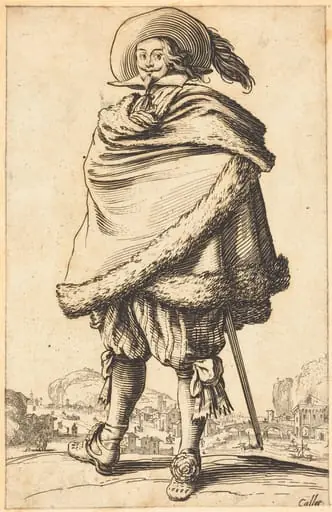 Noble Man Wrapped in a Mantle Trimmed with Fur
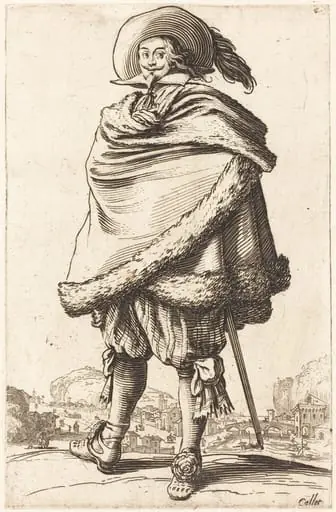 Noble Man Wrapped in a Mantle Trimmed with Fur
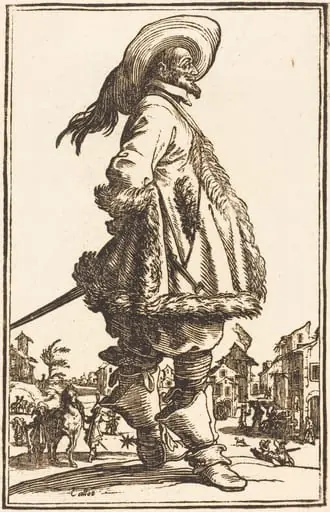 Noble Man with Mantle Trimmed in Fur, Holding his Hands Behind his Back
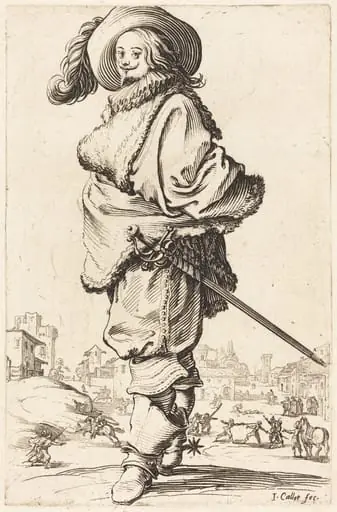 Noble Man with Fur Plastron
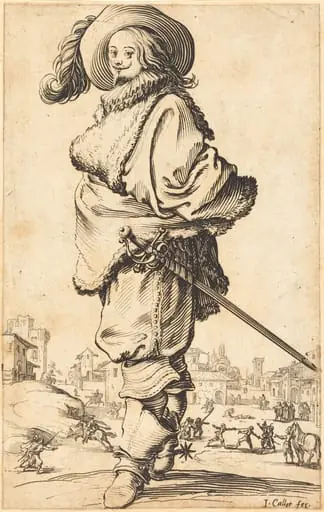 Noble Man with Fur Plastron
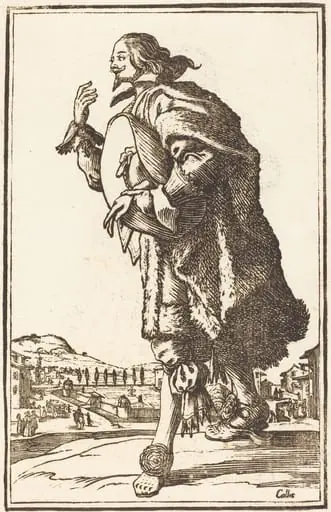 Noble Man with Felt Hat, Bowing
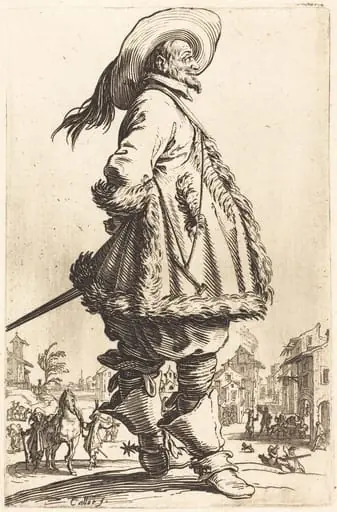 Noble Man with Mantle Trimmed in Fur, Holding his Hands Behind his Back
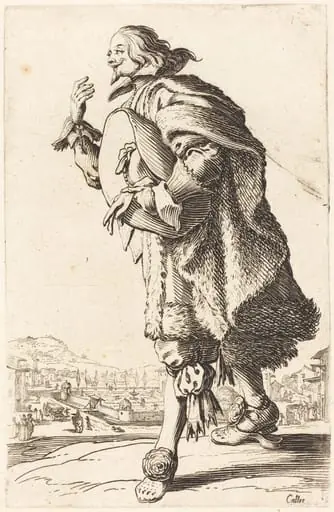 Noble Man with Felt Hat, Bowing
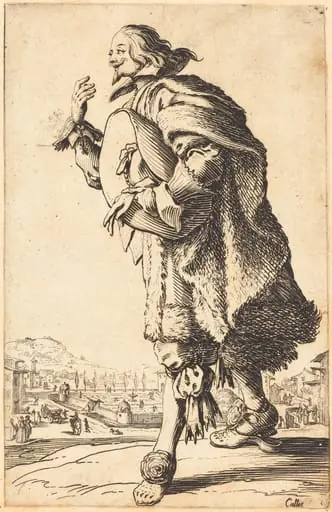 Noble Man with Felt Hat, Bowing
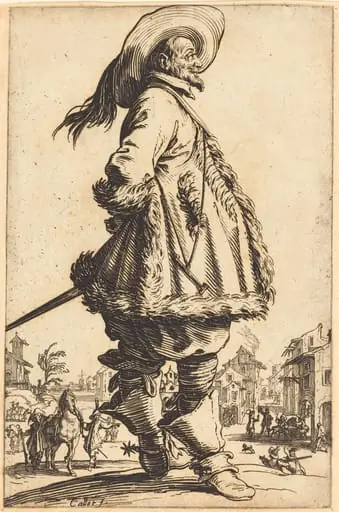 Noble Man with Mantle Trimmed in Fur, Holding his Hands Behind his Back