Artwork
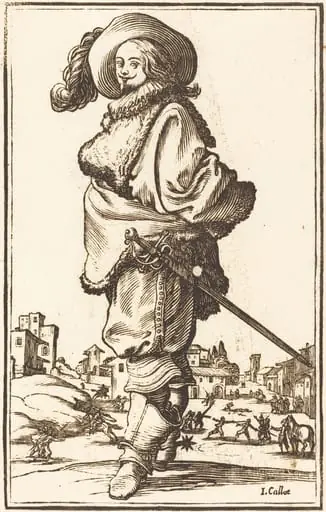
Noble Man Wrapped in a Mantle Trimmed with Fur
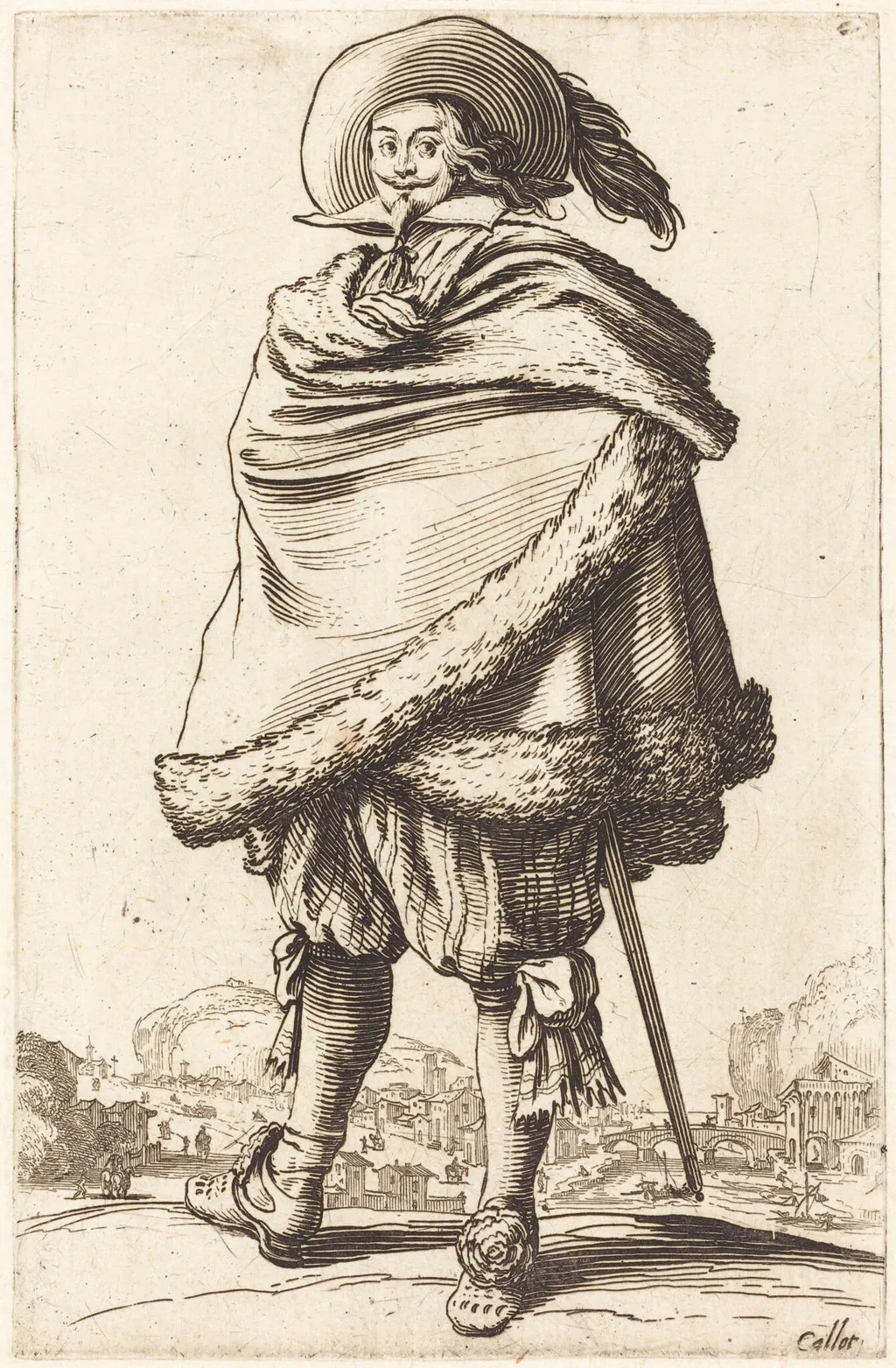
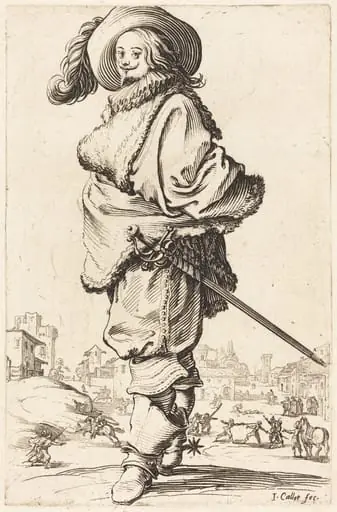
Noble Man Wrapped in a Mantle Trimmed with Fur is an ink print by the Baroque artist Jacques Callot. It dates from 1622 and is held in the collection of the National Gallery of Art.
About this work
Overview
As one of over 1,400 prints he produced, it reflects his mastery of the etching technique and his focus on capturing the nuances of social appearance.
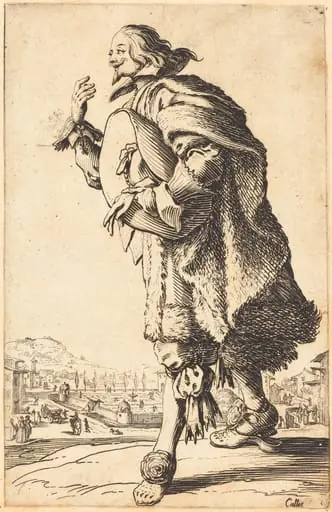
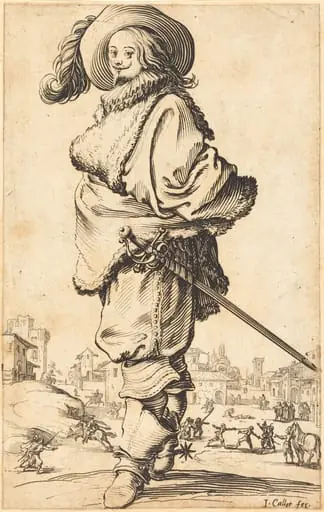
Created around 1622, this etching on laid paper by Jacques Callot depicts a dignified figure enveloped in a heavy fur-trimmed mantle. As one of over 1,400 prints he produced, it reflects his mastery of the etching technique and his focus on capturing the nuances of social appearance. The composition balances intimate portraiture with a distant, minimally rendered landscape, characteristic of his approach to printmaking.
Subject & Meaning
The figure is a man of means, identified by his luxurious fur-lined cloak, wide-brimmed hat, and walking stick—symbols of status and leisure. His sideways stance and composed posture suggest a moment of pause, perhaps in transit or observation. The inclusion of a small town behind him implies a connection between individual identity and the broader social environment, without overt narrative or symbolism.
Technique & Style
Callot employed fine, controlled etching lines to render the dense texture of fur and the deep folds of fabric, using ink retention in scratched grooves to enhance tonal depth. The background town is rendered with loose, rapid strokes, creating a shallow, stage-like space that contrasts with the detailed foreground. This juxtaposition highlights his ability to manipulate scale and detail for visual emphasis.
History & Provenance
Callot, born in the Duchy of Lorraine in 1592, worked primarily in Florence and Paris, where he gained recognition for his technical innovation in etching. This print belongs to a series of character studies from his early career, likely made for private collectors rather than public sale. Its survival in good condition reflects its early circulation among connoisseurs of Northern European prints.
Context
In early 17th-century Europe, etching emerged as a favored medium for recording social types and urban life. Callot’s work aligned with broader trends in portraiture that valued observation over idealization. His depictions of nobility, soldiers, and commoners offered a documentary-like record of contemporary society, distinct from the grandeur of painted court portraits.
Legacy
Callot’s precise line work and compositional economy influenced generations of printmakers, particularly in the Netherlands and France. This etching exemplifies his contribution to elevating etching as a medium for nuanced observation. While not widely exhibited in his lifetime, his studies of character and costume became foundational references for later artists exploring social realism in print.
Artist & collection
Artist
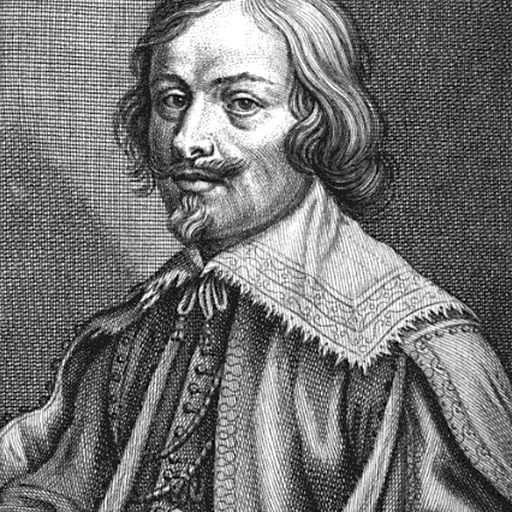
Jacques Callot was a baroque printmaker and draftsman from the Duchy of Lorraine.

 Holy Family at supper
 Restoration of the Aqueduct at Pisa
 Restoration of the Aqueduct at Pisa
 Square in Paris with Many Figures
 Square in Paris with Many Figures
 Horsemen Attacked by Robbers
 HOW WILL A COVERED PART BE CORRECTED?HOW WIKA A COVERED HEART DEED CORRECTED?
![Christ Walking on the Water [second plate], by Jacques Callot](https://artifactworldgallery.com/img/jacques-callot--christ-walking-on-the-water-second-plate--2069f3bfe4cb2126-w320.webp) Christ Walking on the Water [second plate]
Christ Walking on the Water [second plate]
 Noble Man Wrapped in a Mantle Trimmed with Fur
 Noble Man Wrapped in a Mantle Trimmed with Fur
 Noble Man with Fur Plastron
 Noble Man with Felt Hat, Bowing
 Noble Man with Felt Hat, Bowing
 Noble Man with Folded Hands
 Noble Man with Fur Plastron
 Noble Man with Fur Plastron
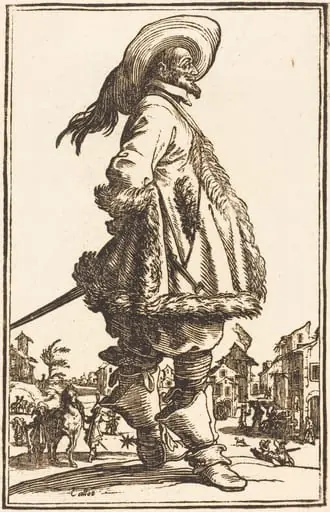 Noble Man with Mantle Trimmed in Fur, Holding his Hands Behind his Back
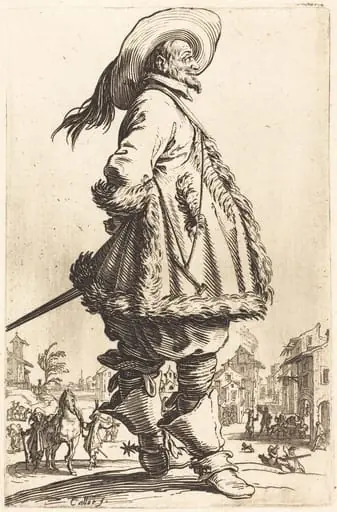 Noble Man with Mantle Trimmed in Fur, Holding his Hands Behind his Back