Artwork
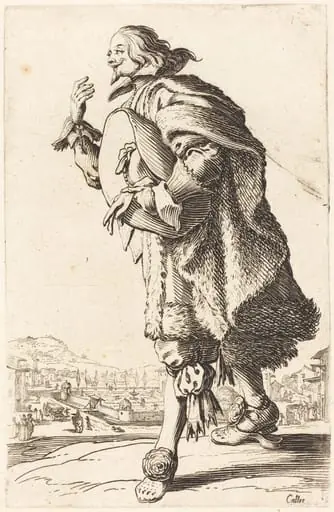
Noble Man Wrapped in a Mantle Trimmed with Fur
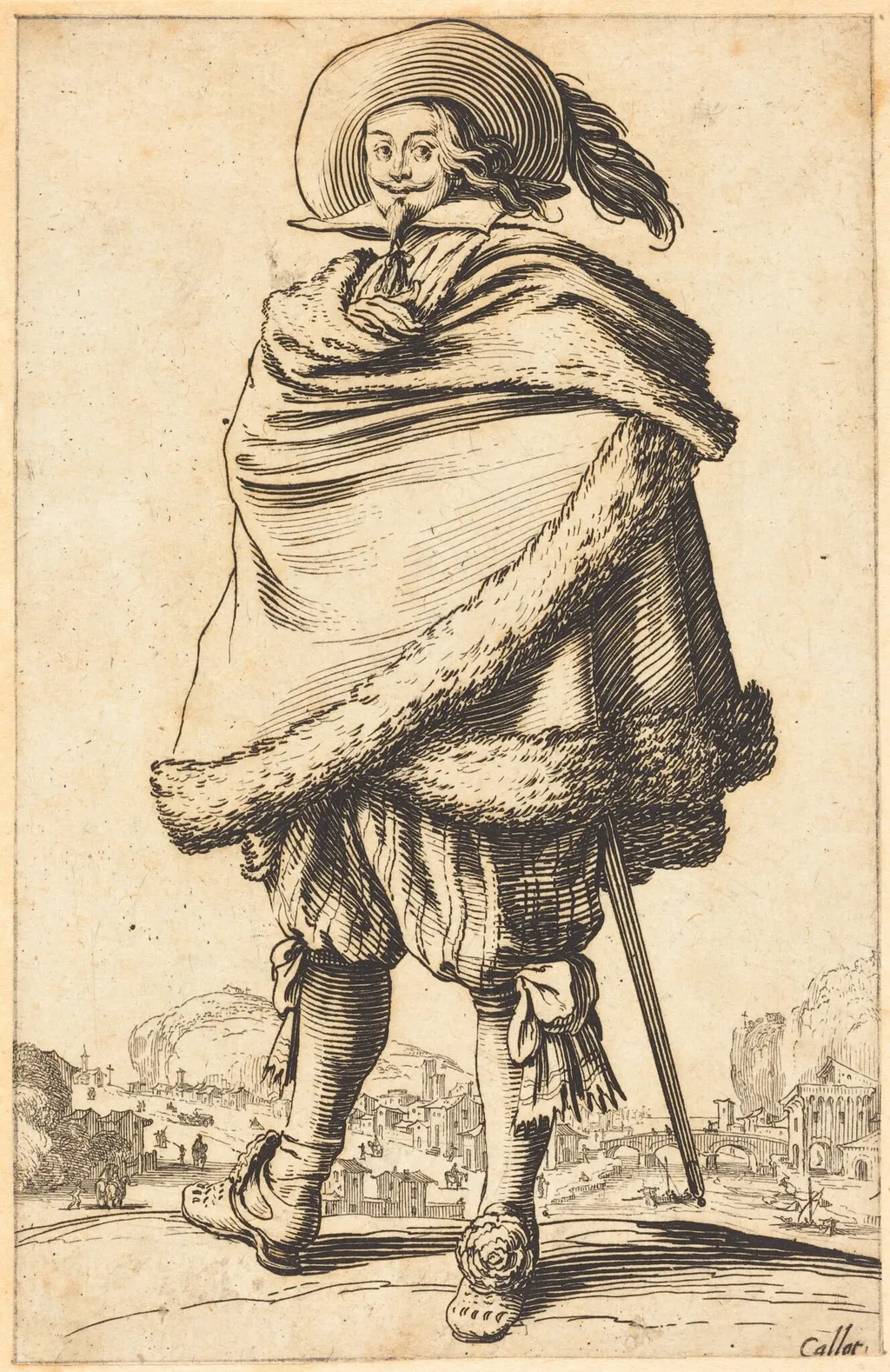
Noble Man Wrapped in a Mantle Trimmed with Fur is an ink print by the Baroque artist Jacques Callot. It dates from 1622 and is held in the collection of the National Gallery of Art.
About this work
Overview
The work belongs to a broader series capturing the visual culture of early modern Europe, emphasizing attire, gesture, and environment as markers of identity.
Created around 1622, this etching by Jacques Callot portrays a nobleman in formal 17th-century dress, rendered in fine lines on laid paper. As one of over 1,400 prints by the Lorrainer artist, it exemplifies his focus on documenting social types through detailed, intimate portraiture. The work belongs to a broader series capturing the visual culture of early modern Europe, emphasizing attire, gesture, and environment as markers of identity.
Subject & Meaning
The figure is depicted as a man of means, clad in a fur-lined mantle and a feathered hat, with a sword at his side—symbols of aristocratic status and martial bearing. His hand rests on his chest, and his gaze turns away from the viewer, suggesting introspection or quiet authority. The composition avoids theatricality, instead conveying dignity through restraint, aligning with ideals of noble comportment in early Baroque society.
Technique & Style
Callot employed fine, controlled etching lines to model form and texture, particularly in the folds of the mantle and the grain of the fur. Shading is achieved through hatching and cross-hatching, lending depth without heavy ink. The faint background landscape, rendered with minimal strokes, grounds the figure in a tangible space. His precision in line work distinguishes this print as a refined example of Baroque graphic art.
History & Provenance
The print emerged during Callot’s mature period in Florence, where he worked for the Medici court and absorbed Italian artistic influences. While its early ownership is undocumented, it entered institutional collections in the 19th century as part of broader efforts to preserve European printmaking. Its survival reflects the enduring interest in Callot’s observational approach to social portraiture.
Context
In early 17th-century Europe, portraiture in print form served both as personal memento and social record. Callot’s etchings, including this one, reflect a shift from idealized nobility to observed individuality. His focus on dress, posture, and setting aligns with broader trends in Northern European print culture, where everyday detail became a vehicle for cultural documentation.
Legacy
Callot’s prints influenced generations of draftsmen and printmakers through their technical rigor and attention to social nuance. This etching, like others in his oeuvre, contributed to the elevation of etching as a medium for serious portraiture, moving beyond reproduction toward expressive observation. His work remains a reference for historians studying the visual language of early modern European elites.
Artist & collection

Artist
Jacques Callot was a baroque printmaker and draftsman from the Duchy of Lorraine.

 Holy Family at supper
 Restoration of the Aqueduct at Pisa
 Restoration of the Aqueduct at Pisa
 Square in Paris with Many Figures
 Square in Paris with Many Figures
 Horsemen Attacked by Robbers
 HOW WILL A COVERED PART BE CORRECTED?HOW WIKA A COVERED HEART DEED CORRECTED?
![Christ Walking on the Water [second plate], by Jacques Callot](https://artifactworldgallery.com/img/jacques-callot--christ-walking-on-the-water-second-plate--2069f3bfe4cb2126-w320.webp) Christ Walking on the Water [second plate]
Christ Walking on the Water [second plate]
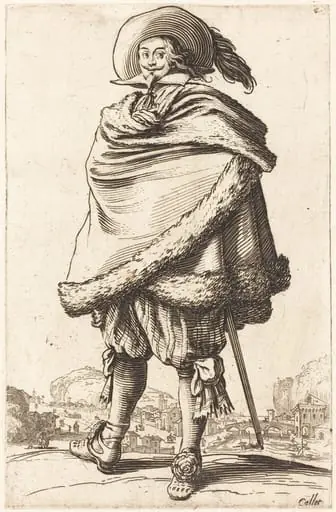 Noble Man Wrapped in a Mantle Trimmed with Fur
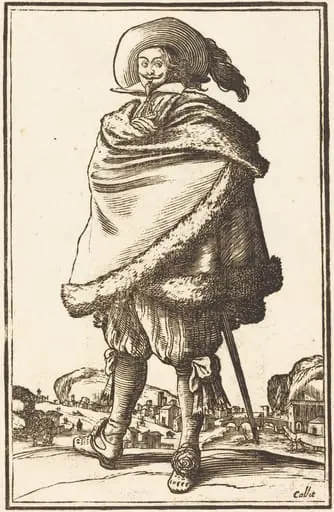 Noble Man Wrapped in a Mantle Trimmed with Fur
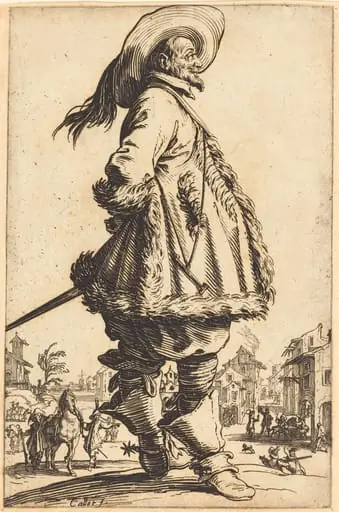 Noble Man with Mantle Trimmed in Fur, Holding his Hands Behind his Back
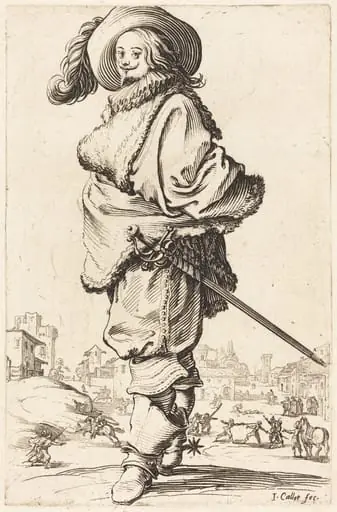 Noble Man with Fur Plastron
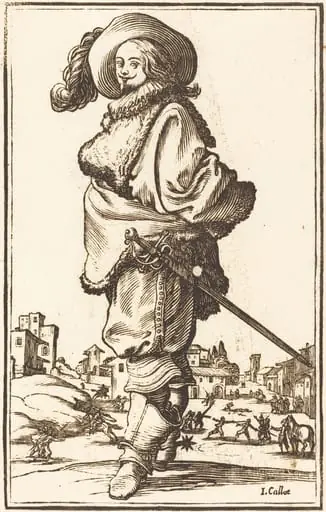 Noble Man with Fur Plastron
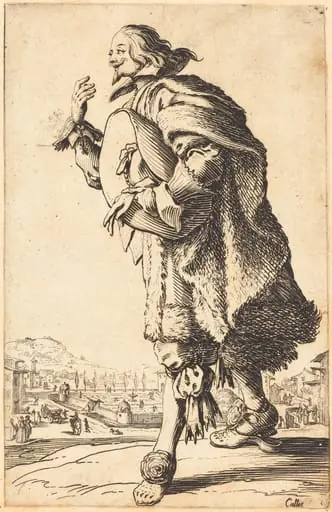 Noble Man with Felt Hat, Bowing
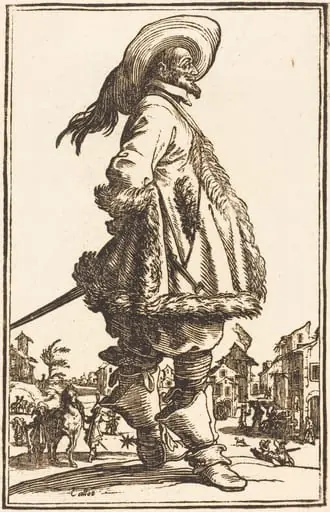 Noble Man with Mantle Trimmed in Fur, Holding his Hands Behind his Back
 Noble Man with Felt Hat, Bowing
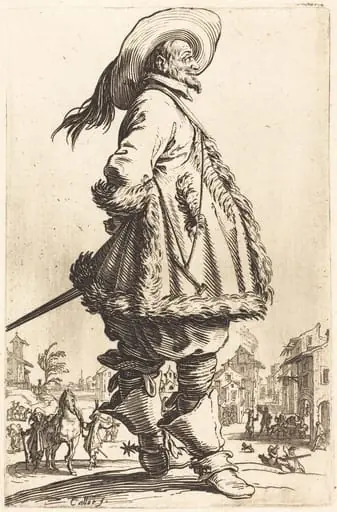 Noble Man with Mantle Trimmed in Fur, Holding his Hands Behind his Back
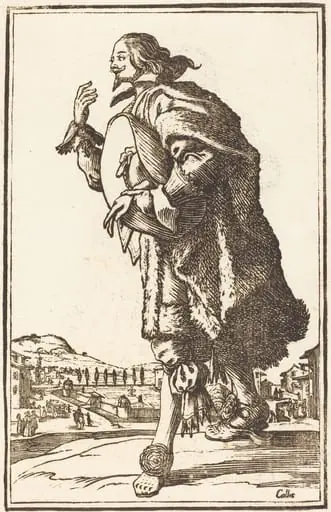 Noble Man with Felt Hat, Bowing
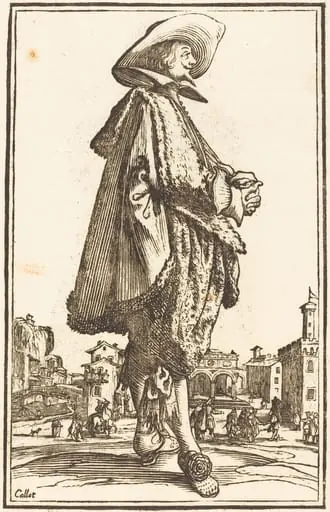 Noble Man with Folded Hands