Artwork
Noble Man with Folded Hands
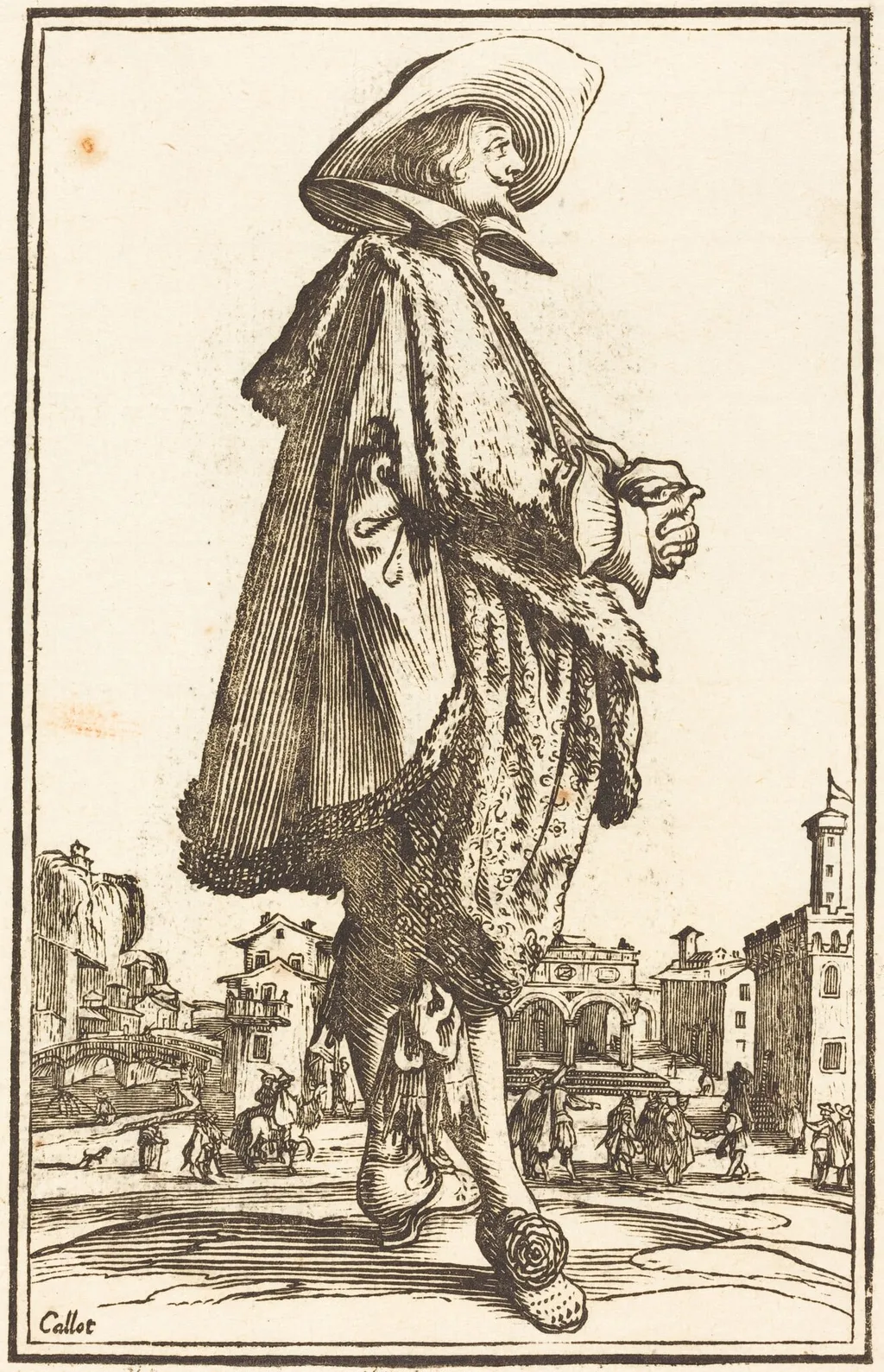
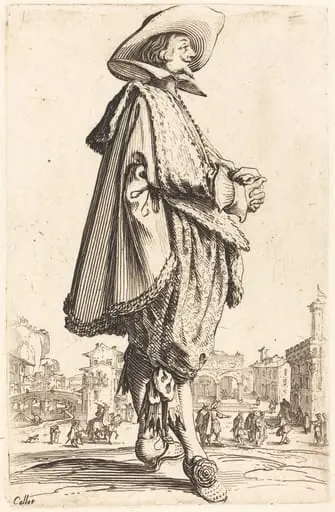
Noble Man with Folded Hands is an ink print by the Baroque artist French 17th Century. It dates from 1623 and is held in the collection of the National Gallery of Art. This woodcut on laid paper depicts a slender, formally dressed man standing in an urban setting.
About this work
Overview
Rendered with precise, angular lines, the figure stands out against a detailed background of city architecture and passing pedestrians.
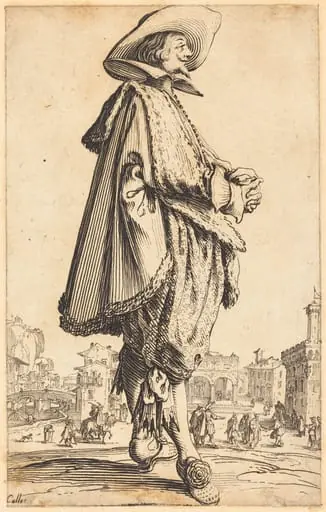
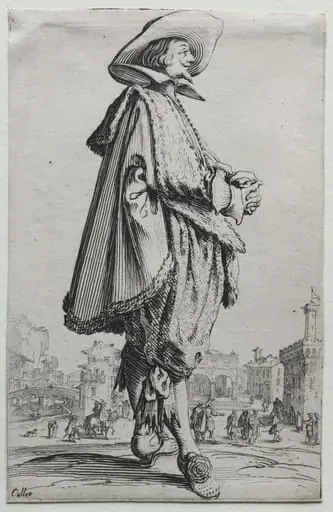
This woodcut on laid paper depicts a slender, formally dressed man standing in an urban setting. Rendered with precise, angular lines, the figure stands out against a detailed background of city architecture and passing pedestrians. The print’s textured surface reflects the carved woodblock technique, emphasizing contrast and rhythm rather than soft gradation. The composition balances individual presence with ambient movement, suggesting a moment of quiet observation amid daily life.
Subject & Meaning
The figure, dressed in elaborate attire with a wide-brimmed hat and long coat, appears contemplative, one hand resting on the chest and the other holding a folded cloth. The gesture and attire imply status or ritual, though no specific identity is given. The shadowed face obscures expression, inviting interpretation of inner reflection or social formality. The bustling street behind him contrasts his stillness, possibly highlighting the tension between individual dignity and urban anonymity.
Technique & Style
Executed in woodcut, the image relies on bold, incised lines to define form and texture. The artist used sharp, directional strokes to model the folds of the coat and the brim of the hat, creating a sense of volume without shading. The paper’s laid texture interacts with the inked lines, enhancing the print’s tactile quality. The style is linear and economical, prioritizing clarity and rhythmic structure over naturalistic detail, typical of early printmaking conventions.
History & Provenance
The print’s origin is not documented with certainty, but its style aligns with Northern European woodcuts from the late 15th or early 16th century. Similar compositions appear in works by anonymous artisans who produced secular imagery for urban audiences. No known collector records or exhibition histories precede its modern acquisition, suggesting it may have circulated as a standalone image rather than part of a larger series.
Context
During the period of its creation, woodcuts were widely used for both religious and secular imagery, often distributed as affordable visual artifacts. Urban scenes like this one reflected growing interest in everyday life among literate, non-noble classes. The depiction of a dignified individual in a public space may have resonated with emerging civic identities, where personal bearing and attire signaled social standing outside aristocratic circles.
Legacy
Though not attributed to a known master, this print exemplifies the skill of anonymous printmakers who shaped visual culture before the rise of individual artistic fame. Its preservation offers insight into how ordinary people engaged with imagery of dignity and urban life. The work contributes to a broader understanding of early printmaking as a medium for documenting social nuance, not just religious or political narratives.
Artist & collection

Artist
Seventeenth-century French printmakers turned ink into story. Their tools were burin and acid, paper their stage. Look at the Beggar Woman with Rosary (1622), etched on laid paper, her hands folded around faith, or The…


 Noble Man with Folded Hands
 Noble Man with Folded Hands
 La Noblesse: Gentleman Standing in Profile with Clasped Hands
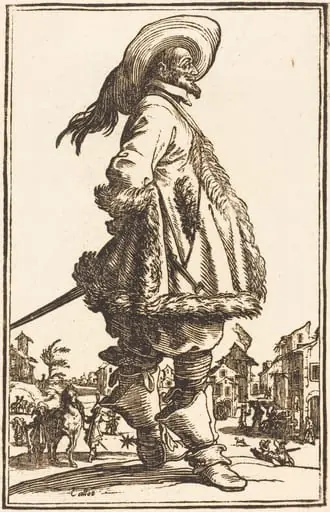 Noble Man with Mantle Trimmed in Fur, Holding his Hands Behind his Back
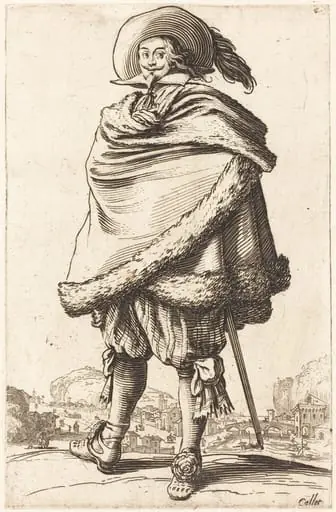 Noble Man Wrapped in a Mantle Trimmed with Fur
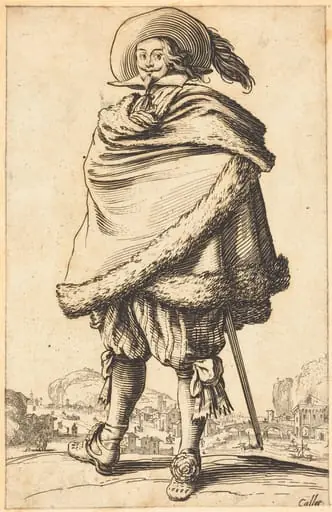 Noble Man Wrapped in a Mantle Trimmed with Fur
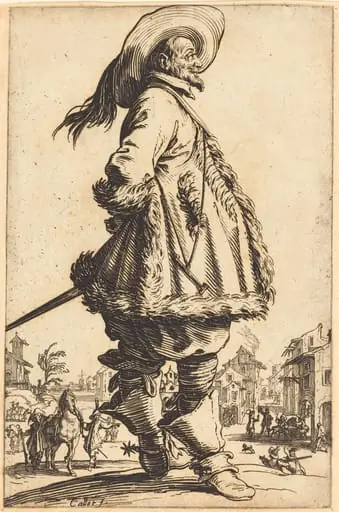 Noble Man with Mantle Trimmed in Fur, Holding his Hands Behind his Back
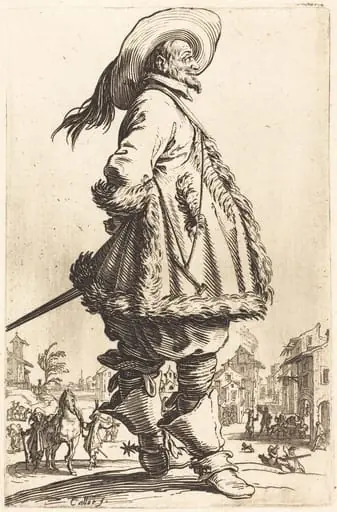 Noble Man with Mantle Trimmed in Fur, Holding his Hands Behind his Back