Artwork
Noble Woman in Profile with her Hands in a Muff
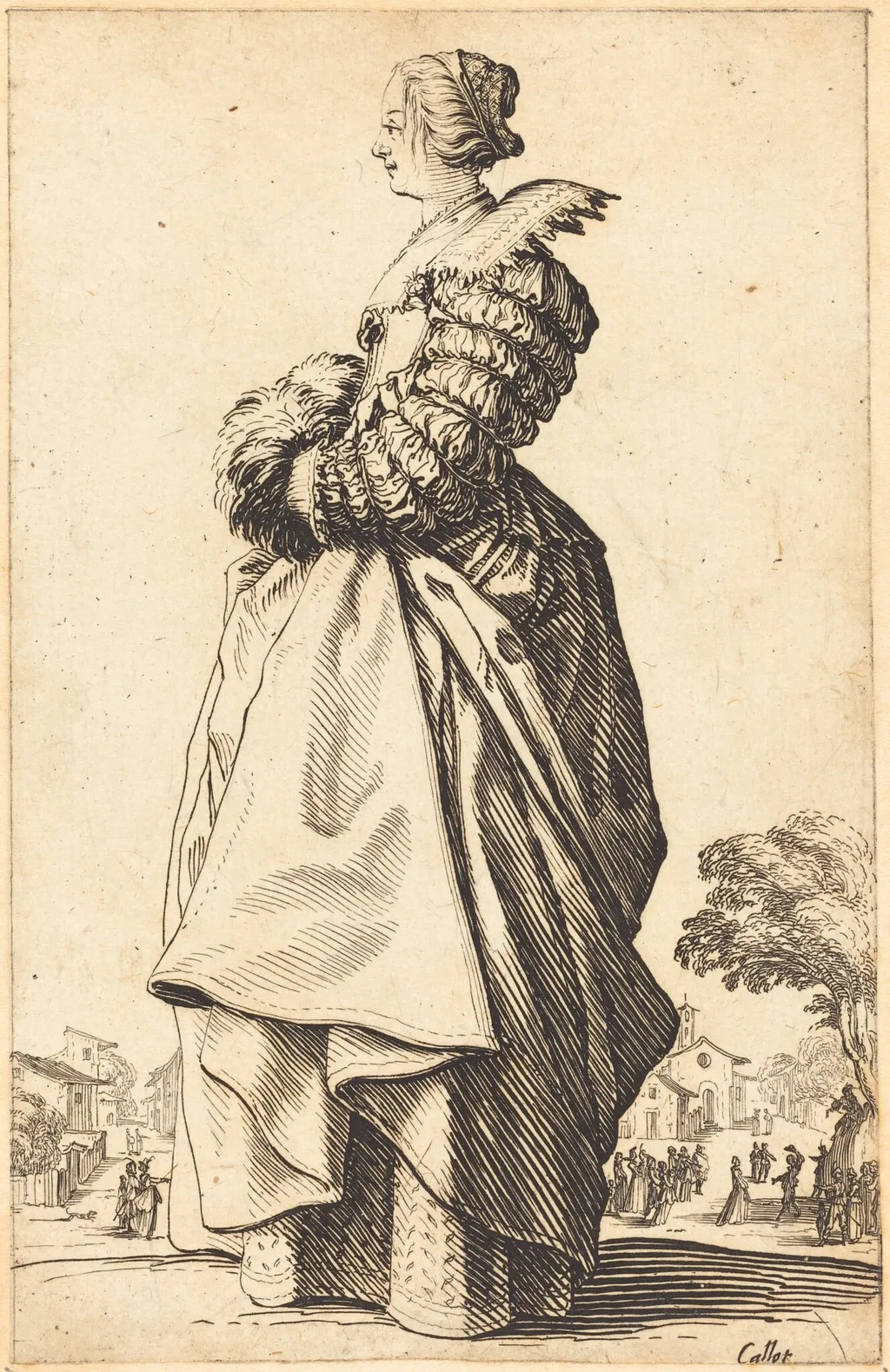
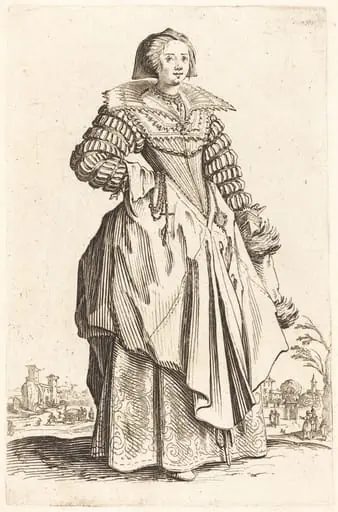
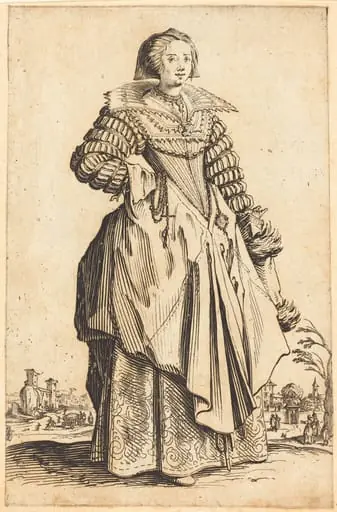
Noble Woman in Profile with her Hands in a Muff is an ink print by the Baroque artist Jacques Callot. It dates from 1622 and is held in the collection of the National Gallery of Art.
About this work
Overview
As one of over 1,400 prints produced by the Lorrainer artist, it exemplifies his precision in capturing quiet moments of aristocratic life.
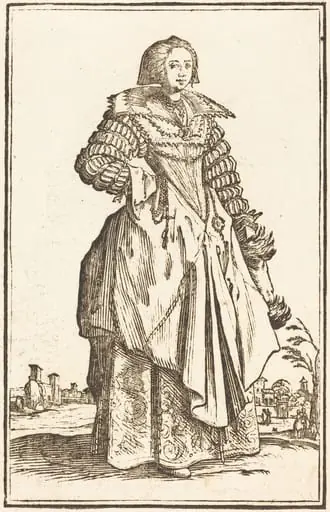
Created around 1622, this etching on laid paper by Jacques Callot depicts a noblewoman in profile, her hands nestled in a muff. As one of over 1,400 prints produced by the Lorrainer artist, it exemplifies his precision in capturing quiet moments of aristocratic life. The work belongs to a broader series documenting social types and environments, rendered with delicate line work and subtle tonal variation characteristic of early 17th-century printmaking.
Subject & Meaning
The figure is portrayed with composure and restraint, her posture and attire signaling aristocratic status. The muff, a practical yet fashionable accessory, suggests both warmth and decorum. Behind her, a distant townscape with a church and pedestrians anchors the figure in a specific social milieu, implying a connection between private elegance and public life. The composition avoids theatricality, favoring understated presence over narrative drama.
Technique & Style
Callot employed fine, controlled etching lines to render the textures of fabric, the softness of fur, and the atmospheric depth of the background. The use of laid paper enhanced the print’s tactile quality, while careful ink pressure allowed gradations of light and shadow. His technique reflects mastery of the etching needle, enabling intricate detail without clutter, a hallmark of his approach to both portraiture and landscape elements.
History & Provenance
The print emerged during Callot’s most productive period in Florence and Paris, where he served aristocratic patrons and engaged with European print markets. While its early ownership is undocumented, it entered institutional collections in the 19th century as interest in Northern Renaissance and Baroque prints grew. Its survival in good condition reflects careful handling and the durability of etching on high-quality paper.
Context
In early 17th-century Europe, etching became a favored medium for capturing both elite and common life. Callot’s work stood apart for its observational fidelity and technical refinement. This print aligns with contemporaneous portraiture that emphasized dignity through restraint, contrasting with the more dramatic styles of painting. It also reflects the rising demand for intimate, collectible images among educated elites.
Legacy
Callot’s etchings influenced generations of printmakers through their blend of realism and technical discipline. While this particular image is not among his most widely reproduced, it exemplifies his contribution to elevating printmaking as a serious artistic medium. Scholars continue to study his works for insights into daily life, fashion, and social hierarchy in early modern Europe.
Artist & collection

Artist
Jacques Callot was a baroque printmaker and draftsman from the Duchy of Lorraine.

 Holy Family at supper
 Restoration of the Aqueduct at Pisa
 Restoration of the Aqueduct at Pisa
 Square in Paris with Many Figures
 Square in Paris with Many Figures
 Horsemen Attacked by Robbers
 HOW WILL A COVERED PART BE CORRECTED?HOW WIKA A COVERED HEART DEED CORRECTED?
![Christ Walking on the Water [second plate], by Jacques Callot](https://artifactworldgallery.com/img/jacques-callot--christ-walking-on-the-water-second-plate--2069f3bfe4cb2126-w320.webp) Christ Walking on the Water [second plate]
Christ Walking on the Water [second plate]