Artwork
The Envoy of Tuscany thanking the Queen [verso]
![The Envoy of Tuscany thanking the Queen [verso], by Jacques Callot, ink, 1612](https://artifactworldgallery.com/img/jacques-callot--the-envoy-of-tuscany-thanking-the-queen-verso--d1096c23bbbd576f-w1024.webp)
The Envoy of Tuscany thanking the Queen [verso] is an ink print by the Baroque artist Jacques Callot. It dates from 1612 and is held in the collection of the National Gallery of Art.
About this work
Overview
As a Lorrainer artist active in Italy, Callot produced over a thousand prints documenting courtly and military life.
Created in 1612 by Jacques Callot, this etching on laid paper captures a formal diplomatic moment. As a Lorrainer artist active in Italy, Callot produced over a thousand prints documenting courtly and military life. This work, labeled as the verso of another composition, exemplifies his precision in rendering social rituals through fine-line etching, a technique he refined to capture subtle gestures and textures.
Subject & Meaning
The scene depicts a Tuscan envoy offering thanks to a royal figure, likely a queen, in a ceremonial setting. The seated man, adorned with a ruff and broad hat, represents authority; the standing figure bows in deference. Surrounding attendants observe in silence, reinforcing the formality of the exchange. The composition emphasizes protocol and hierarchy, reflecting the diplomatic customs of early 17th-century European courts.
Technique & Style
Callot employed fine etching lines to render intricate details in fabric, facial expressions, and architectural elements. The use of laid paper allowed for subtle tonal gradations, enhancing the solemn atmosphere. His controlled hand and attention to spatial depth—evident in the receding wall and doorway—show mastery of perspective and texture, hallmarks of his contribution to Baroque printmaking.
History & Provenance
The print was made during Callot’s time in Florence, where he served the Medici court and documented its ceremonies. Its existence as a verso suggests it was part of a larger series or a reused sheet, common among printmakers conserving materials. While its early ownership is unrecorded, it entered institutional collections in the 19th century as interest in Baroque prints grew.
Context
In early 1600s Italy, diplomatic rituals were carefully staged to assert political alliances. Callot, observing these events firsthand, translated them into prints for elite audiences. His work intersected with the broader Baroque interest in movement, emotion, and spectacle, yet retained a documentary clarity that distinguished his approach from more theatrical contemporaries.
Legacy
Callot’s meticulous etchings influenced generations of printmakers by elevating the medium’s capacity for narrative and social observation. This piece, though minor in his oeuvre, exemplifies his role in documenting courtly life with precision. His technical innovations in etching—especially fine-line control—became foundational to later European print traditions.
Artist & collection
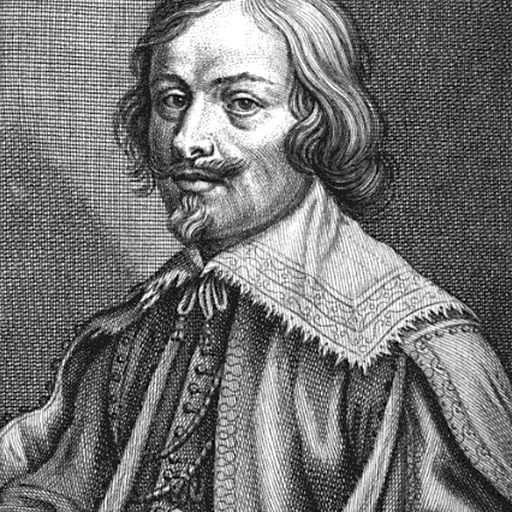
Artist
Jacques Callot was a baroque printmaker and draftsman from the Duchy of Lorraine.

 Holy Family at supper
 Restoration of the Aqueduct at Pisa
 Restoration of the Aqueduct at Pisa
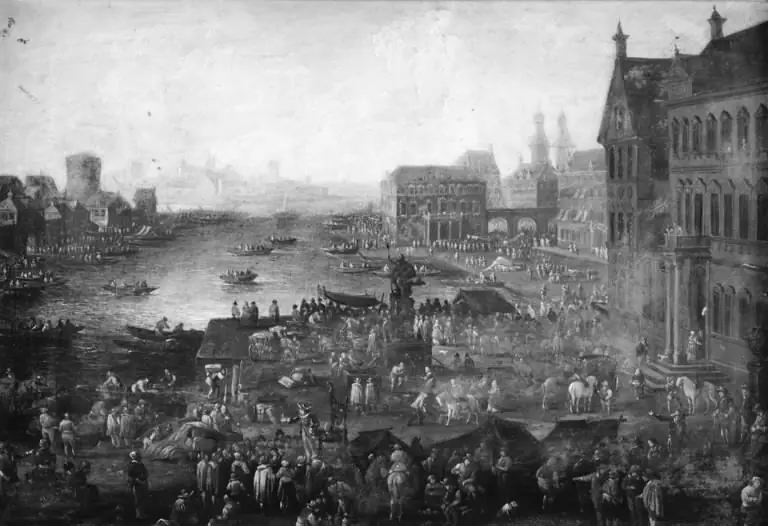 Square in Paris with Many Figures
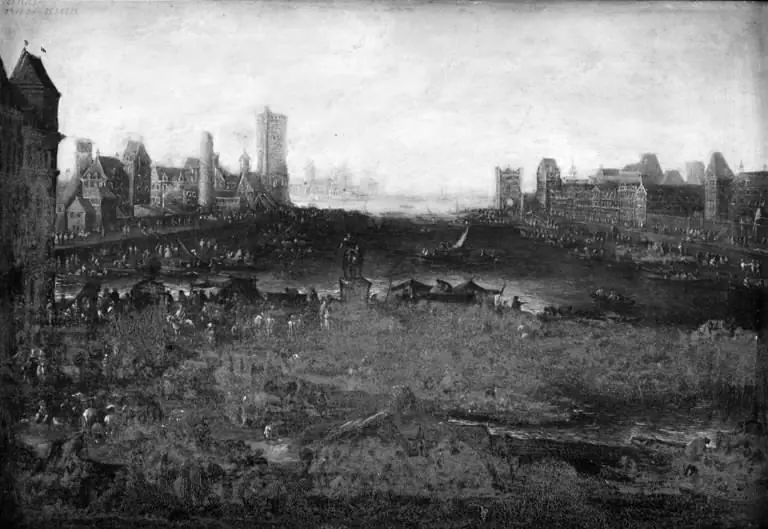 Square in Paris with Many Figures
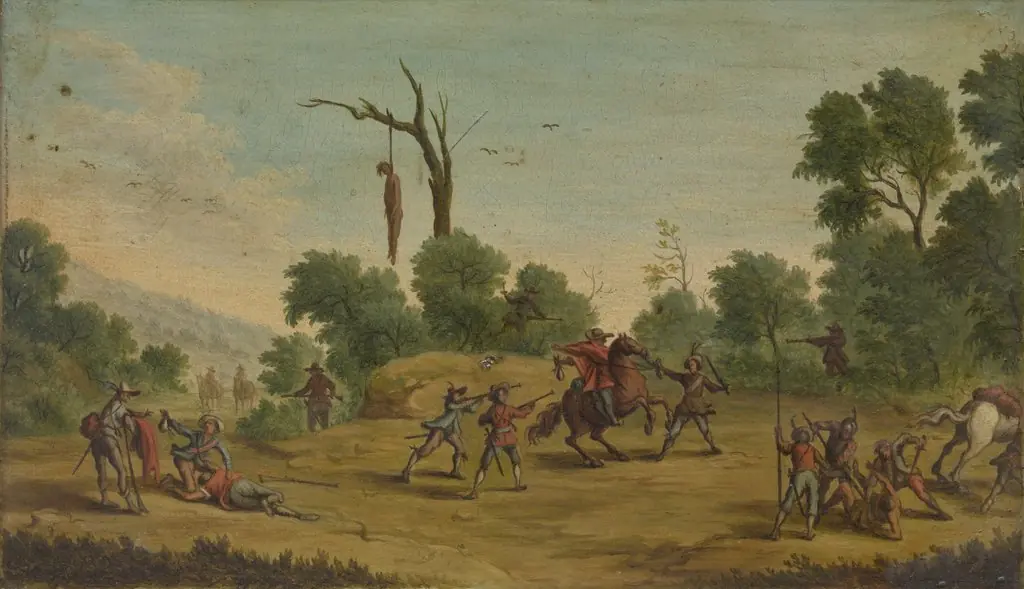 Horsemen Attacked by Robbers
 HOW WILL A COVERED PART BE CORRECTED?HOW WIKA A COVERED HEART DEED CORRECTED?
![Christ Walking on the Water [second plate], by Jacques Callot](https://artifactworldgallery.com/img/jacques-callot--christ-walking-on-the-water-second-plate--2069f3bfe4cb2126-w320.webp) Christ Walking on the Water [second plate]
Christ Walking on the Water [second plate]
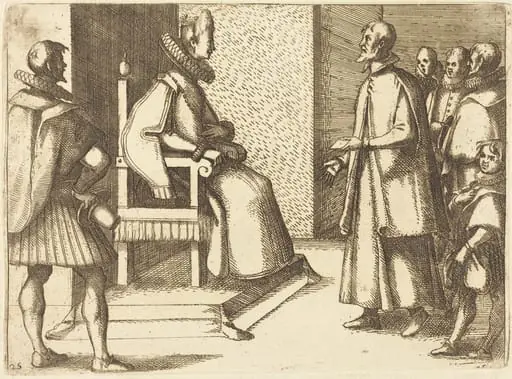 The Envoy of Tuscany Thanking the Queen
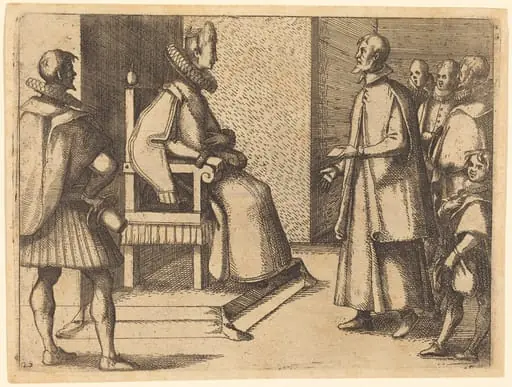 The Envoy of Tuscany thanking the Queen
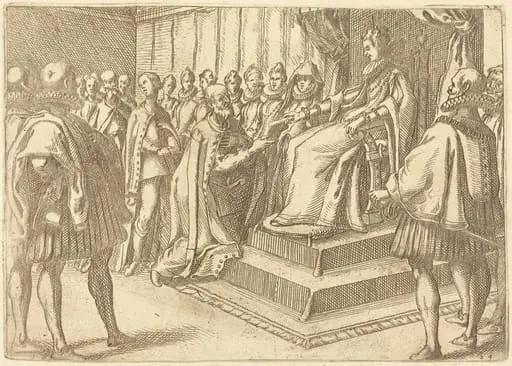 Reception of the Envoy of Poland
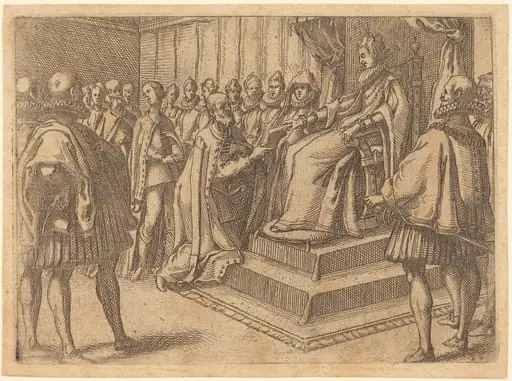 Reception of the Envoy of Poland
![Reception of the Envoy of Poland [recto], by Jacques Callot](https://artifactworldgallery.com/img/jacques-callot--reception-of-the-envoy-of-poland-recto--b391a89639ee42f8-w320.webp) Reception of the Envoy of Poland [recto]
Reception of the Envoy of Poland [recto]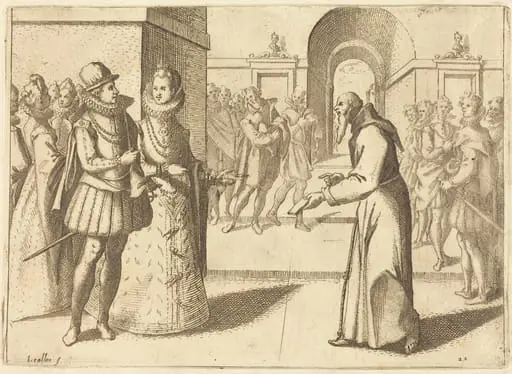 A Capucin Bringing Thanks of the King of Bavaria
![A Capucin bringing thanks of the King of Bavaria [recto], by Jacques Callot](https://artifactworldgallery.com/img/jacques-callot--a-capucin-bringing-thanks-of-the-king-of-bavaria-recto--39ed030c08b9b2a7-w320.webp) A Capucin bringing thanks of the King of Bavaria [recto]
A Capucin bringing thanks of the King of Bavaria [recto]![King and Queen in Consultation about the Turks [recto], by Jacques Callot](https://artifactworldgallery.com/img/jacques-callot--king-and-queen-in-consultation-about-the-turks-recto--5b03792b86815455-w320.webp) King and Queen in Consultation about the Turks [recto]
King and Queen in Consultation about the Turks [recto]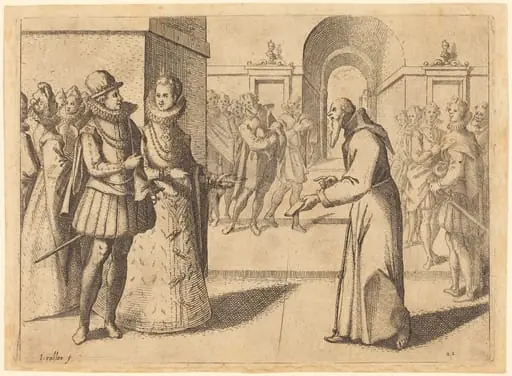 A Capucin bringing thanks of the King of Bavaria
![Margaret of Austria Giving Audience to a Nobleman [verso], by Raffaello Schiaminossi](https://artifactworldgallery.com/img/raffaello-schiaminossi--margaret-of-austria-giving-audience-to-a-nobleman-verso--86ac2347af277f00-w320.webp) Margaret of Austria Giving Audience to a Nobleman [verso]
Margaret of Austria Giving Audience to a Nobleman [verso]