Artwork
Peasant Woman, in Profile, Facing Left
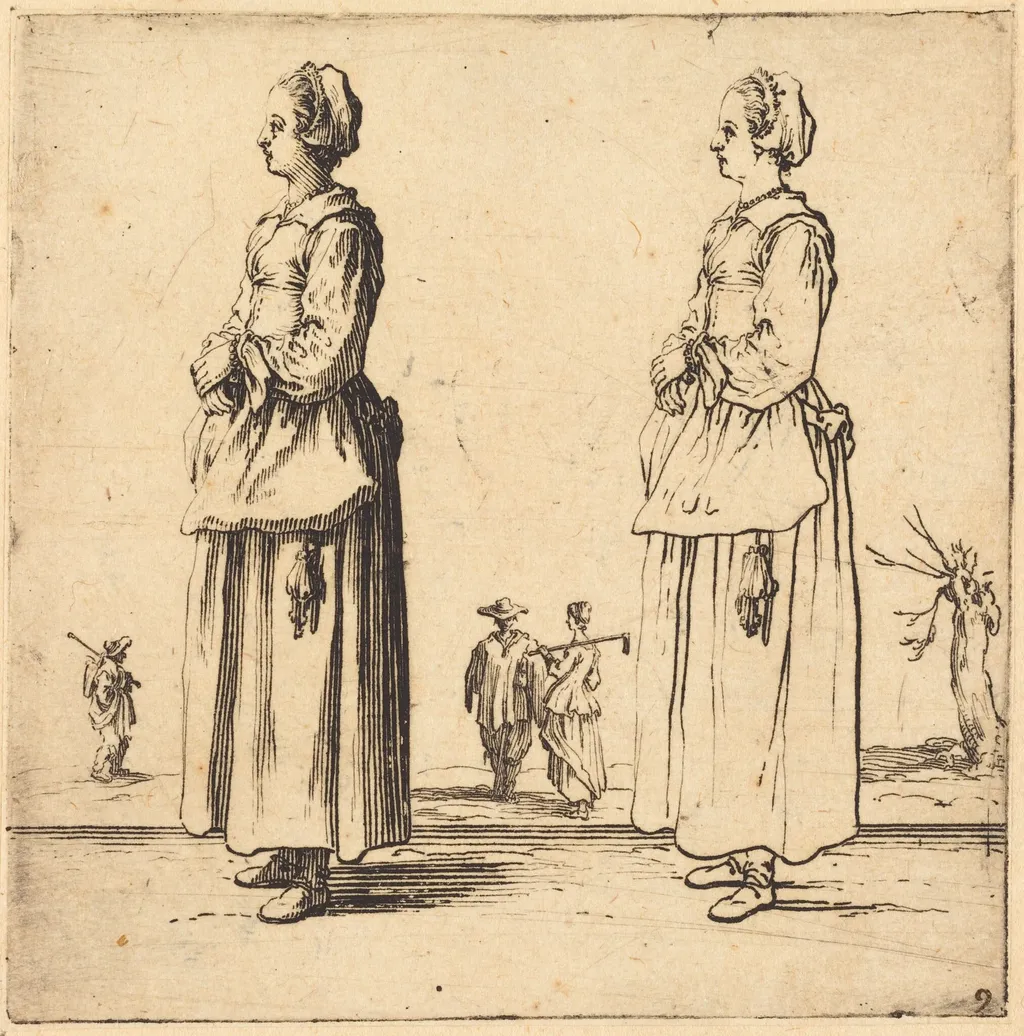
Peasant Woman, in Profile, Facing Left is an ink print by the Baroque artist Jacques Callot. It dates from 1622 and is held in the collection of the National Gallery of Art.
About this work
Overview
Executed on laid paper, the work belongs to a large series of prints in which Callot recorded rural and lower-class life in early 17th-century Lorraine.
Created in 1622 by Jacques Callot, this etching depicts two peasant women in profile, facing left. Executed on laid paper, the work belongs to a large series of prints in which Callot recorded rural and lower-class life in early 17th-century Lorraine. His precise, incised lines capture not only form but also the texture of fabric and terrain, reflecting his technical mastery and interest in social observation.
Subject & Meaning
The two women, dressed in plain, ankle-length garments with aprons, are rendered with quiet dignity. One holds a small bundle, suggesting labor or travel; the other stands with arms crossed, conveying stillness or contemplation. Behind them, two distant figures recede into the landscape, implying a broader world of movement and routine. The scene avoids sentimentality, presenting ordinary lives without embellishment.
Technique & Style
Callot employed etching with fine, controlled lines to achieve sharp detail and tonal variation. The surface texture, often mistaken for drypoint, results from his precise biting of the copper plate, allowing for dense cross-hatching and delicate gradations. The paper’s slight yellowing and rough edge are consistent with period materials, enhancing the work’s tactile, unpolished quality that aligns with its subject matter.
History & Provenance
This print emerged during Callot’s most productive period, when he was based in Florence and producing studies of everyday life. Though no specific early ownership record is documented, it aligns with collections of Northern European prints from the 17th century. Its survival reflects the enduring interest in Callot’s genre scenes among collectors and institutions focused on early modern printmaking.
Context
In early 17th-century Europe, printmaking offered a means to circulate images beyond elite circles. Callot’s focus on peasants, soldiers, and laborers contrasted with the dominant religious and mythological themes. His work contributed to a growing visual record of common life, influenced by regional traditions and the rise of secular observation in art.
Legacy
Callot’s detailed depictions of rural figures influenced later generations of printmakers, including Rembrandt and Goya. His ability to convey character and environment with minimal means established a model for social observation in graphic art. This etching, like others in his oeuvre, remains a quiet but significant document of pre-modern European daily life.
Artist & collection
Artist
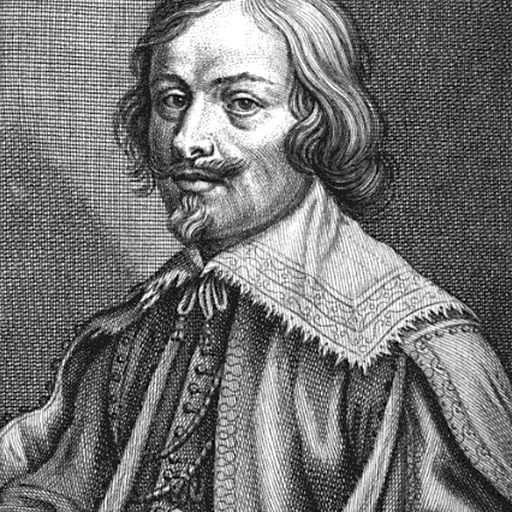
Jacques Callot was a baroque printmaker and draftsman from the Duchy of Lorraine.

 Holy Family at supper
 Restoration of the Aqueduct at Pisa
 Restoration of the Aqueduct at Pisa
 Square in Paris with Many Figures
 Square in Paris with Many Figures
 Horsemen Attacked by Robbers
 HOW WILL A COVERED PART BE CORRECTED?HOW WIKA A COVERED HEART DEED CORRECTED?
![Christ Walking on the Water [second plate], by Jacques Callot](https://artifactworldgallery.com/img/jacques-callot--christ-walking-on-the-water-second-plate--2069f3bfe4cb2126-w320.webp) Christ Walking on the Water [second plate]
Christ Walking on the Water [second plate]
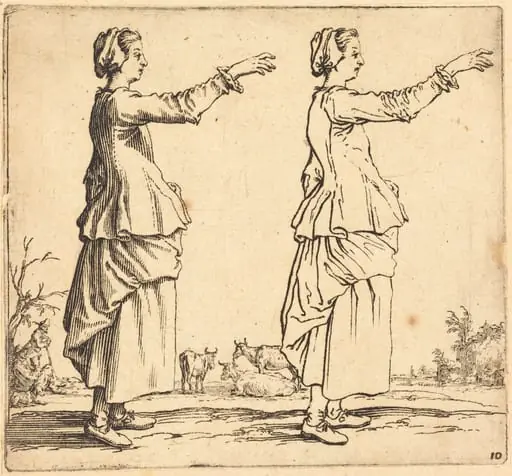 Peasant Woman, in Profile, Facing Right, with Arm Extended
 Peasant Woman, in Profile, Facing Left
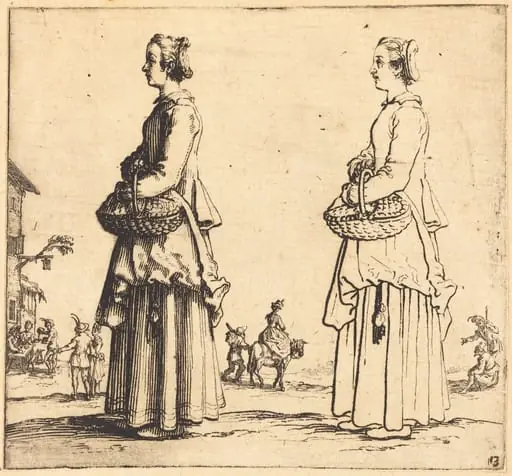 Peasant Woman with Basket, in Profile, Facing Left
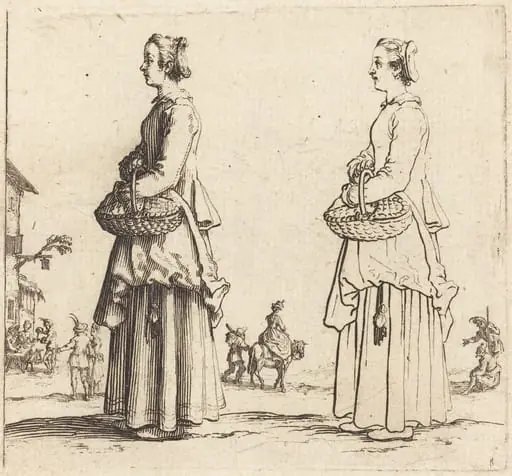 Peasant Woman with Basket, in Profile, Facing Left
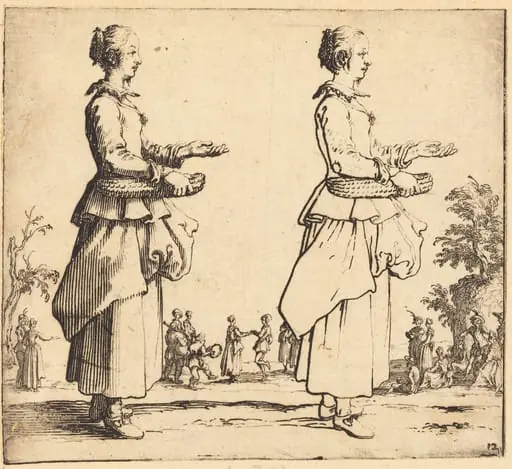 Peasant Woman with Basket, in Profile, Facing Right
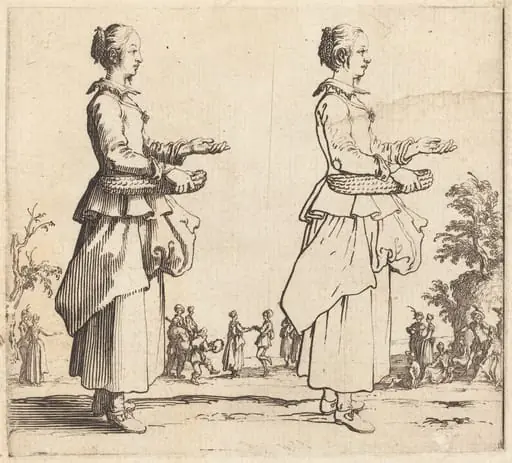 Peasant Woman with Basket, in Profile, Facing Right
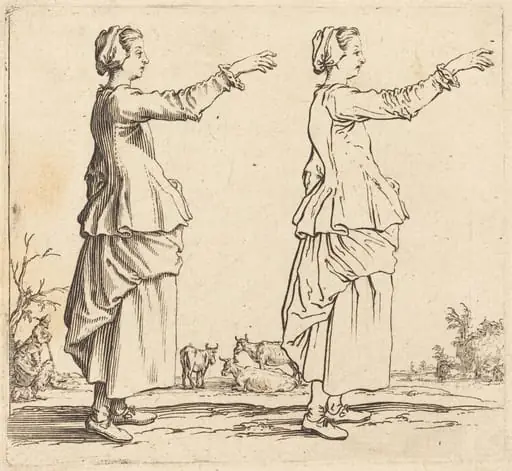 Peasant Woman, in Profile, Facing Right, with Arm Extended
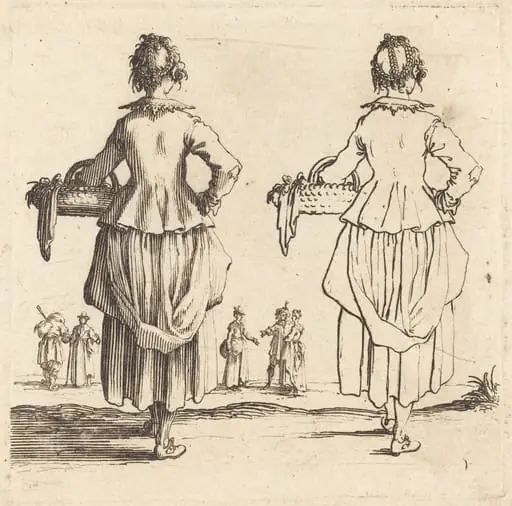 Peasant Woman with Basket, Seen from Behind
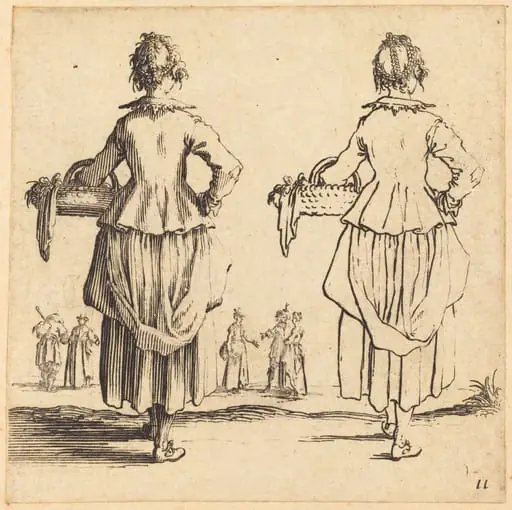 Peasant Woman with Basket, Seen from Behind
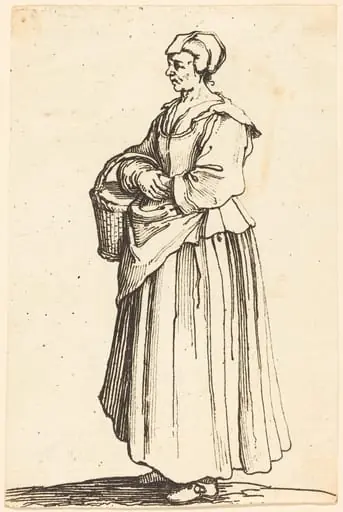 Peasant Woman with Basket, in Profile, Facing Left