Artwork
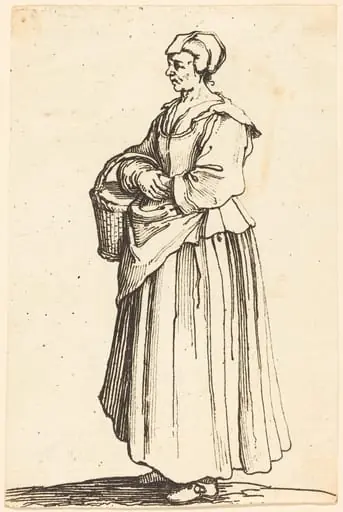
Peasant Woman with Basket, in Profile, Facing Right
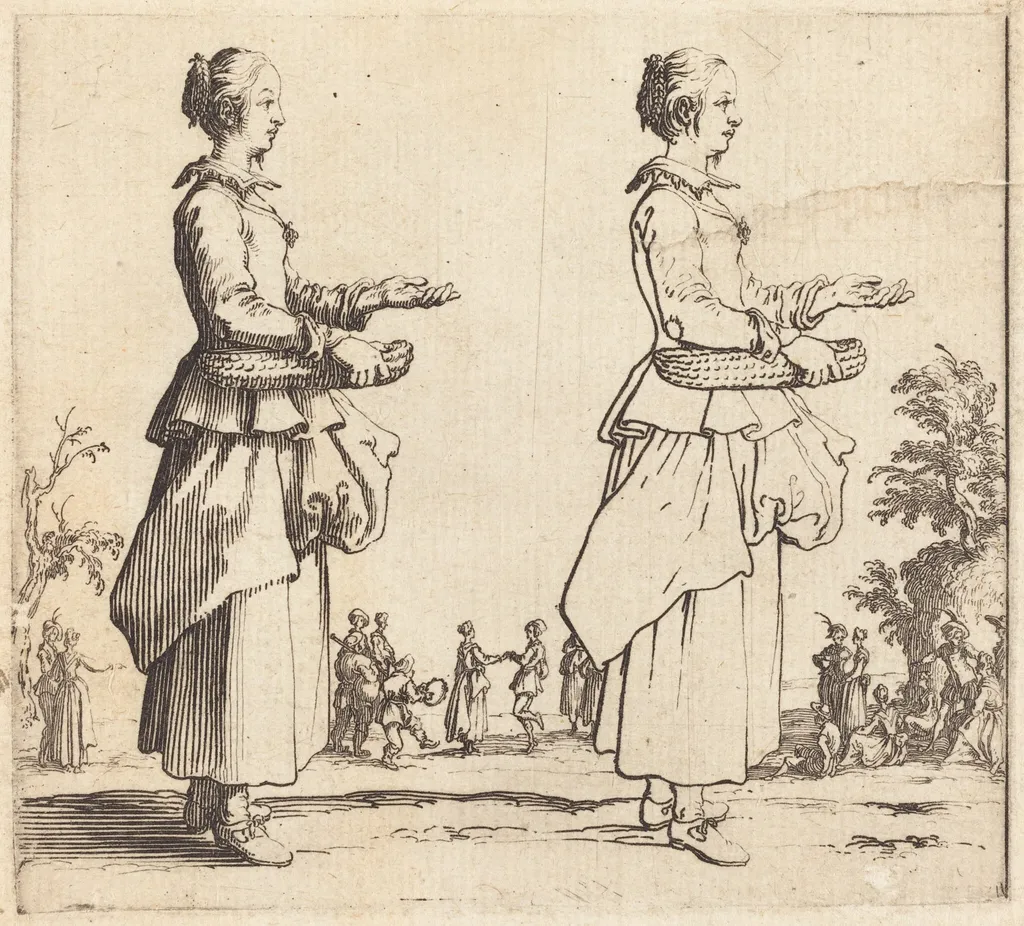
Peasant Woman with Basket, in Profile, Facing Right is an ink print by the Baroque artist Jacques Callot. It dates from 1622 and is held in the collection of the National Gallery of Art.
About this work
Overview
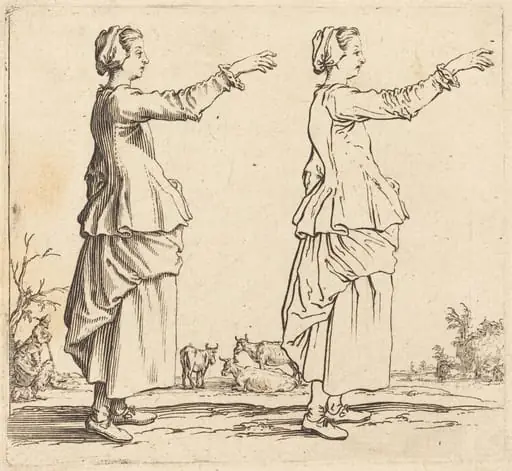
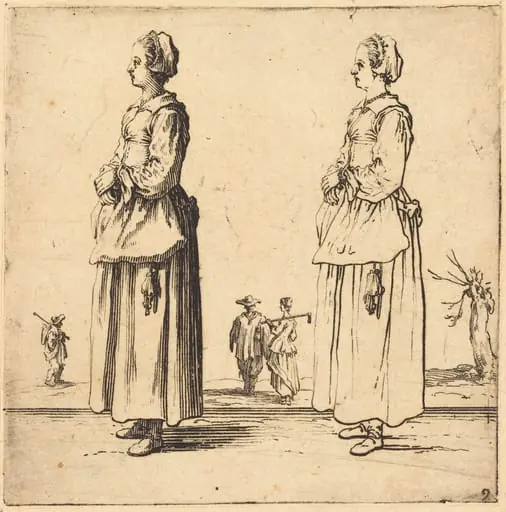
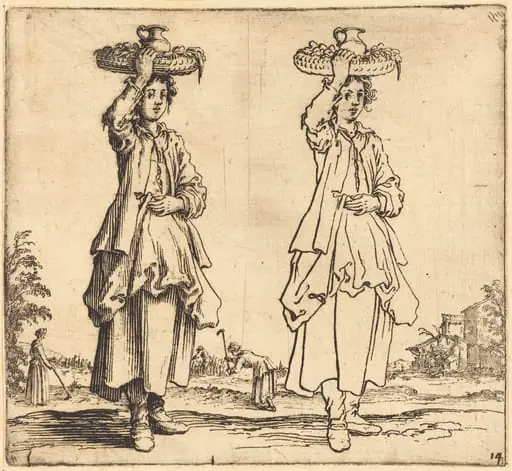
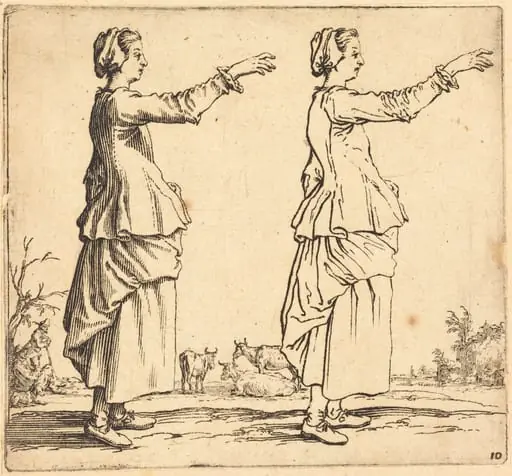
Created in 1622 by Jacques Callot, this etching on laid paper captures two peasant women standing side by side in a quiet outdoor setting. Callot, a printmaker from the Duchy of Lorraine, produced over 1,400 etchings, many focused on ordinary people. This work is part of his broader effort to record daily life with precision and quiet dignity, avoiding idealization in favor of observed reality.
Subject & Meaning
The two women, dressed in simple garments with belts, stand with arms extended as if in a deliberate, almost ceremonial pose. Their setting—a garden with distant figures, trees, and a fence—suggests a moment of pause within rural labor. Callot does not dramatize their condition; instead, he presents them as part of a larger, unremarkable rhythm of life, emphasizing presence over narrative.
Technique & Style
The composition feels deliberate and slightly formal, as if the subjects are aware of being observed, lending the scene a quiet stillness.
Callot employed fine, controlled etching lines to render textures in fabric, foliage, and ground. The delicate cross-hatching defines the folds of their dresses and the sparse vegetation, while the background figures are rendered with minimal strokes, suggesting depth without detail. The composition feels deliberate and slightly formal, as if the subjects are aware of being observed, lending the scene a quiet stillness.
History & Provenance
The print emerged during a period when etching was gaining prominence as a medium for social documentation. Callot’s works circulated widely among collectors and artists in Europe. While the specific early ownership of this piece is unrecorded, its survival in institutional collections reflects its recognition as a representative example of early 17th-century Northern European printmaking.
Context
In early 17th-century Europe, depictions of peasants were often either moralized or caricatured. Callot’s approach diverged by treating his subjects with observational neutrality. His etchings, including this one, align with a growing interest in realism among Northern artists, who sought to capture the textures and rhythms of ordinary existence without overt commentary.
Legacy
Callot’s detailed etchings influenced later generations of printmakers, particularly in their attention to everyday life and technical precision. While not widely reproduced in popular culture, this work remains a reference in academic studies of Baroque printmaking, valued for its restraint and its contribution to the visual record of rural labor in early modern Europe.
Artist & collection

Artist
Jacques Callot was a baroque printmaker and draftsman from the Duchy of Lorraine.

 Holy Family at supper
 Restoration of the Aqueduct at Pisa
 Restoration of the Aqueduct at Pisa
 Square in Paris with Many Figures
 Square in Paris with Many Figures
 Horsemen Attacked by Robbers
 HOW WILL A COVERED PART BE CORRECTED?HOW WIKA A COVERED HEART DEED CORRECTED?
![Christ Walking on the Water [second plate], by Jacques Callot](https://artifactworldgallery.com/img/jacques-callot--christ-walking-on-the-water-second-plate--2069f3bfe4cb2126-w320.webp) Christ Walking on the Water [second plate]
Christ Walking on the Water [second plate]
 Peasant Woman with Basket, in Profile, Facing Right
 Peasant Woman with Basket, in Profile, Facing Left
 Peasant Woman with Basket, in Profile, Facing Left
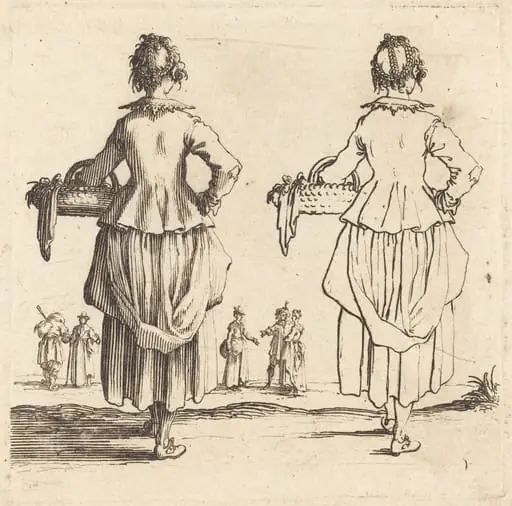 Peasant Woman with Basket, Seen from Behind
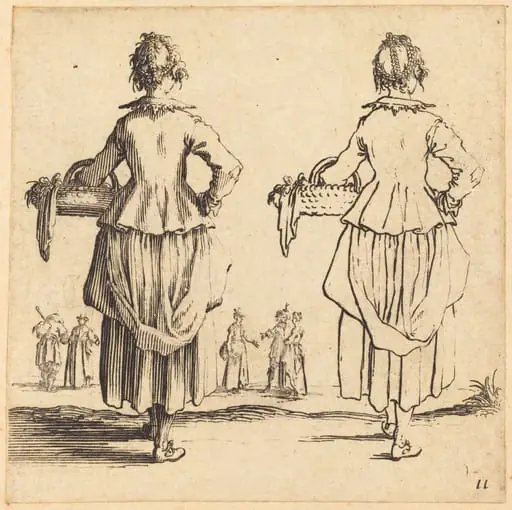 Peasant Woman with Basket, Seen from Behind
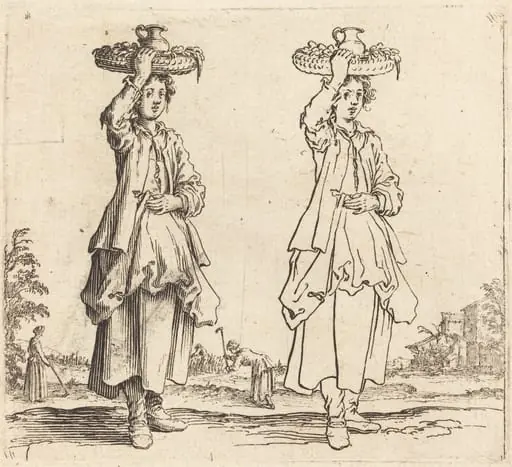 Peasant Woman with Basket on Head, Front View
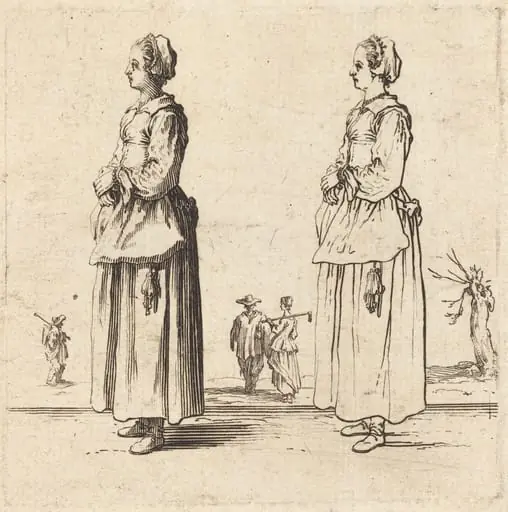 Peasant Woman, in Profile, Facing Left
 Peasant Woman, in Profile, Facing Right, with Arm Extended
 Peasant Woman, in Profile, Facing Left
 Peasant Woman with Basket on Head, Front View
 Peasant Woman, in Profile, Facing Right, with Arm Extended
 Peasant Woman with Basket, in Profile, Facing Left