Artwork
Pietà
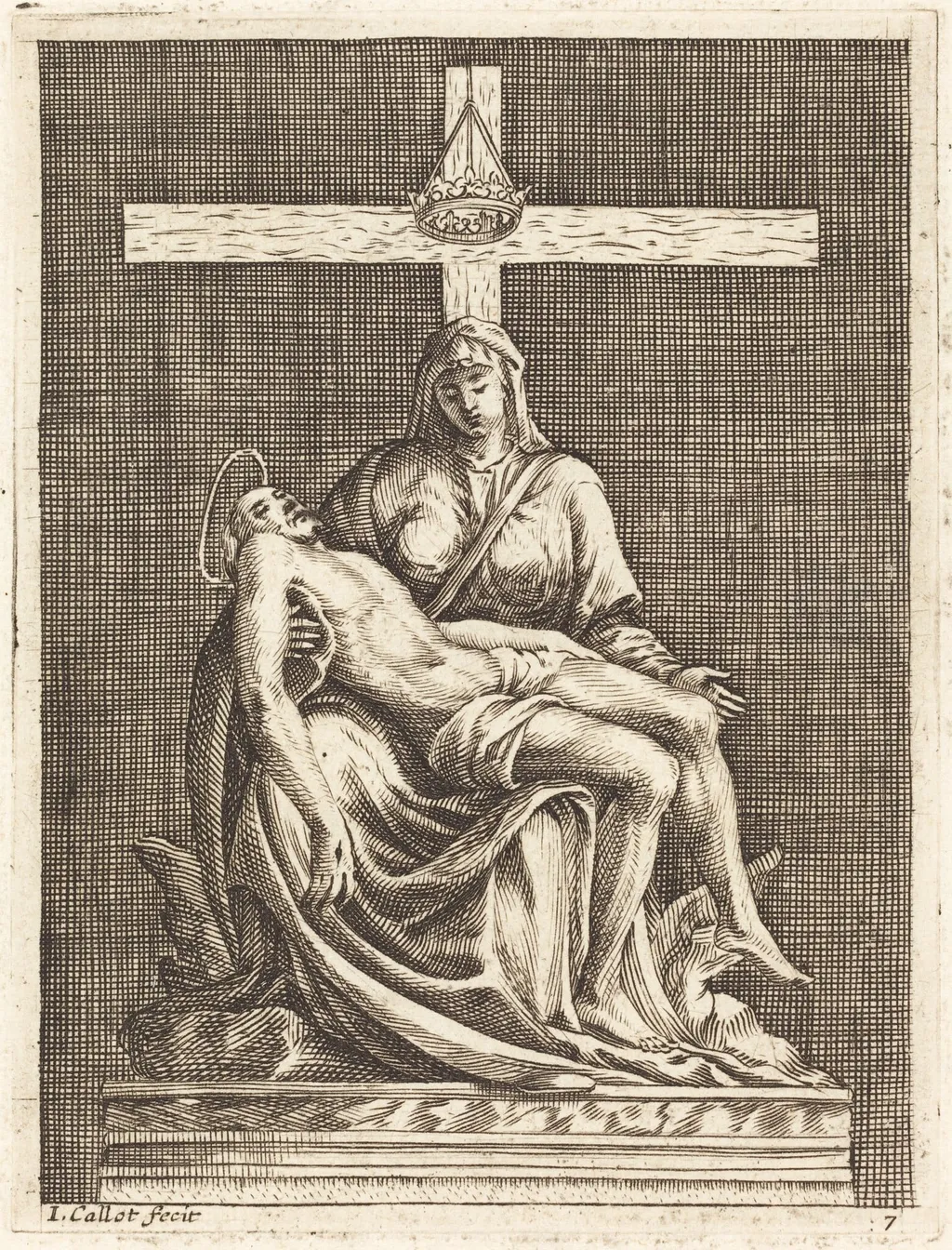
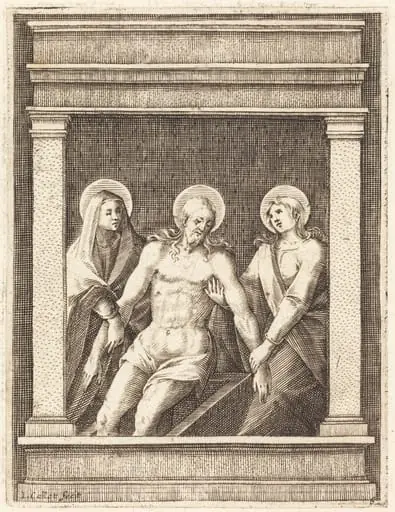
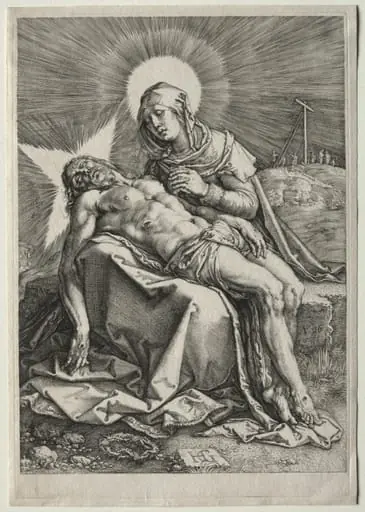
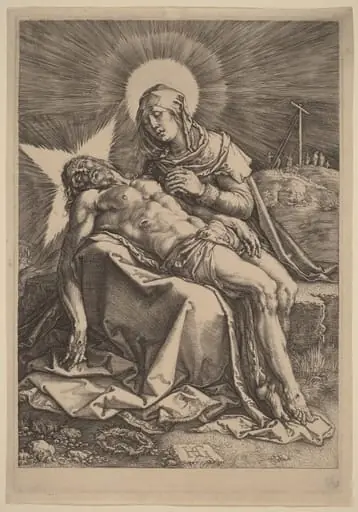
Pietà is an ink print by the Baroque artist Jacques Callot. It dates from 1610 and is held in the collection of the National Gallery of Art.
About this work
Overview
Created in 1610, the engraving titled *Pietà* is a black‑and‑white print on laid paper by Jacques Callot, a printmaker active in the early seventeenth‑century Duchy of Lorraine. The work presents a conventional religious tableau, rendered with Callot’s characteristic attention to line and texture, and measures roughly within the dimensions typical of his small‑scale prints.
Subject & Meaning
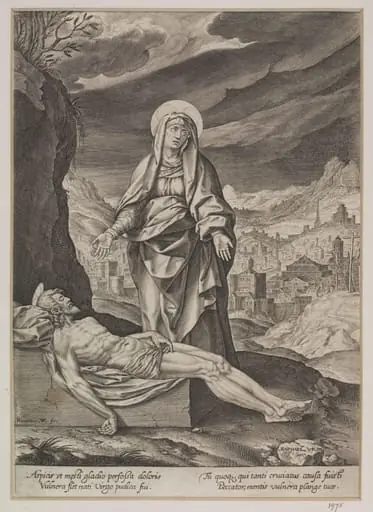
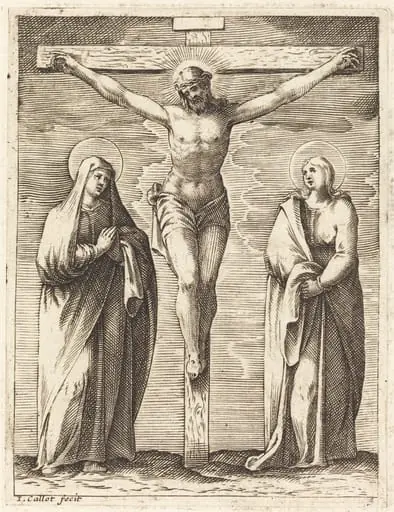
The composition depicts a grieving woman, clothed in a long robe, cradling the lifeless body of a man whose head is inclined backward and eyes are closed. A cross looms behind them, bearing a crown of thorns, identifying the scene as a representation of the biblical Pietà, a meditation on sorrow and redemption.
Technique & Style
Callot employs fine cross‑hatching and varied line density to model flesh, fabric, and the wooden cross, achieving a convincing sense of volume on a flat surface. The background includes a muted landscape that recedes through subtle tonal gradations, a hallmark of his baroque printmaking that balances narrative clarity with atmospheric depth.
History & Provenance
The engraving belongs to Callot’s prolific output of over a thousand prints that document both secular and sacred themes. Produced during his early period, *Pietà* reflects his engagement with religious subjects before he turned increasingly to military and genre scenes. Existing copies are held in several European print collections, confirming its circulation among collectors of the period.
Artist & collection
Artist
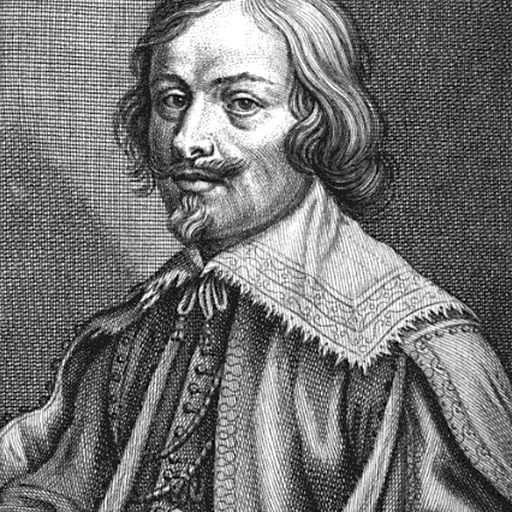
Jacques Callot was a baroque printmaker and draftsman from the Duchy of Lorraine.

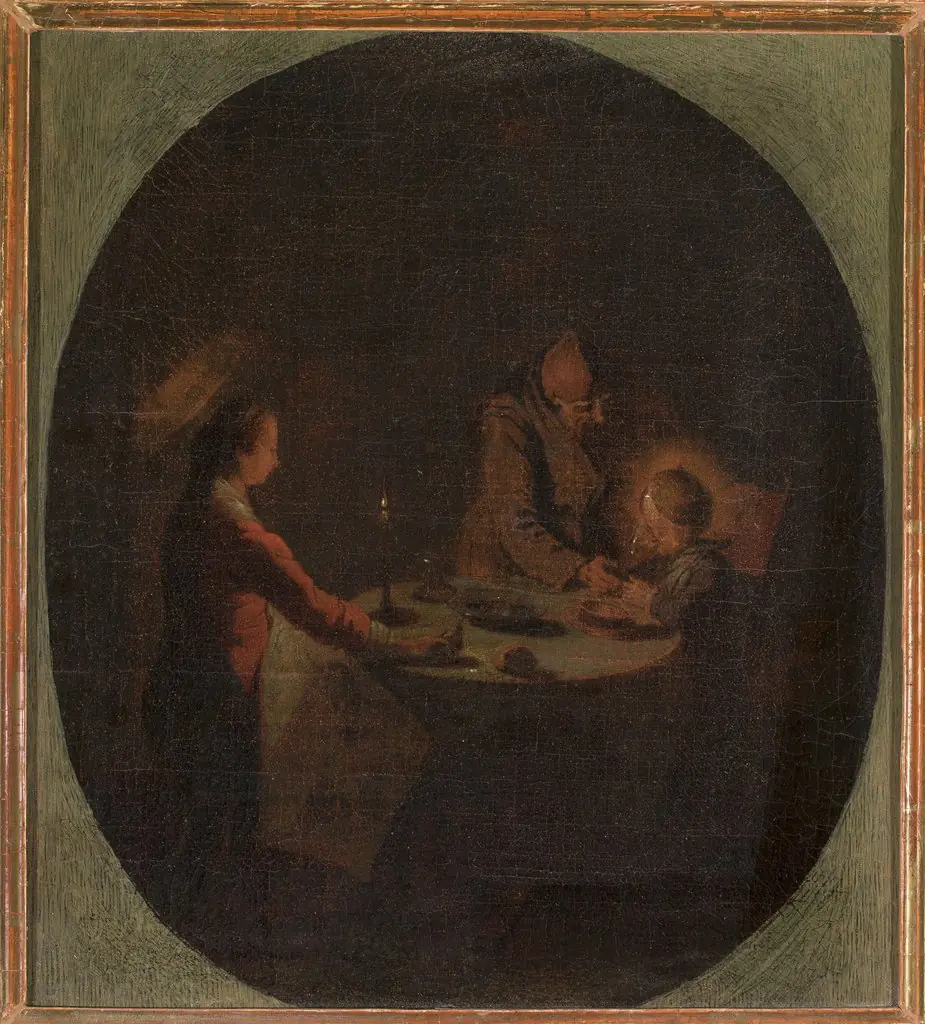 Holy Family at supper
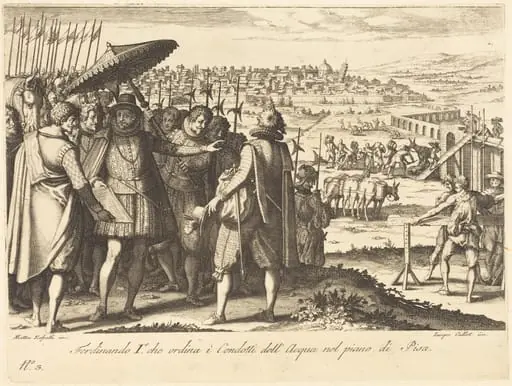 Restoration of the Aqueduct at Pisa
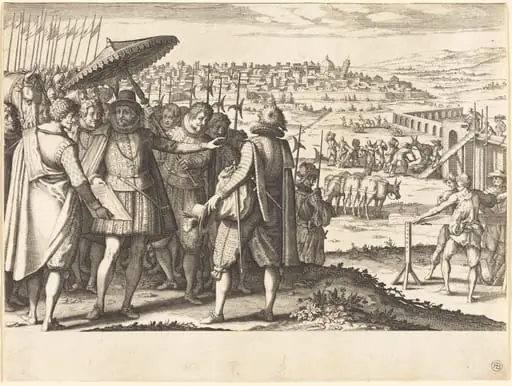 Restoration of the Aqueduct at Pisa
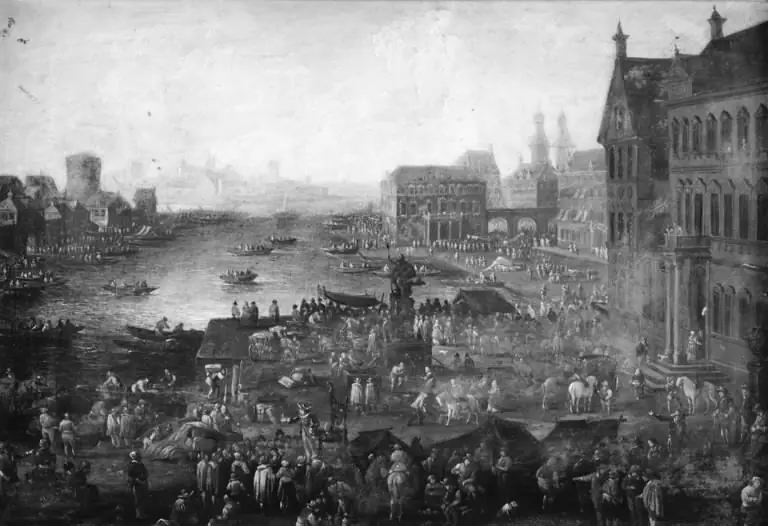 Square in Paris with Many Figures
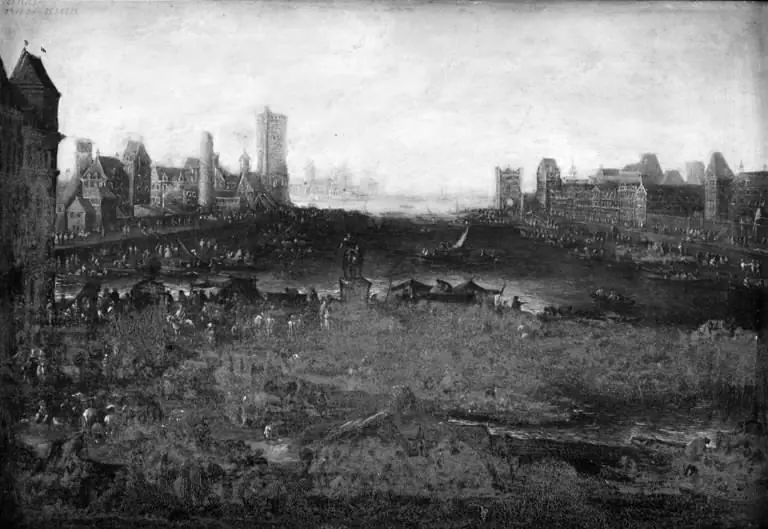 Square in Paris with Many Figures
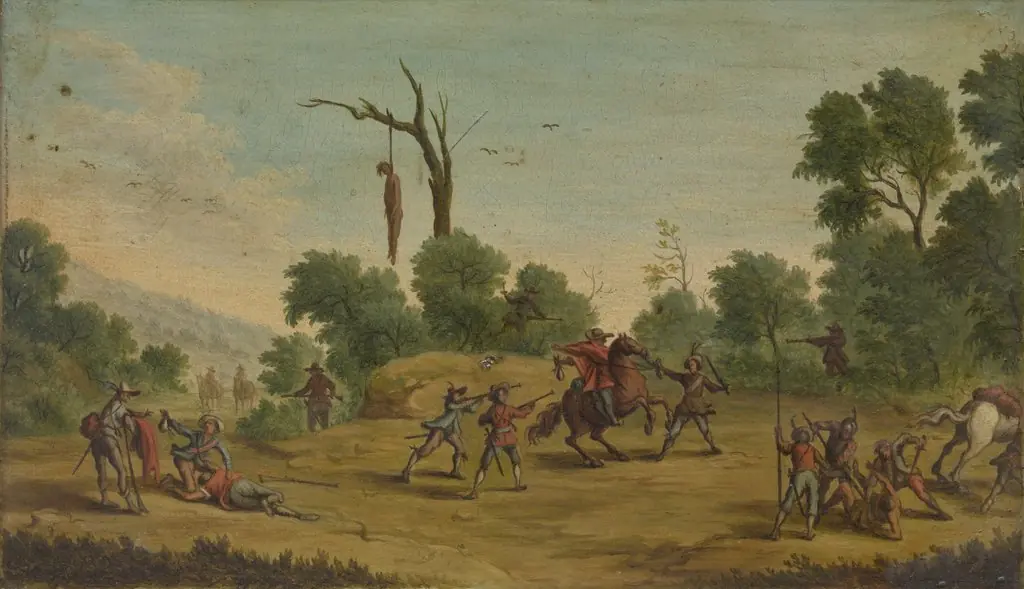 Horsemen Attacked by Robbers
 HOW WILL A COVERED PART BE CORRECTED?HOW WIKA A COVERED HEART DEED CORRECTED?
![Christ Walking on the Water [second plate], by Jacques Callot](https://artifactworldgallery.com/img/jacques-callot--christ-walking-on-the-water-second-plate--2069f3bfe4cb2126-w320.webp) Christ Walking on the Water [second plate]
Christ Walking on the Water [second plate]