Artwork
Pietà
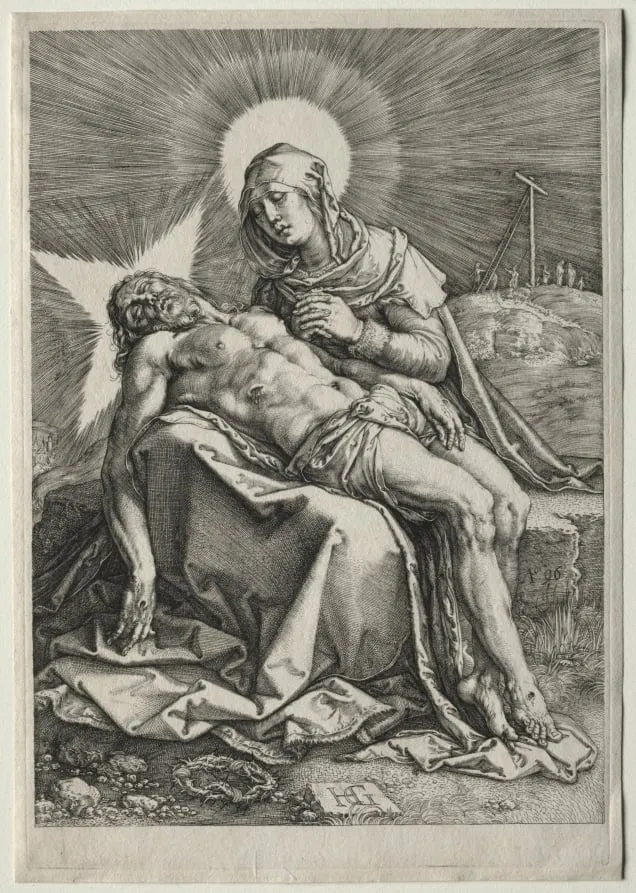
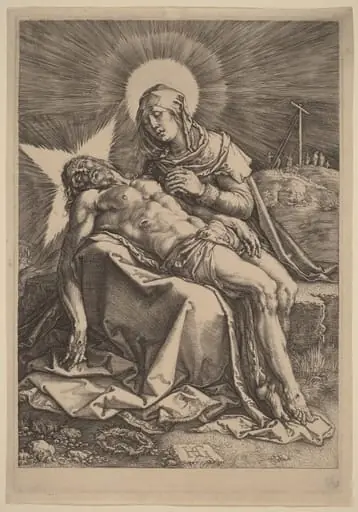
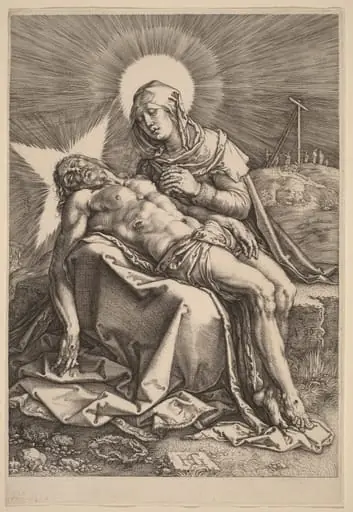
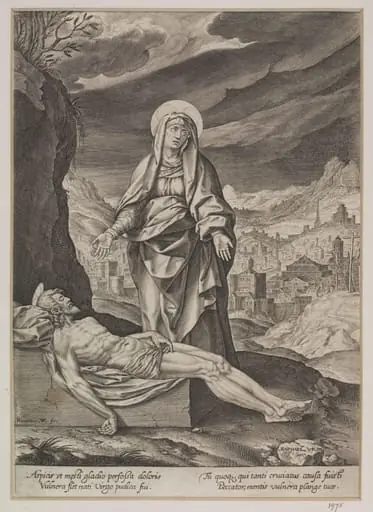
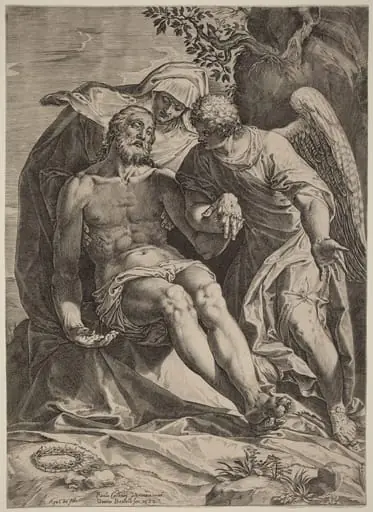
Pietà is a print by the Renaissance artist Hendrik Goltzius. It dates from 1596 and is held in the collection of the Cleveland Museum of Art.
About this work
But Goltzius worked in the Netherlands, where artists often shared ideas through prints.
A woman sits holding a limp man across her lap. His body is pale, his eyes closed. She looks down, quiet and still. Around them, shadows press close.
This is the Virgin Mary with Jesus after his death. Goltzius made this print in 1596, years after a trip to Italy. He saw Michelangelo’s famous sculpture of the same scene. But Goltzius worked in the Netherlands, where artists often shared ideas through prints. He mixed what he saw in Italy with the detailed style common in Dutch art at the time. Look at the heavy folds in Mary’s clothes — they add weight and sorrow.
The Cleveland Museum of Art holds this print today.
(Word count: 115)
Overview
Hendrick Goltzius’s 1596 engraving presents a somber Pietà, showing the Virgin Mary cradling the lifeless body of Christ. The composition is dominated by deep shadows that press against the figures, emphasizing the intimacy and grief of the moment. The print is part of the Cleveland Museum of Art’s collection and reflects the artist’s engagement with both Italian models and Northern print traditions.
Subject & Meaning
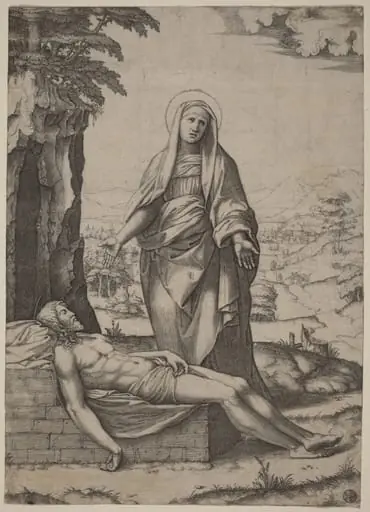
The image depicts the biblical scene of Mary mourning her son after the crucifixion. Mary’s gaze is directed downward, her posture still, while Christ lies pale and still on her lap, his eyes closed. The work conveys a quiet, contemplative sorrow, inviting viewers to contemplate the human cost of the Passion and the maternal grief inherent in the narrative.
Technique & Style
Executed in fine line engraving, the print showcases Goltzius’s characteristic precision and intricate detailing. The heavy drapery folds on Mary’s garments are rendered with dense cross‑hatching, giving a sense of weight and texture. The chiaroscuro effect, achieved through varied line density, creates a stark contrast between illuminated forms and surrounding darkness, a hallmark of Dutch printmaking of the period.
History & Provenance
Goltzius traveled to Italy in 1590–91, where he encountered Michelangelo’s marble Pietà. The 1596 engraving, produced after his return to the Netherlands, translates that sculptural model into a print medium. Over the centuries the work entered several private collections before being acquired by the Cleveland Museum of Art, where it remains on view.
Context
During the Northern Renaissance, artists often absorbed Italian influences through prints rather than direct contact. Goltzius’s Pietà exemplifies this cultural exchange, merging the compositional gravity of Michelangelo’s sculpture with the meticulous line work and narrative clarity typical of Dutch engraving. The piece illustrates how regional artistic traditions could reinterpret and disseminate iconic Italian motifs across Europe.
Artist & collection
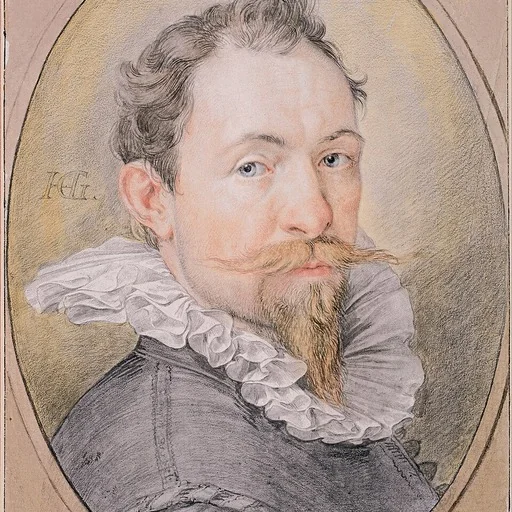
Artist
Hendrick Goltzius (German: , Dutch: ; né Goltz; January or February 1558 – 1 January 1617) was a German-born Dutch printmaker, draftsman, and painter.