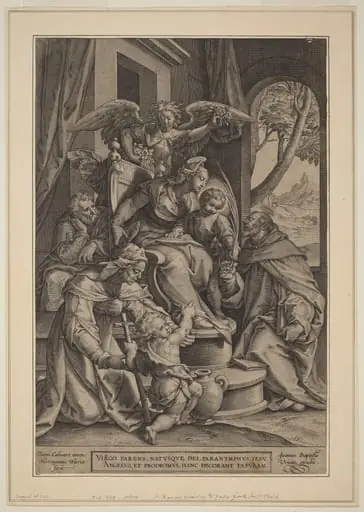
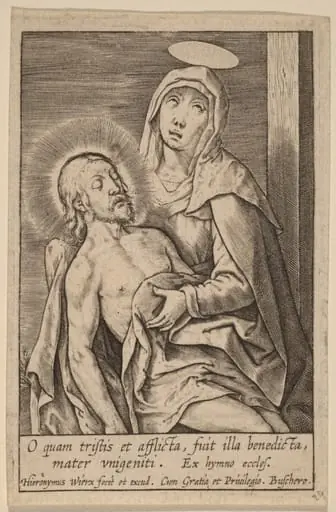
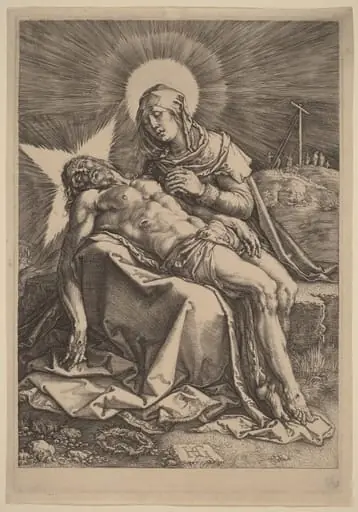
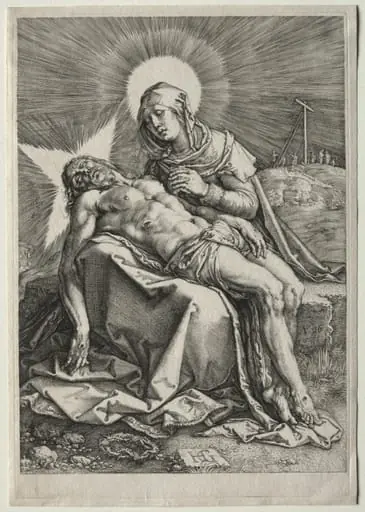
Artwork
Fasciculus myrrhae dilectus meus mihi
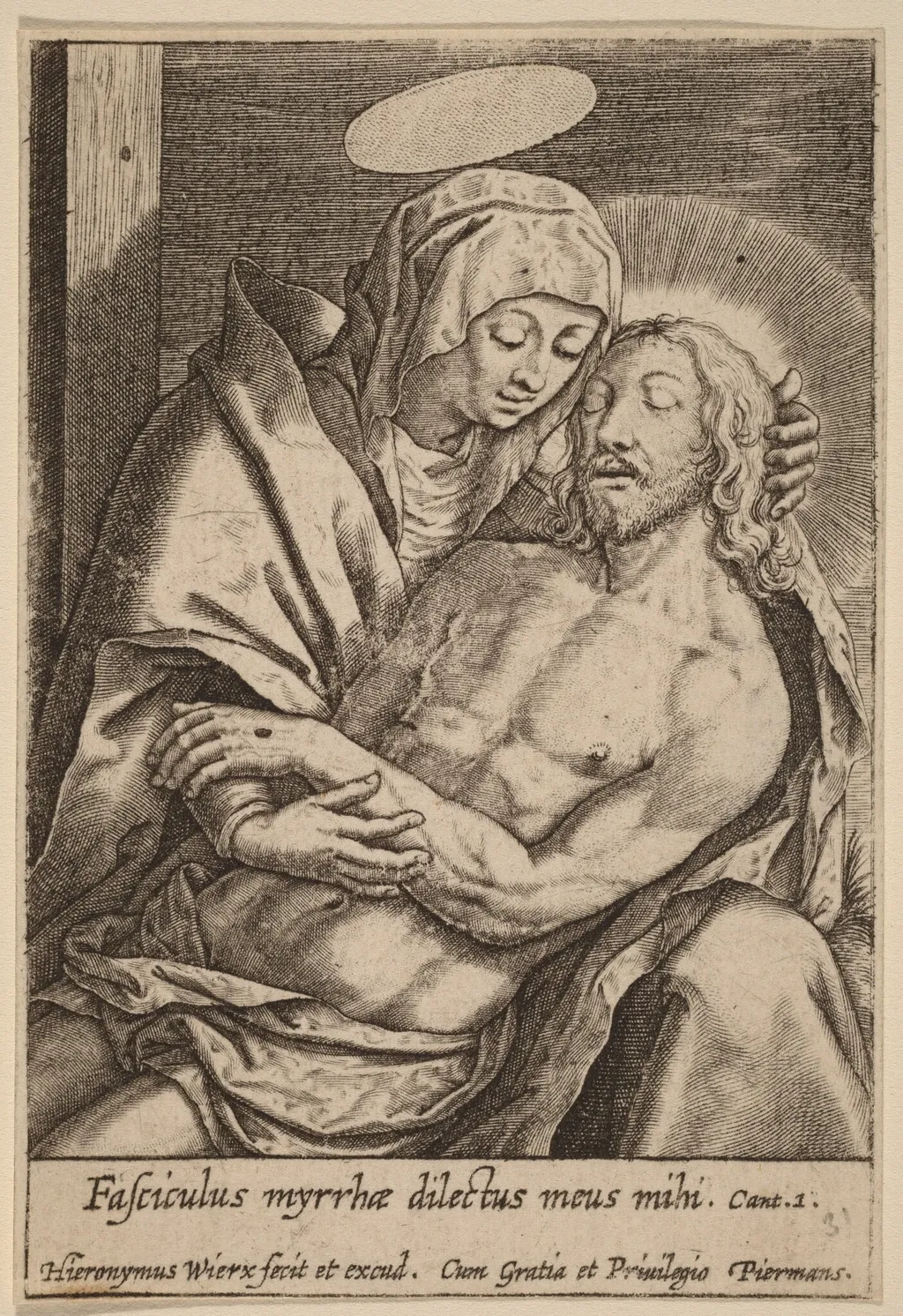
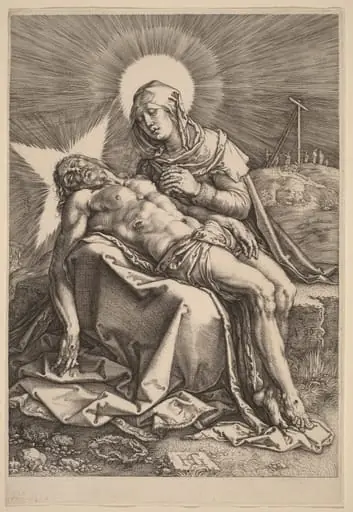
Fasciculus myrrhae dilectus meus mihi is an ink print by the Renaissance artist Hieronymus Wierix. It dates from 1586 and is held in the collection of the National Gallery of Art.
About this work
Overview
Fasciculus myrrhae dilectus meus mihi is a 1586 engraving by Hieronymus Wierix, a Flemish engraver prominent in the late 16th century. Characteristic of his work, this piece demonstrates technical precision and thematic depth.
Subject & Meaning
The engraving depicts a heart pierced by an arrow and wrapped in myrrh, accompanied by kneeling figures holding a book and a scroll. This imagery suggests a religious theme, potentially bridging Protestant and Catholic motifs prevalent in the Southern Netherlands during the period.
Technique & Style
The work showcases Wierix's mastery of cross-hatching, employing thousands of intricate lines to achieve detailed shading across the compact square composition. The level of detail underscores the manual dexterity required to carve the design by hand.
History & Provenance
Created in 1586, this engraving is part of Wierix's broader contribution to disseminating Netherlandish art, including reproductive prints after notable artists like Albrecht Dürer. The specific provenance of this piece is not detailed here.
Context
Produced within the religiously nuanced landscape of the Southern Netherlands, the engraving reflects the era's theological themes, with Wierix's family playing a significant role in the region's artistic output and dissemination.
Legacy
While specific lasting impacts of *Fasciculus myrrhae dilectus meus mihi* are not outlined, Wierix's overall body of work, including this piece, contributes to the appreciation of 16th-century Flemish engraving techniques and religious art themes.
Artist & collection

Artist
Hieronymus Wierix (1553–1619) was a Flemish engraver, draughtsman and publisher. He is known for his reproductive engravings after the work of well-known local and foreign artists including Albrecht Dürer. Together with…