Artwork
Plan and Elevation of the Church of the Holy Nativity
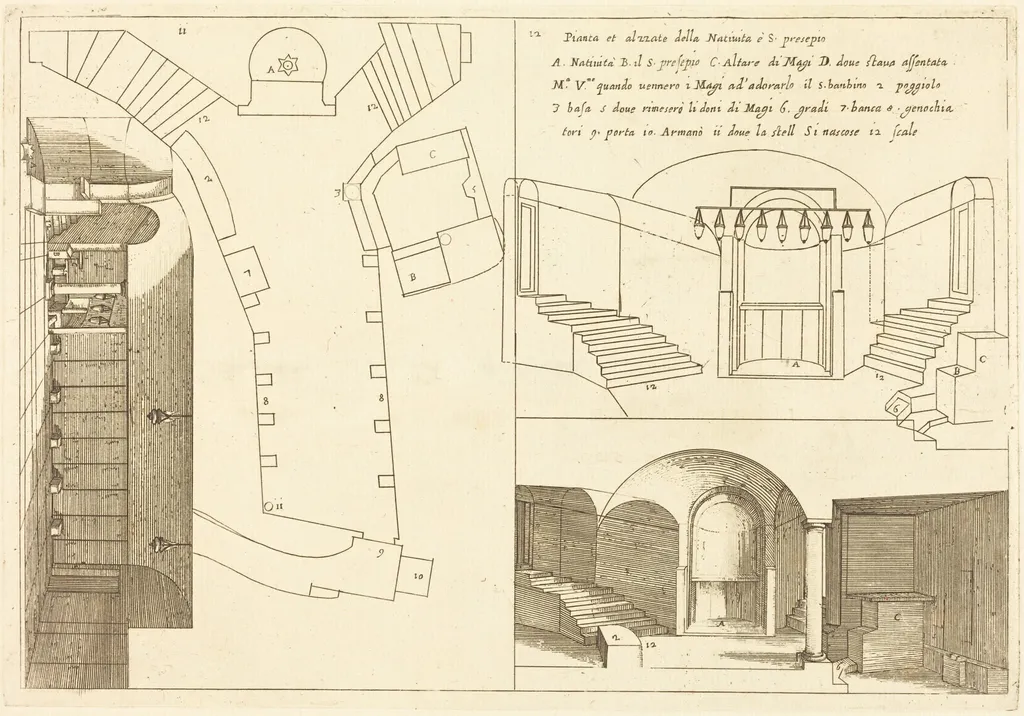
Plan and Elevation of the Church of the Holy Nativity is an ink print by the Baroque artist Jacques Callot. It dates from 1619 and is held in the collection of the National Gallery of Art.
About this work
Overview
Created in 1619 by the French baroque printmaker Jacques Callot, this work is an etching and engraving on laid paper. It presents both a plan and an elevation of the Church of the Holy Nativity, combining a side cutaway with a frontal view. The image functions as a detailed architectural study, integrating the building within a modest landscape setting.
Subject & Meaning
The print records the interior and exterior organization of the Holy Nativity church, labeling rooms, arches, stairs and windows with alphabetic markers. An Italian caption at the top identifies liturgical elements such as the nativity scene and altar, indicating the work’s purpose as a spatial analysis rather than a purely decorative representation.
Technique & Style
Callot employed a dual process of etching and engraving, allowing for fine line work and precise contouring typical of his baroque sensibility. The laid paper surface enhances the crispness of the architectural lines, while the restrike nature of the print suggests a careful replication of an original design.
History & Provenance
Part of a series of religious images produced by Callot, the print reflects his broader interest in documenting contemporary architecture. Though originally intended for a specific patron or workshop, the work survives as a rare example of early 17th‑century architectural printmaking, preserved in several museum collections.
Artist & collection

Artist
Jacques Callot was a baroque printmaker and draftsman from the Duchy of Lorraine.

 Holy Family at supper
 Restoration of the Aqueduct at Pisa
 Restoration of the Aqueduct at Pisa
 Square in Paris with Many Figures
 Square in Paris with Many Figures
 Horsemen Attacked by Robbers
 HOW WILL A COVERED PART BE CORRECTED?HOW WIKA A COVERED HEART DEED CORRECTED?
![Christ Walking on the Water [second plate], by Jacques Callot](https://artifactworldgallery.com/img/jacques-callot--christ-walking-on-the-water-second-plate--2069f3bfe4cb2126-w320.webp) Christ Walking on the Water [second plate]
Christ Walking on the Water [second plate]
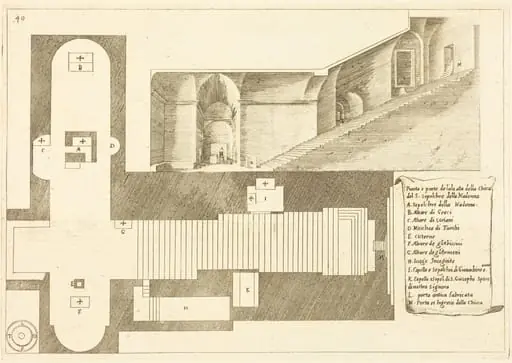 Plan and Part of the Elevation of the Church of the Holy Sepulchre of the Madonna
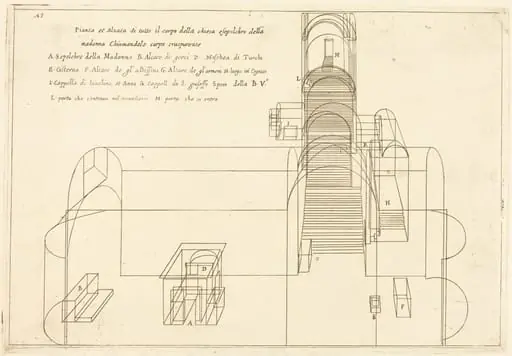 Plan and Elevation of the Church of the Madonna's Sepulchre
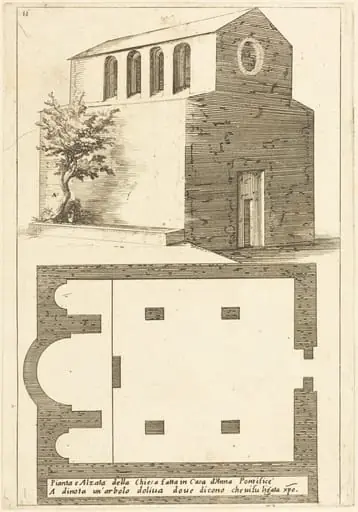 Plan and Elevation of the Church near the House of Annas
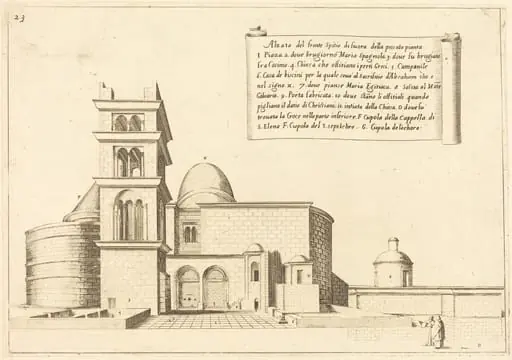 Elevation of a Church
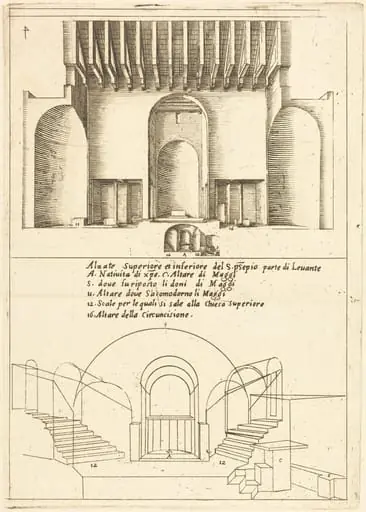 Elevation of the Church of the Holy Manger
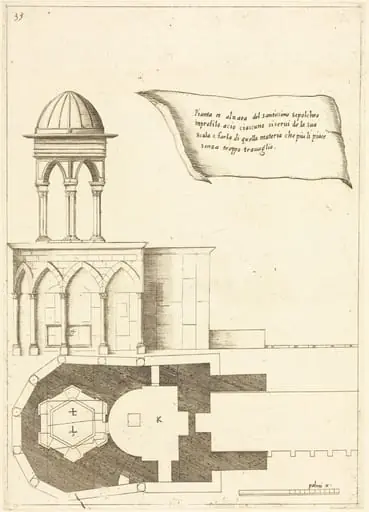 Plan and Elevation of the Church of the Holy Sepulchre
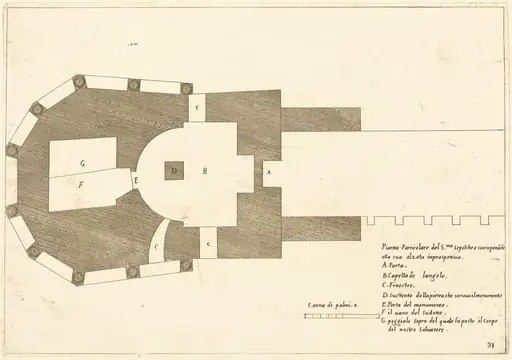 Plan of the Church of the Holy Sepulchre
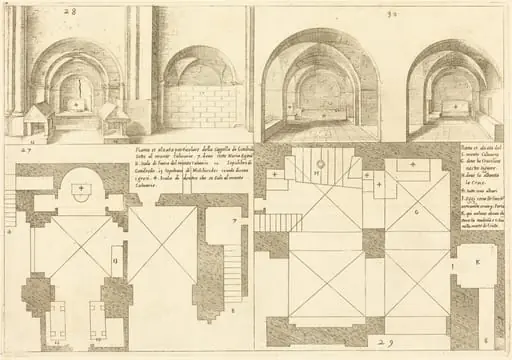 Plan and Elevation of the Chapel of Godefroy de Bouillon
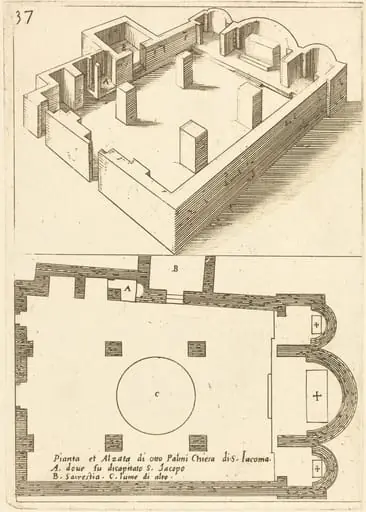 Plan and Elevation of the Church of S. Iacoma