Artwork
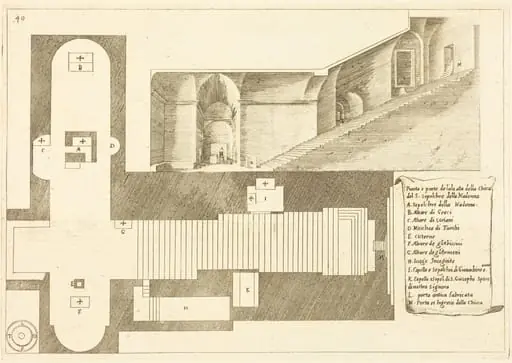
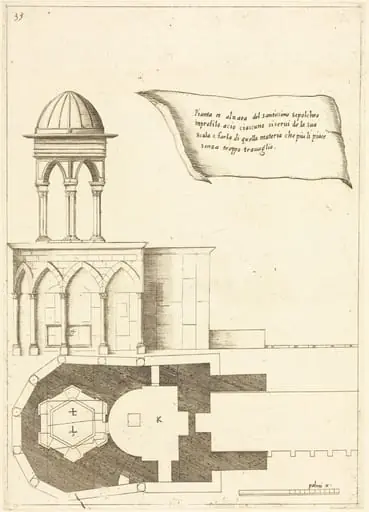
Plan and Elevation of the Church of the Madonna's Sepulchre
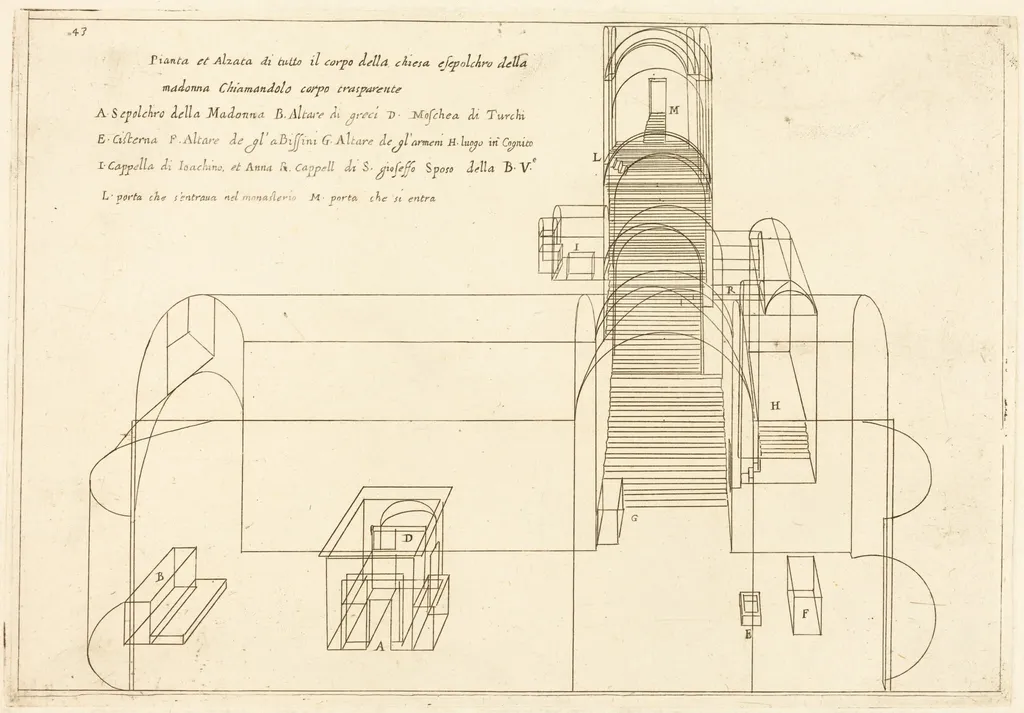
Plan and Elevation of the Church of the Madonna's Sepulchre is an ink print by the Baroque artist Jacques Callot. It dates from 1619 and is held in the collection of the National Gallery of Art.
About this work
Overview
The work belongs to Callot’s broader engagement with architectural subjects, distinguishing his oeuvre from his more famous depictions of social scenes.
Created in 1619 by Jacques Callot, this print is a technical rendering of the Church of the Madonna's Sepulchre, executed in etching and engraving on laid paper. Though a restrike, it preserves the precision of the original. The work belongs to Callot’s broader engagement with architectural subjects, distinguishing his oeuvre from his more famous depictions of social scenes. It functions as a measured visual document rather than a devotional image.
Subject & Meaning
The print depicts the architectural layout and elevation of a church believed to mark the burial site of the Virgin Mary. Its purpose is documentary: to convey spatial relationships between altars, chapels, and entrances with clarity. The Italian labels identify key features, grounding the image in its liturgical context. The design reflects contemporary devotional priorities, emphasizing the sacred geometry of pilgrimage architecture.
Technique & Style
Callot employed fine etched lines and engraved details to render architectural elements with surgical precision. Overlapping planes and layered perspectives mimic the logic of architectural blueprints, using cross-hatching and consistent line weight to suggest depth. The absence of shading or ornamentation focuses attention on structural accuracy. The paper’s laid texture subtly enhances the print’s tactile, technical character.
History & Provenance
The original plate was likely produced for scholarly or ecclesiastical use, given its detailed annotations and lack of decorative flourish. This impression is a later restrike, indicating continued interest in Callot’s architectural studies. While the print’s early ownership is undocumented, its survival in multiple impressions suggests it was valued as a reference tool among artists and architects in the 17th and 18th centuries.
Context
In early 17th-century Europe, detailed architectural drawings were increasingly used to record sacred sites, especially those linked to pilgrimage. Callot, though better known for genre scenes, was deeply engaged with spatial representation, influenced by contemporary treatises on perspective and design. This print aligns with a broader trend of using printmaking to disseminate architectural knowledge beyond manuscript circles.
Legacy
Callot’s architectural prints, including this one, contributed to the standardization of technical illustration in print culture. Though not widely exhibited as art, they served as models for later surveyors and designers. The precision of his line work influenced generations of engravers working in urban planning and ecclesiastical documentation, cementing his role as a bridge between artistic and scientific representation.
Artist & collection
Artist
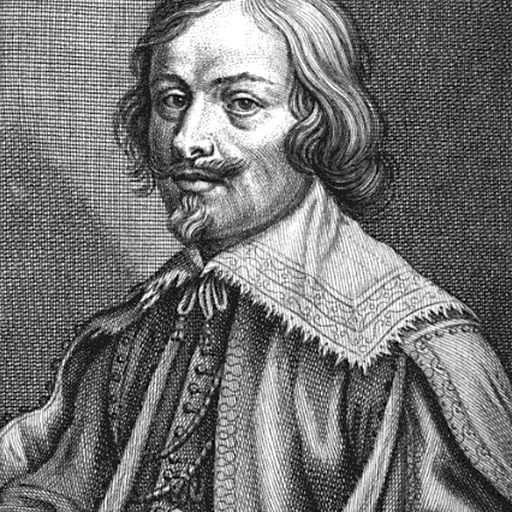
Jacques Callot was a baroque printmaker and draftsman from the Duchy of Lorraine.

 Holy Family at supper
 Restoration of the Aqueduct at Pisa
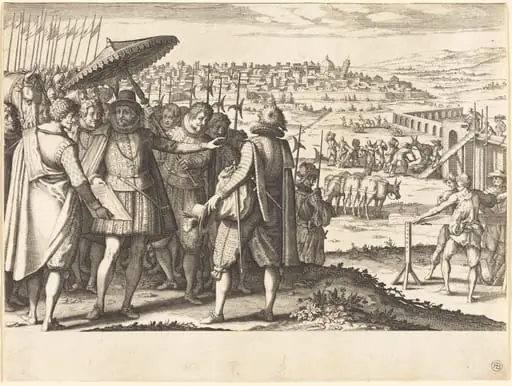 Restoration of the Aqueduct at Pisa
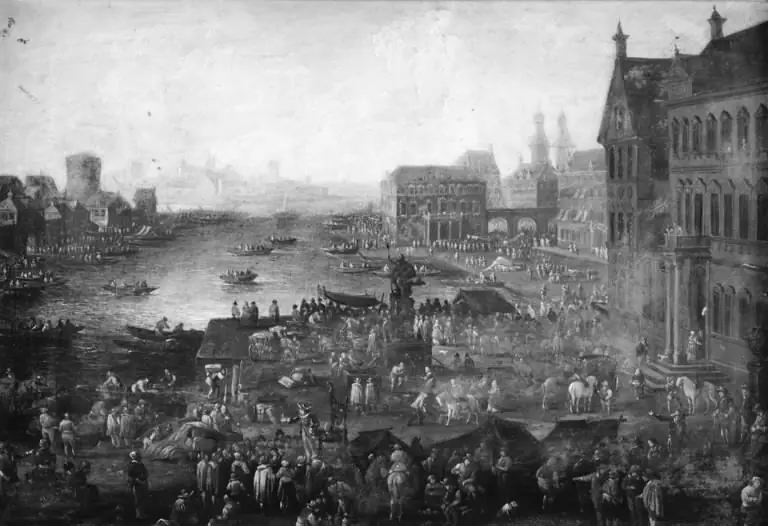 Square in Paris with Many Figures
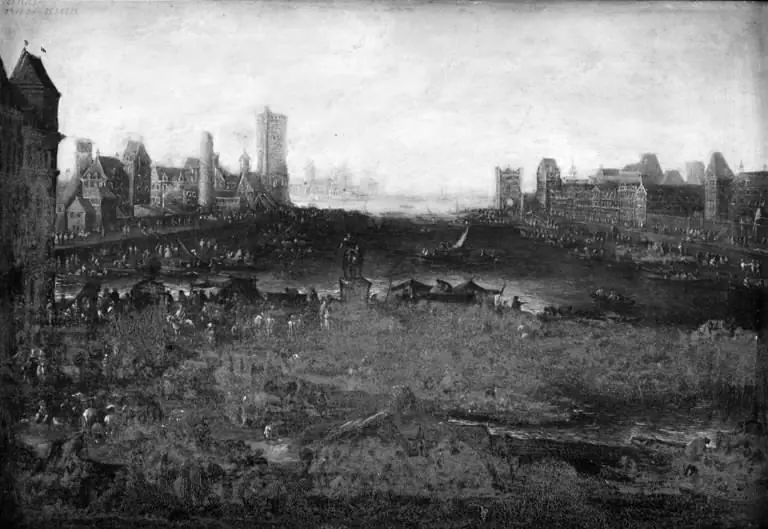 Square in Paris with Many Figures
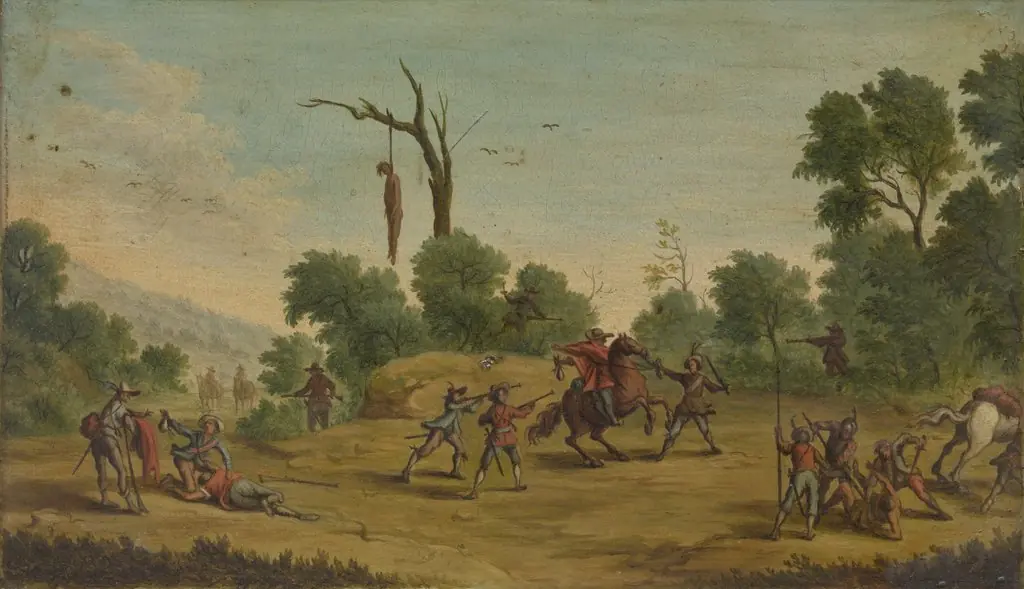 Horsemen Attacked by Robbers
 HOW WILL A COVERED PART BE CORRECTED?HOW WIKA A COVERED HEART DEED CORRECTED?
![Christ Walking on the Water [second plate], by Jacques Callot](https://artifactworldgallery.com/img/jacques-callot--christ-walking-on-the-water-second-plate--2069f3bfe4cb2126-w320.webp) Christ Walking on the Water [second plate]
Christ Walking on the Water [second plate]
 Plan and Part of the Elevation of the Church of the Holy Sepulchre of the Madonna
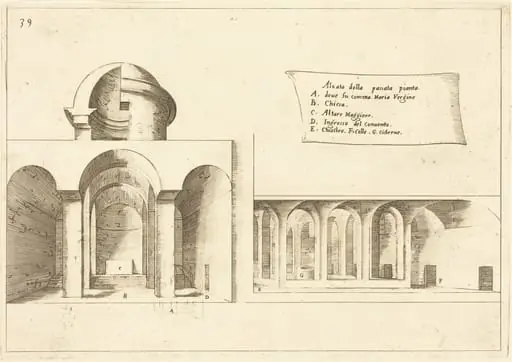 Elevation of a Church
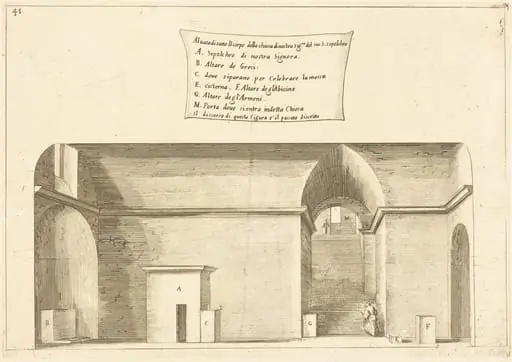 Elevation of the Church of the Holy Sepulchre
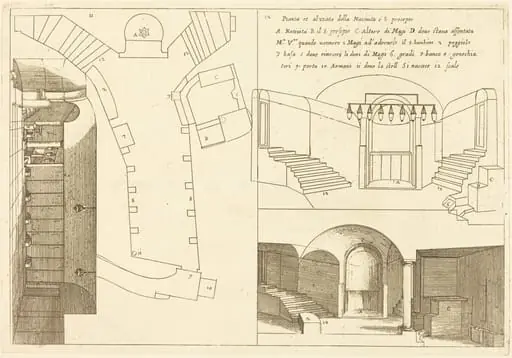 Plan and Elevation of the Church of the Holy Nativity
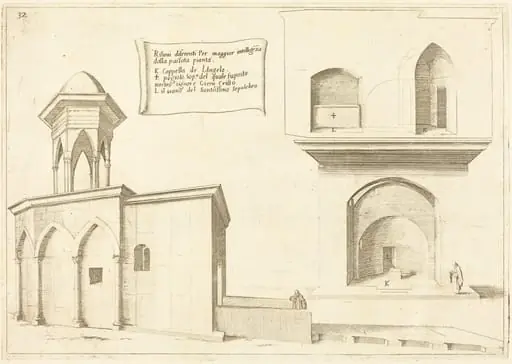 Elevation of the Church of the Holy Sepulchre
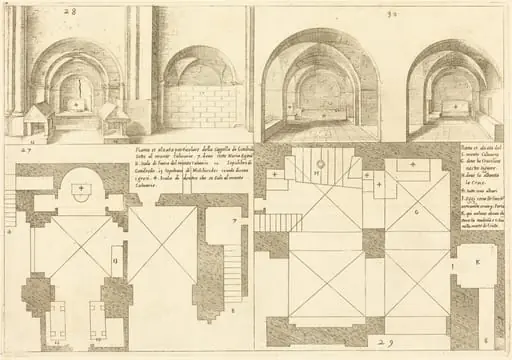 Plan and Elevation of the Chapel of Godefroy de Bouillon
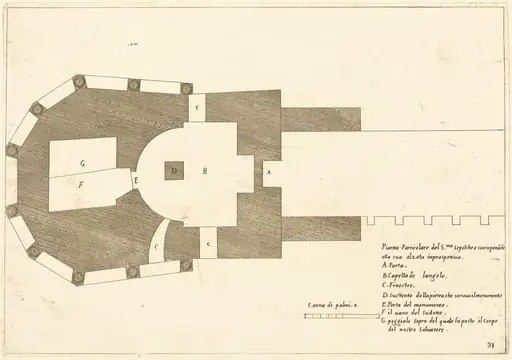 Plan of the Church of the Holy Sepulchre
 Plan and Elevation of the Church of the Holy Sepulchre
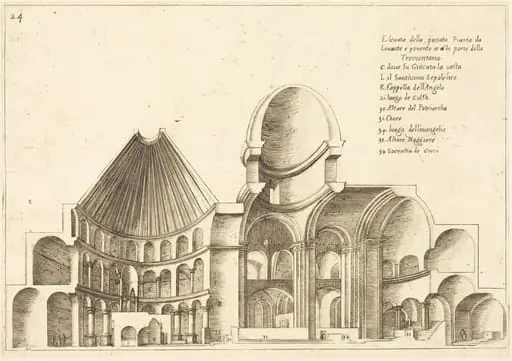 Cross-Section of the Church of the Holy Sepulchre
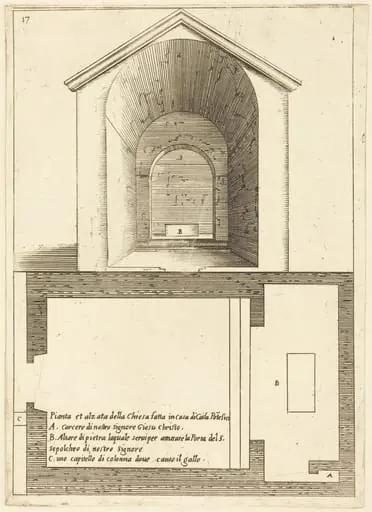 Plan and Elevation of the Church near the House of Caiaphas
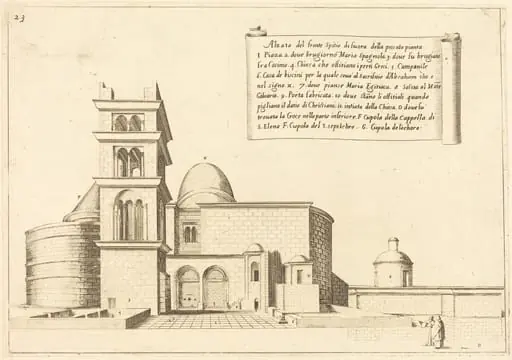 Elevation of a Church