Artwork
Return of the Prodigal Son
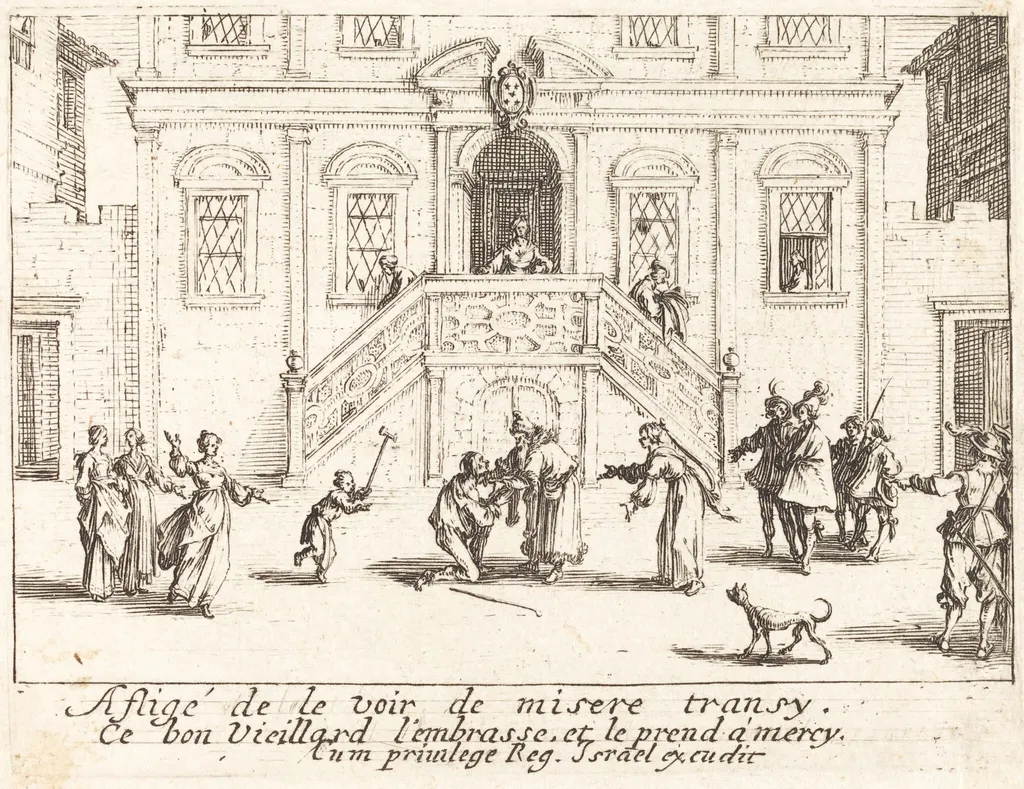
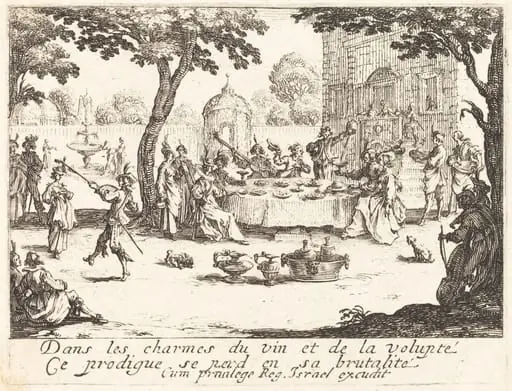
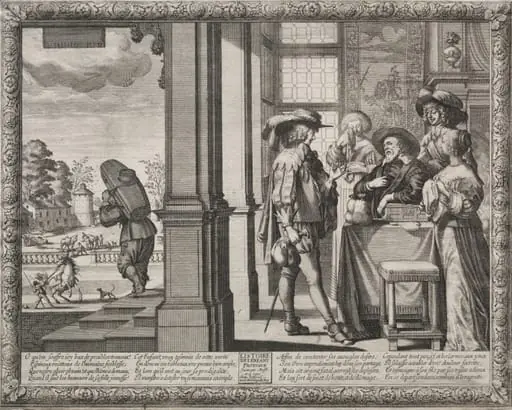
Return of the Prodigal Son is an ink print by the Baroque artist Jacques Callot. It dates from 1635 and is held in the collection of the National Gallery of Art.
About this work
Overview
Jacques Callot produced this etching in 1635, part of a vast body of over 1,400 prints that documented both secular and sacred themes.
Jacques Callot produced this etching in 1635, part of a vast body of over 1,400 prints that documented both secular and sacred themes. Executed on laid paper, the work belongs to his series of biblical narratives rendered with meticulous detail. Unlike many contemporaries, Callot favored intimate, crowded compositions that fused religious subject matter with keen observation of everyday life, grounding spiritual stories in tangible social environments.
Subject & Meaning
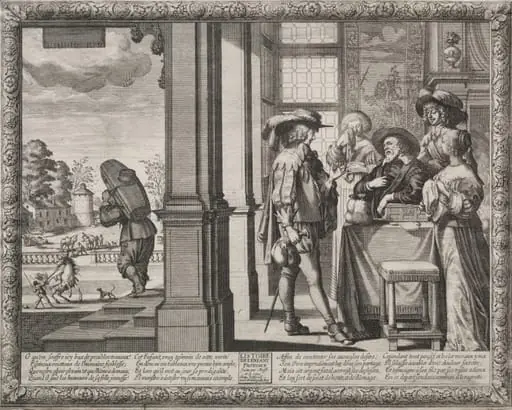
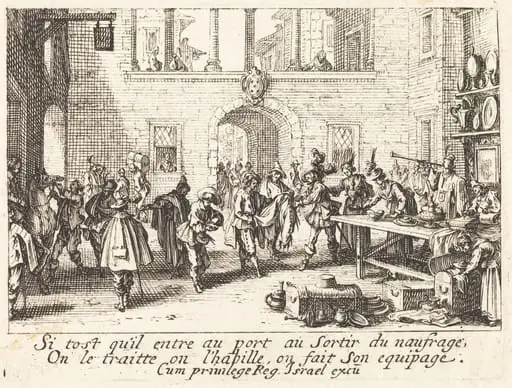
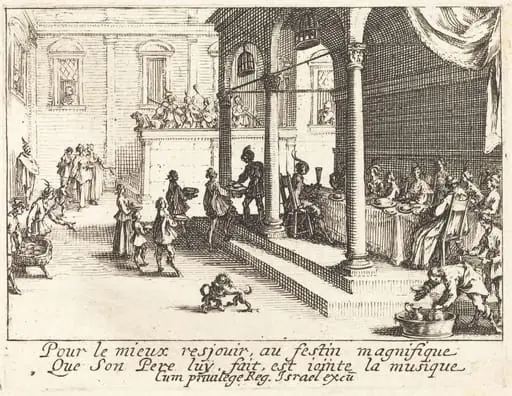
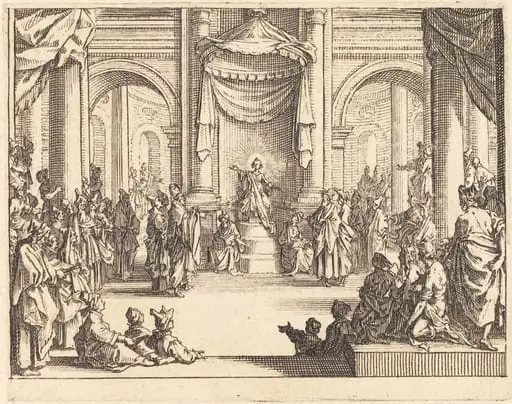
The scene depicts the biblical moment when the prodigal son returns home, forgiven by his father. Figures in rich attire and humble garments gather around the central pair, emphasizing social contrast. A man offers support to the kneeling son, while guards and onlookers observe silently. The presence of a dog and the architectural backdrop reinforce realism. The accompanying French verse underscores themes of repentance and mercy, transforming the image into a moral reflection rather than mere illustration.
Technique & Style
Callot employed fine-line etching to achieve extraordinary detail, using multiple burin touches to define textures in fabric, stone, and skin. The composition is densely packed yet carefully ordered, guiding the eye through layered spatial planes. Architectural elements like the clock and balcony are rendered with precision, while the figures vary in scale and posture to suggest movement and hierarchy. His technique allowed for nuanced expression, capturing subtle gestures and emotional tension within a single plate.
History & Provenance
Created during Callot’s mature period in Nancy, the etching likely circulated among collectors and religious institutions in Lorraine and beyond. Though specific early ownership records are sparse, its survival in multiple museum collections suggests widespread appreciation in the 17th and 18th centuries. The print was reproduced in devotional albums and studied by later artists for its compositional complexity and emotional depth.
Context
In mid-17th-century Europe, religious imagery remained central to print culture, especially in regions affected by the Thirty Years’ War. Callot’s work responded to a public appetite for moral narratives rendered with psychological realism. His depictions of biblical scenes often mirrored contemporary social hierarchies and urban life, making sacred stories accessible through familiar settings and recognizable human behavior.
Legacy
Callot’s etchings influenced generations of printmakers through their technical innovation and narrative clarity. 'Return of the Prodigal Son' exemplifies his ability to elevate religious themes with observational rigor. Later artists, including Rembrandt, drew from his use of light, crowd dynamics, and emotional nuance. The print endures as a reference for how printmaking could convey complex moral ideas with quiet authority.
Artist & collection
Artist
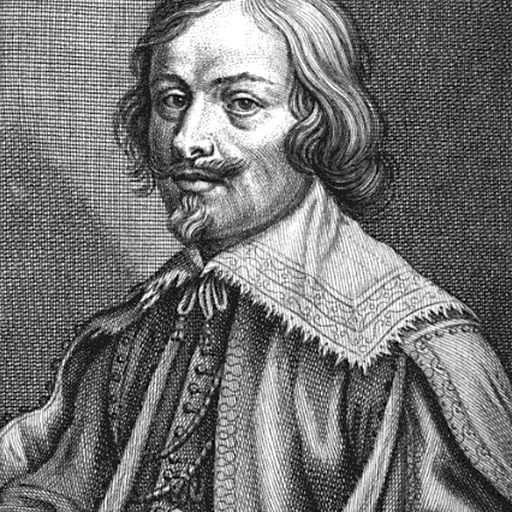
Jacques Callot was a baroque printmaker and draftsman from the Duchy of Lorraine.

 Holy Family at supper
 Restoration of the Aqueduct at Pisa
 Restoration of the Aqueduct at Pisa
 Square in Paris with Many Figures
 Square in Paris with Many Figures
 Horsemen Attacked by Robbers
 HOW WILL A COVERED PART BE CORRECTED?HOW WIKA A COVERED HEART DEED CORRECTED?
![Christ Walking on the Water [second plate], by Jacques Callot](https://artifactworldgallery.com/img/jacques-callot--christ-walking-on-the-water-second-plate--2069f3bfe4cb2126-w320.webp) Christ Walking on the Water [second plate]
Christ Walking on the Water [second plate]