Artwork
Il Greco in Troia: Plate 6
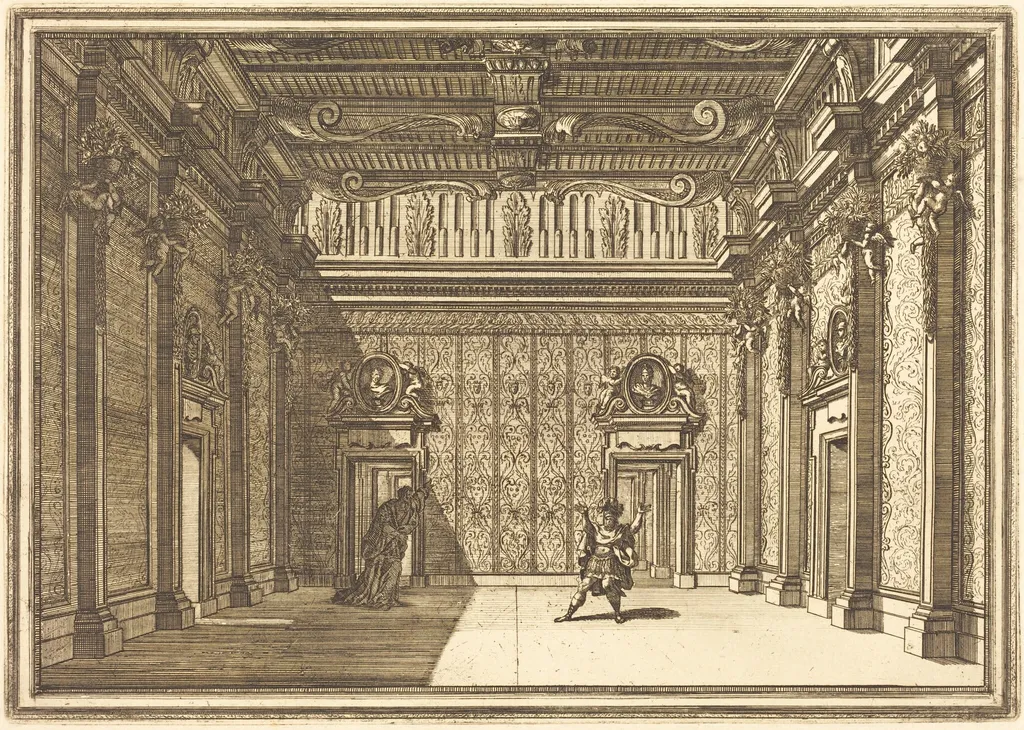
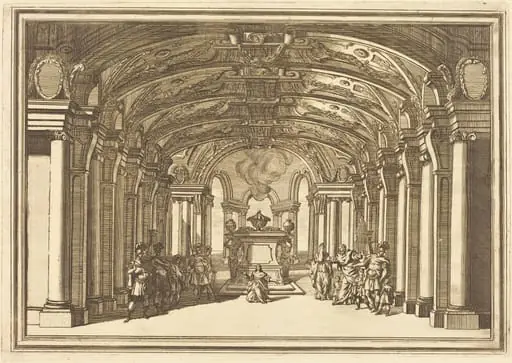
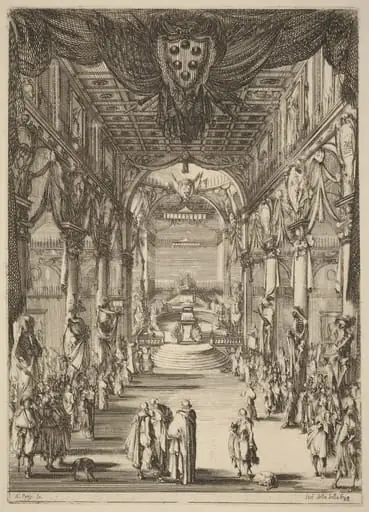
Il Greco in Troia: Plate 6 is an ink print by the Baroque artist Arnold von Westerhout. It dates from 1688 and is held in the collection of the National Gallery of Art.
About this work
Overview
Il Greco in Troia: Plate 6 is a restrike etching and engraving from 1688 by Arnold von Westerhout, part of a series illustrating scenes from the Trojan War.
Il Greco in Troia: Plate 6 is a restrike etching and engraving from 1688 by Arnold von Westerhout, part of a series illustrating scenes from the Trojan War. Executed on laid paper, the print captures an architectural interior with precise linear detail. The composition emphasizes spatial depth through controlled shading and rhythmic patterning, evoking a theatrical setting rather than a documented space.
Subject & Meaning
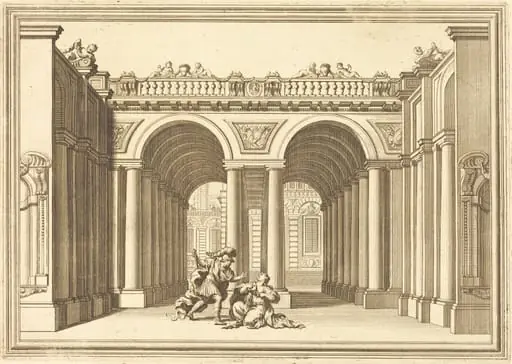
The scene depicts two minor figures within an expansive, empty hall— one resting against a column, the other gesturing toward him. Their small scale contrasts with the monumental architecture, suggesting narrative tension without clear action. The title references the Trojan War, yet the imagery omits battle or mythic figures, implying a contemplative pause or offstage moment in the larger drama.
Technique & Style
Westerhout employed fine etched lines and engraved accents to render the ornate columns, carved wall reliefs, and coffered ceiling. Cross-hatching and subtle tonal gradations model the polished stone floor and architectural volumes, creating a sense of three-dimensionality. The precision of the lines reflects printmaking conventions of the late 17th century, prioritizing clarity and decorative detail over expressive brushwork.
History & Provenance
The print originates from a series published in 1688, likely commissioned for a private or scholarly audience interested in classical themes. This impression is a later restrike, indicating continued interest in the imagery beyond its initial circulation. Original plates were preserved and reprinted, a common practice among printmakers seeking to extend the reach of their work.
Context
Produced during a period of renewed fascination with classical antiquity in European art, the image aligns with decorative cycles illustrating Homeric epics. Unlike overtly dramatic depictions of battle, this interior scene reflects a quieter, architectural mode of storytelling favored in academic and theatrical circles, where setting often carried symbolic weight.
Legacy
Westerhout’s series contributed to the tradition of print-based classical illustration in the late Baroque era. While not widely reproduced today, the work exemplifies how printmakers translated literary narratives into spatial compositions, influencing later designers of stage sets and decorative interiors through its emphasis on architectural narrative.
Artist & collection


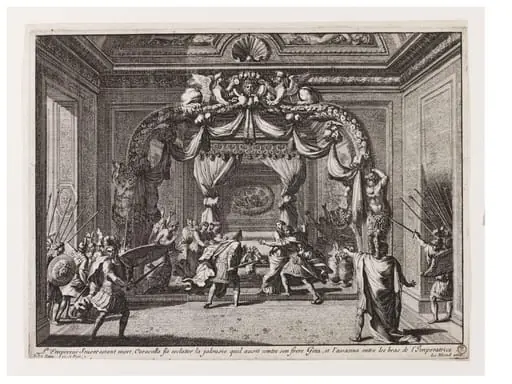 The Emperor Caracalla killing his brother
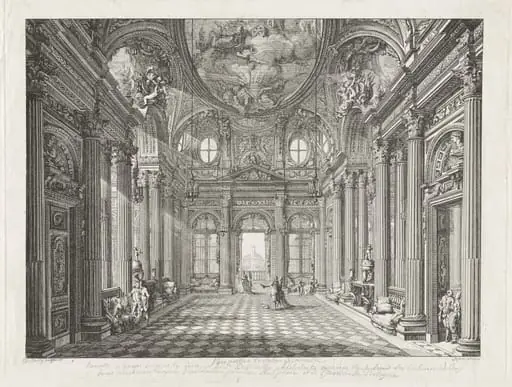 Perspectival View of the Salon of the Palazzo Spinola, Genoa
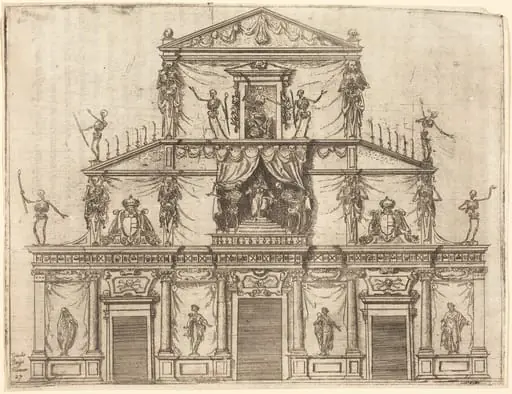 Façade of San Lorenzo, Florence
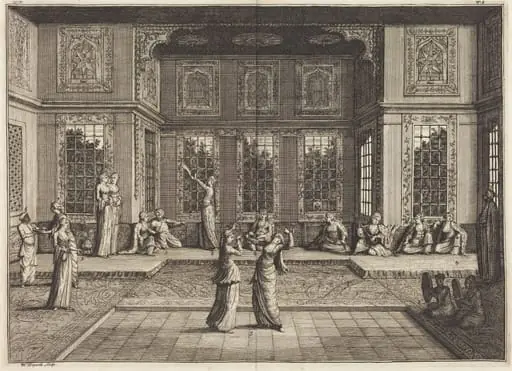 The Seraglio
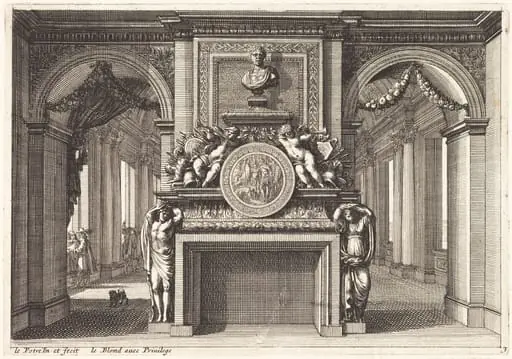 Fireplaces and Other Interior Decorations
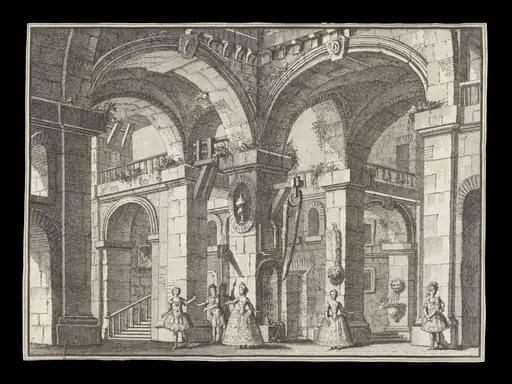 H Beard Print Collection
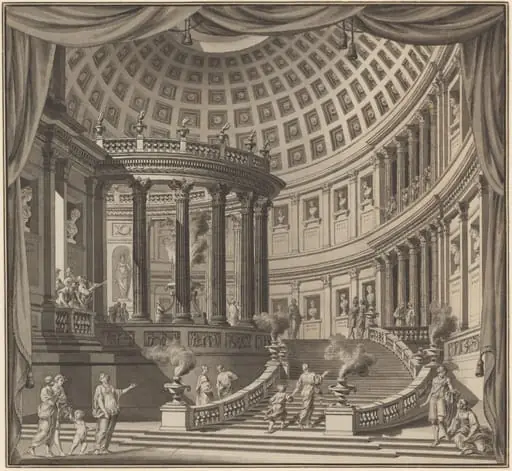 Design for a Stage Curtain: The Interior of an Elaborate Temple Dedicated to Illustrious Men
 Funeral of Prince Francesco de Medici