Artwork
The Dissipation
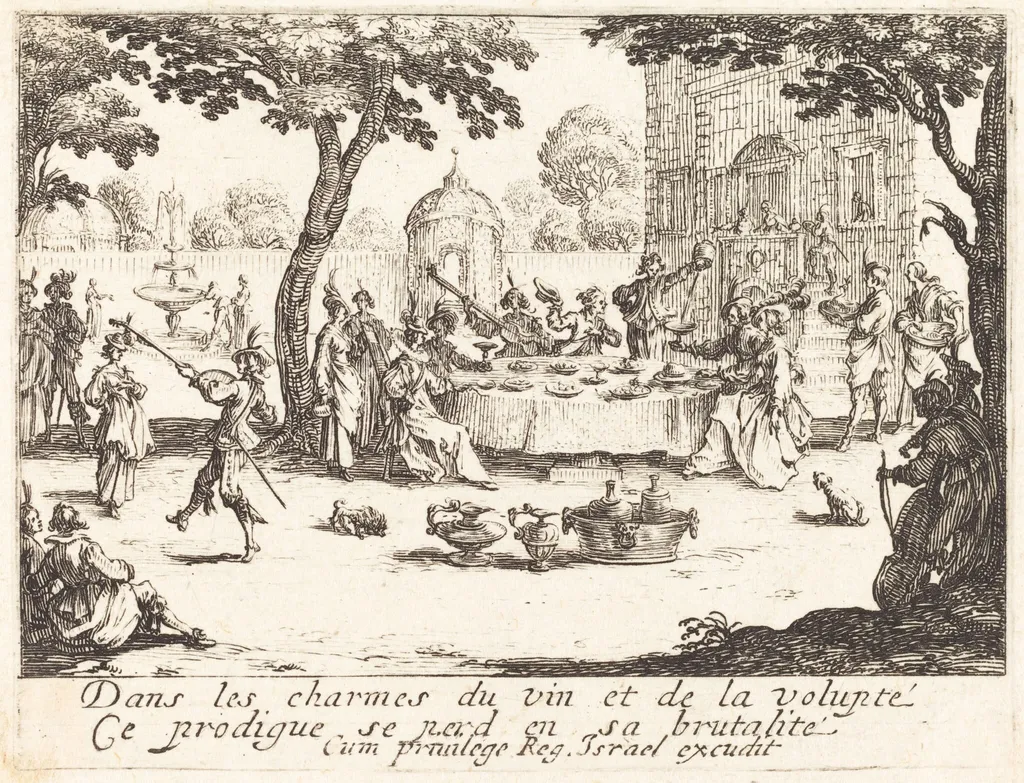
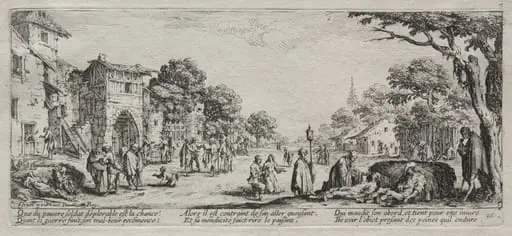
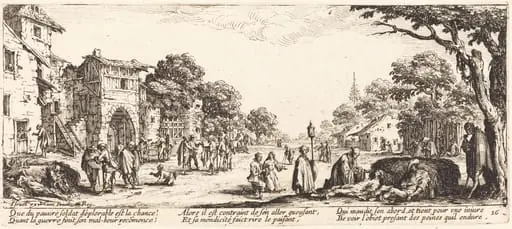
The Dissipation is an ink print by the Baroque artist Jacques Callot. It dates from 1635 and is held in the collection of the National Gallery of Art.
About this work
Overview
As one of more than 1,400 prints produced by the Lorrainer artist, it exemplifies his focus on social scenes drawn from everyday life.
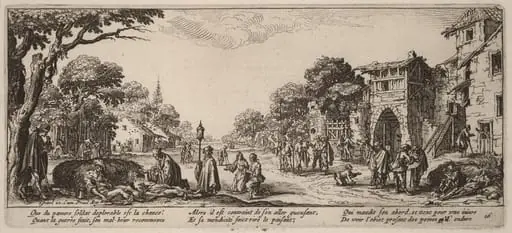
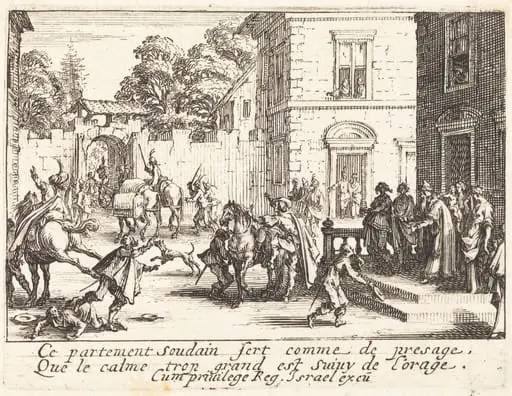
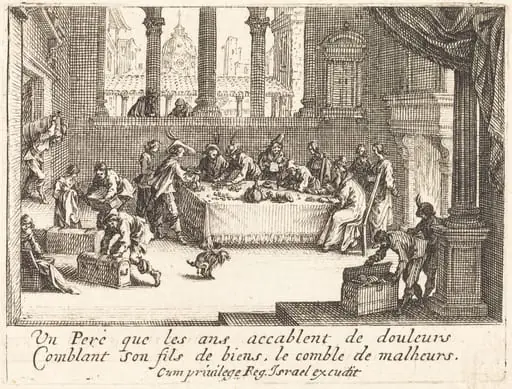
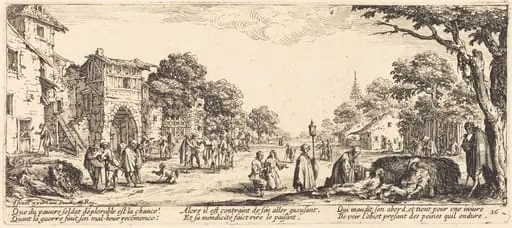
Created in 1635 by Jacques Callot, *The Dissipation* is an etching on laid paper that captures a raucous outdoor gathering. As one of more than 1,400 prints produced by the Lorrainer artist, it exemplifies his focus on social scenes drawn from everyday life. The work combines precise line work with dynamic composition to portray a moment of unrestrained revelry, reflecting Callot’s interest in human behavior under unguarded conditions.
Subject & Meaning
The scene depicts a garden party in full disorder: figures dance, feast, argue, and nap amid overturned tables and scattered food. Instruments lie abandoned, and a dog sleeps undisturbed in the chaos. Beneath the image, an inscription serves as a moral caution against excess. The contrast between festive energy and implicit warning suggests a commentary on the fragility of social order and the consequences of indulgence.
Technique & Style
Callot employed fine, incised lines to convey motion and texture, using the etching medium to render dense detail without clutter. His sharp, controlled strokes define the twisting bodies, fluttering fabrics, and gnarled tree branches, enhancing the sense of kinetic disorder. The use of laid paper, with its subtle watermark texture, adds a tactile quality that complements the scene’s raw immediacy and intimate scale.
History & Provenance
Produced during Callot’s mature period in Nancy, the print emerged from a time when printmaking was increasingly used to document social realities beyond religious or mythological themes. While its early ownership is undocumented, it circulated among collectors and artists familiar with Northern European graphic traditions. Its survival in multiple institutional collections attests to its enduring relevance as a record of 17th-century visual culture.
Context
In the mid-1630s, Europe was still reeling from the religious and political upheavals of the Thirty Years’ War. Amid this instability, Callot turned his attention to civilian life, portraying both its pleasures and perils. *The Dissipation* aligns with broader Northern European traditions of moralizing genre scenes, yet its specificity—down to the placement of a single overturned jug—grounds it in observed reality rather than allegory.
Legacy
Callot’s detailed, narrative-driven etchings influenced generations of printmakers, particularly in their ability to merge observation with social critique. *The Dissipation* remains a key example of how printmaking could serve as both documentary and moral commentary. Its preservation in major collections underscores its role as a reference point for studies of early modern leisure, class, and visual storytelling.
Artist & collection
Artist
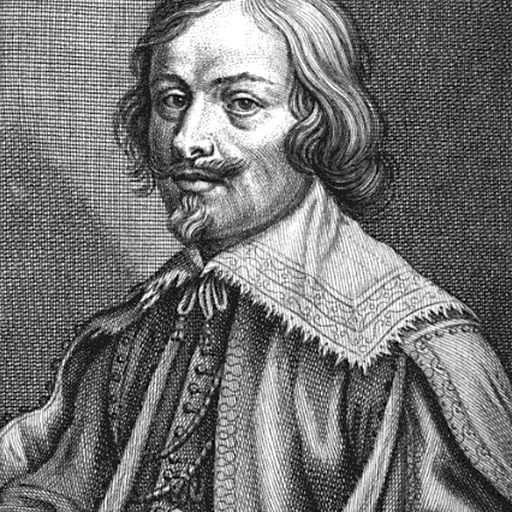
Jacques Callot was a baroque printmaker and draftsman from the Duchy of Lorraine.

 Holy Family at supper
 Restoration of the Aqueduct at Pisa
 Restoration of the Aqueduct at Pisa
 Square in Paris with Many Figures
 Square in Paris with Many Figures
 Horsemen Attacked by Robbers
 HOW WILL A COVERED PART BE CORRECTED?HOW WIKA A COVERED HEART DEED CORRECTED?
![Christ Walking on the Water [second plate], by Jacques Callot](https://artifactworldgallery.com/img/jacques-callot--christ-walking-on-the-water-second-plate--2069f3bfe4cb2126-w320.webp) Christ Walking on the Water [second plate]
Christ Walking on the Water [second plate]