Artwork
Scene of Pillage
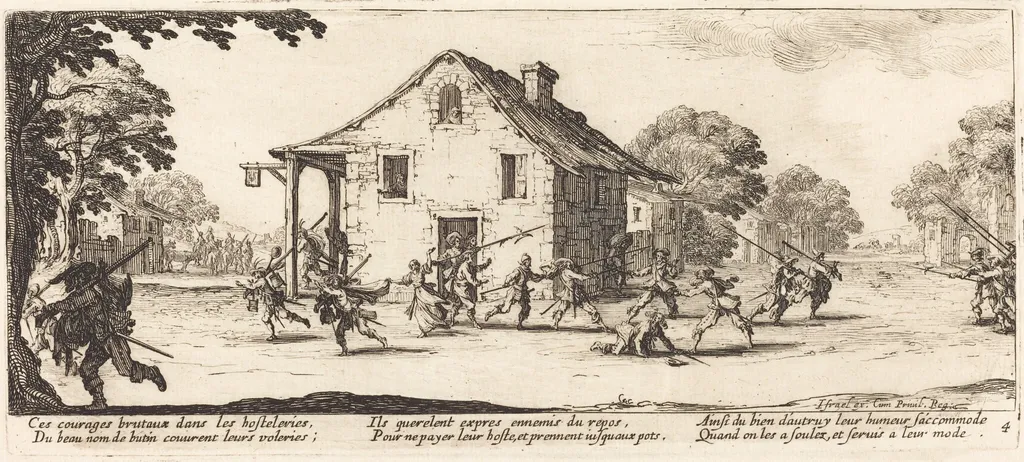
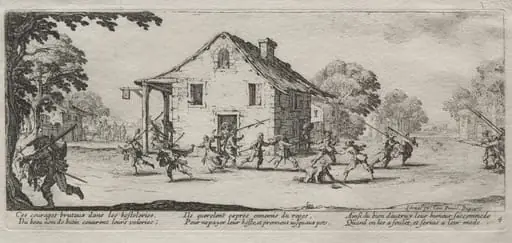
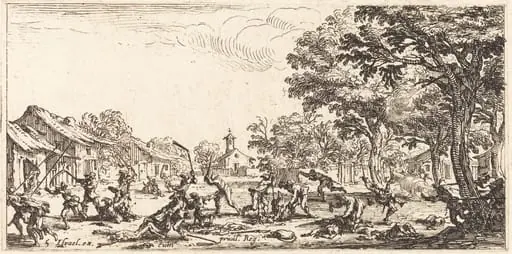
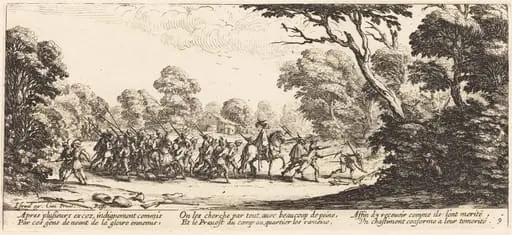
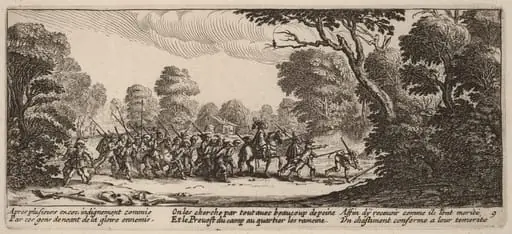
Scene of Pillage is an ink print by the Baroque artist Jacques Callot. It dates from 1633 and is held in the collection of the National Gallery of Art.
About this work
Overview
Created around 1633 by Jacques Callot, a printmaker from the Duchy of Lorraine, this etching on laid paper captures a moment of violent disorder. Part of a larger series, it reflects Callot’s focus on the human cost of war. His technical precision and prolific output—over 1,400 prints—established him as a key chronicler of early 17th-century European conflict through the medium of printmaking.
Subject & Meaning
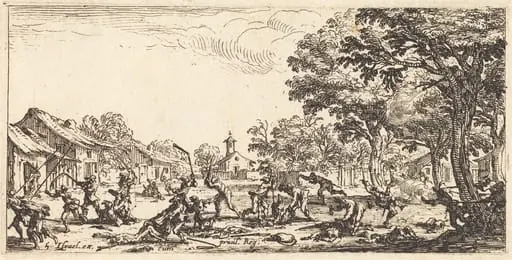
The scene portrays armed soldiers ransacking a rural dwelling, with figures in motion—some fleeing, others engaged in combat or collapsing.
The scene portrays armed soldiers ransacking a rural dwelling, with figures in motion—some fleeing, others engaged in combat or collapsing. The chaos suggests the breakdown of civilian life during wartime. Inscriptions in French reinforce the brutality depicted, grounding the image in real historical trauma rather than myth or allegory. The work functions as a direct witness to the suffering inflicted during the Thirty Years' War.
Technique & Style
Callot employed fine, sharp lines to render dense, dynamic compositions. The etching’s intricate detail—individual limbs, facial expressions, and architectural elements—demonstrates his mastery of the medium. He used the tonal range of ink on laid paper to suggest depth and movement, avoiding broad washes in favor of controlled, linear energy. The composition’s crowded perspective draws the viewer into the turmoil without idealization.
History & Provenance
The print emerged during Callot’s mature period, when he was documenting the military campaigns that ravaged the Holy Roman Empire. Likely produced in Nancy or Paris, it circulated among collectors and soldiers alike. Its survival in multiple institutional collections attests to its early recognition as a significant record of wartime violence, though its original commission remains undocumented.
Context
The Thirty Years' War (1618–1648) brought widespread devastation across Central Europe, with marauding troops often targeting civilian populations. Callot’s prints, including this one, responded to the visible realities of occupation and pillage. Unlike idealized battle scenes, his work avoided glorification, instead presenting the grim, unvarnished consequences of prolonged conflict on ordinary communities.
Legacy
Callot’s detailed etchings influenced later artists, including Goya, who adopted similar approaches to depicting war’s brutality. His technical innovations in etching—such as improved biting techniques—expanded the medium’s capacity for narrative complexity. This print endures not as a decorative image, but as a sober document of civilian suffering, shaping how subsequent generations understood the human toll of war.
Artist & collection
Artist
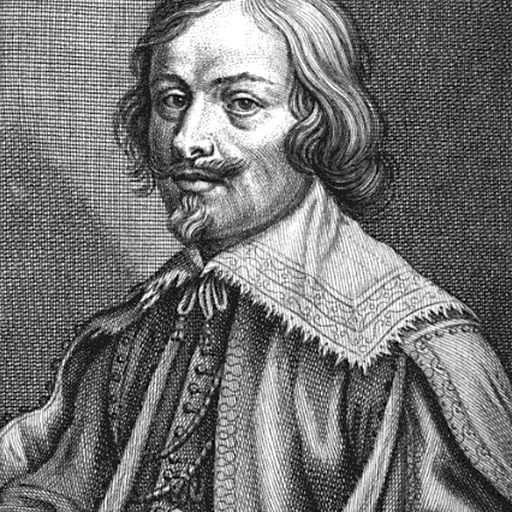
Jacques Callot was a baroque printmaker and draftsman from the Duchy of Lorraine.

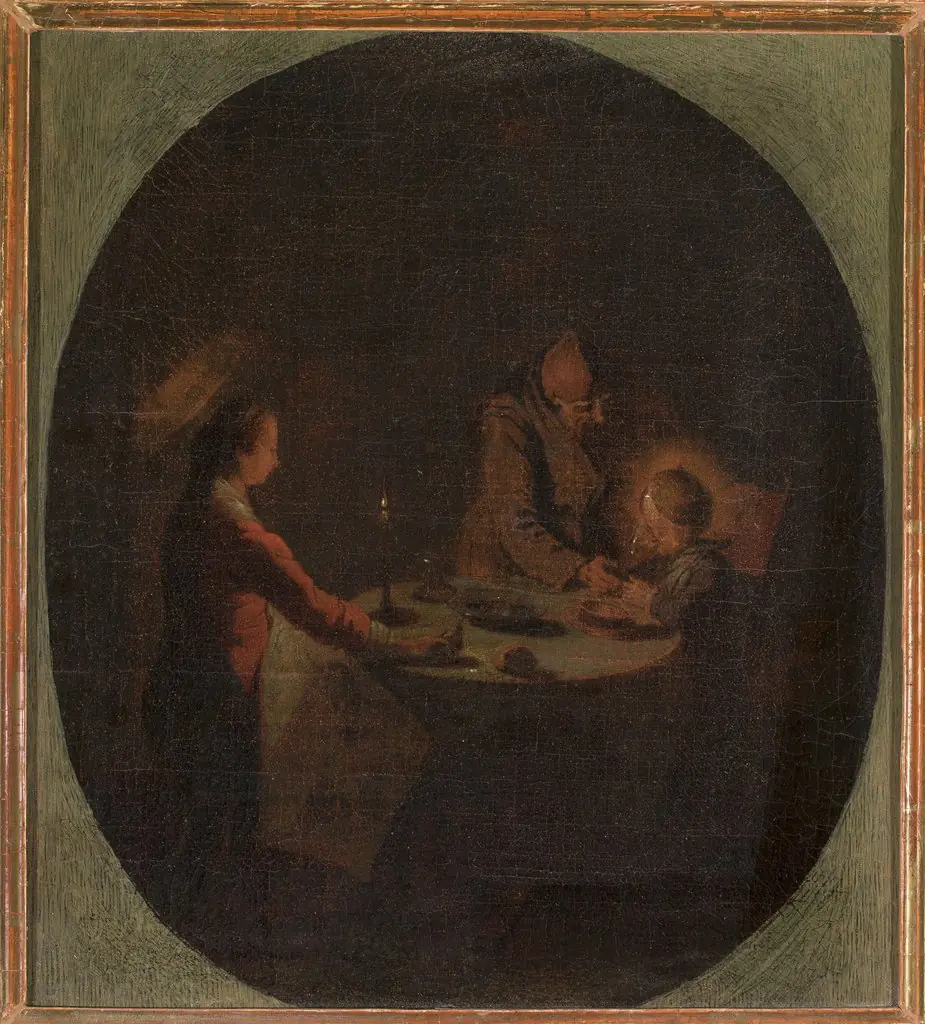 Holy Family at supper
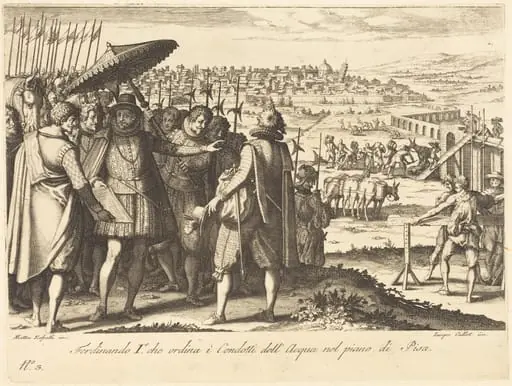 Restoration of the Aqueduct at Pisa
 Restoration of the Aqueduct at Pisa
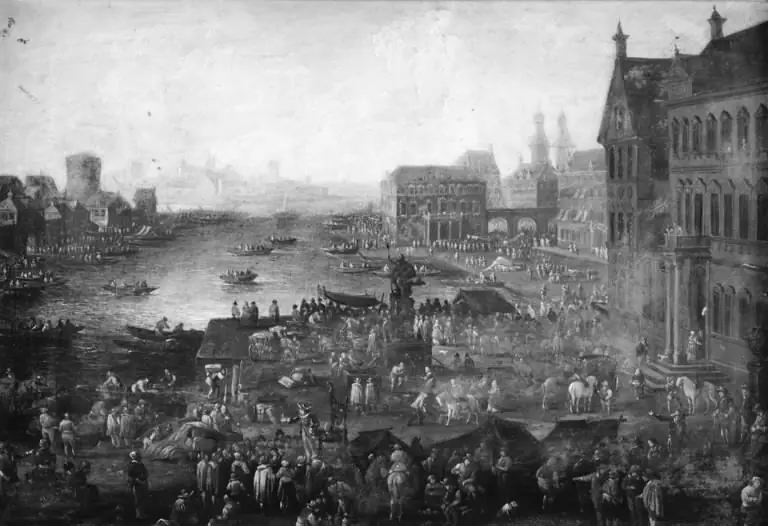 Square in Paris with Many Figures
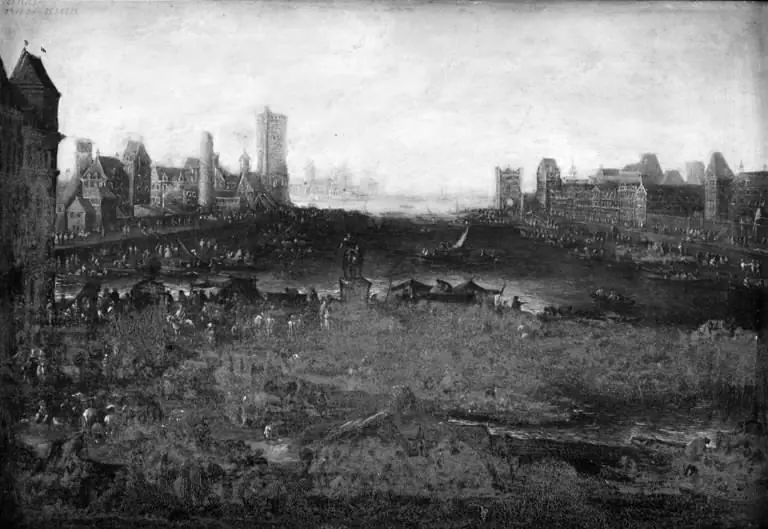 Square in Paris with Many Figures
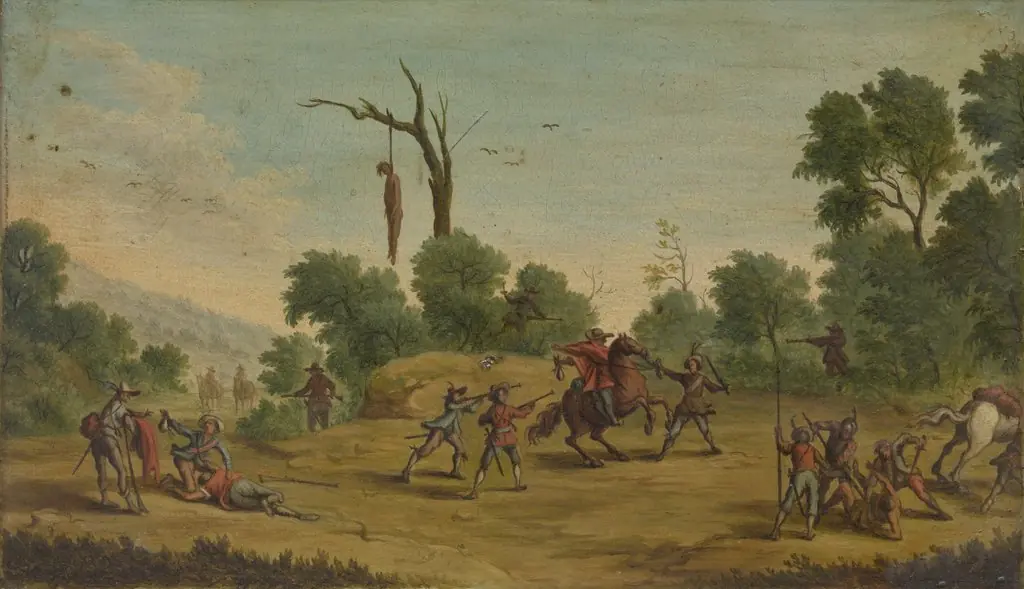 Horsemen Attacked by Robbers
 HOW WILL A COVERED PART BE CORRECTED?HOW WIKA A COVERED HEART DEED CORRECTED?
![Christ Walking on the Water [second plate], by Jacques Callot](https://artifactworldgallery.com/img/jacques-callot--christ-walking-on-the-water-second-plate--2069f3bfe4cb2126-w320.webp) Christ Walking on the Water [second plate]
Christ Walking on the Water [second plate]