Artwork
The Peasants' Revenge
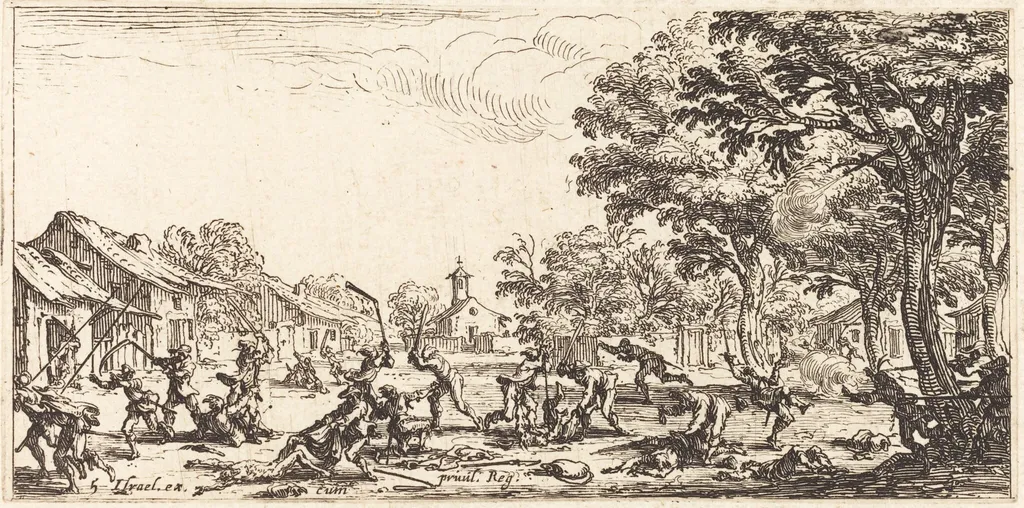
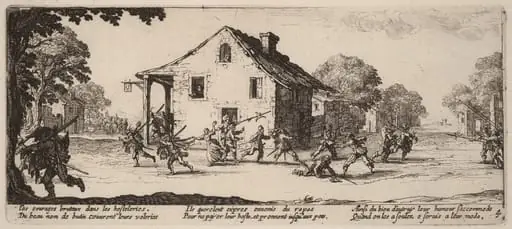
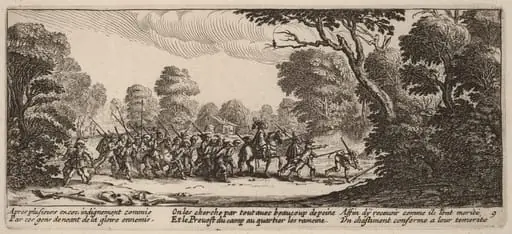
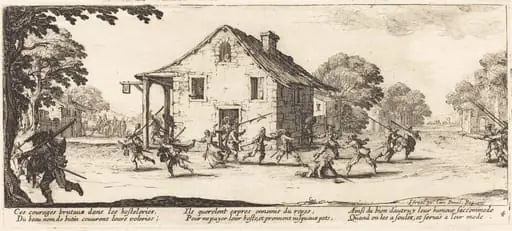
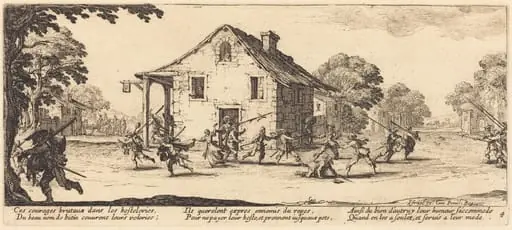
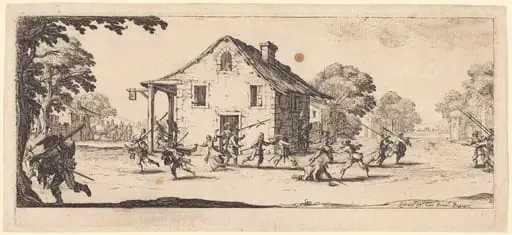
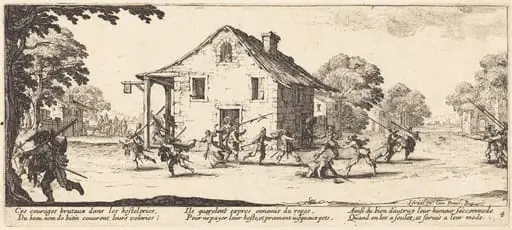
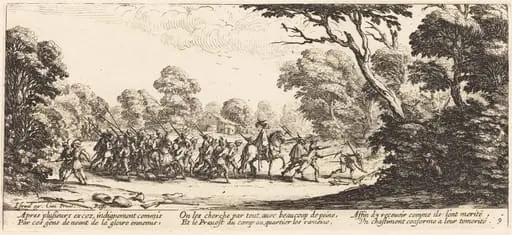
The Peasants' Revenge is an ink print by the Baroque artist Jacques Callot. It dates from 1633 and is held in the collection of the National Gallery of Art.
About this work
Overview
Jacques Callot, a 17th-century printmaker from Lorraine, produced this etching around 1633 as part of a larger series documenting social unrest.
Jacques Callot, a 17th-century printmaker from Lorraine, produced this etching around 1633 as part of a larger series documenting social unrest. Executed on laid paper, the work exemplifies his technical precision and interest in capturing moments of civic turmoil. Unlike many contemporaries who focused on elite subjects, Callot turned his attention to the margins of society, rendering scenes of conflict with meticulous detail and narrative clarity.
Subject & Meaning
The scene depicts peasants rising in armed resistance against armored soldiers, wielding pitchforks and torches in a crowded, chaotic composition. This inversion of power dynamics—peasants confronting their oppressors—was unusual in early modern art, where such uprisings were typically suppressed or ignored. The image suggests a moment of collective defiance, reflecting real social tensions in the wake of war and exploitation.
Technique & Style
Callot employed fine-line etching to render dense, dynamic compositions with remarkable clarity. His use of cross-hatching and precise contours gives weight to figures and textures, from fabric to armor. Background elements are rendered with atmospheric depth, anchoring the violence in a recognizable landscape. The etching’s small scale belies its complexity, showcasing Callot’s mastery of the medium and his ability to compress narrative into tight frames.
History & Provenance
Created during the Thirty Years’ War, the print likely circulated among educated audiences familiar with the hardships of rural life under military occupation. While no early ownership records are well-documented, the work aligns with Callot’s known series on war and disorder. It was likely produced for private collectors rather than public display, reflecting a growing interest in social commentary through print.
Context
In early 17th-century Europe, peasant revolts were frequent but rarely depicted in art. Most visual culture upheld hierarchical order, portraying peasants as passive or comic figures. Callot’s image stands apart by granting agency to the oppressed, possibly influenced by firsthand observations of troop movements and local uprisings in Lorraine, a region repeatedly ravaged by war and conscription.
Legacy
Callot’s etchings, including this one, influenced later generations of social commentators in print, such as Goya and Hogarth. His unflinching portrayal of violence and class conflict expanded the potential of printmaking as a vehicle for critical observation. Though not widely exhibited in his lifetime, his work gained recognition in the 18th and 19th centuries as a vital record of early modern life beyond the courtly ideal.
Artist & collection
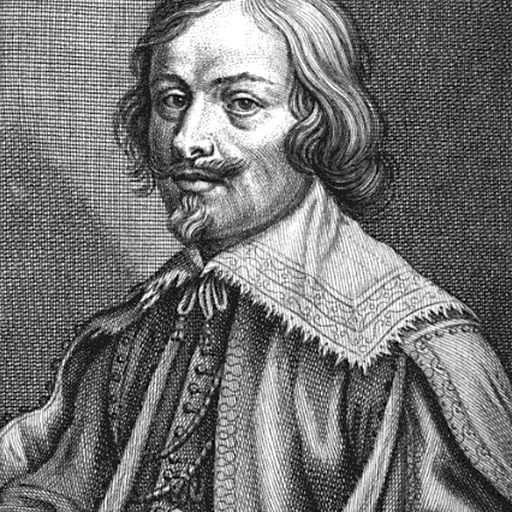
Artist
Jacques Callot was a baroque printmaker and draftsman from the Duchy of Lorraine.

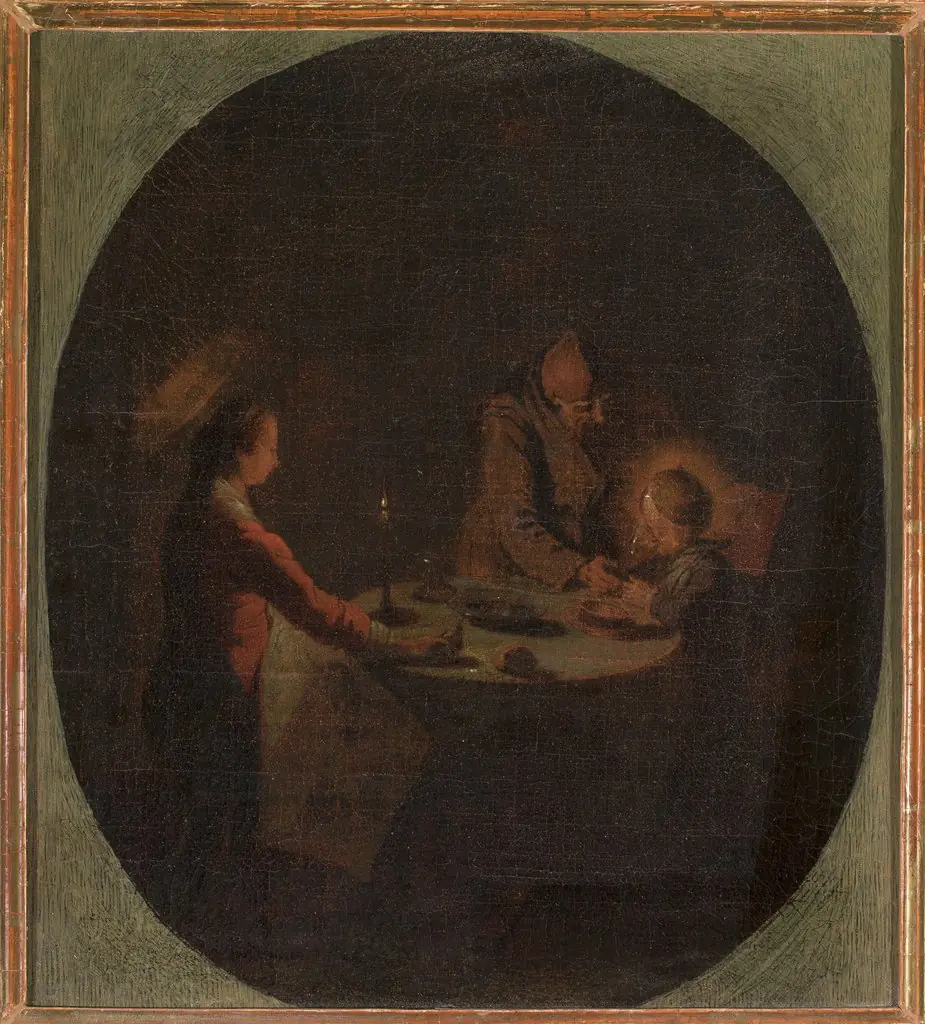 Holy Family at supper
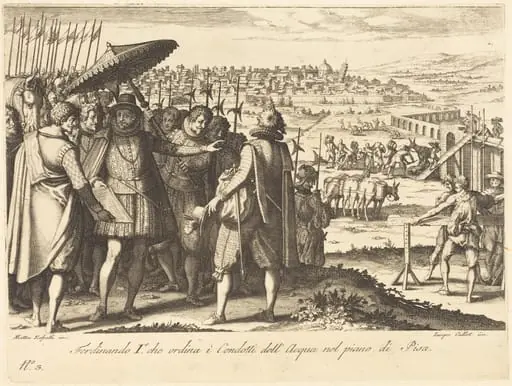 Restoration of the Aqueduct at Pisa
 Restoration of the Aqueduct at Pisa
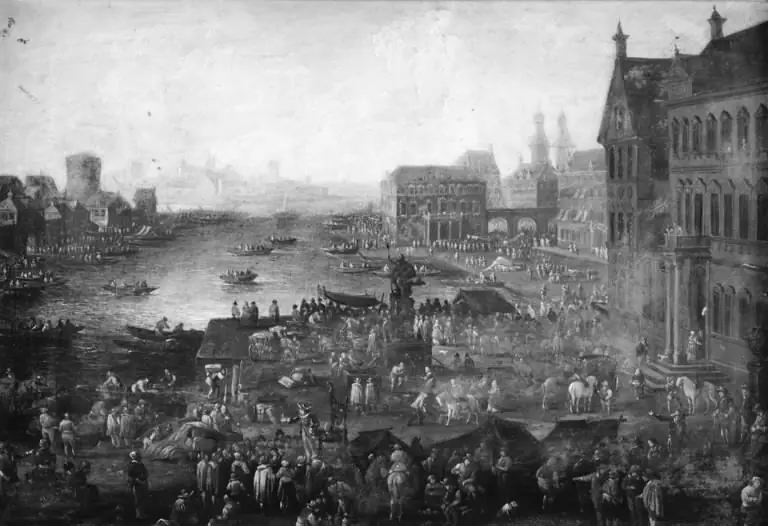 Square in Paris with Many Figures
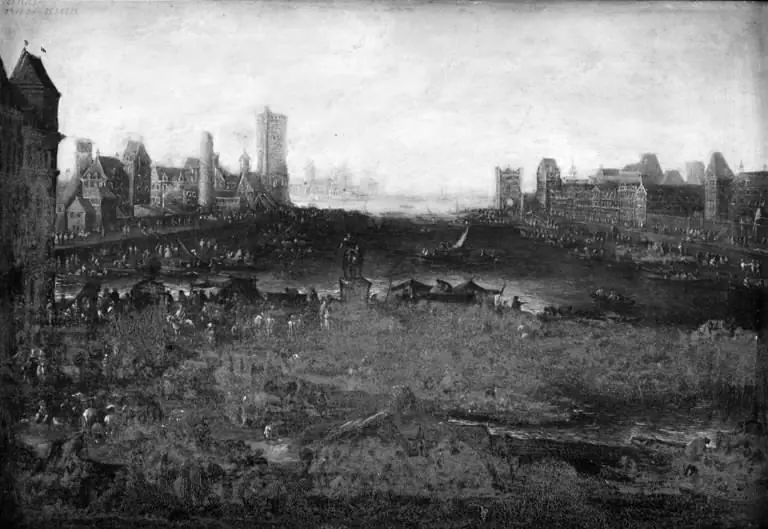 Square in Paris with Many Figures
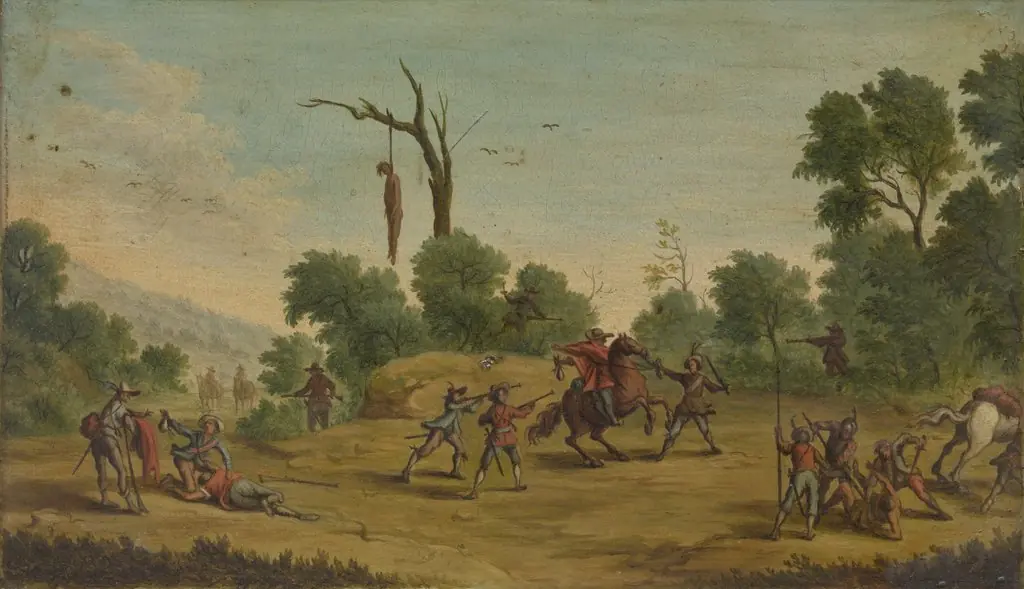 Horsemen Attacked by Robbers
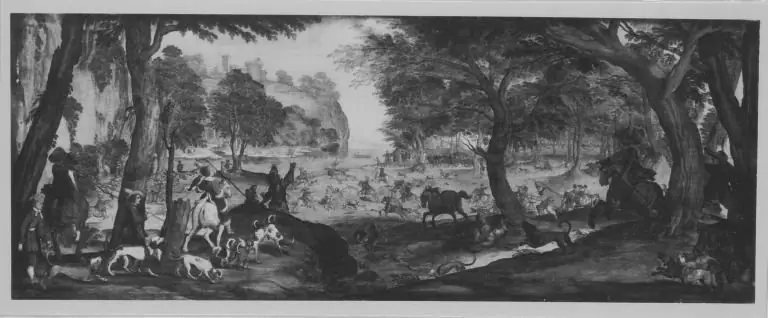 HOW WILL A COVERED PART BE CORRECTED?HOW WIKA A COVERED HEART DEED CORRECTED?
![Christ Walking on the Water [second plate], by Jacques Callot](https://artifactworldgallery.com/img/jacques-callot--christ-walking-on-the-water-second-plate--2069f3bfe4cb2126-w320.webp) Christ Walking on the Water [second plate]
Christ Walking on the Water [second plate]