Artwork
Discovery of the Criminal Soldiers
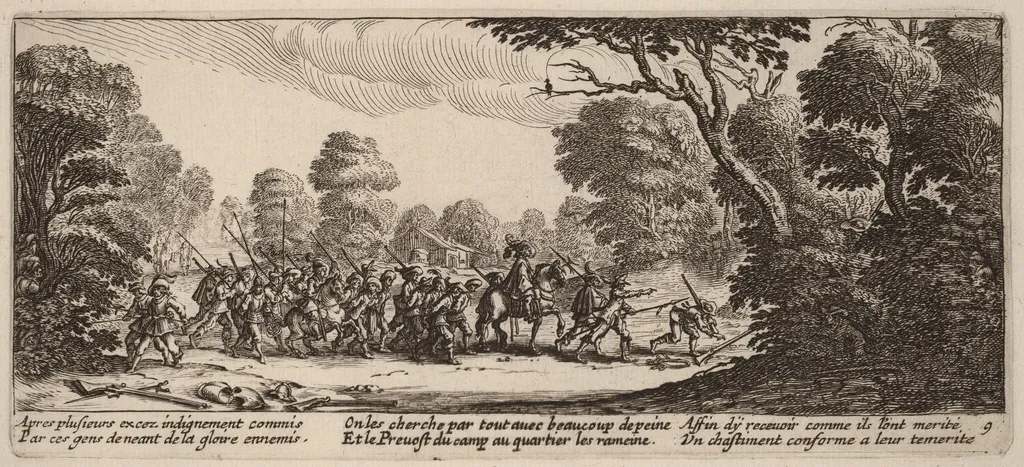
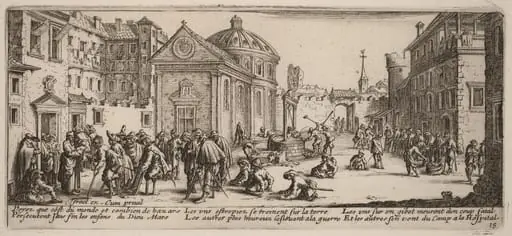
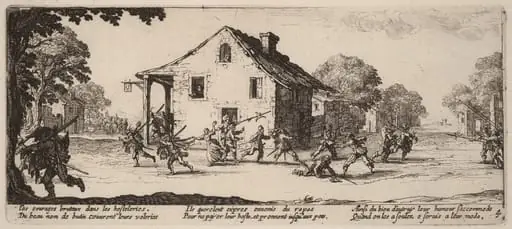
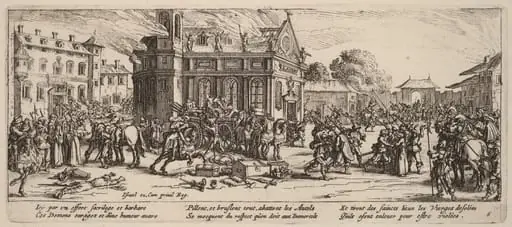
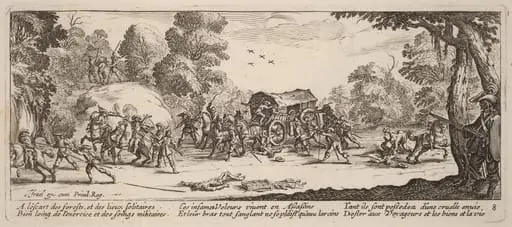
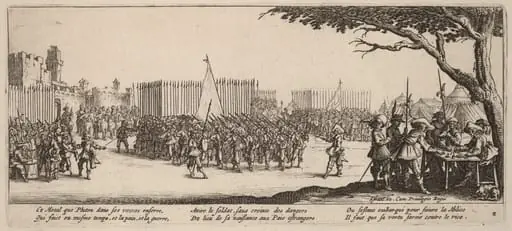
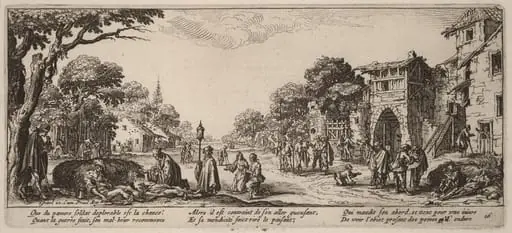
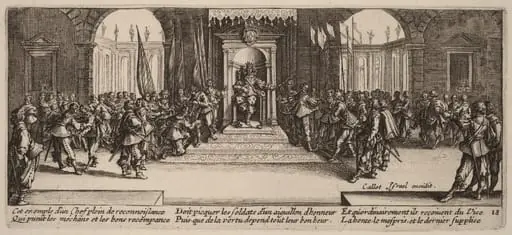
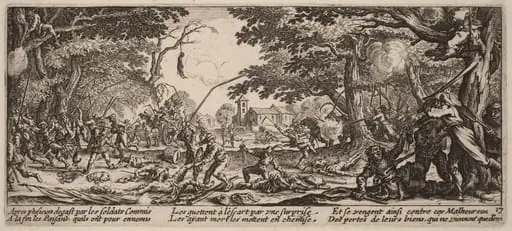
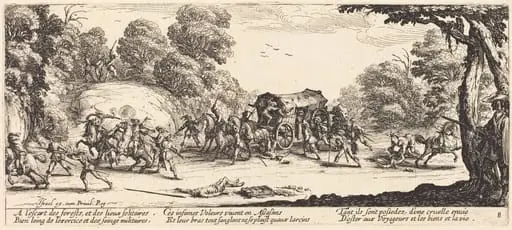
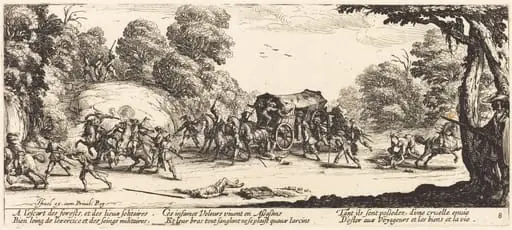
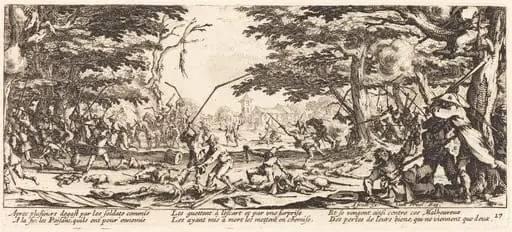
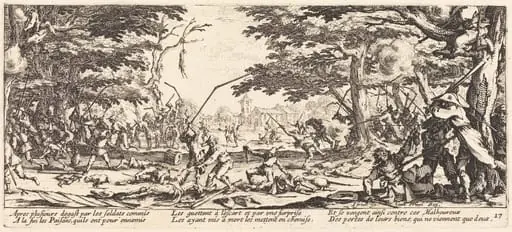
Discovery of the Criminal Soldiers is an ink print by the Baroque artist Gerrit van Schagen. It dates from 1642 and is held in the collection of the National Gallery of Art.
About this work
Overview
Created in 1642 by Gerrit van Schagen, this print combines etching and engraving on laid paper to depict a moment of moral reckoning among soldiers.
Created in 1642 by Gerrit van Schagen, this print combines etching and engraving on laid paper to depict a moment of moral reckoning among soldiers. The scene unfolds in a confined interior, illuminated by a single candle, drawing attention to the figures’ expressions and gestures. Van Schagen’s technical precision in line work enhances the emotional gravity of the moment, distinguishing it as a quiet but potent narrative in 17th-century Dutch printmaking.
Subject & Meaning
The image portrays a group of soldiers in a dim chamber, one kneeling with a bandaged head, another holding what appears to be a pardon document. The tension lies in the unspoken exchange between guilt and mercy. The candle’s narrow beam isolates their faces, suggesting inner turmoil and the weight of concealed actions. The scene implies a judicial or disciplinary moment, where justice hangs in the balance, leaving the outcome ambiguous.
Technique & Style
Van Schagen employed fine, controlled lines typical of engraving to model form and depth, while etching added softer tonal variations. The candlelight is rendered not as ambient glow but as a directional force, carving sharp contrasts between light and shadow. This deliberate manipulation of chiaroscuro focuses the viewer’s gaze on the soldiers’ faces and the document, emphasizing psychological intensity over narrative detail.
History & Provenance
The print was produced in the Netherlands during a period when etching flourished as a medium for narrative and moral themes. Van Schagen, active in Amsterdam, was known for his reproductive prints after other artists, but this work appears original. Its early 17th-century date aligns with a broader interest in scenes of human vulnerability and legal consequence, though its specific commission or ownership history remains undocumented.
Context
In the Dutch Republic, prints like this often reflected contemporary anxieties about discipline, justice, and redemption within military and civic life. While religious and biblical subjects dominated much of the era’s imagery, secular scenes of moral ambiguity gained traction among urban audiences. Van Schagen’s work fits within this trend, offering a secular parable of guilt and pardon without overt religious symbolism.
Legacy
Though less widely known than Rembrandt’s etchings, van Schagen’s work shares a similar preoccupation with light as a psychological tool. His use of focused illumination to reveal inner states influenced later printmakers interested in emotional realism. This print endures as a quiet example of how technical mastery in printmaking could convey complex human drama without grandeur or spectacle.
Artist & collection