Artwork
A Pike-Man Turned to the Left
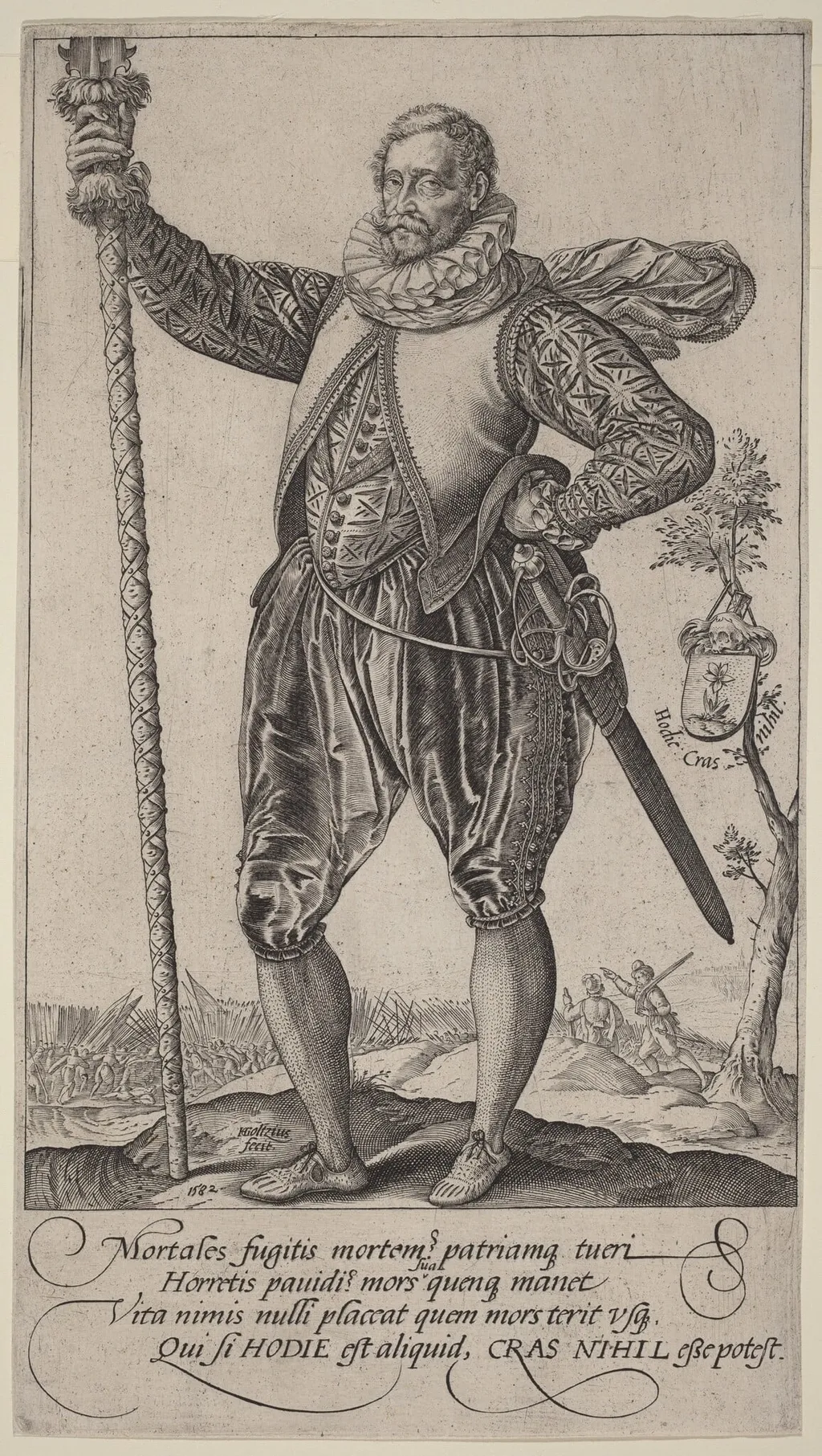
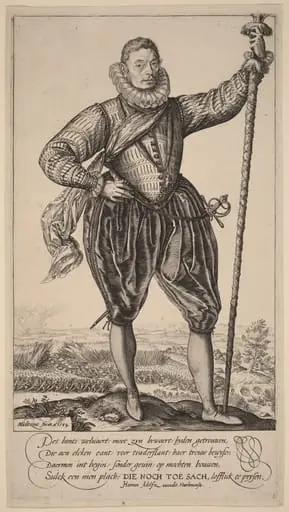
A Pike-Man Turned to the Left is an ink print by the Renaissance artist Hendrik Goltzius. It dates from 1582 and is held in the collection of the National Gallery of Art. Created in 1582 by Hendrick Goltzius, this engraving on laid paper captures a solitary soldier oriented to the left.
About this work
Overview
Created in 1582 by Hendrick Goltzius, this engraving on laid paper captures a solitary soldier oriented to the left. Goltzius, a Dutch artist of German origin, was celebrated for his mastery of engraving during the late 16th century. The work exemplifies his ability to render complex textures and figures with fine, controlled lines, reflecting the refined aesthetic of Northern Mannerism.
Subject & Meaning
The figure is a pike-bearer, a common infantry soldier of the period, depicted in a moment of stillness rather than action. His posture—arm resting on hip, pike held loosely—suggests vigilance or pause. The absence of narrative context invites focus on the individual’s presence, emphasizing dignity and discipline rather than battle or heroism.
Technique & Style
Goltzius employed meticulous cross-hatching and fine line work to model form and texture, particularly in the soldier’s layered clothing and the distant landscape. The ruffled collar, patterned jacket, and textured socks reveal his attention to material detail. The engraving’s precision and tonal gradation demonstrate advanced control of the burin, characteristic of his mature style.
History & Provenance
Produced during Goltzius’s early career in Haarlem, this print belongs to a series of soldier studies he made around 1582. Though no specific early ownership records are documented, such engravings circulated widely among collectors and artists in the Netherlands and beyond, contributing to Goltzius’s reputation as a technical innovator.
Context
In the late 1500s, the Dutch provinces were engaged in the Eighty Years’ War, and military figures appeared frequently in art as symbols of civic duty. Goltzius’s soldier studies, though not overtly political, reflect contemporary interest in the individual soldier’s role and attire, informed by both real observation and Renaissance ideals of the human form.
Legacy
This engraving contributed to Goltzius’s influence on later printmakers across Europe. His ability to convey texture and presence through line alone set a standard for technical excellence. While not widely exhibited today, the work remains a reference point in studies of Northern Mannerist engraving and the evolution of printmaking as a serious artistic medium.
Artist & collection
Artist
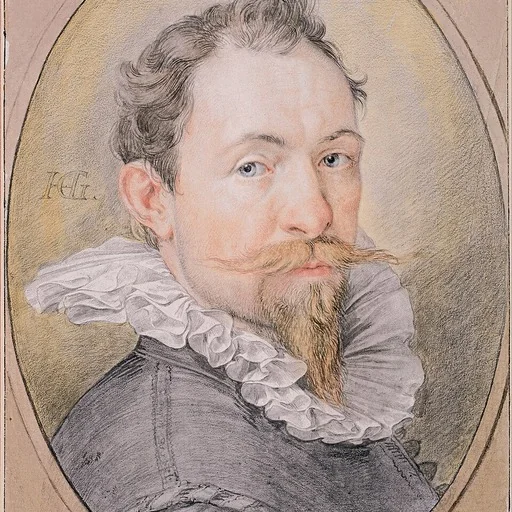
Hendrick Goltzius (German: , Dutch: ; né Goltz; January or February 1558 – 1 January 1617) was a German-born Dutch printmaker, draftsman, and painter.

 Gerrit de Jong
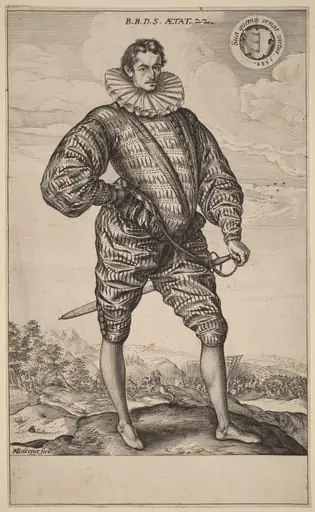 Balthasar Bathory de Somlyo
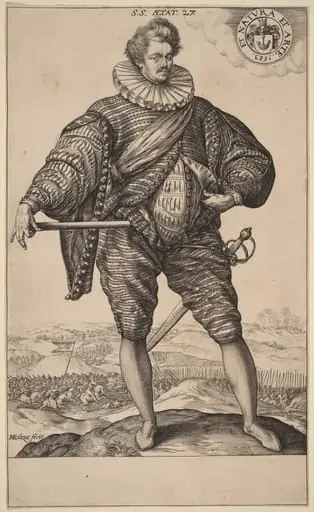 Stanislaw Sobocki (?)
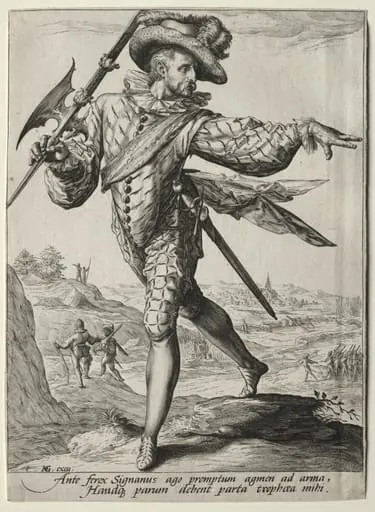 Officers and Soldiers of the Bodyguard of Emperor Rudolf II: Sergeant
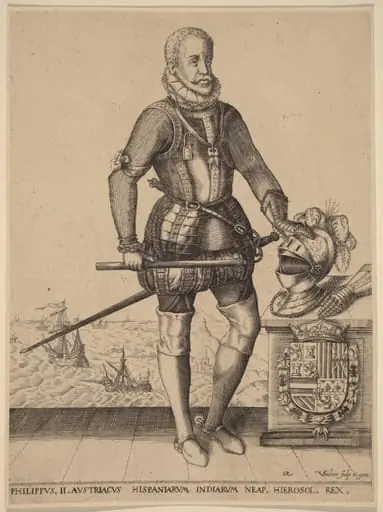 Philip II, King of Spain
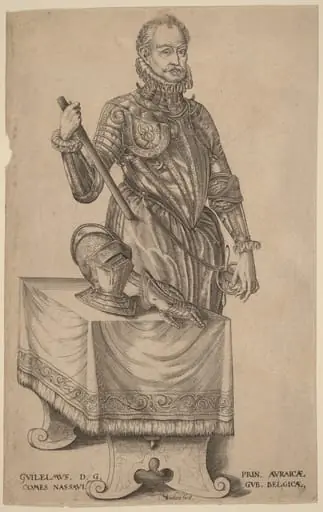 William of Nassau, Prince of Orange
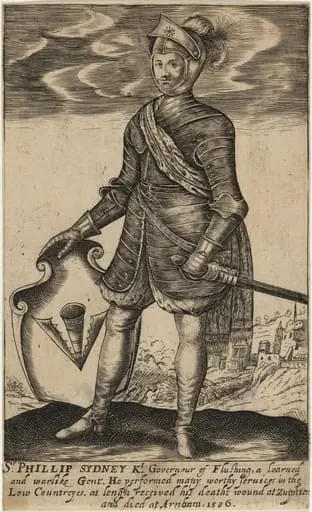 Sir Philip Sidney
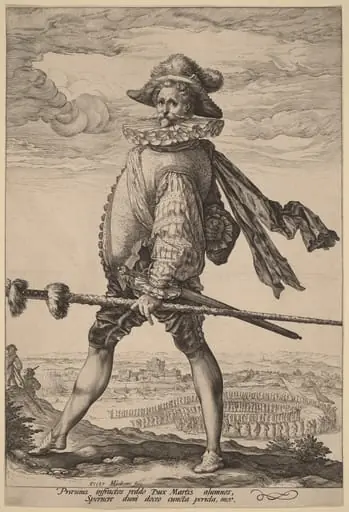 The Captain of the Infantry
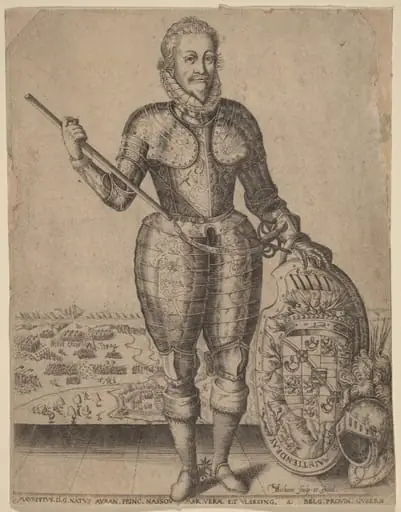 Maurice of Nassau, Prince of Orange
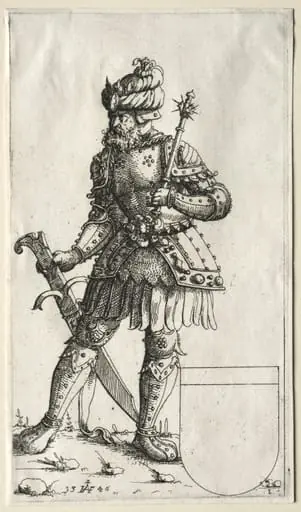 Sigismund II, King of Poland
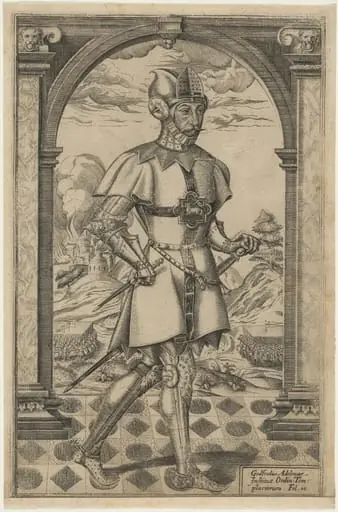 Godfrey Adelmar, Founder of the Knights Templar
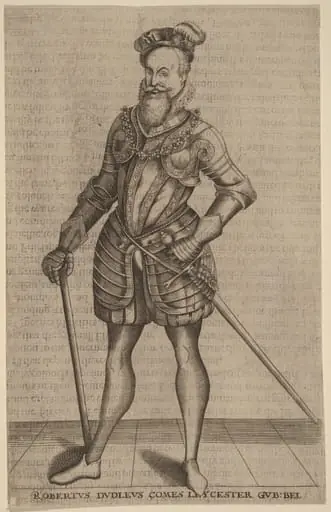 Robert Dudley, Earl of Leicester