Artwork
Soldiers Attacking Robbers
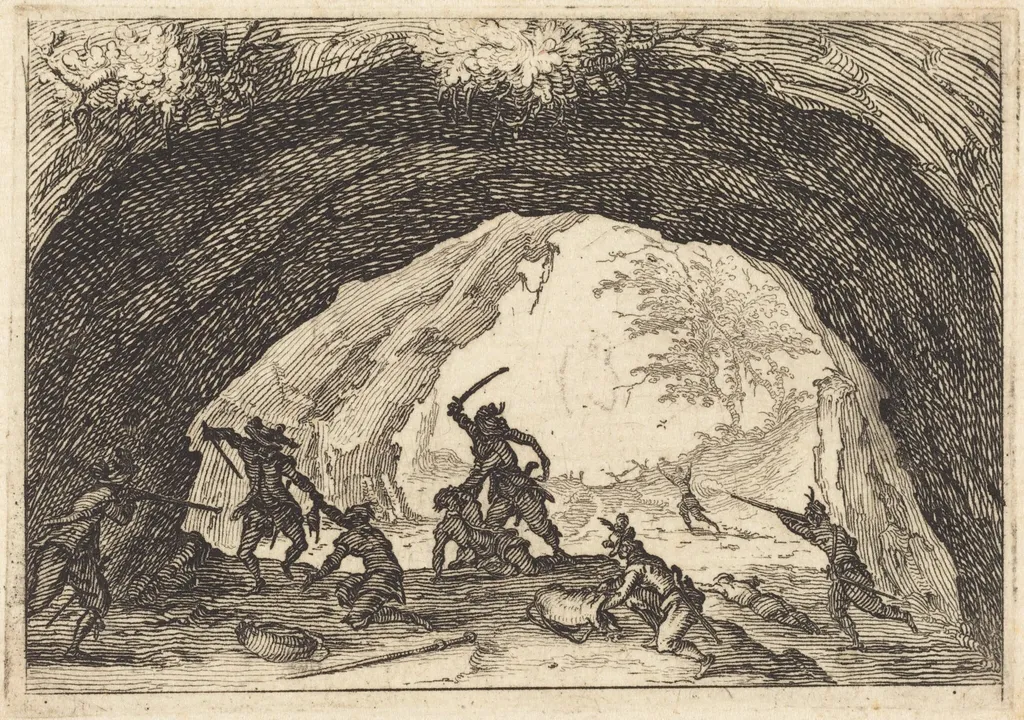
Soldiers Attacking Robbers is an ink print by the Baroque artist Jacques Callot. It dates from 1617 and is held in the collection of the National Gallery of Art.
About this work
Overview
With over 1,400 known etchings, Callot’s output served as a visual record of early 17th-century Europe, blending observation with narrative tension.
Jacques Callot, a printmaker from the Duchy of Lorraine, produced this etching around 1617 as part of a large series documenting everyday violence and military life. Executed in ink on laid paper, the work reflects his technical precision and interest in transient moments of social disorder. With over 1,400 known etchings, Callot’s output served as a visual record of early 17th-century Europe, blending observation with narrative tension.
Subject & Meaning
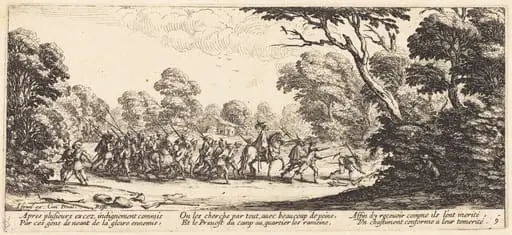
The scene captures armored soldiers pursuing three robbers along a rural road, one of whom carries stolen sacks. The figures are caught mid-action, suggesting a spontaneous encounter rather than a staged event. Callot avoids moralizing; instead, he presents the chaos of banditry and military response with neutral detail, reflecting the blurred lines between law enforcement and plunder in wartime regions.
Technique & Style
Callot employed fine, controlled lines to render armor, hats, and weapons with archaeological accuracy. His use of etching allowed for sharp contrasts and intricate textures, particularly in the folds of fabric and the grain of the dirt road. The composition is tightly framed, with no background depth to distract from the urgency of the chase, enhancing the immediacy of the moment through focused detail.
History & Provenance
Created during Callot’s early career in Nancy, the print emerged from a period when Lorraine was a contested region caught between larger powers. While its specific early ownership is unrecorded, it was likely circulated among collectors and military observers. The work survives in multiple institutional collections, testament to its enduring value as a document of its time.
Context
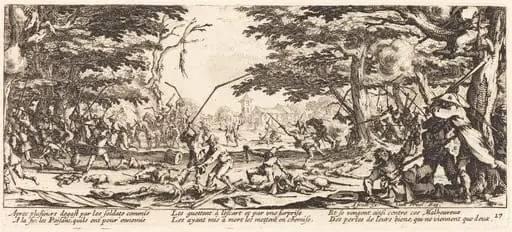
This print reflects the instability of the Thirty Years’ War era, when mercenary troops often preyed on civilians and local populations. Callot’s depictions of soldiers and outlaws were not merely decorative but served as social commentary on the breakdown of order. His attention to authentic gear suggests he may have witnessed such events firsthand or relied on detailed eyewitness accounts.
Legacy
Callot’s etchings influenced later generations of printmakers through their narrative clarity and technical innovation. *Soldiers Attacking Robbers* exemplifies his role in elevating printmaking as a medium for documenting real-world events. Though not widely exhibited as a standalone work, it remains a key example of early modern visual journalism and the human cost of conflict.
Artist & collection

Artist
Jacques Callot was a baroque printmaker and draftsman from the Duchy of Lorraine.

 Holy Family at supper
 Restoration of the Aqueduct at Pisa
 Restoration of the Aqueduct at Pisa
 Square in Paris with Many Figures
 Square in Paris with Many Figures
 Horsemen Attacked by Robbers
 HOW WILL A COVERED PART BE CORRECTED?HOW WIKA A COVERED HEART DEED CORRECTED?
![Christ Walking on the Water [second plate], by Jacques Callot](https://artifactworldgallery.com/img/jacques-callot--christ-walking-on-the-water-second-plate--2069f3bfe4cb2126-w320.webp) Christ Walking on the Water [second plate]
Christ Walking on the Water [second plate]
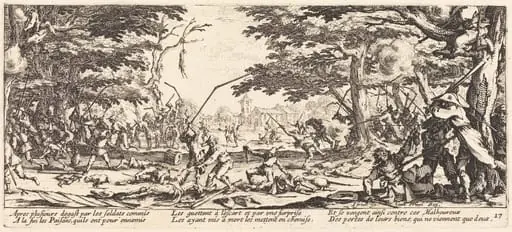 The Peasants Avenge Themselves
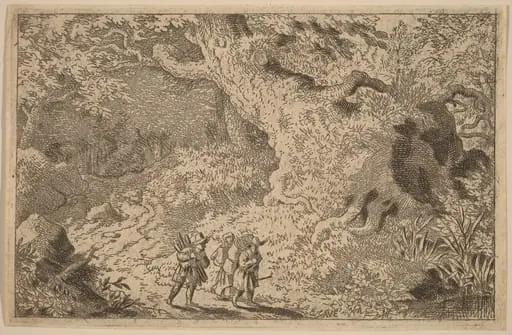 A Thick Forest
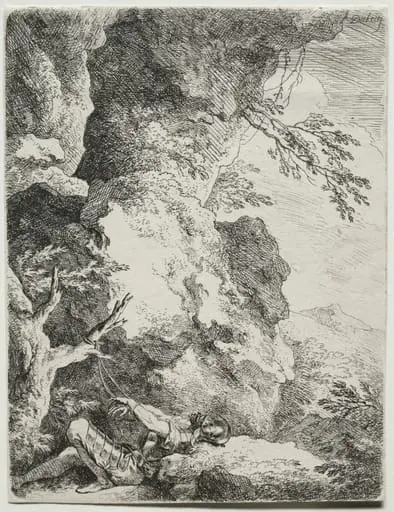 St. William, The Hermit Saint
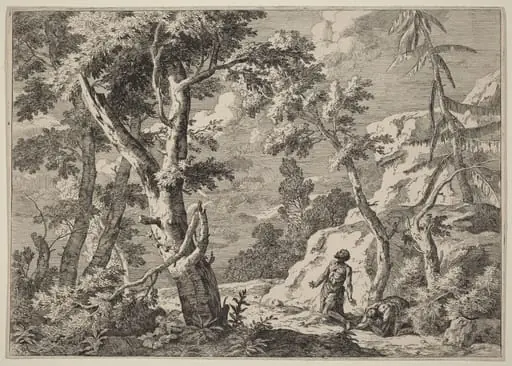 Two Men Penitent in the Wilderness
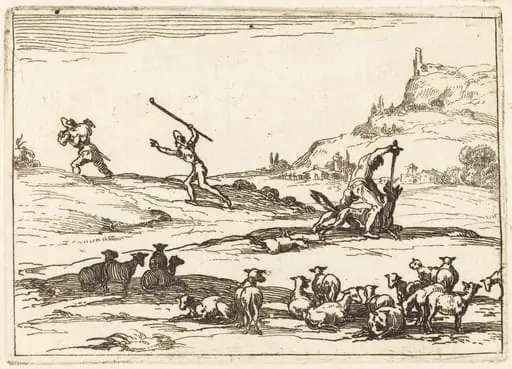 Shepherds Defending their Herds
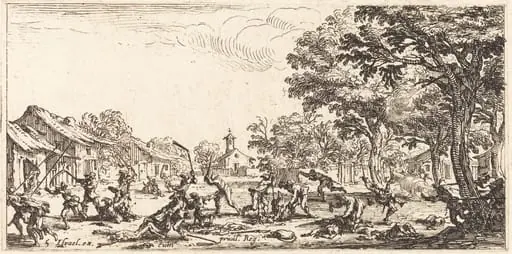 The Peasants' Revenge
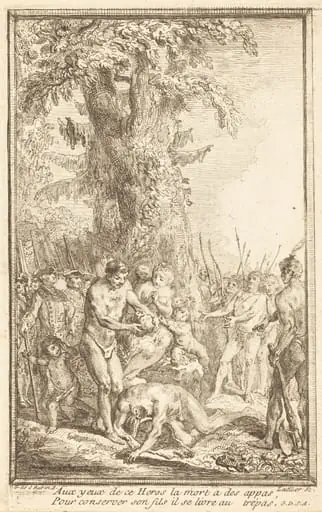 Heroic Act of a Father Who Sacrifices for His Son (Trait heroique d'un pere qui se sacrifie pour son fils)
 Discovery of the Criminal Soldiers
 The Peasants Avenge Themselves