Artwork
Two Men Penitent in the Wilderness
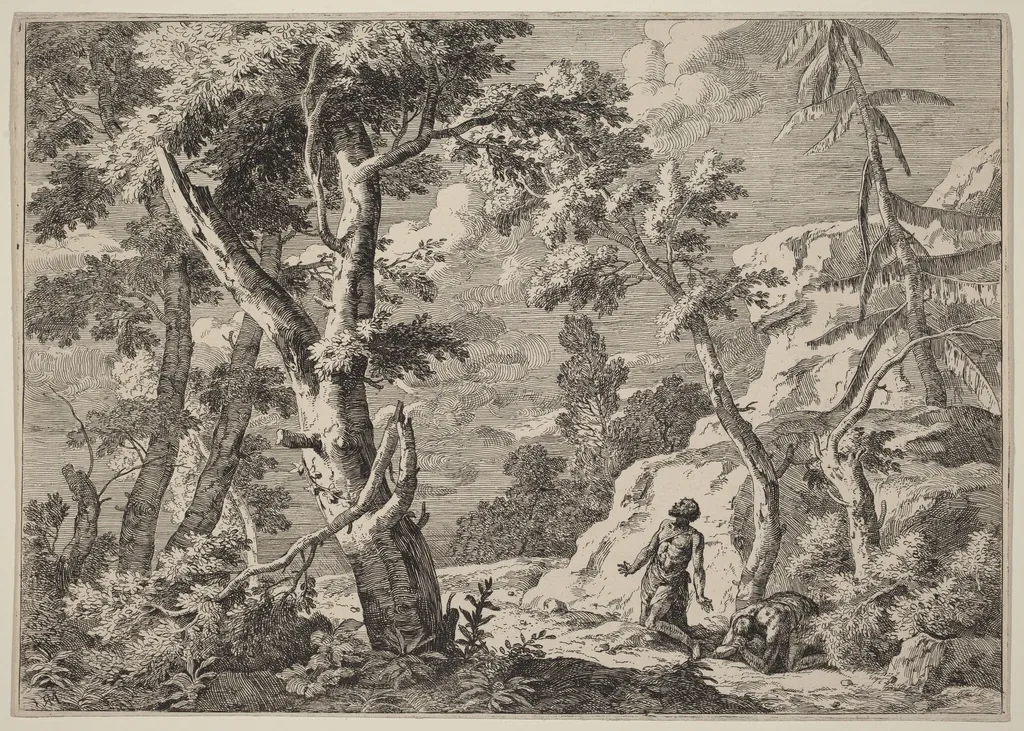
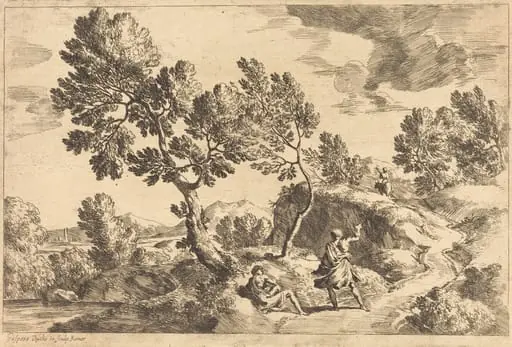
Two Men Penitent in the Wilderness is an ink print by the Baroque artist Marco Ricci. It dates from 1730 and is held in the collection of the National Gallery of Art.
About this work
Overview
Its composition emphasizes isolation and introspection, using the medium’s capacity for fine line work to evoke mood rather than narrative clarity.
Created in 1730 by Marco Ricci, this etching depicts two figures in a dense, shadowed woodland. Rendered on laid paper, the work belongs to the printmaking tradition of early 18th-century Italy. Its composition emphasizes isolation and introspection, using the medium’s capacity for fine line work to evoke mood rather than narrative clarity. The scene lacks overt religious symbols, yet the figures’ postures suggest spiritual contemplation.
Subject & Meaning
The two figures, dressed in plain garments, are positioned in a posture of quiet penitence—one standing with head bowed, the other kneeling with clasped hands. Their setting, a tangled forest shrouded in darkness, evokes themes of solitude and inner reckoning. While no specific biblical story is illustrated, the imagery aligns with broader cultural associations of wilderness as a space for moral reflection and repentance in Christian tradition.
Technique & Style
Ricci employed etching to achieve sharp contrasts between deep shadows and faintly lit areas. Fine, controlled lines define the gnarled trees and textured ground, while areas of bare paper suggest scattered light filtering through dense foliage. The technique allows for atmospheric depth without relying on tone or wash, characteristic of Northern European print traditions adapted by Italian artists of the period.
History & Provenance
The print was produced during Ricci’s later years, a time when he increasingly focused on landscape and genre subjects. Though no early ownership records are widely documented, it appears in several 18th- and 19th-century European collections of prints. Its survival in multiple institutional holdings suggests it was circulated among collectors interested in expressive, non-narrative imagery.
Context
In early 1700s Italy, etching was gaining favor as a medium for intimate, atmospheric works, distinct from grand historical painting. Ricci, influenced by Dutch and Flemish landscape traditions, contributed to this shift. His focus on mood over story aligned with emerging tastes for contemplative art, reflecting broader Enlightenment interests in individual experience and nature’s emotional resonance.
Legacy
Though not widely reproduced in popular culture, this etching remains a quiet example of Ricci’s skill in conveying psychological depth through landscape. It influenced later artists exploring solitude and natural symbolism in printmaking. Its preservation in major collections underscores its value as a refined, understated work within the broader history of European graphic arts.
Artist & collection

 Roman Landscape
 The Little Angels on the Hill
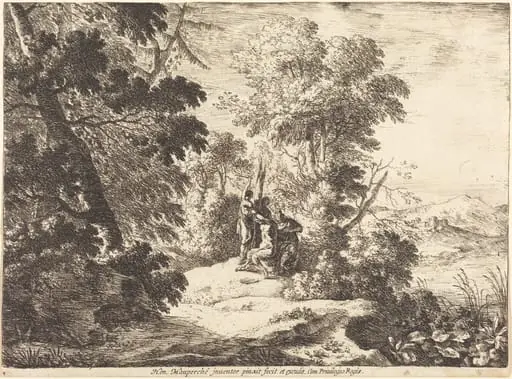 The Flaying of Marsyas
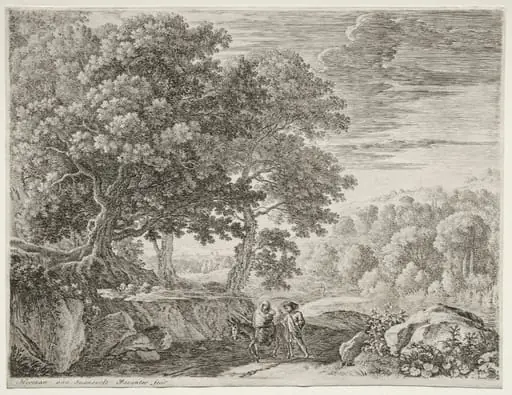 The Flight into Egypt: The Holy Family
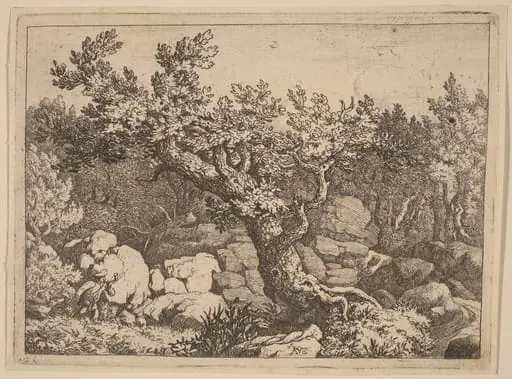 Sportsman near a Large Tree
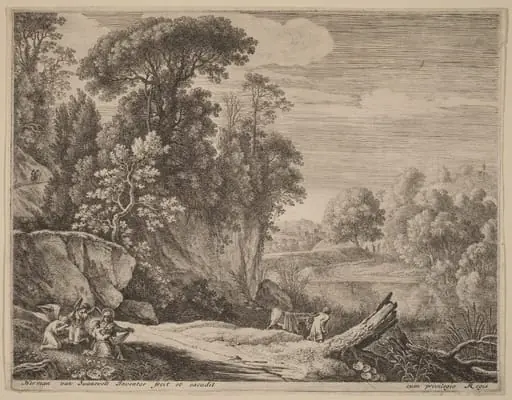 The Donkey Led to the River
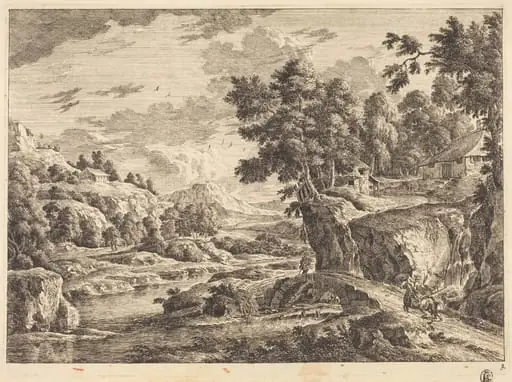 Landscape with a Bridge and Three Farm Buildings
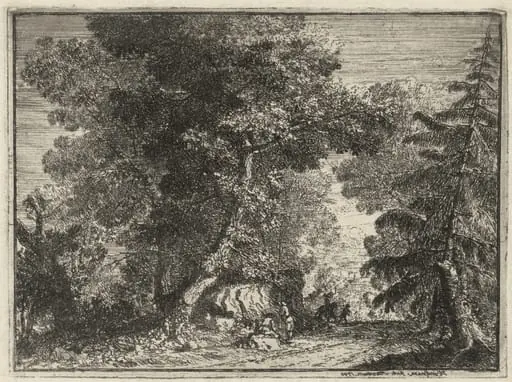 A Road through the Woods
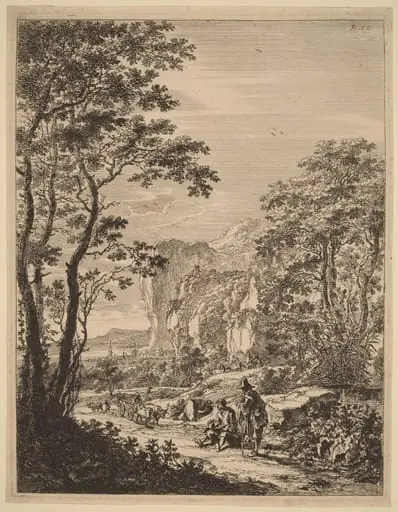 The Ox-Cart: View between Ancona and Sinigaglia
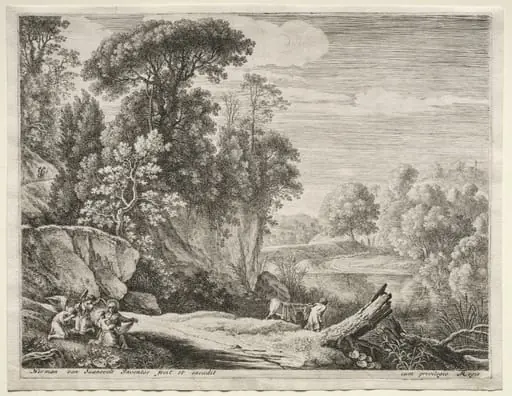 The Flight into Egypt: The Donkey Led to the River