Artwork
Soldiers Attacking Robbers
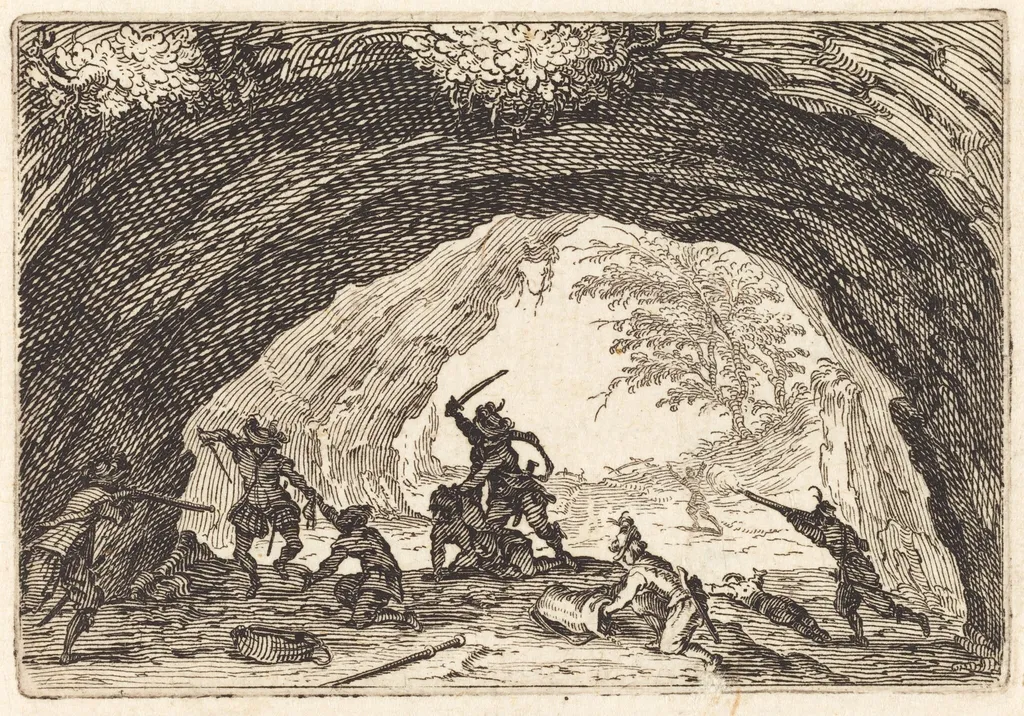
Soldiers Attacking Robbers is an ink print by the Baroque artist Jacques Callot. It dates from 1622 and is held in the collection of the National Gallery of Art.
About this work
Overview
Created around 1622 by Jacques Callot, this etching on laid paper captures a violent encounter between soldiers and bandits in a rugged landscape.
Created around 1622 by Jacques Callot, this etching on laid paper captures a violent encounter between soldiers and bandits in a rugged landscape. As one of over 1,400 prints by the artist, it exemplifies his focus on the turbulent realities of early 17th-century life. Callot, from the Duchy of Lorraine, used etching to record scenes of military conflict and social disorder with precision and narrative clarity.
Subject & Meaning
The scene depicts mounted soldiers charging at fleeing robbers amid rocky terrain. One bandit tumbles from his donkey, while others scramble in panic. Swords gleam in motion, suggesting sudden violence. The composition reflects the lawlessness of wartime regions, where military forces often targeted civilians and outlaws alike. It does not glorify combat but presents it as chaotic and brutal.
Technique & Style
Callot employed fine etching lines on a metal plate to achieve intricate textures and tonal gradations. His use of closely spaced lines created depth and shadow, allowing detailed rendering of armor, animals, and terrain. The small scale and high level of finish give the image a miniature, almost illustrative quality, reminiscent of engraved book illustrations of the period.
History & Provenance
Made during the Thirty Years' War, the print emerged from a region frequently traversed by mercenary troops. Callot’s work was widely circulated, influencing later artists and documenting the era’s unrest. While its early ownership is undocumented, it entered major collections by the 19th century, including the National Gallery of Art in Washington, where it remains accessible for study.
Context
France and the surrounding territories were scarred by prolonged military campaigns, with soldiers often acting as both protectors and predators. Callot’s prints, including this one, served as visual records of these conditions. His depictions were not idealized but grounded in observation, offering insight into the daily violence experienced by rural populations caught between warring factions.
Legacy
Callot’s detailed etchings set a standard for narrative printmaking in Europe. His ability to convey motion, emotion, and environment in small formats influenced generations of artists. While not widely exhibited as standalone works, his prints remain essential references for understanding the visual culture of early modern warfare and its human cost.
Artist & collection
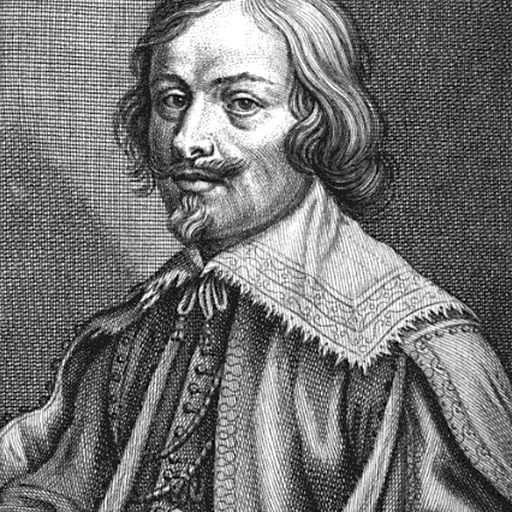
Artist
Jacques Callot was a baroque printmaker and draftsman from the Duchy of Lorraine.

 Holy Family at supper
 Restoration of the Aqueduct at Pisa
 Restoration of the Aqueduct at Pisa
 Square in Paris with Many Figures
 Square in Paris with Many Figures
 Horsemen Attacked by Robbers
 HOW WILL A COVERED PART BE CORRECTED?HOW WIKA A COVERED HEART DEED CORRECTED?
![Christ Walking on the Water [second plate], by Jacques Callot](https://artifactworldgallery.com/img/jacques-callot--christ-walking-on-the-water-second-plate--2069f3bfe4cb2126-w320.webp) Christ Walking on the Water [second plate]
Christ Walking on the Water [second plate]
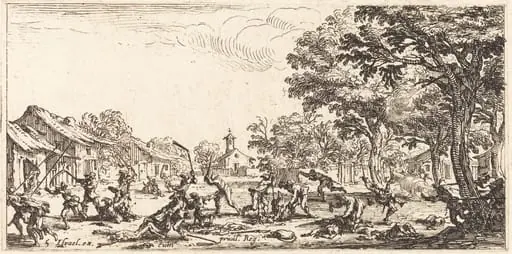 The Peasants' Revenge
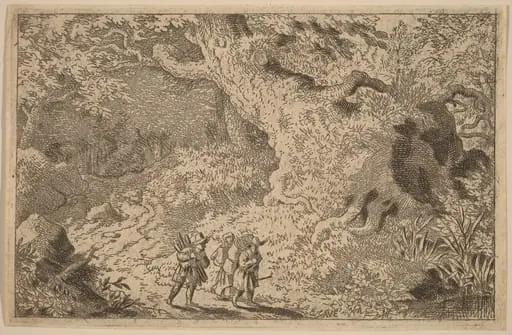 A Thick Forest
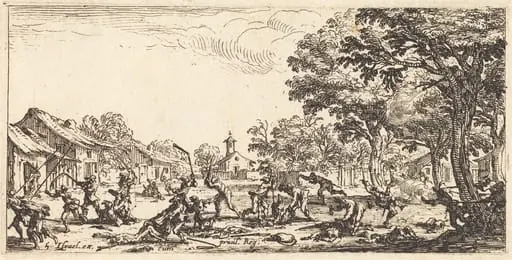 The Peasants' Revenge
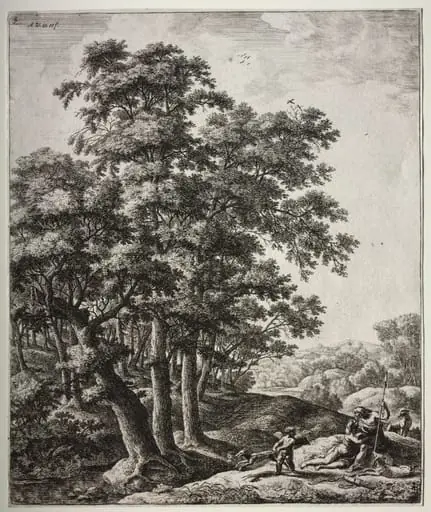 Six large upright landscapes with scenes from Ovid's Metamorphoses: Venus and Adonis
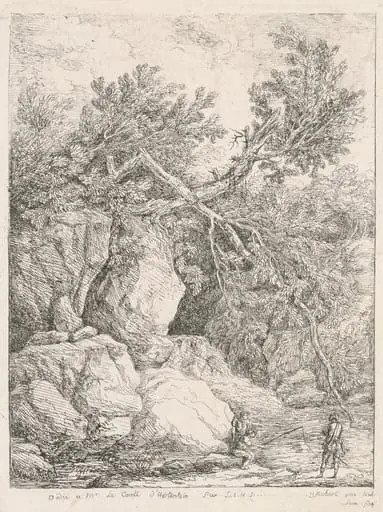 Landscape with a Fallen Tree (Paysage à l'arbre cassé)
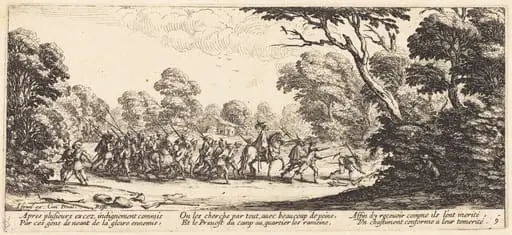 Discovery of the Criminal Soldiers
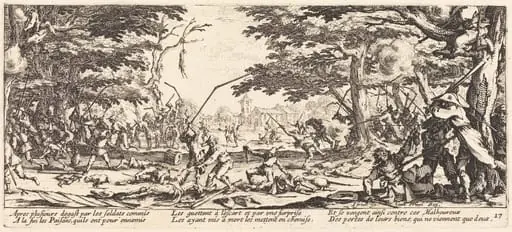 The Peasants Avenge Themselves
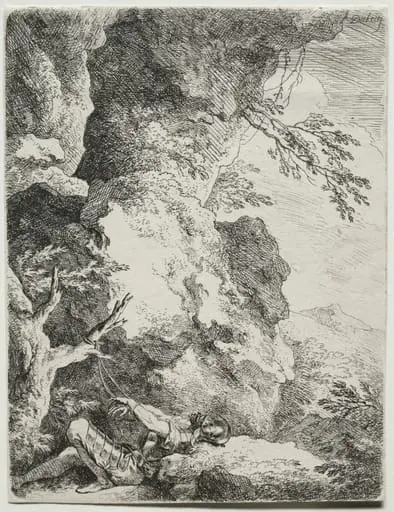 St. William, The Hermit Saint
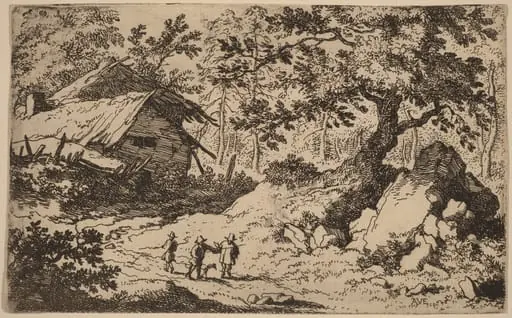 Ruinous Cottage