Artwork
Six large upright landscapes with scenes from Ovid's Metamorphoses: Venus and Adonis
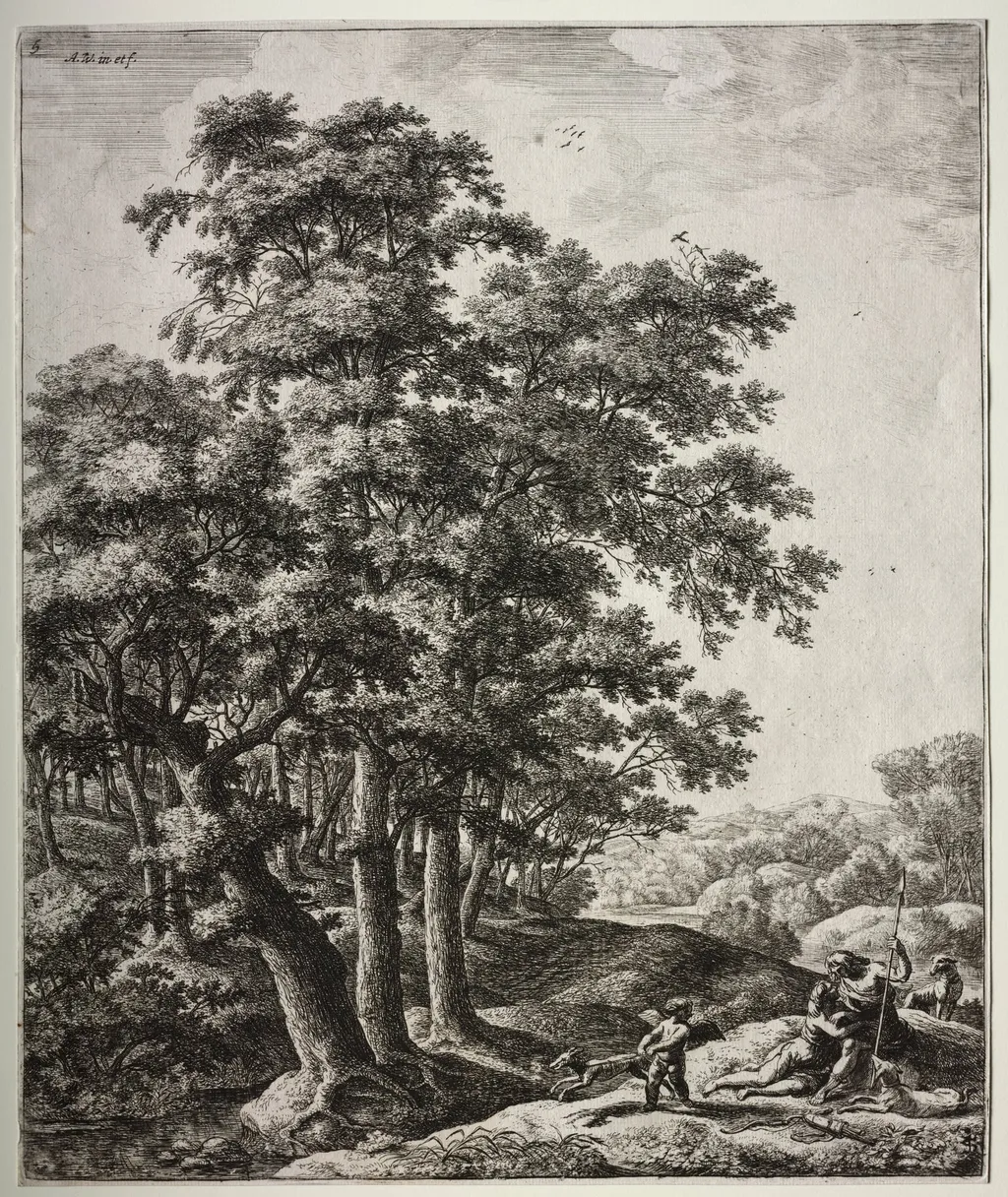
Six large upright landscapes with scenes from Ovid's Metamorphoses: Venus and Adonis is a print by the Baroque artist Antonie Waterloo. It dates from 1665 and is held in the collection of the Cleveland Museum of Art.
About this work
Overview
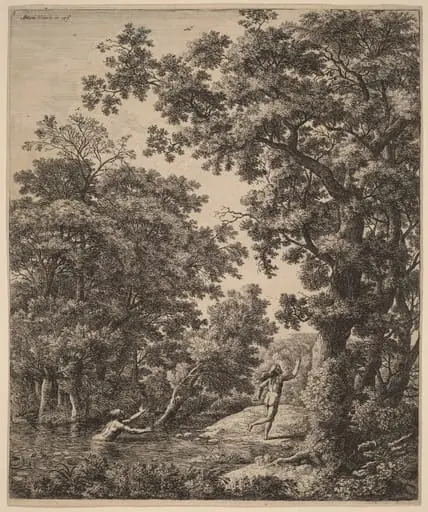
Created in 1665 by Anthonie Waterloo, this black-and-white print is one of six vertical landscape compositions illustrating episodes from Ovid’s Metamorphoses.
Created in 1665 by Anthonie Waterloo, this black-and-white print is one of six vertical landscape compositions illustrating episodes from Ovid’s Metamorphoses. Executed in pen and ink with wash, it depicts a moment from the myth of Venus and Adonis within a dense, atmospheric woodland. The work resides in the collection of the Cleveland Museum of Art, where it is valued for its nuanced rendering of natural space and narrative restraint.
Subject & Meaning
The scene captures Venus and Adonis moments before his fatal hunt, as recounted in Ovid’s text. Venus, seated on a stone by a stream, attempts to dissuade Adonis, who stands nearby, staff in hand, already turning toward the forest. The quiet tension between them reflects the myth’s theme of inevitable fate. Waterloo avoids overt drama, instead emphasizing solitude and the looming presence of nature as a silent witness to human vulnerability.
Technique & Style
Waterloo employed pen and ink with subtle washes to model form and depth, using chiaroscuro to define the volume of trees and figures. The dense, interwoven branches create a textured canopy, while gradations of gray separate foreground from distant hills. His technique avoids fine detail in favor of atmospheric suggestion, aligning with Northern European landscape traditions that prioritize mood over precision. The composition’s verticality enhances the sense of encroaching wilderness.
History & Provenance
The print was produced in the mid-17th century, likely as part of a series commissioned or circulated among collectors interested in classical themes. It entered the Cleveland Museum of Art’s collection in the 20th century, having passed through private hands in Europe. Its survival in good condition reflects its status as a refined, if modest, work within Waterloo’s oeuvre, appreciated for its technical discipline rather than public fame.
Context
Waterloo, a Dutch artist active in the Netherlands and Germany, was influenced by the tonal landscapes of Rembrandt and the poetic naturalism of French and Flemish printmakers. His Ovid series emerged during a period when classical mythology was frequently adapted into visual art for educated audiences. Unlike grand historical paintings, these prints offered intimate, contemplative interpretations suited to private study and collection.
Legacy
Though not widely reproduced or exhibited, Waterloo’s series remains a quiet example of how mythological narratives were translated into landscape form during the Baroque era. His use of atmosphere and restraint influenced later generations of printmakers who favored emotional subtlety over theatricality. The Cleveland Museum’s holding preserves a rare, cohesive group of works that illustrate the enduring appeal of Ovid’s tales in visual culture.
Own this work as a print
Artist & collection
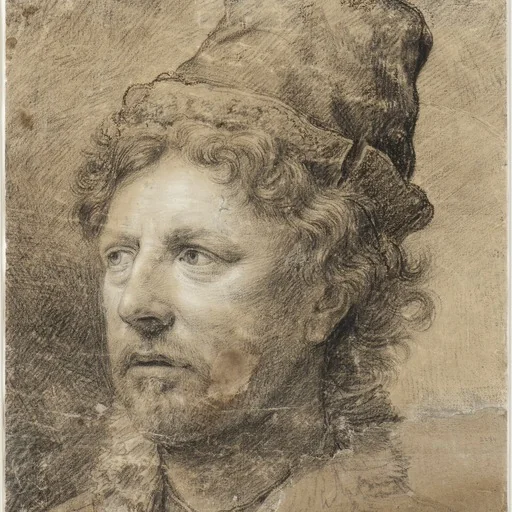

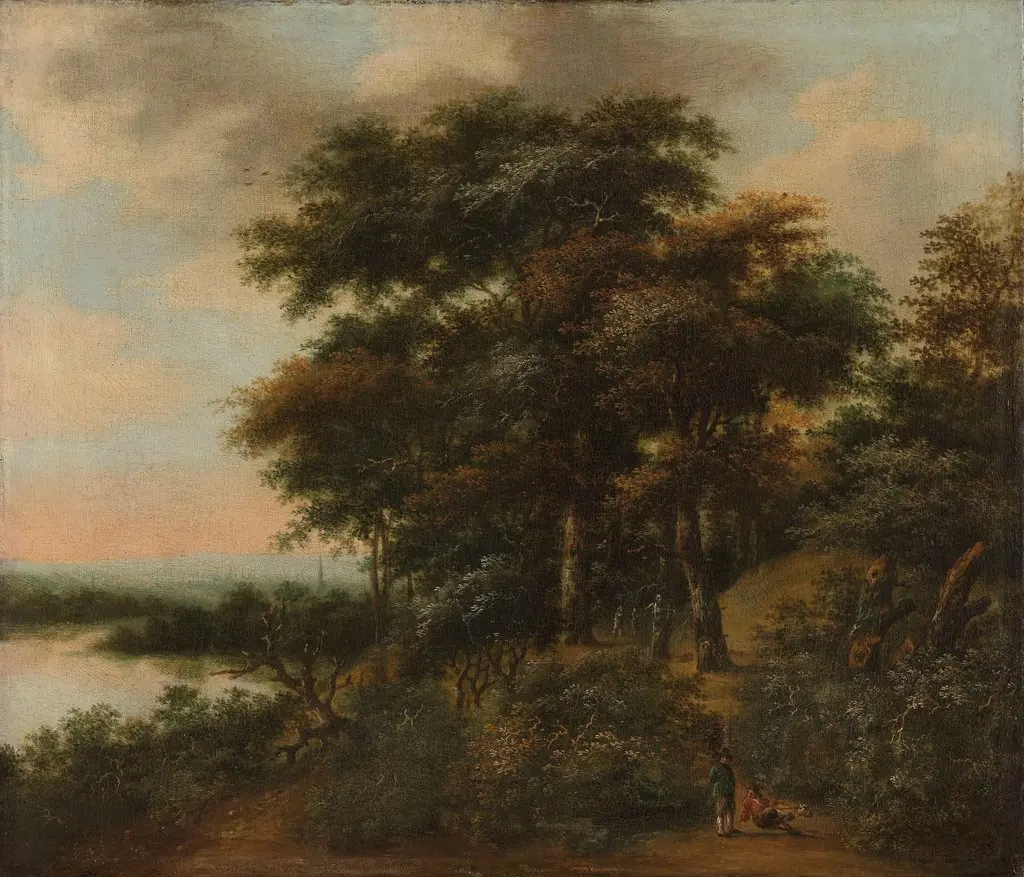
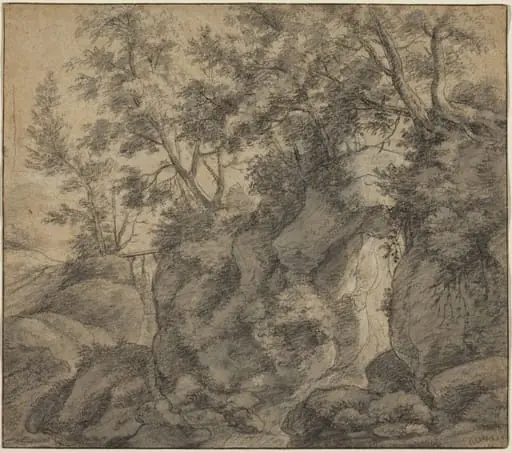
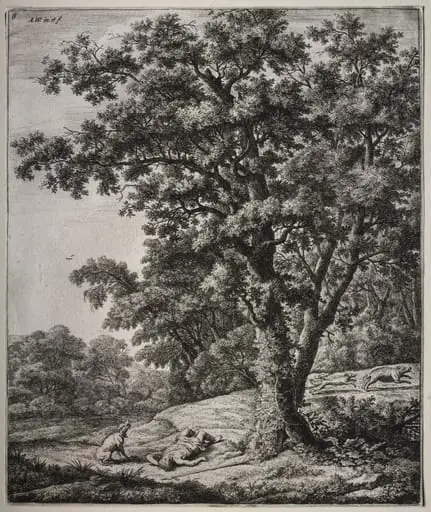 Six large upright landscapes with scenes from Ovid's Metamorphoses: The Death of Adonis
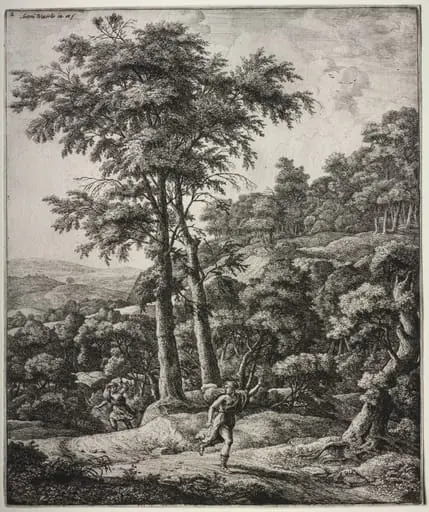 Six large upright landscapes with scenes from Ovid's Metamorphoses: Apollo and Daphne
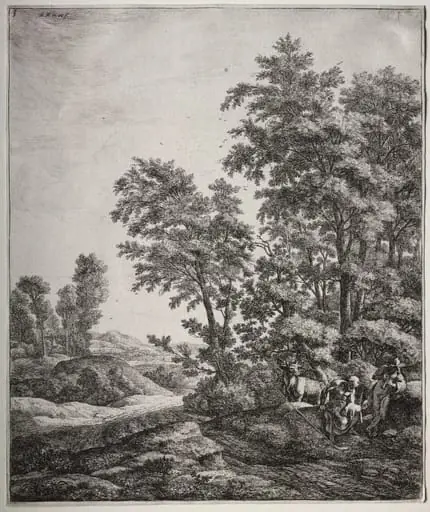 Six large upright landscapes with scenes from Ovid's Metamorphoses: Mercury and Argus
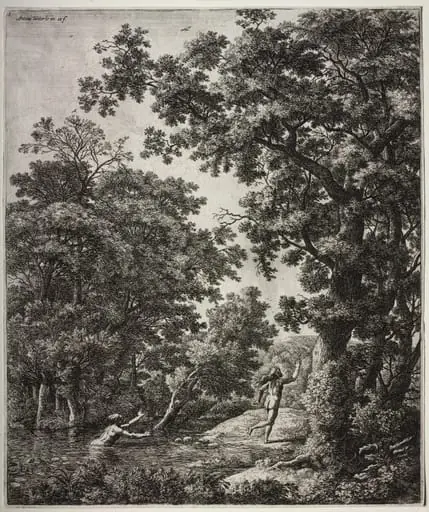 Six large upright landscapes with scenes from Ovid's Metamorphoses
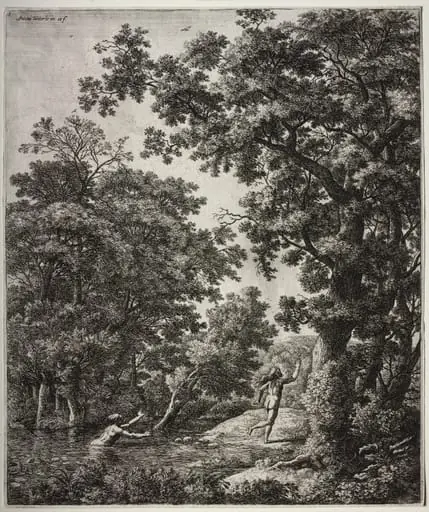 Six large upright landscapes with scenes from Ovid's Metamorphoses: Alpheus and Arethusa
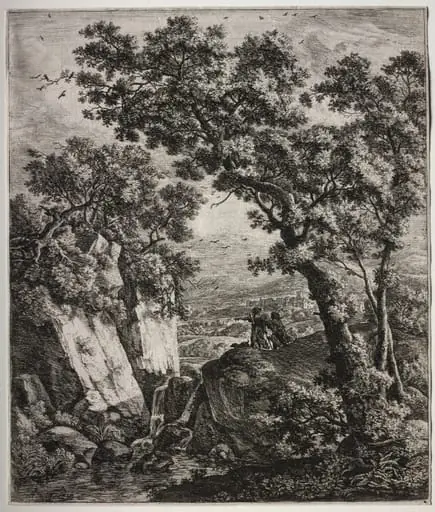 Six large upright landscapes with scenes from the Old Testament: Tobias and the Angel