Artwork
St. Giles; St. Lupus; St. Anne; St. Nonnosus
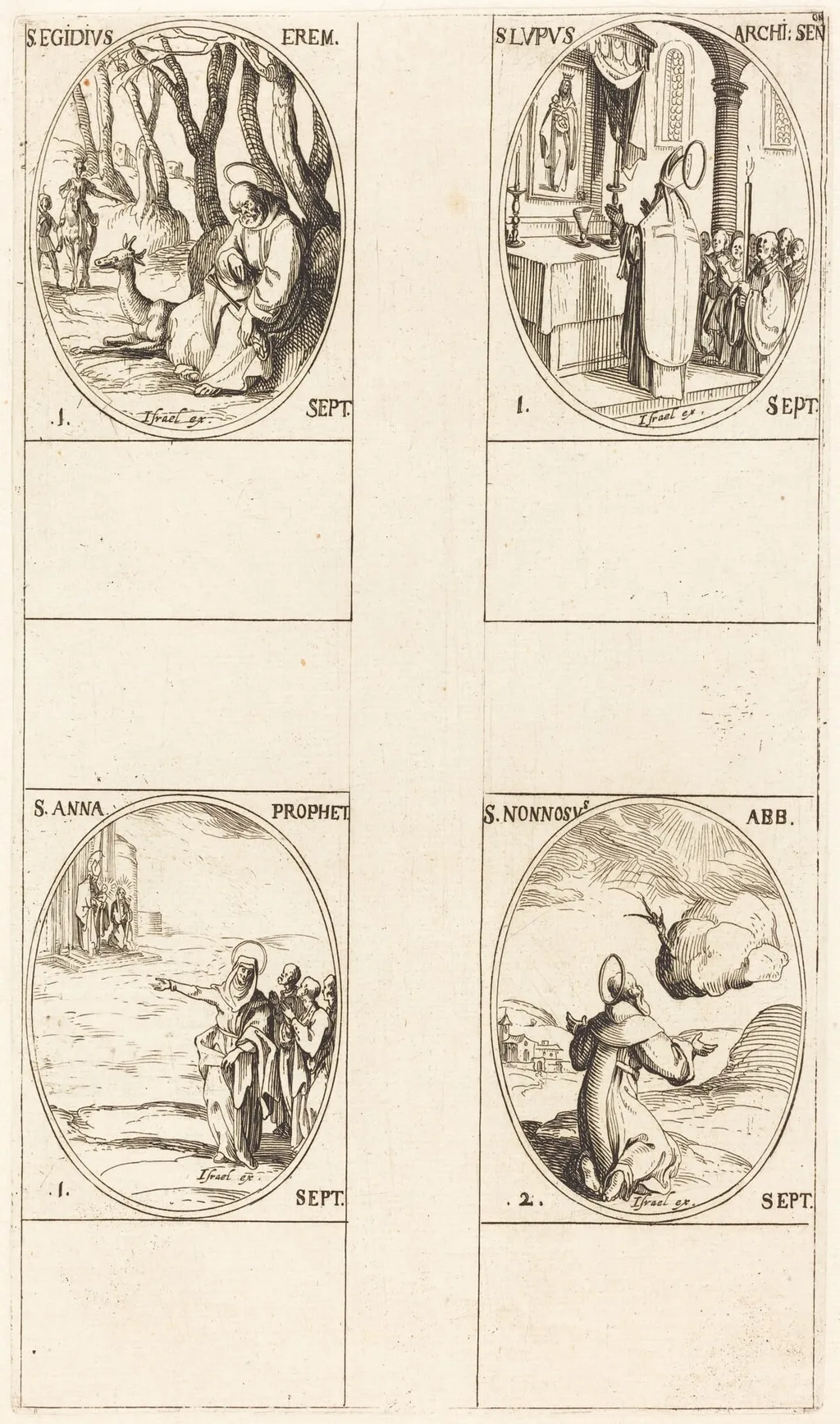
St. Giles; St. Lupus; St. Anne; St. Nonnosus is an ink print by the Baroque artist Jacques Callot. It dates from 1634 and is held in the collection of the National Gallery of Art.
About this work
Overview
Created around 1634 by Jacques Callot, this etching on laid paper presents four small, framed scenes of saints, each accompanied by the month 'Sept.
Created around 1634 by Jacques Callot, this etching on laid paper presents four small, framed scenes of saints, each accompanied by the month 'Sept.' As one of over 1,400 prints by the Lorraine-born artist, it exemplifies his disciplined approach to religious iconography. The composition is structured like a grid of miniature windows, each isolating a distinct narrative moment. Callot’s precision in line and spatial arrangement reflects his technical command of etching, a medium he elevated through meticulous detail and controlled ink tone.
Subject & Meaning
The four figures represent saints associated with September: St. Giles with a deer, St. Lupus holding a key, St. Anne gesturing toward a group, and St. Nonnosus kneeling beside a bear. These saints were venerated in regional cults, often linked to healing, protection, or monastic life. The scenes condense hagiographic traditions into compact visual episodes, emphasizing quiet devotion rather than dramatic spectacle. Their placement in a single frame suggests a devotional calendar or liturgical reference, intended for private contemplation.
Technique & Style
Callot employed fine, controlled etching lines to render texture, depth, and movement with remarkable clarity. Each oval scene is densely detailed—trees, architecture, and figures rendered with consistent precision. The use of laid paper, with its subtle watermark texture, enhances the tonal range of the ink. His technique avoids broad washes, relying instead on layered hatching and cross-contour lines to model form. This method allowed for intricate storytelling within confined spaces, characteristic of his mature style.
History & Provenance
The print emerged during Callot’s most productive period in Florence and Paris, where he served noble patrons and engaged with Counter-Reformation imagery. Though no specific early ownership is documented, such prints circulated widely among collectors and clergy. Its survival in multiple institutional collections suggests it was reproduced and preserved as part of devotional or artistic portfolios. The work’s survival reflects its role in the broader dissemination of religious imagery through print.
Context
In the 1630s, religious prints served both spiritual and educational functions, especially in regions affected by war and reform. Callot’s focus on lesser-known saints aligned with local devotional practices in Lorraine and the Holy Roman Empire. Unlike grand altarpieces, these small-scale etchings were accessible, portable, and suitable for personal or household veneration. His work bridges the gap between high art and popular piety, reflecting the era’s complex religious landscape.
Legacy
Callot’s influence extended through his technical innovations in etching, which inspired generations of printmakers across Europe. This work, though not widely exhibited today, exemplifies his ability to distill complex narratives into intimate, legible compositions. Its preservation in museum collections underscores its value as a document of early modern religious culture and printmaking craftsmanship, rather than as a singular artistic triumph.
Artist & collection
Artist
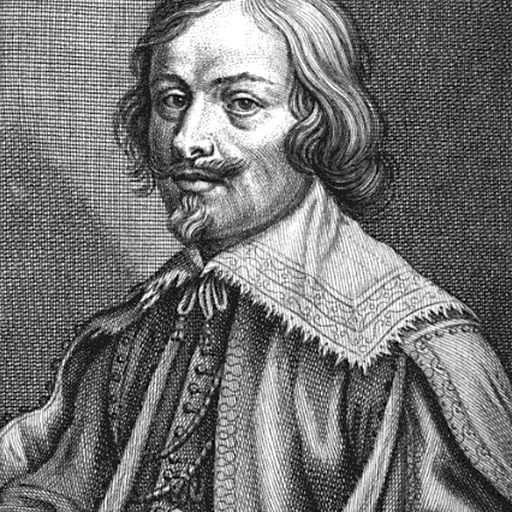
Jacques Callot was a baroque printmaker and draftsman from the Duchy of Lorraine.

 Holy Family at supper
 Restoration of the Aqueduct at Pisa
 Restoration of the Aqueduct at Pisa
 Square in Paris with Many Figures
 Square in Paris with Many Figures
 Horsemen Attacked by Robbers
 HOW WILL A COVERED PART BE CORRECTED?HOW WIKA A COVERED HEART DEED CORRECTED?
![Christ Walking on the Water [second plate], by Jacques Callot](https://artifactworldgallery.com/img/jacques-callot--christ-walking-on-the-water-second-plate--2069f3bfe4cb2126-w320.webp) Christ Walking on the Water [second plate]
Christ Walking on the Water [second plate]
 St. Martin; St. Tryphon and Companions; St. Renatus; St. Didacus
 St. Theodosius; St. Tatiana; St. Hilary; St. Felix
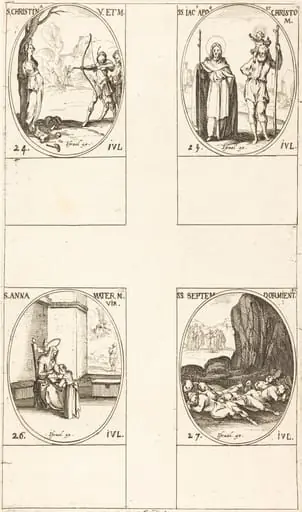 St. Christina; St. James, Apostle, and St. Christopher; St. Anne; Seven Sleepers of Ephesus
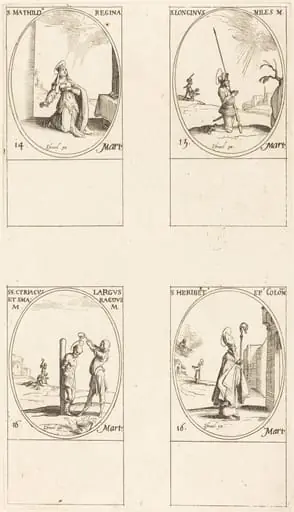 St. Matilda; St. Longinus; St. Cyriacus; St. Heribert
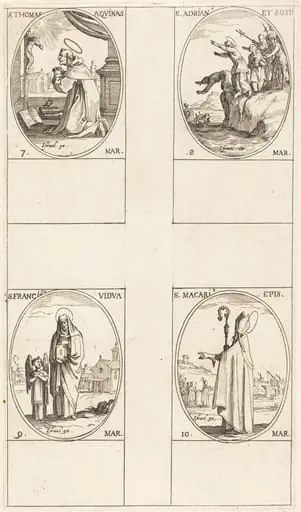 St. Thomas Aquin; St. Adrian and Companions; St. Frances; St. Macari
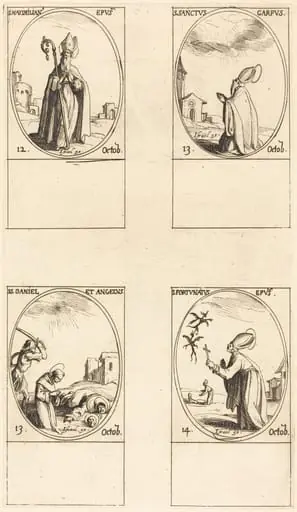 St. Maximilian; St. Carpus; St. Daniel and Angelus; St. Fortunatus
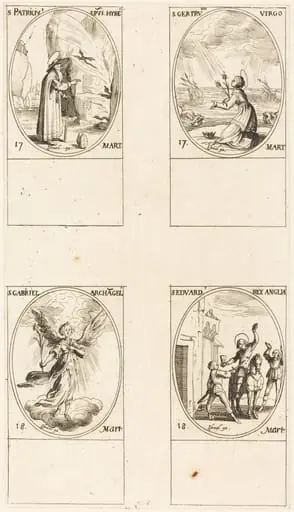 St. Patrick; St. Gertrude; St. Gabriel, Archangel; St. Edward
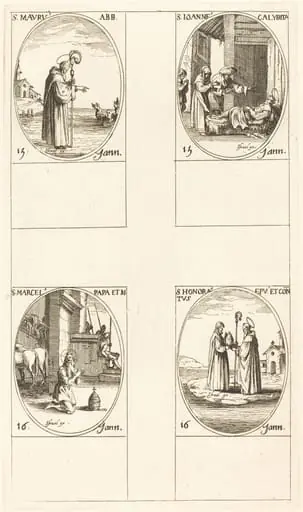 St. Maurus; St. John Calybite; St. Marcellus; St. Honoratus
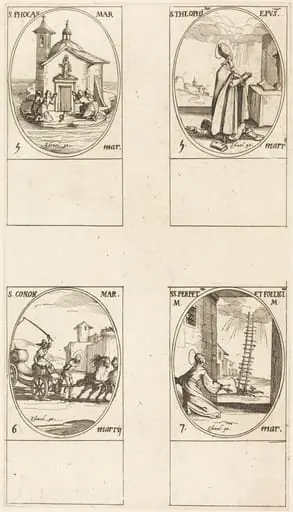 St. Phocas; St. Theophilus; St. Conon; Sts. Perpetua and Felicitas