Artwork
St. Christina; St. James, Apostle, and St. Christopher; St. Anne; Seven Sleepers of Ephesus
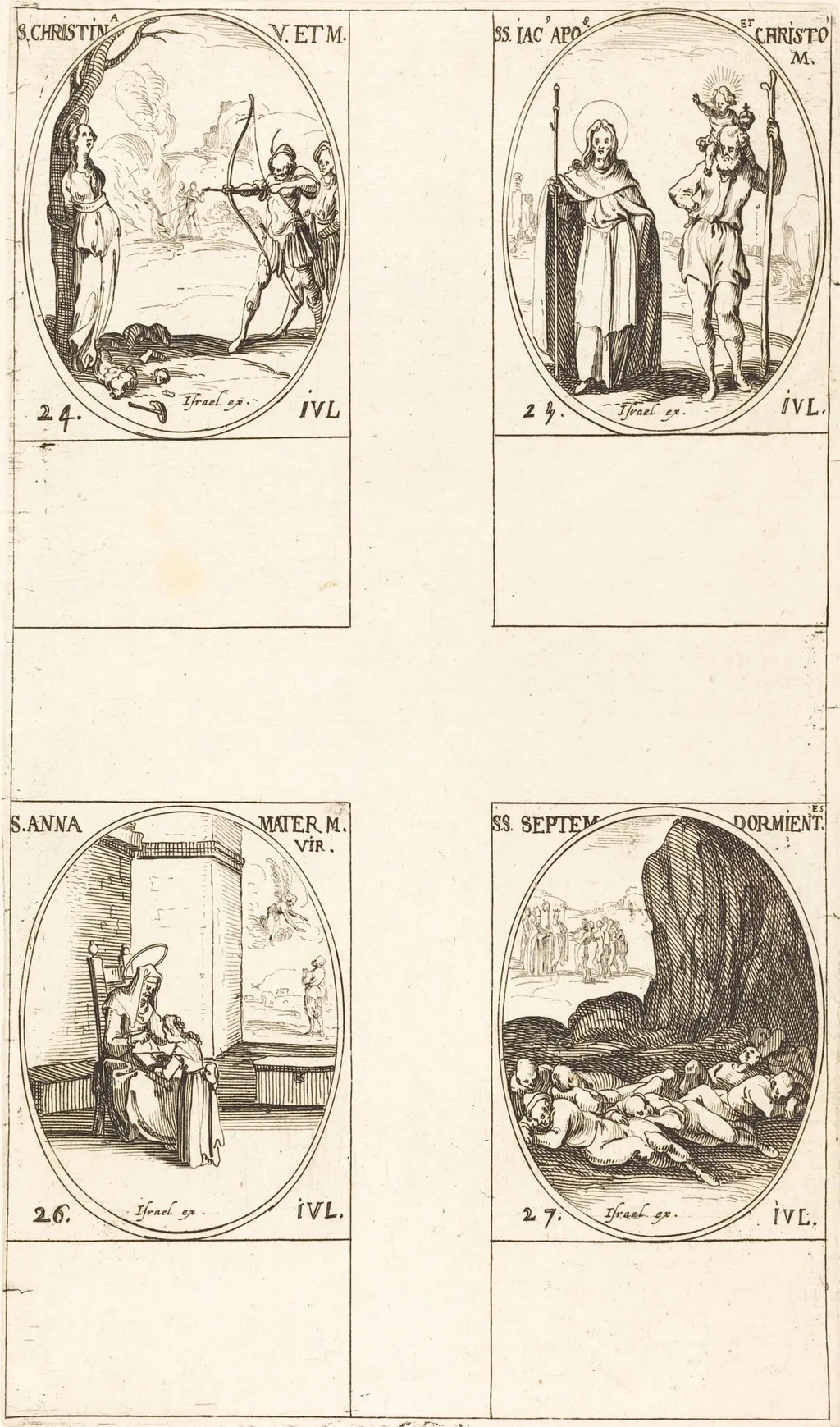
St. Christina; St. James, Apostle, and St. Christopher; St. Anne; Seven Sleepers of Ephesus is an ink print by the Baroque artist Jacques Callot. It dates from 1634 and is held in the collection of the National Gallery of Art.
About this work
Overview
Created around 1634 by Jacques Callot, this etching on laid paper presents five distinct religious scenes arranged in four oval frames.
Created around 1634 by Jacques Callot, this etching on laid paper presents five distinct religious scenes arranged in four oval frames. As one of over 1,400 prints by the Lorrainer artist, the work reflects his sustained engagement with sacred narratives. The composition is tightly structured, each vignette isolated yet unified by consistent line quality and tonal precision, characteristic of Callot’s mastery in printmaking.
Subject & Meaning
The scenes depict St. Christina confronting a martyr’s fate, St. James the Apostle alongside another figure, St. Anne with the young Virgin Mary in a doorway, and the Seven Sleepers of Ephesus resting in a cave. These figures represent themes of faith, endurance, and divine protection. Their arrangement suggests a devotional sequence, inviting contemplation of individual sanctity within a broader spiritual framework.
Technique & Style
Callot employed fine, controlled etching lines to render texture, depth, and motion with remarkable economy. Subtle gradations of shadow define volume without heavy chiaroscuro, allowing figures to emerge clearly against minimal backgrounds. The precision of his burin work captures delicate gestures—pointing fingers, draped robes, slumbering postures—enhancing narrative immediacy while preserving the quiet dignity of each moment.
History & Provenance
The print emerged during Callot’s mature period in Nancy, where he produced numerous religious and genre subjects for collectors and religious institutions. Though specific early ownership records are sparse, its survival in multiple institutional collections indicates early circulation among European connoisseurs. The work reflects the demand for portable, devotional imagery in the early 17th century.
Context
In the 1630s, religious imagery remained vital in Catholic regions despite the Reformation’s influence. Callot’s prints catered to private devotion, offering compact, emotionally resonant scenes accessible to lay audiences. His integration of contemporary dress and landscape details grounded sacred stories in tangible reality, aligning with Counter-Reformation efforts to deepen spiritual engagement through visual immediacy.
Legacy
Callot’s technical innovations in etching influenced generations of printmakers across Europe. This work exemplifies his ability to condense complex narratives into intimate compositions, setting a precedent for narrative cycles in print. Though less celebrated than his battle scenes, such devotional etchings remain key to understanding the breadth of his artistic vision and the role of prints in early modern piety.
Artist & collection
Artist
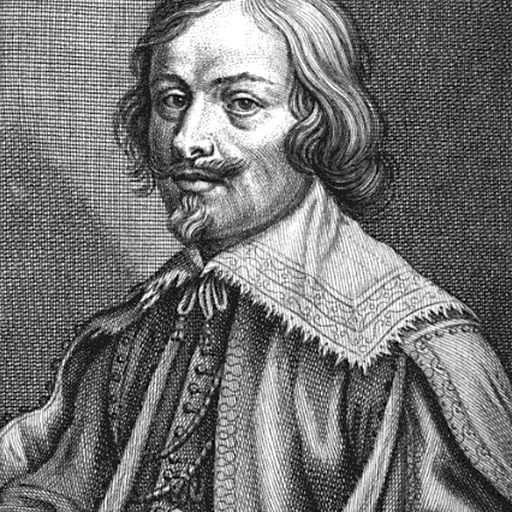
Jacques Callot was a baroque printmaker and draftsman from the Duchy of Lorraine.

 Holy Family at supper
 Restoration of the Aqueduct at Pisa
 Restoration of the Aqueduct at Pisa
 Square in Paris with Many Figures
 Square in Paris with Many Figures
 Horsemen Attacked by Robbers
 HOW WILL A COVERED PART BE CORRECTED?HOW WIKA A COVERED HEART DEED CORRECTED?
![Christ Walking on the Water [second plate], by Jacques Callot](https://artifactworldgallery.com/img/jacques-callot--christ-walking-on-the-water-second-plate--2069f3bfe4cb2126-w320.webp) Christ Walking on the Water [second plate]
Christ Walking on the Water [second plate]
 St. Alexander Carbonarius; St. Clare; St. Digna and Companions; St. Concordia
 St. Giles; St. Lupus; St. Anne; St. Nonnosus
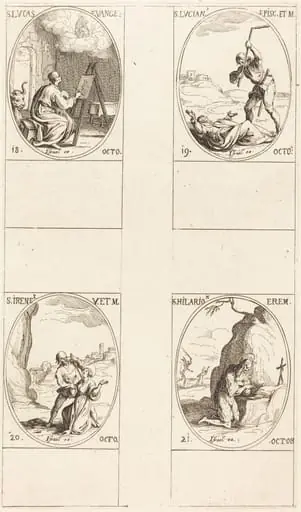 St. Luke; St. Lucian; St. Irene; St. Hilarion
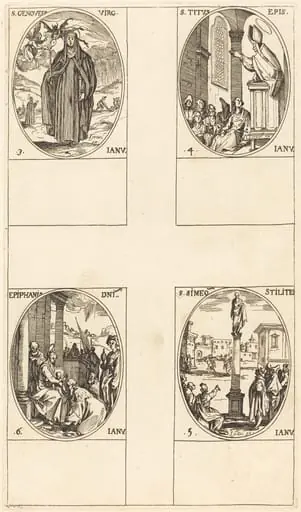 St. Genevieve; St. Titus; St. Simeon Stylites; Epiphany
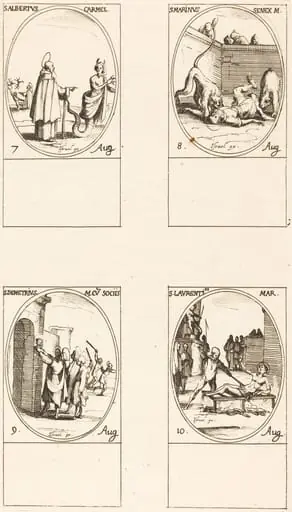 St. Albert of Sicliy, Carmelite; St. Martinus;St. Demetrius and Companions; St. Lawrence
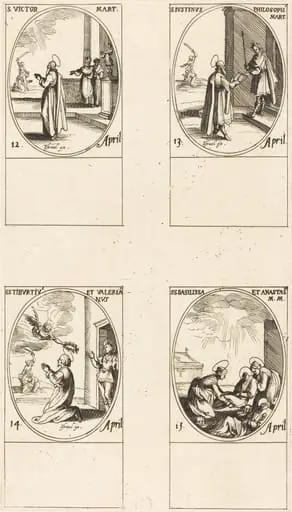 St. Victor; St. Justinus; Sts. Tiburtius and Valerianus; Sts. Basilissa and Anastasia
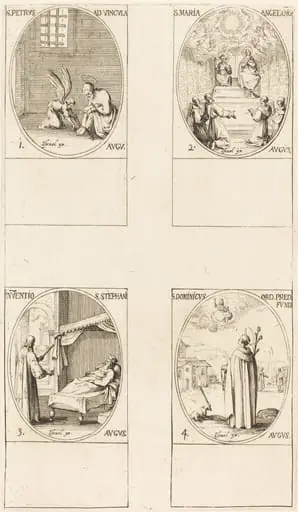 St. Peter, Apostle; St. Mary of Angels; Discovery of the Body of St. Stephen; St. Dominicus
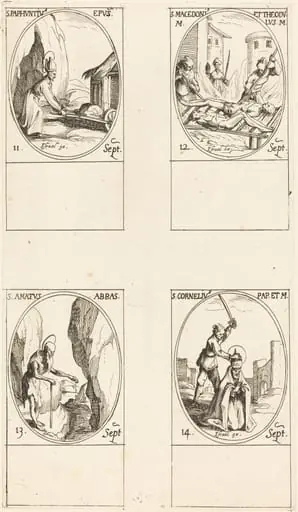 St. Paphnutius; Sts. Macedonius and Theodulus; St. Amatus; St. Cornelias
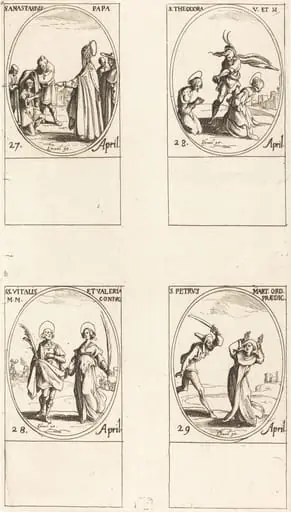 St. Anastasius; St. Theodora; Sts. Vitalis and Valeria; St. Peter Martyr
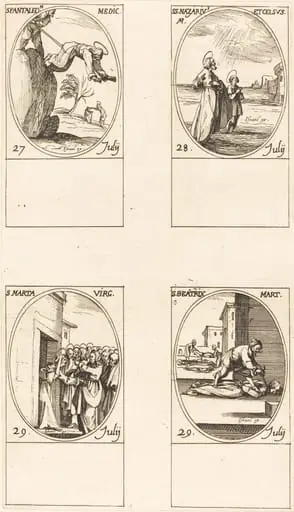 St. Pantaleon; Sts. Nazarius and Celsus; St. Martha; St. Beatrice