Artwork
St. Phocas; St. Theophilus; St. Conon; Sts. Perpetua and Felicitas
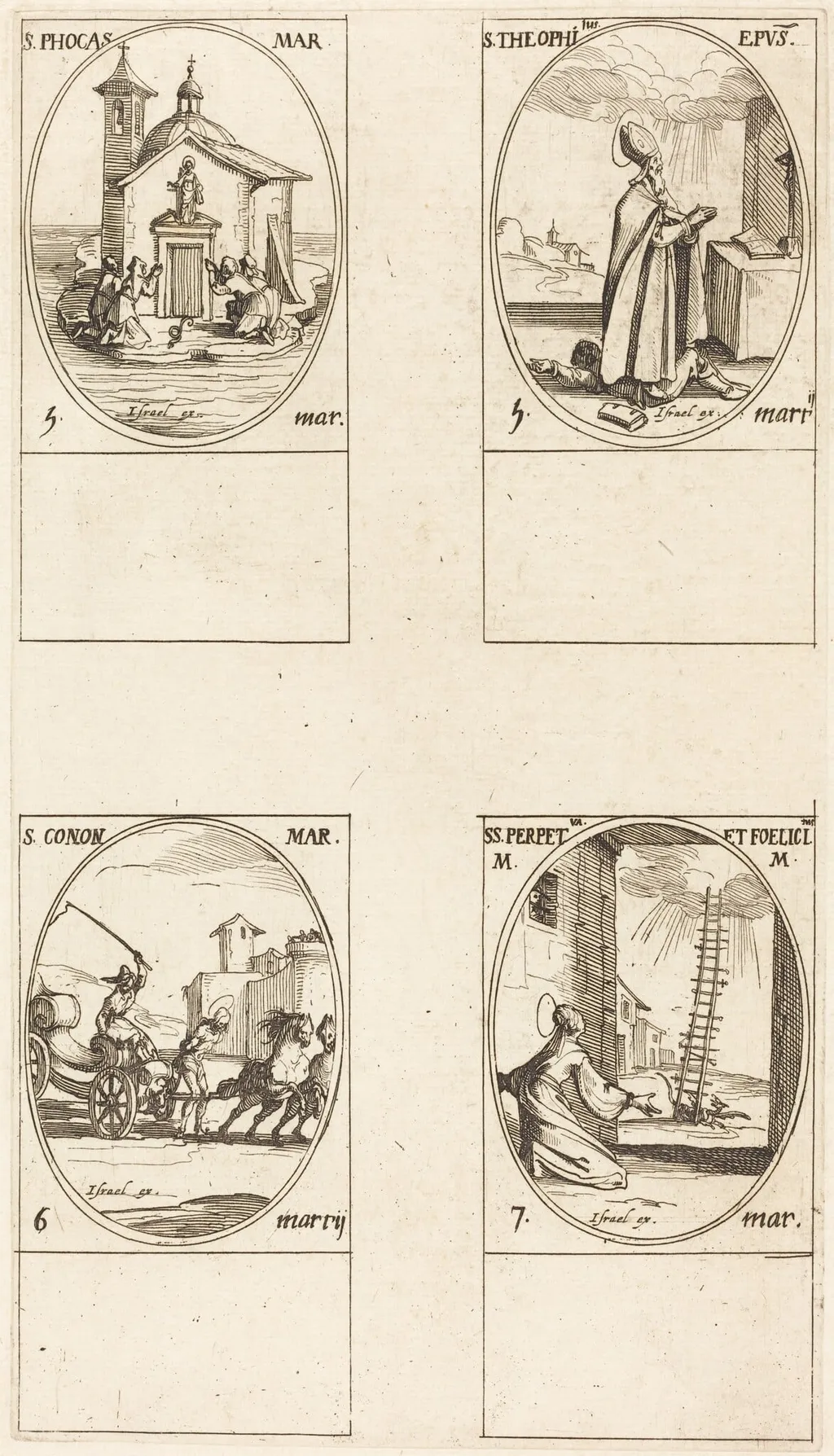
St. Phocas; St. Theophilus; St. Conon; Sts. Perpetua and Felicitas is an ink print by the Baroque artist Jacques Callot. It dates from 1634 and is held in the collection of the National Gallery of Art.
About this work
Overview
As one of over 1,400 prints produced by the Lorrainer artist, it reflects his sustained interest in sacred narratives and his mastery of fine-line etching.
Created around 1634 by Jacques Callot, this etching on laid paper presents four distinct religious scenes arranged in oval frames. As one of over 1,400 prints produced by the Lorrainer artist, it reflects his sustained interest in sacred narratives and his mastery of fine-line etching. The composition avoids ornate decoration, focusing instead on clear, contained moments of devotion and martyrdom.
Subject & Meaning
Each oval illustrates a different saint or group: a congregation before a church with a statue, a robed figure holding a book likely representing Theophilus, a mounted rider near a religious structure possibly Conon, and two women bound to a pole—Perpetua and Felicitas, martyred in Carthage. The scenes convey quiet solemnity, emphasizing faith under pressure rather than theatrical spectacle.
Technique & Style
Callot employed fine, controlled etching lines to define figures and architecture with precision. Backgrounds are sparse but functional, using minimal detail to suggest setting without distraction. The uniform oval framing unifies disparate stories, while the sharp contrast between ink and paper enhances legibility and emotional restraint.
History & Provenance
The print emerged during Callot’s mature period in Nancy, when he frequently produced religious subjects for private collectors and ecclesiastical patrons. Though no specific early ownership is documented, its technical quality aligns with prints circulated in Catholic regions of Europe, where devotional imagery remained in demand after the Reformation.
Context
In early 17th-century Europe, printmaking offered an accessible medium for religious instruction and personal devotion. Callot’s work responded to this demand, distilling complex hagiographies into compact, legible scenes. His approach diverged from grand altarpieces, favoring intimacy and narrative clarity suited to domestic contemplation.
Legacy
This print exemplifies Callot’s influence on the development of narrative printmaking. His ability to convey spiritual themes with restrained detail inspired later generations of engravers and etchers, particularly in Northern Europe. Though not widely exhibited today, it remains a representative example of his disciplined, story-driven technique.
Artist & collection
Artist
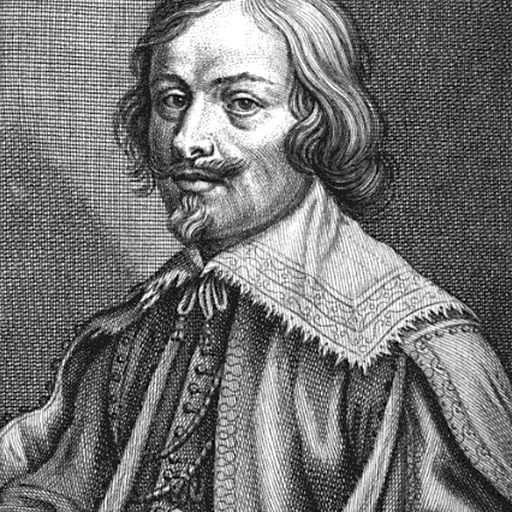
Jacques Callot was a baroque printmaker and draftsman from the Duchy of Lorraine.

 Holy Family at supper
 Restoration of the Aqueduct at Pisa
 Restoration of the Aqueduct at Pisa
 Square in Paris with Many Figures
 Square in Paris with Many Figures
 Horsemen Attacked by Robbers
 HOW WILL A COVERED PART BE CORRECTED?HOW WIKA A COVERED HEART DEED CORRECTED?
![Christ Walking on the Water [second plate], by Jacques Callot](https://artifactworldgallery.com/img/jacques-callot--christ-walking-on-the-water-second-plate--2069f3bfe4cb2126-w320.webp) Christ Walking on the Water [second plate]
Christ Walking on the Water [second plate]
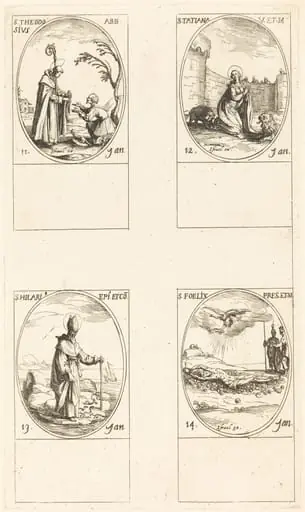 St. Theodosius; St. Tatiana; St. Hilary; St. Felix
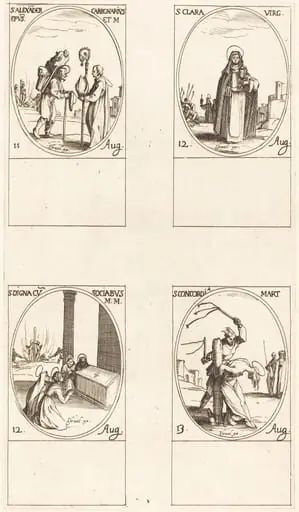 St. Alexander Carbonarius; St. Clare; St. Digna and Companions; St. Concordia
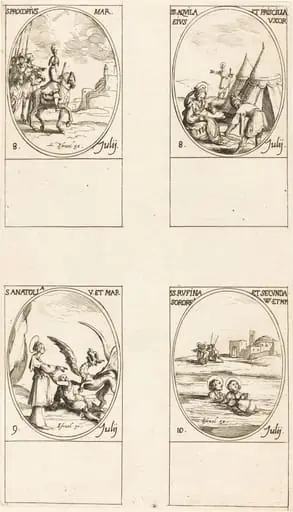 St. Procopius; Sts. Aquila and Prisca; St. Anatolia; Sts. Rufina and Secunda
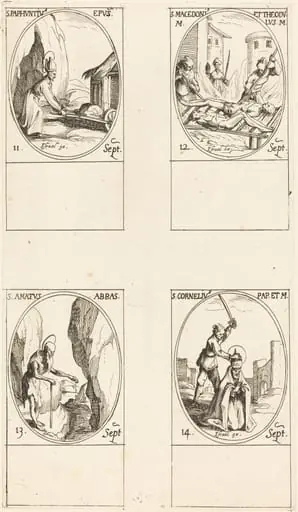 St. Paphnutius; Sts. Macedonius and Theodulus; St. Amatus; St. Cornelias
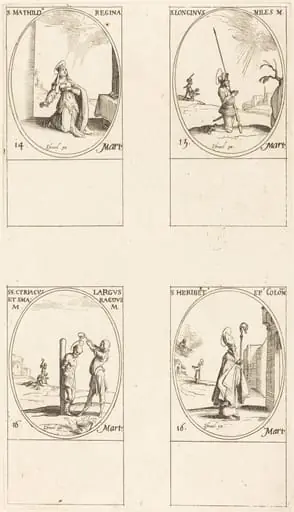 St. Matilda; St. Longinus; St. Cyriacus; St. Heribert
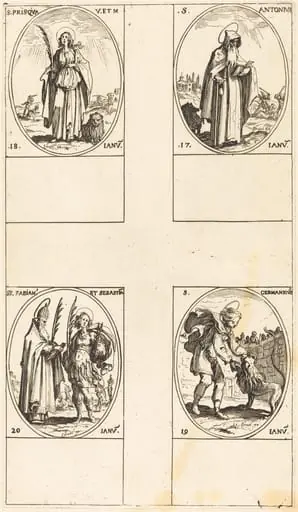 St. Anthony; St. Prisca; St. Germanicus; Sts. Fabian and Sebastian
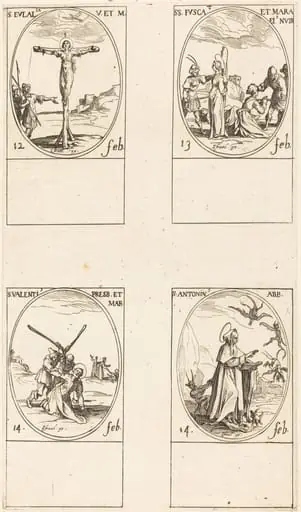 St. Eulalia; St. Fusca and Maura; St. Valentine; St. Anthony
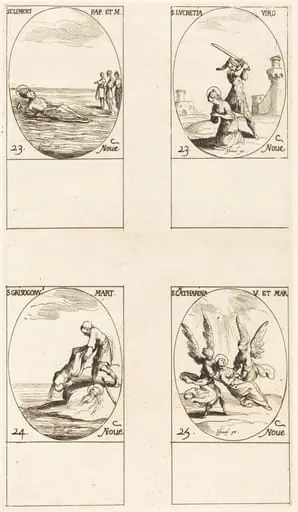 St. Clement; St. Lucretia; St. Chrysogonus; St. Catharine
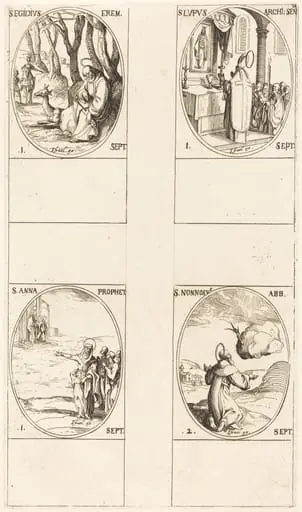 St. Giles; St. Lupus; St. Anne; St. Nonnosus