Artwork
St. Mary of Snow; St. Memmius, Bishop; The Transfiguration; Sts. Justus and Pastor
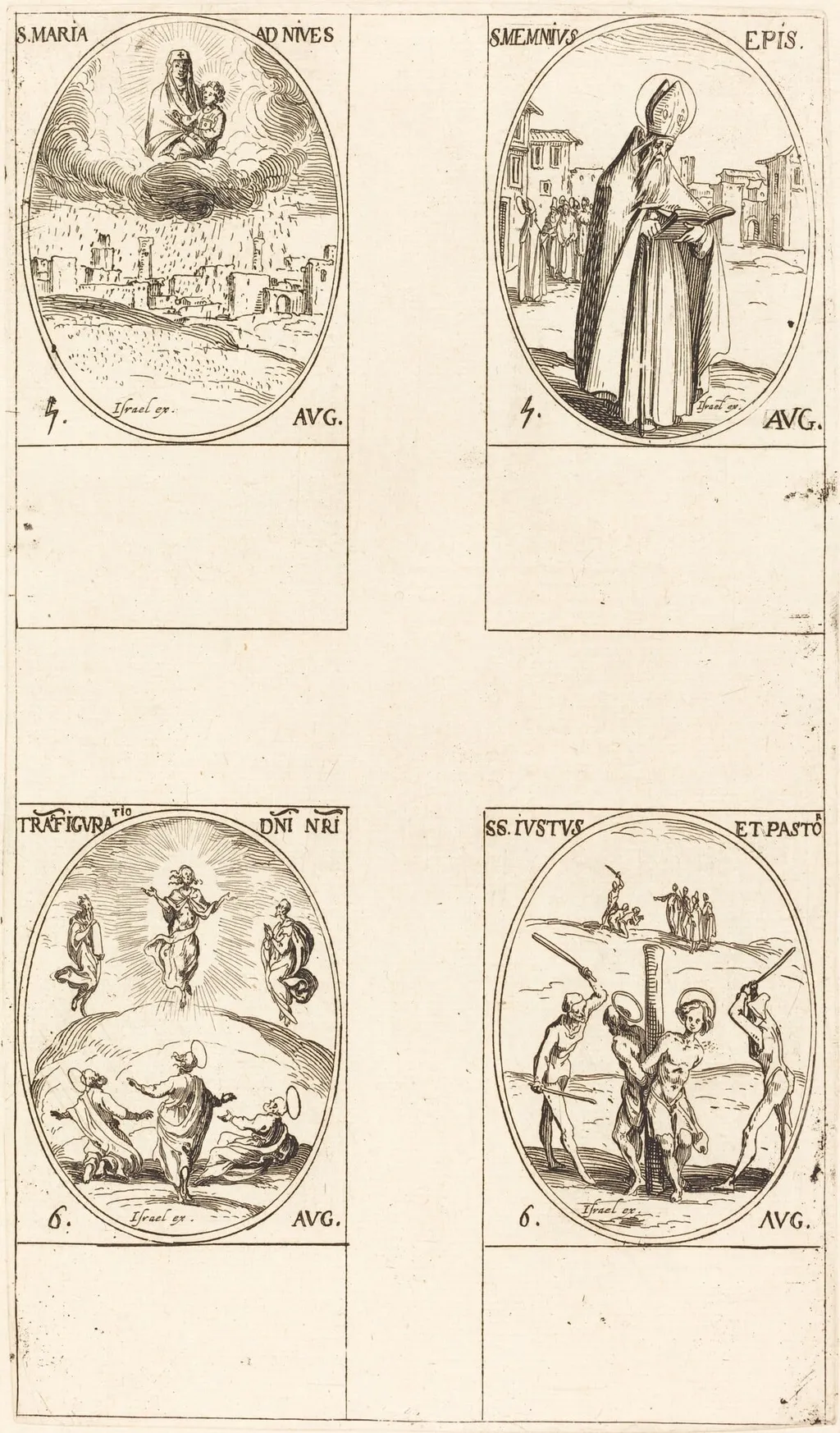
St. Mary of Snow; St. Memmius, Bishop; The Transfiguration; Sts. Justus and Pastor is an ink print by the Baroque artist Jacques Callot. It dates from 1634 and is held in the collection of the National Gallery of Art.
About this work
Overview
Jacques Callot’s etching, created around 1634, presents four distinct oval panels arranged in a two‑by‑two format. Each panel contains a separate narrative scene rendered in fine line work on laid paper, a typical support for early modern prints. The composition reflects the Baroque interest in varied subjects within a single work, combining religious figures with dynamic groupings.
Subject & Meaning
Opposite, the upper right panel depicts Saint Memmius, a bishop, in a long robe before a building façade.
The upper left oval shows a woman cradling an infant, identified as the Virgin Mary with the Christ child, set against an architectural backdrop and a clouded sky. Opposite, the upper right panel depicts Saint Memmius, a bishop, in a long robe before a building façade. The lower left illustrates the Transfiguration, with a luminous figure among a group of onlookers, while the lower right features Saints Justus and Pastor, shown holding objects and accompanied by a crowd in the distance.
Technique & Style
Callot employed the etching technique, incising lines into a copper plate and using acid to produce varying depths of line. The artist’s characteristic fine hatching creates subtle gradations of tone, giving the scenes a sense of volume and atmospheric perspective. The use of laid paper, with its ribbed texture, enhances the delicate rendering of architectural details and fabric folds.
History & Provenance
The print belongs to Callot’s prolific output of more than 1,400 etchings, which documented a wide range of subjects from military life to religious narratives. Produced in the Duchy of Lorraine, the work circulated among collectors of the period and later entered museum collections that focus on Baroque printmaking.
Context
During the early 17th century, French printmakers such as Callot responded to the Baroque aesthetic, emphasizing dramatic composition, chiaroscuro effects, and emotional intensity. The inclusion of multiple saints and a biblical episode reflects the Counter‑Reformation’s demand for didactic and devotional imagery, while the detailed backgrounds demonstrate the era’s fascination with urban and landscape settings.
Artist & collection
Artist
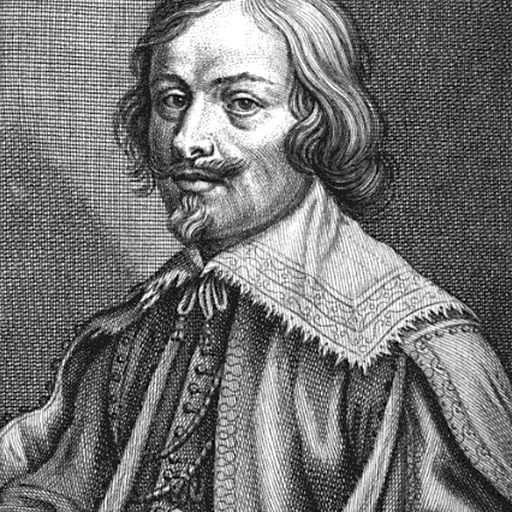
Jacques Callot was a baroque printmaker and draftsman from the Duchy of Lorraine.

 Holy Family at supper
 Restoration of the Aqueduct at Pisa
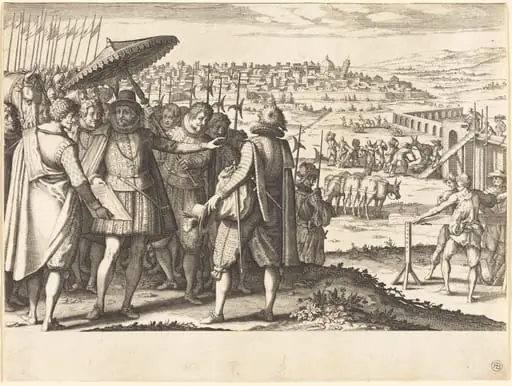 Restoration of the Aqueduct at Pisa
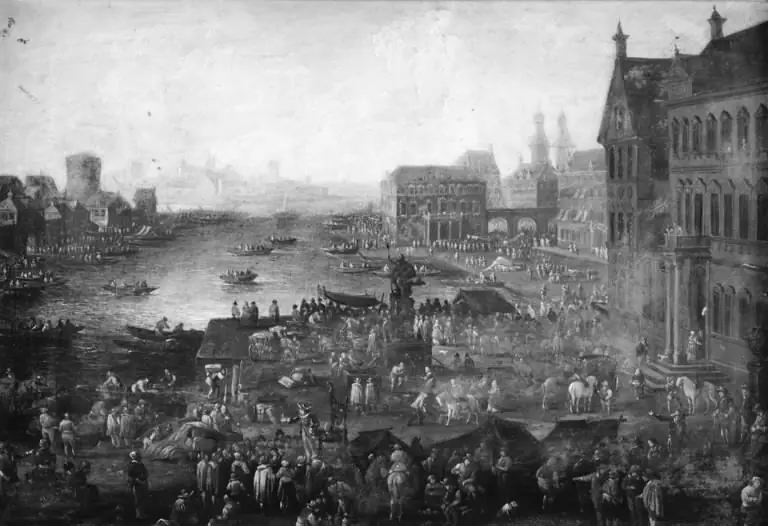 Square in Paris with Many Figures
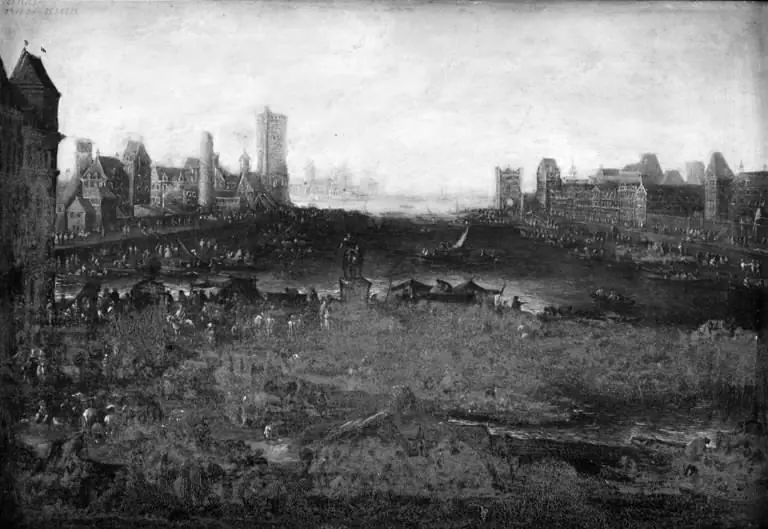 Square in Paris with Many Figures
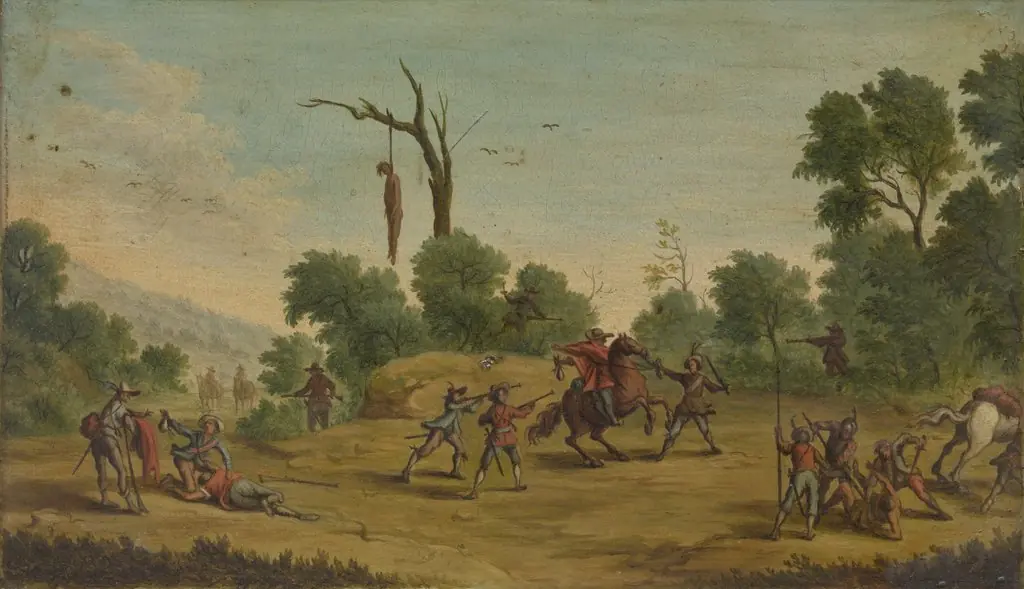 Horsemen Attacked by Robbers
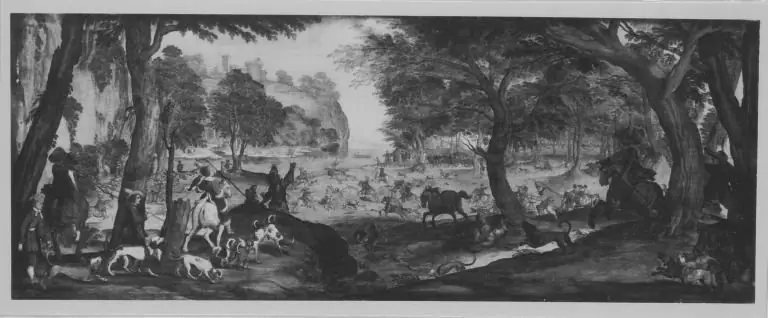 HOW WILL A COVERED PART BE CORRECTED?HOW WIKA A COVERED HEART DEED CORRECTED?
![Christ Walking on the Water [second plate], by Jacques Callot](https://artifactworldgallery.com/img/jacques-callot--christ-walking-on-the-water-second-plate--2069f3bfe4cb2126-w320.webp) Christ Walking on the Water [second plate]
Christ Walking on the Water [second plate]
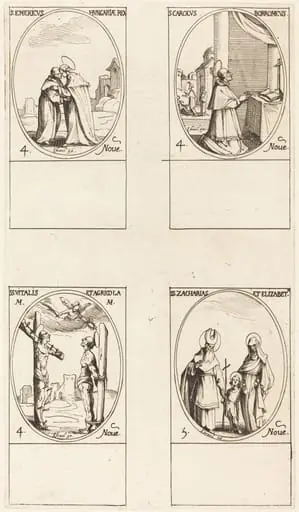 St. Emeric; St. Charles Borromeo; St. Vitalis & Agricola; Sts. Zachary & Elizabeth
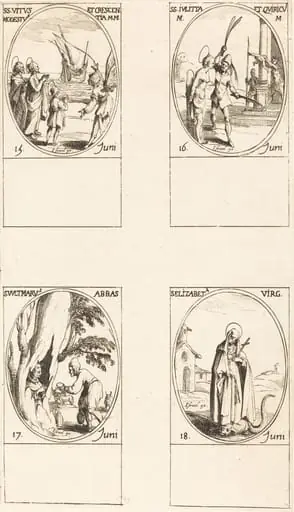 Sts. Vitus, Modestus, & Crescentia; Sts. Julitta & Quiricus; St. Avitus, Abbot; St. Elizabeth, Virgin
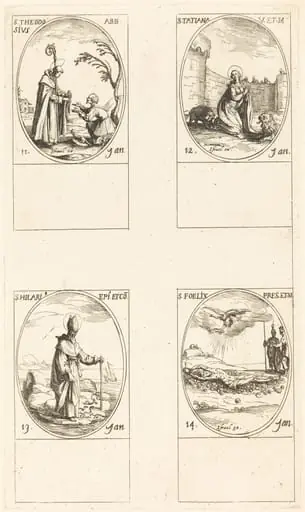 St. Theodosius; St. Tatiana; St. Hilary; St. Felix
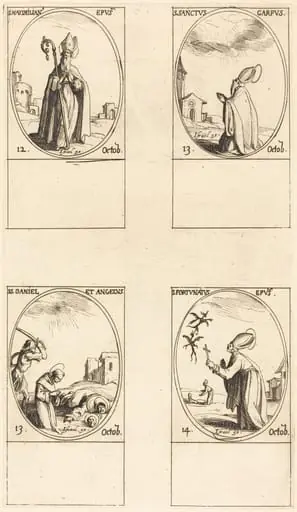 St. Maximilian; St. Carpus; St. Daniel and Angelus; St. Fortunatus
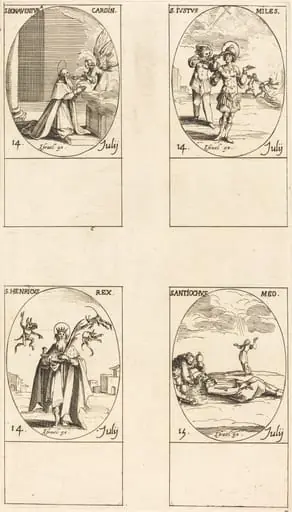 St. Bonaventura; St. Justus; St. Henry, Emperor; St. Antiochus
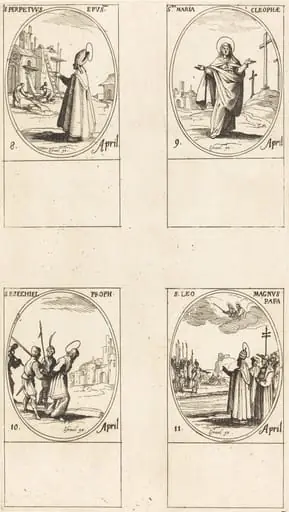 St. Perpetuus; St. Mary of Cleophas; St. Ezechiel; St. Leo the Great
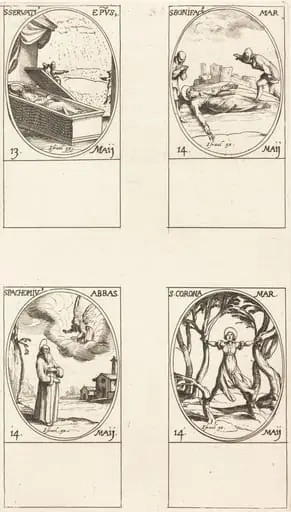 St. Servatius; St. Boniface; St. Pachomius; St. Corona
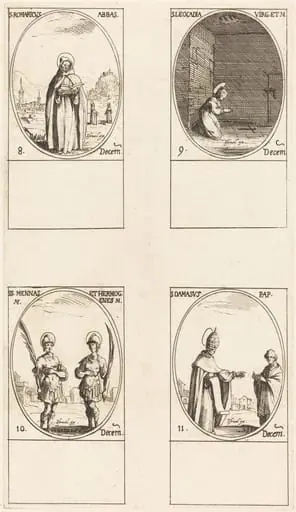 St. Romaricus; St. Leocadia; Sts. Mennas and Hermogenes; St. Damasus