Artwork
St. Paphnutius; Sts. Macedonius and Theodulus; St. Amatus; St. Cornelias
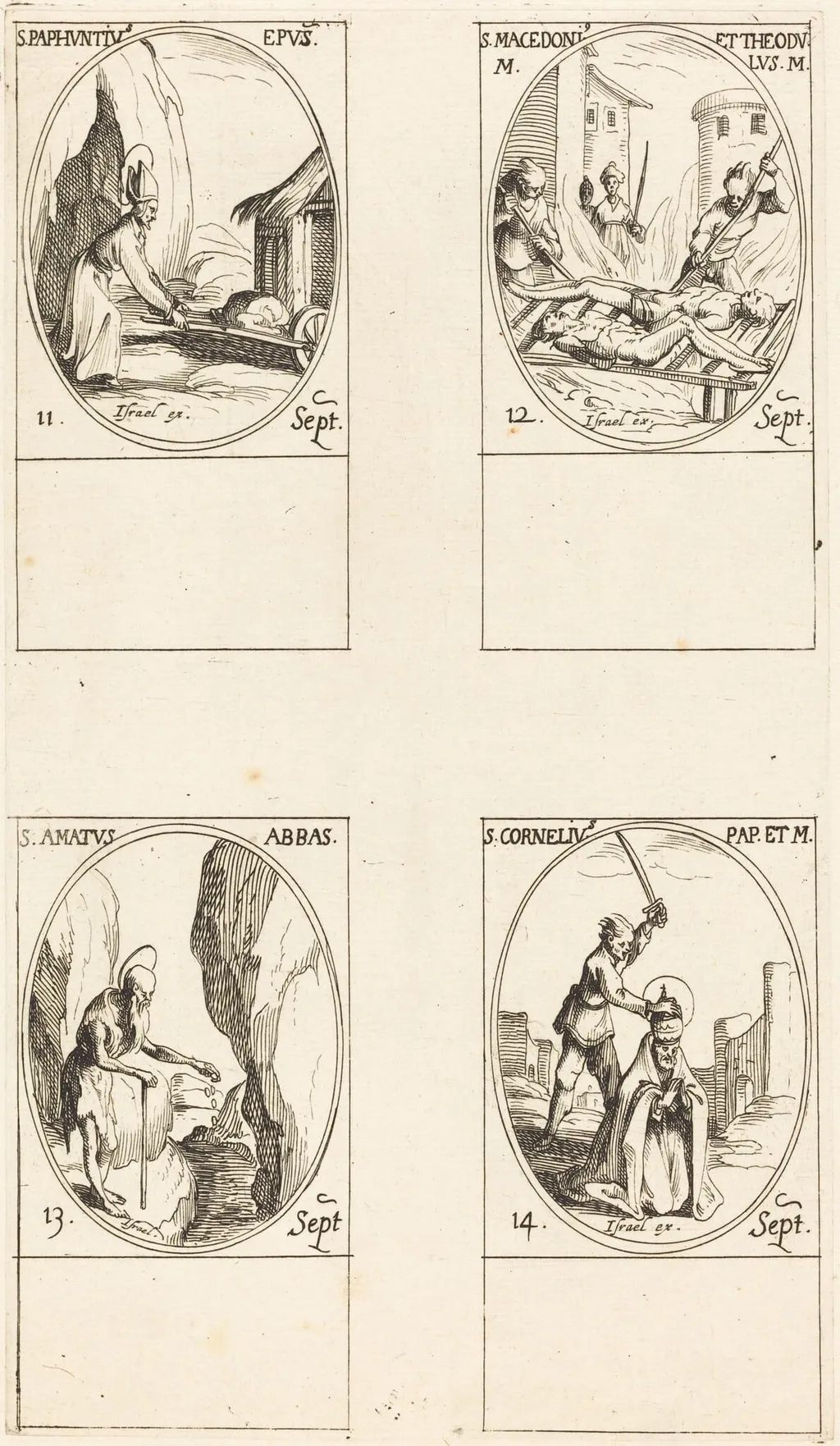
St. Paphnutius; Sts. Macedonius and Theodulus; St. Amatus; St. Cornelias is an ink print by the Baroque artist Jacques Callot. It dates from 1634 and is held in the collection of the National Gallery of Art.
About this work
Overview
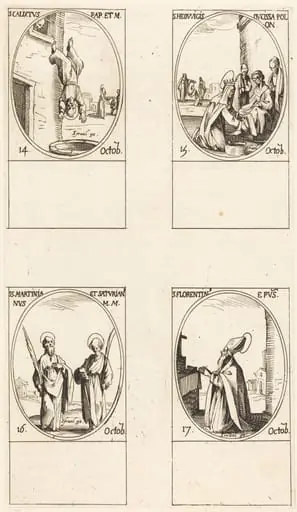
Around 1634 Jacques Callot produced a series of four small etchings on laid paper, each depicting a different saint within an oval frame. The prints are modest in size and present solitary figures engaged in simple actions, set against minimally rendered backgrounds. The work exemplifies Callot’s prolific output as a Baroque printmaker from the Duchy of Lorraine.
Subject & Meaning
The four images portray St. Paphnutius, Saints Macedonius and Theodulus, St. Amatus, and St. Cornelias. Each saint is shown in a distinct, everyday context—a kneeling figure beside a bed, a standing figure near a sheep pen, a figure leaning on a staff, and a saint holding a cross while another figure looks upward—suggesting narratives of piety and devotion drawn from hagiographic traditions.
Technique & Style
Executed in etching, the prints display Callot’s characteristic fine line work and dense cross‑hatching, which model the folds of garments and create deep shadows. The lines are crisp yet appear swiftly drawn, giving the images a sketch‑like vitality. The oval frames and Latin headings at the top of each plate, along with the repeated “Israel ex.” mark, identify the artist’s workshop conventions.
History & Provenance
Created during Callot’s mature period, the series belongs to his extensive catalog of over 1,400 etchings that ranged from religious subjects to genre scenes. While the specific original patron is unknown, the prints were likely intended for devotional use or as collector’s items within the 17th‑century market for small religious prints.
Context
The series reflects the Baroque era’s interest in vivid, narrative religious imagery, yet Callot’s approach remains restrained, focusing on individual saints rather than grandiose compositions. His work bridges the detailed observation of everyday life with the spiritual concerns of contemporary Catholic devotion, a hallmark of French printmaking in the early 1600s.
Artist & collection
Artist
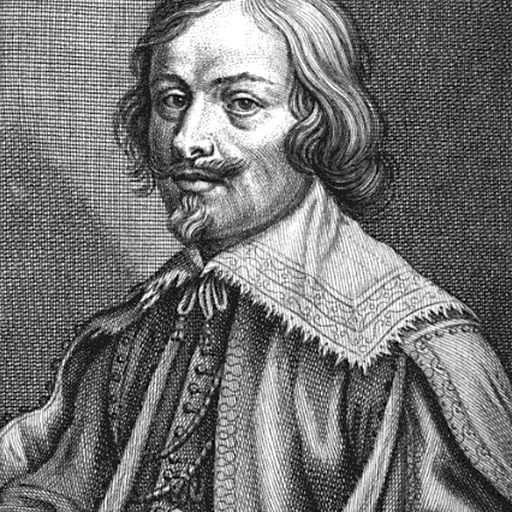
Jacques Callot was a baroque printmaker and draftsman from the Duchy of Lorraine.

 Holy Family at supper
 Restoration of the Aqueduct at Pisa
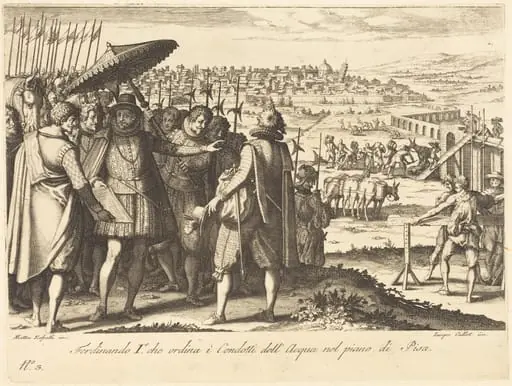
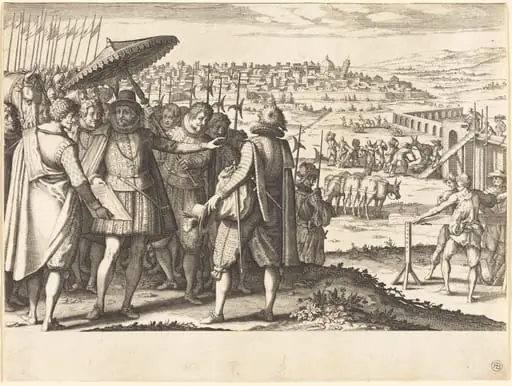 Restoration of the Aqueduct at Pisa
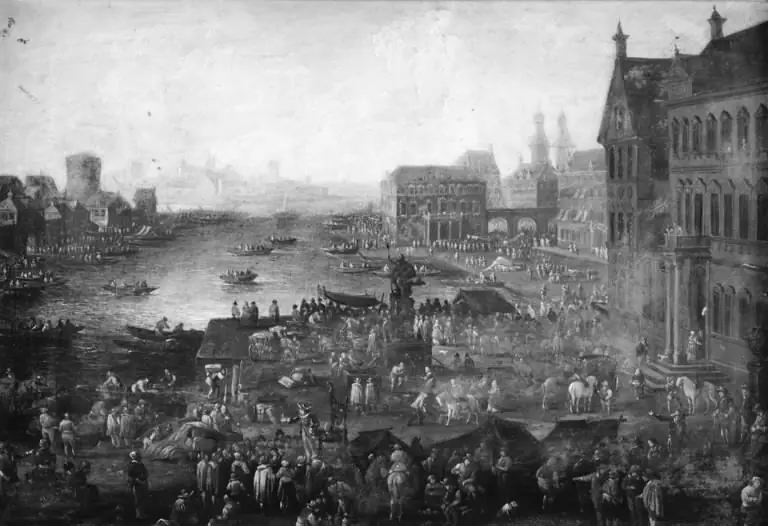 Square in Paris with Many Figures
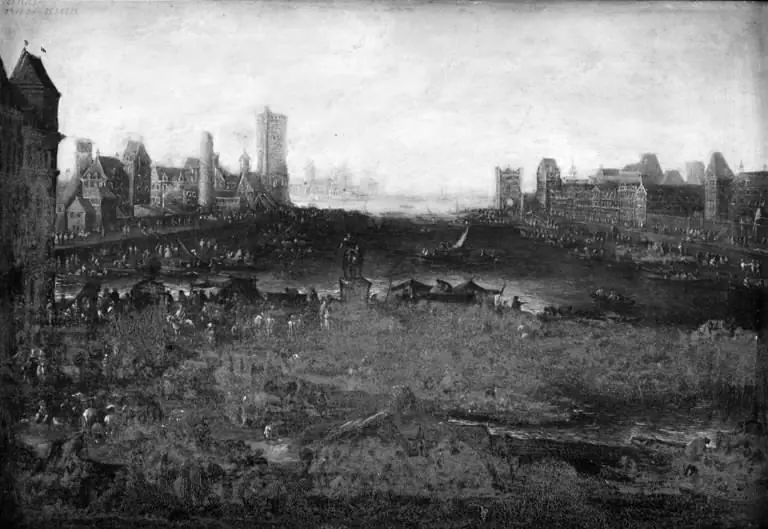 Square in Paris with Many Figures
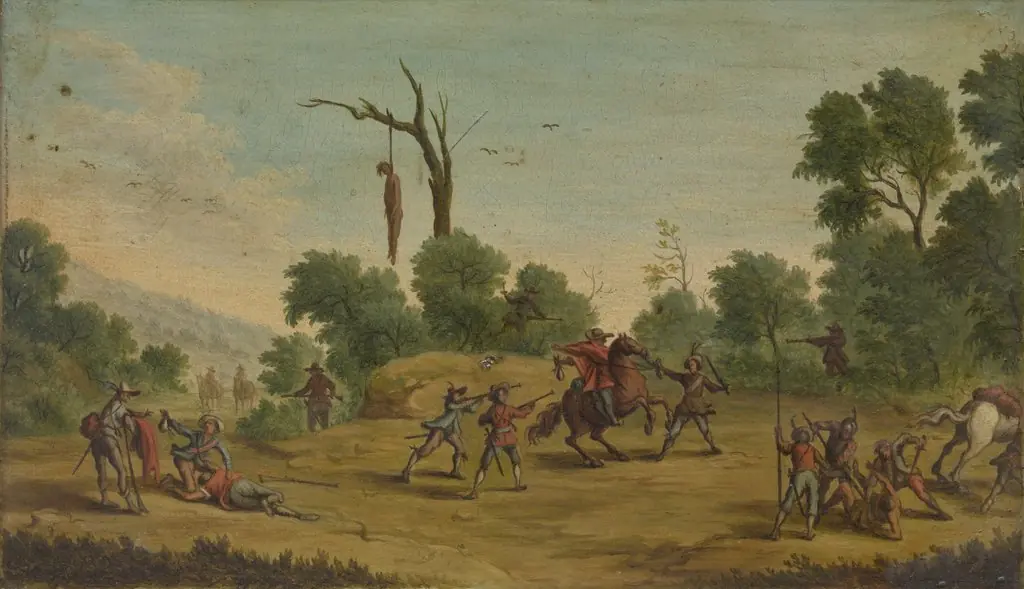 Horsemen Attacked by Robbers
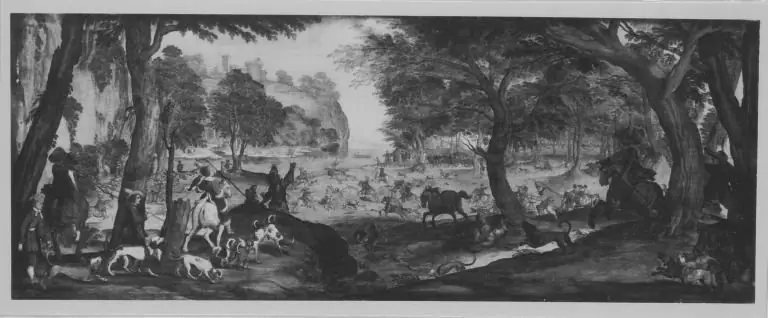 HOW WILL A COVERED PART BE CORRECTED?HOW WIKA A COVERED HEART DEED CORRECTED?
![Christ Walking on the Water [second plate], by Jacques Callot](https://artifactworldgallery.com/img/jacques-callot--christ-walking-on-the-water-second-plate--2069f3bfe4cb2126-w320.webp) Christ Walking on the Water [second plate]
Christ Walking on the Water [second plate]
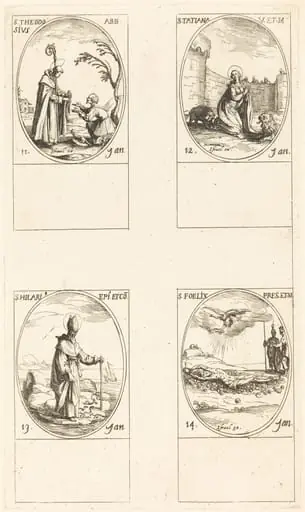 St. Theodosius; St. Tatiana; St. Hilary; St. Felix
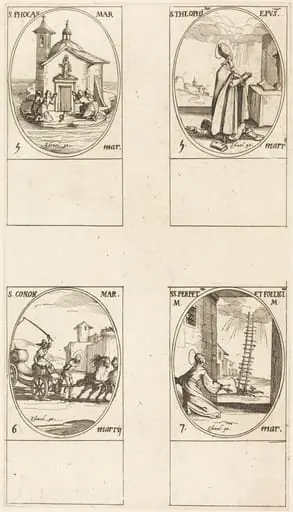 St. Phocas; St. Theophilus; St. Conon; Sts. Perpetua and Felicitas
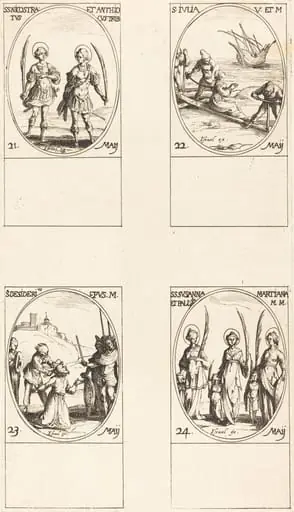 Sts. Nicostratus and Anthiocus; St. Julia; St. Desiderius; Sts. Susanna, Palladia, and Martiana
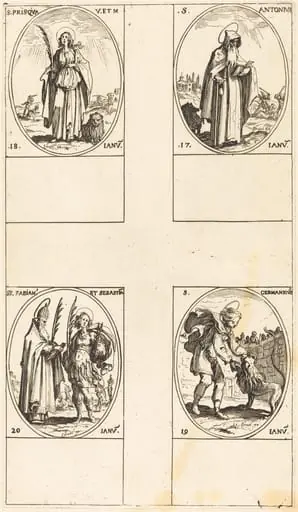 St. Anthony; St. Prisca; St. Germanicus; Sts. Fabian and Sebastian
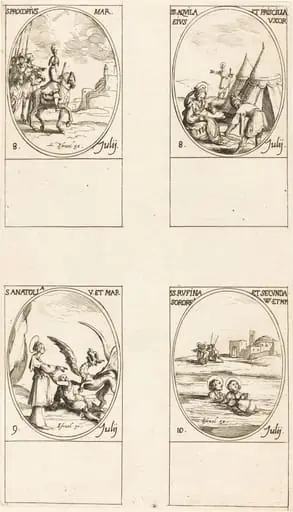 St. Procopius; Sts. Aquila and Prisca; St. Anatolia; Sts. Rufina and Secunda
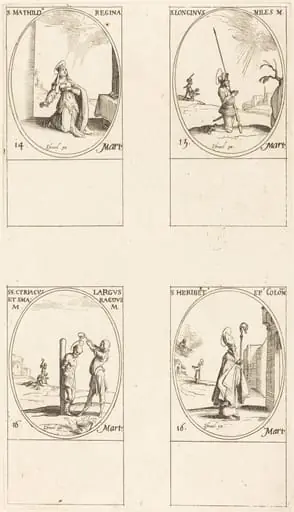 St. Matilda; St. Longinus; St. Cyriacus; St. Heribert
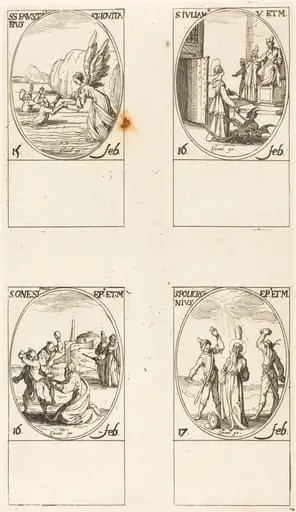 Sts. Faustinus and Jovita; St. Juliana; St. Onesimus; St. Policronius
 St. Calixtus; St. Hedwiges; Sts. Martinian and Saturian; St. Florentinus