Artwork
Sts. Chrysanthus & Daria; Sts. Crispin & Crispinian; St. Evaristus; St. Frumentius
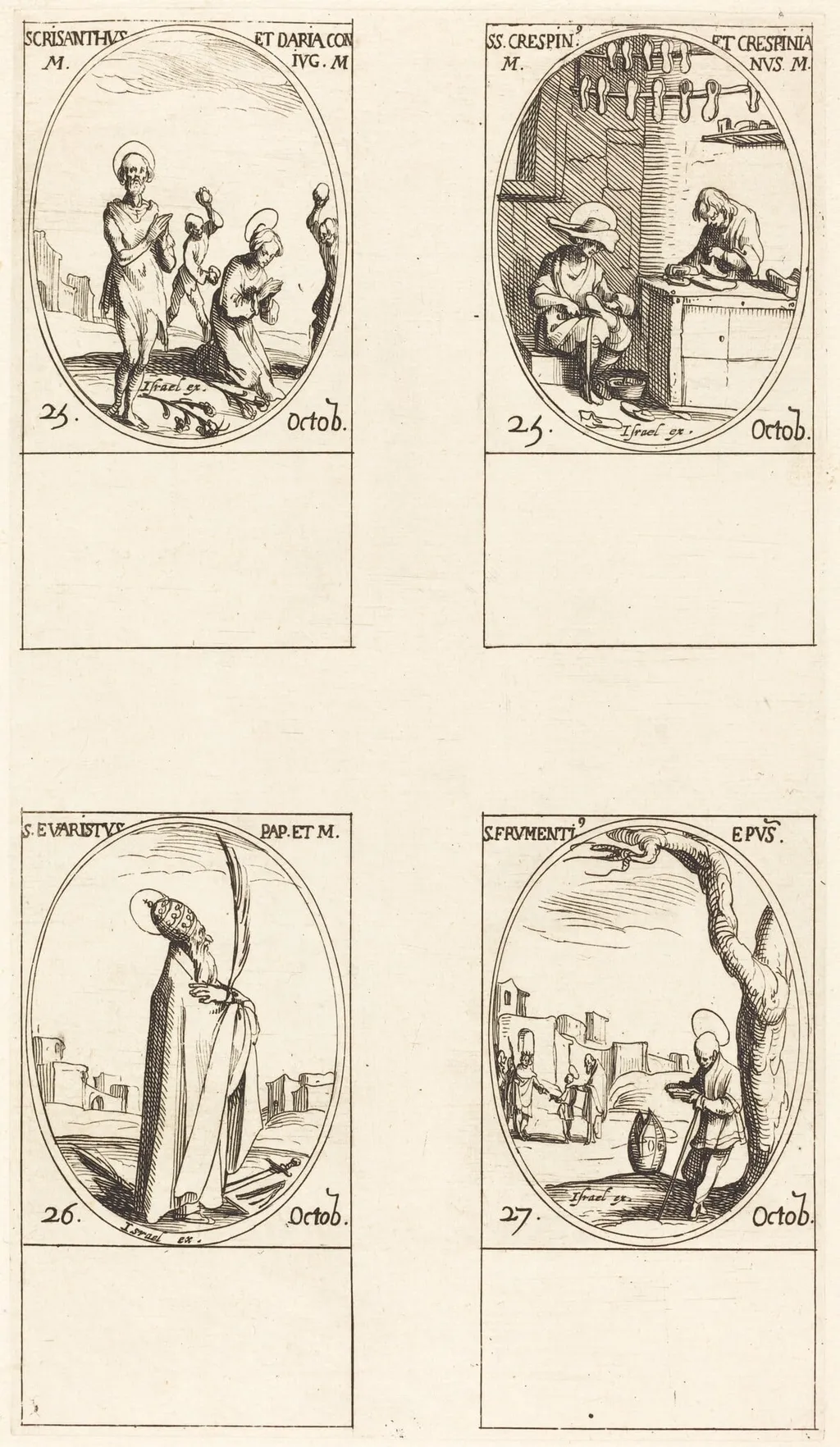
Sts. Chrysanthus & Daria; Sts. Crispin & Crispinian; St. Evaristus; St. Frumentius is an ink print by the Baroque artist Jacques Callot. It dates from 1634 and is held in the collection of the National Gallery of Art.
About this work
Overview
Created around 1634 by Jacques Callot, this print is a single etching on laid paper depicting four distinct saintly scenes within oval borders.
Created around 1634 by Jacques Callot, this print is a single etching on laid paper depicting four distinct saintly scenes within oval borders. Callot, a Lorrainer artist renowned for his technical precision in printmaking, produced this work as part of a broader body of over 1,400 etchings that captured religious, social, and military themes of his time. The composition reflects his mastery of fine-line technique and narrative economy.
Subject & Meaning
The print illustrates four early Christian saints: Chrysanthus and Daria, Crispin and Crispinian, Evaristus, and Frumentius. Each scene presents a moment from their hagiographies—kneeling prayer, shoemaking labor, or martyrdom—rendered with symbolic clarity. The inclusion of inscribed names confirms their devotional purpose, likely intended for private contemplation or instruction, aligning with Counter-Reformation efforts to reinforce saintly models of piety.
Technique & Style
Callot employed etching to achieve intricate, controlled lines that define each figure and background element with sharp clarity. The use of fine cross-hatching and delicate contours gives texture to fabric, architecture, and landscape details without overwhelming the small format. His method allowed layered tonal effects and precise delineation, characteristic of his mature style and distinct from the looser brushwork of contemporary painters.
History & Provenance
The print was produced during Callot’s time in Florence, where he worked under Medici patronage and absorbed Italian compositional traditions. Though specific early ownership records are sparse, such religious prints circulated widely among educated collectors and religious institutions in 17th-century Europe. Its survival in multiple museum collections suggests consistent demand for his devotional imagery.
Context
In the 1630s, religious imagery remained central to print culture despite growing secular interests. Callot’s choice of obscure saints reflects a broader trend of reviving lesser-known martyrs to inspire piety amid religious tensions. His integration of landscape elements, though minimal, echoes Northern European traditions, contrasting with the more theatrical Italian altarpieces of the period.
Legacy
Callot’s etchings, including this one, influenced generations of printmakers through their technical rigor and narrative discipline. While not widely exhibited today, the work exemplifies how small-scale religious prints served as accessible tools of devotion and education. His precise line work became a benchmark for later artists exploring the expressive potential of etching.
Artist & collection

Artist
Jacques Callot was a baroque printmaker and draftsman from the Duchy of Lorraine.

 Holy Family at supper
 Restoration of the Aqueduct at Pisa
 Restoration of the Aqueduct at Pisa
 Square in Paris with Many Figures
 Square in Paris with Many Figures
 Horsemen Attacked by Robbers
 HOW WILL A COVERED PART BE CORRECTED?HOW WIKA A COVERED HEART DEED CORRECTED?
![Christ Walking on the Water [second plate], by Jacques Callot](https://artifactworldgallery.com/img/jacques-callot--christ-walking-on-the-water-second-plate--2069f3bfe4cb2126-w320.webp) Christ Walking on the Water [second plate]
Christ Walking on the Water [second plate]
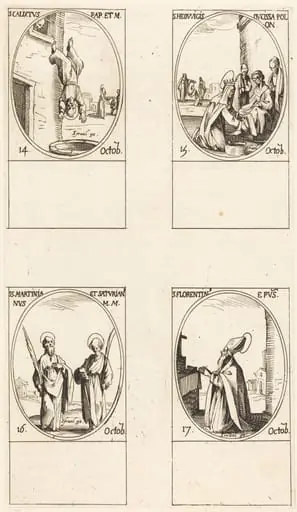 St. Calixtus; St. Hedwiges; Sts. Martinian and Saturian; St. Florentinus
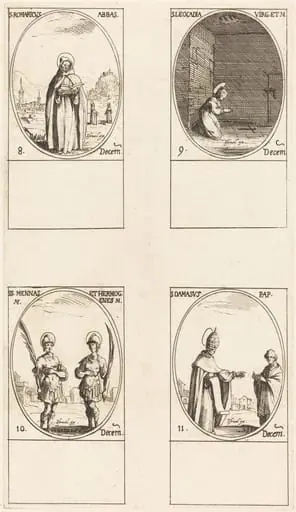 St. Romaricus; St. Leocadia; Sts. Mennas and Hermogenes; St. Damasus
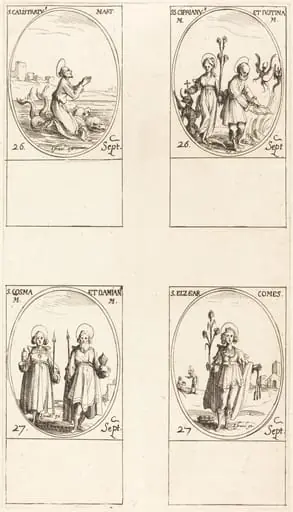 St. Calistratus; Sts. Cyprian and Justina; Sts. Comus and Damian; St. Elzear, Count
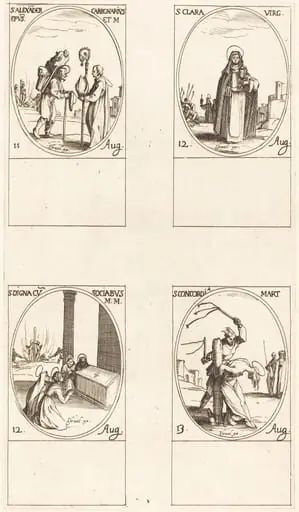 St. Alexander Carbonarius; St. Clare; St. Digna and Companions; St. Concordia
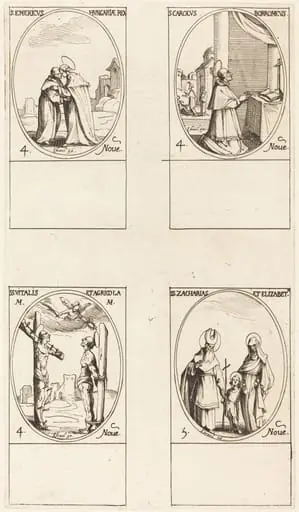 St. Emeric; St. Charles Borromeo; St. Vitalis & Agricola; Sts. Zachary & Elizabeth
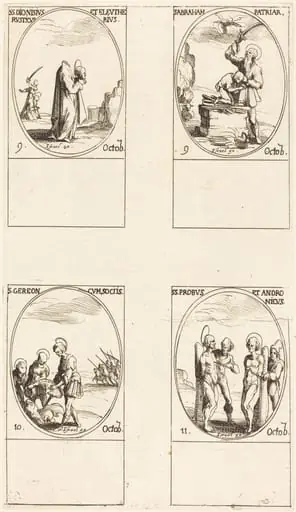 St. Dionysius, Rusticus & Eleutherius; St. Abraham; St. Gereon & Companions; Sts. Probus & Andronichus
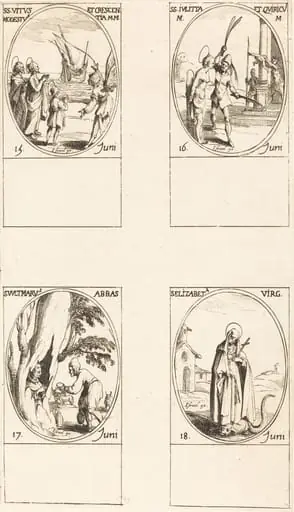 Sts. Vitus, Modestus, & Crescentia; Sts. Julitta & Quiricus; St. Avitus, Abbot; St. Elizabeth, Virgin
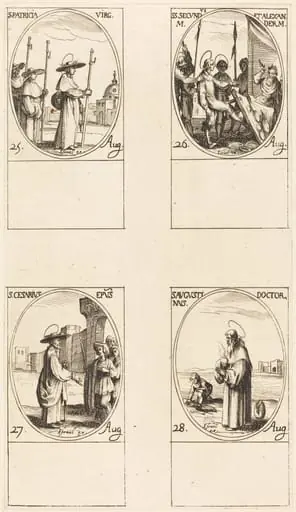 St. Patricia; Sts. Secundus and Alexander; St. Cesarius; St. Augustine
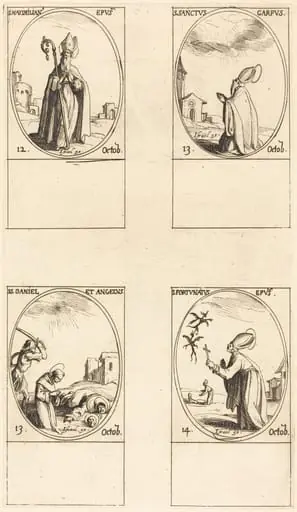 St. Maximilian; St. Carpus; St. Daniel and Angelus; St. Fortunatus
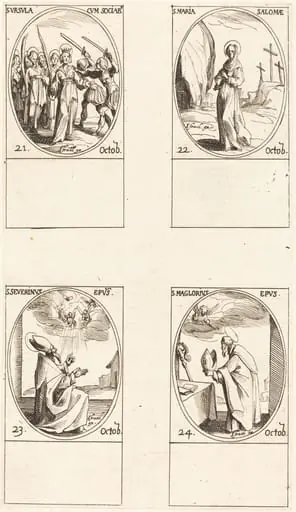 St. Ursula and Companions; St. Mary Salome; St. Severinus; St. Maglorius