Artwork
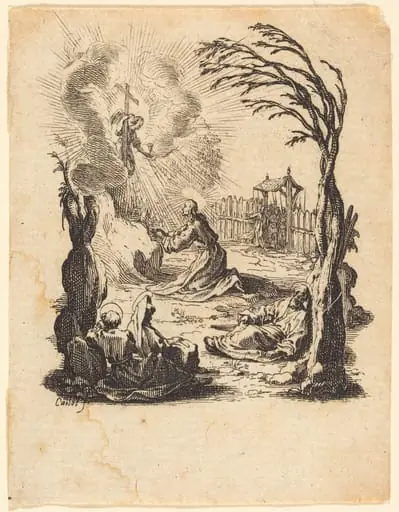
The Agony in the Garden
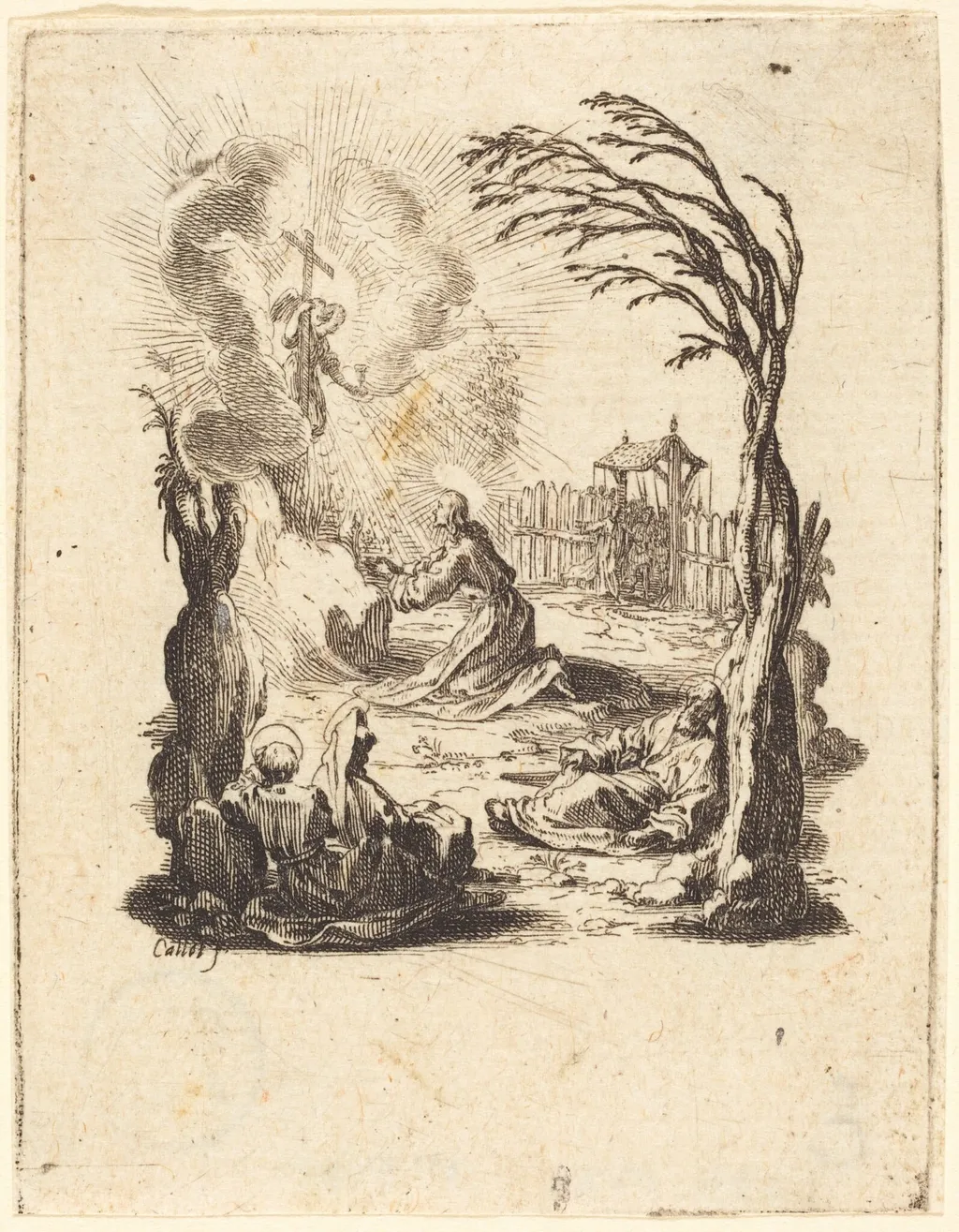
The Agony in the Garden is an ink print by the Baroque artist Jacques Callot. It dates from 1624 and is held in the collection of the National Gallery of Art.
About this work
Overview
Created around 1624 by Jacques Callot, this etching on laid paper depicts a moment from the Gospel of Matthew in which Christ prays in Gethsemane.
Created around 1624 by Jacques Callot, this etching on laid paper depicts a moment from the Gospel of Matthew in which Christ prays in Gethsemane. As one of over 1,400 prints by the Lorraine-born artist, it exemplifies his mastery of fine-line technique and his interest in religious subjects rendered with psychological nuance. The composition balances intimate human emotion with a carefully constructed nocturnal setting.
Subject & Meaning
The scene captures Christ in prayer, kneeling with clasped hands beneath a glowing cross held by an angel, while two disciples sleep nearby. The tension between spiritual resolve and human exhaustion is conveyed through posture and lighting. The dark, encroaching trees and distant building suggest isolation and impending betrayal, reinforcing the narrative’s emotional weight without overt symbolism.
Technique & Style
Callot employed fine, controlled etching lines to model form and atmosphere, using subtle gradations of tone to suggest moonlit shadows and the ethereal glow of the cross. The dense, leaning foliage and textured ground demonstrate his skill in rendering depth and texture on a small scale. His use of chiaroscuro enhances the drama, aligning with Baroque sensibilities while maintaining the precision characteristic of Northern printmaking traditions.
History & Provenance
The print was produced during Callot’s most prolific period, likely in Nancy or Paris, where he worked for noble patrons and religious institutions. Though specific early ownership records are sparse, the work aligns with his broader output of devotional prints circulated among educated collectors. Its survival in multiple institutional collections attests to its enduring presence in early modern print circulation.
Context
In early 17th-century Europe, religious imagery remained central to print culture, especially in regions affected by the Counter-Reformation. Callot’s etchings responded to a demand for accessible, emotionally resonant biblical scenes. His attention to naturalistic detail and nighttime settings distinguished his work from more stylized contemporaries, reflecting a growing interest in realism and psychological depth.
Legacy
Callot’s technical innovations in etching influenced generations of printmakers across Europe. His ability to convey narrative tension through light, composition, and minute detail set a standard for religious prints. Though less celebrated than his satirical series, works like this demonstrate his quiet mastery of sacred themes and his role in elevating printmaking as a medium for serious spiritual contemplation.
Artist & collection
Artist
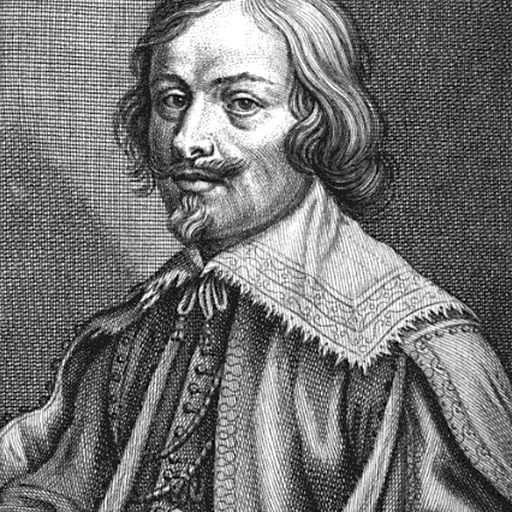
Jacques Callot was a baroque printmaker and draftsman from the Duchy of Lorraine.

 Holy Family at supper
 Restoration of the Aqueduct at Pisa
 Restoration of the Aqueduct at Pisa
 Square in Paris with Many Figures
 Square in Paris with Many Figures
 Horsemen Attacked by Robbers
 HOW WILL A COVERED PART BE CORRECTED?HOW WIKA A COVERED HEART DEED CORRECTED?
![Christ Walking on the Water [second plate], by Jacques Callot](https://artifactworldgallery.com/img/jacques-callot--christ-walking-on-the-water-second-plate--2069f3bfe4cb2126-w320.webp) Christ Walking on the Water [second plate]
Christ Walking on the Water [second plate]
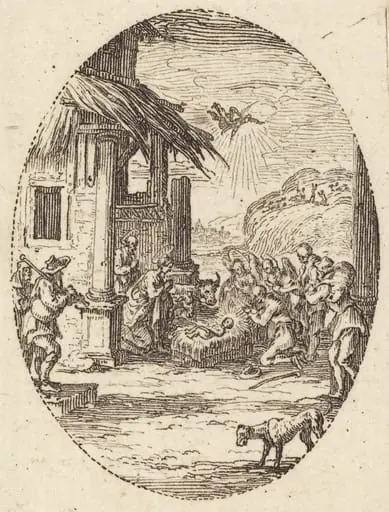 The Adoration of the Shepherds
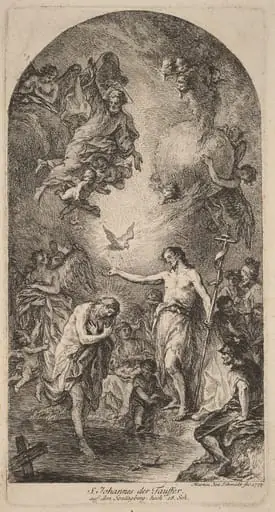 The Baptism of Christ
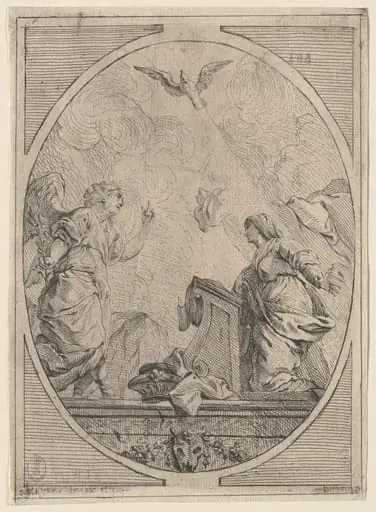 The Annunciation
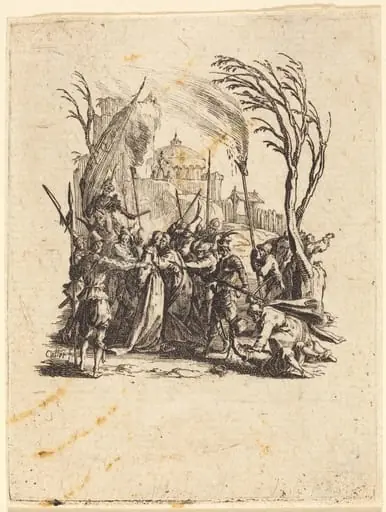 The Betrayal
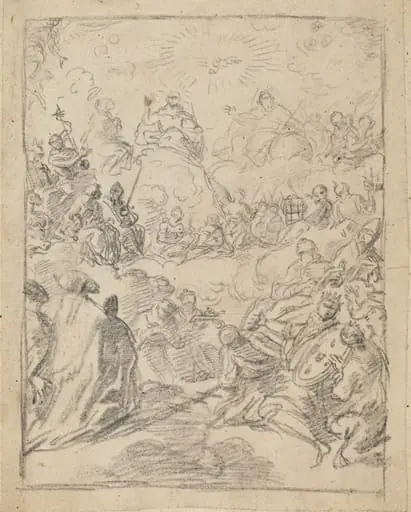 The Triumph of the Trinity (The Gloria)
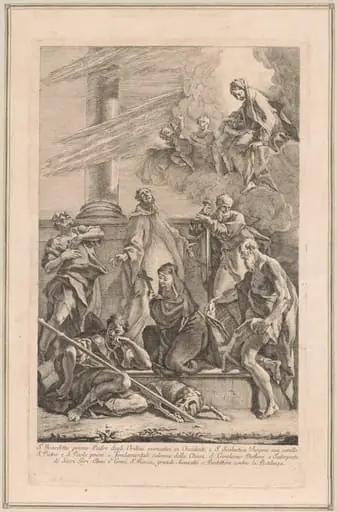 The Madonna and Child with Two Angels and Saints Scholastica, Benedict, Roch, Peter, Paul and Jerome
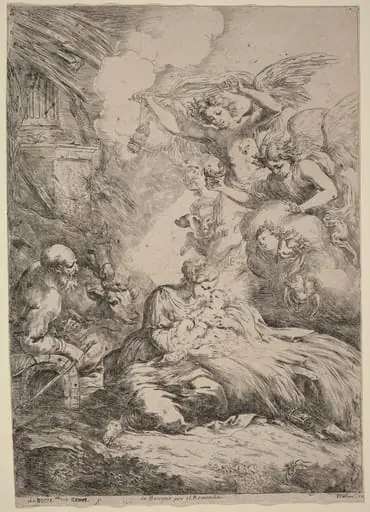 The Holy Family Adored by Angels (The Large Nativity)
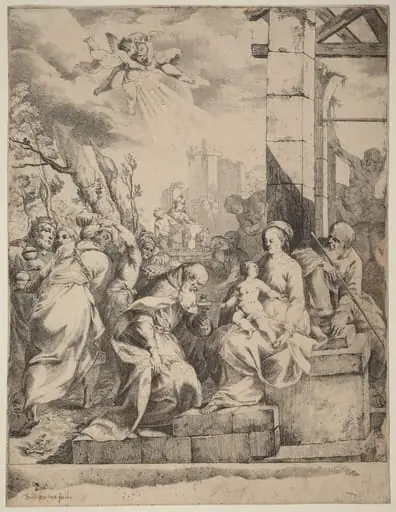 The Adoration of the Magi
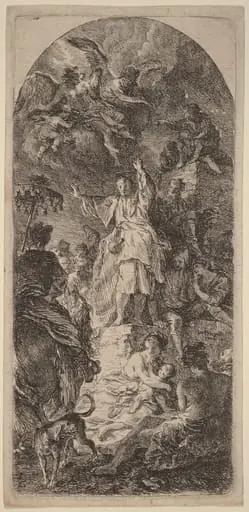 Saint James Major Preaching
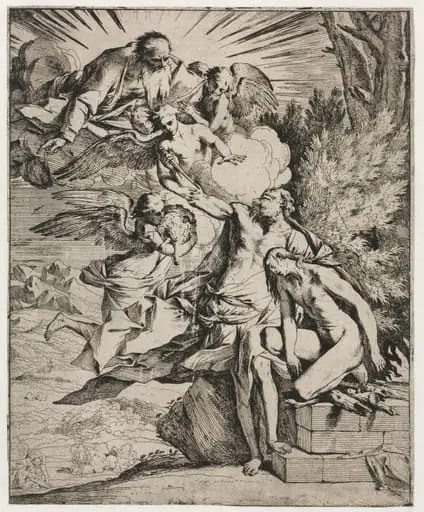 The Sacrifice of Abraham
 Charity with Faith and Hope
 The Agony in the Garden