Artwork
The Adoration of the Shepherds
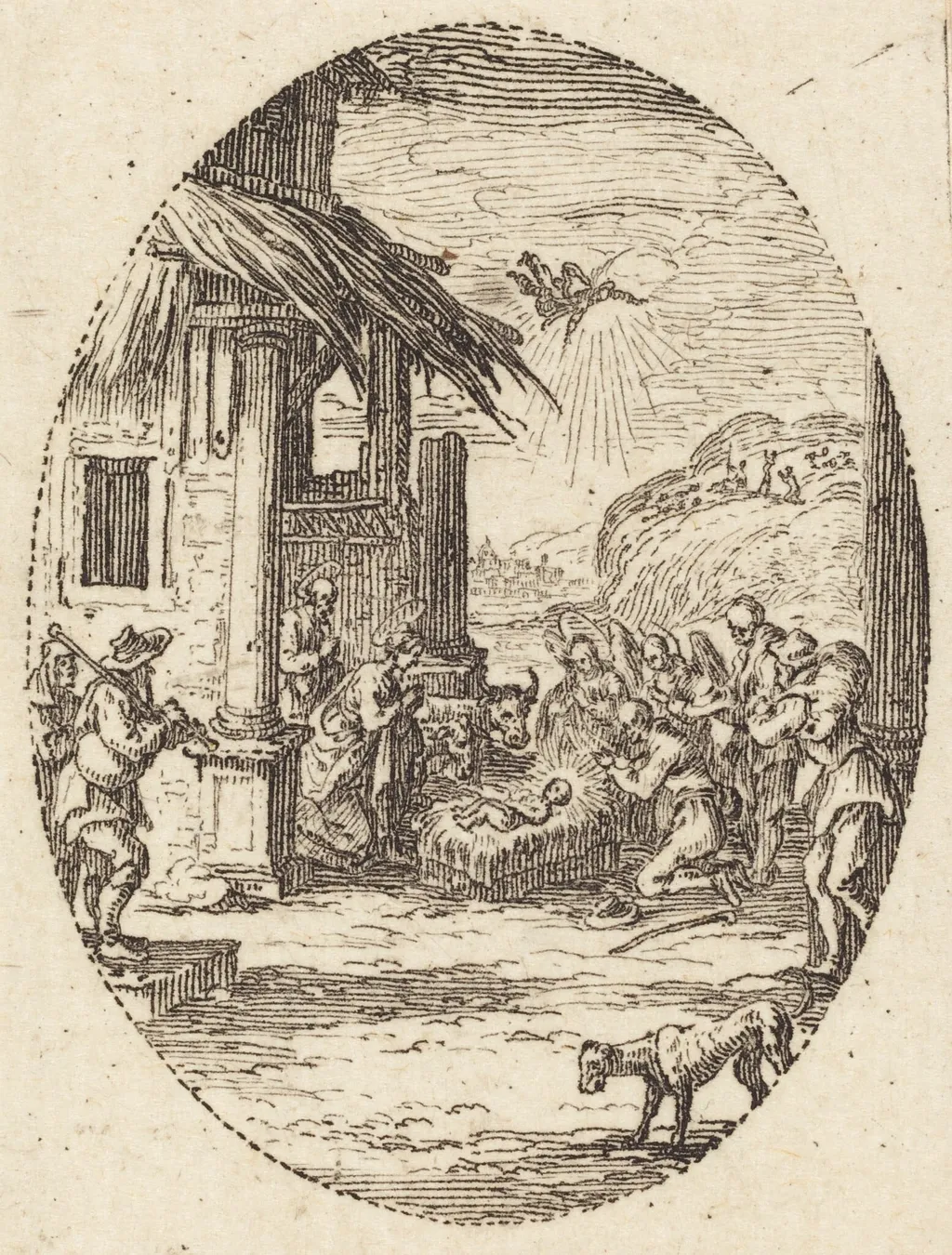
The Adoration of the Shepherds is an ink print by the Baroque artist Jacques Callot. It dates from 1631 and is held in the collection of the National Gallery of Art.
About this work
The artist used etching on laid paper to make this work, which is a technique that involves scratching a design onto a metal plate.
The Adoration of the Shepherds is a work by Jacques Callot.
It was created around 1631.
The artist used etching on laid paper to make this work, which is a technique that involves scratching a design onto a metal plate.
This technique allows for detailed and intricate designs.
The fact that Callot used etching on laid paper suggests he was interested in exploring this medium.
You can learn more about this technique by looking up etching.
Overview
Jacques Callot produced this etching around 1631, during the height of his career as a printmaker from the Duchy of Lorraine. Executed on laid paper, the work belongs to a vast body of over 1,400 prints he created, many of which depict religious themes with meticulous attention to detail. His choice of etching reflects a commitment to the medium’s capacity for fine line and tonal nuance, distinguishing his output within early 17th-century Northern European printmaking.
Subject & Meaning
The scene portrays shepherds approaching the newborn Christ, a traditional Nativity moment rooted in the Gospel of Luke. Callot emphasizes humility and awe, framing the figures within a quiet, atmospheric landscape. The composition avoids theatricality, instead focusing on the quiet reverence of the shepherds and the stillness of the night, aligning with Counter-Reformation ideals that valued accessible, emotionally grounded religious imagery.
Technique & Style
Callot employed etching, a process involving acid-bitten lines on a metal plate, to achieve fine gradations of tone and intricate detail. His use of laid paper, with its subtle texture, enhanced the tactile quality of the print. He rendered architecture, foliage, and figures with precision, demonstrating his mastery of line and his ability to suggest depth and atmosphere without color or heavy shading.
History & Provenance
The print was made during Callot’s mature period, following his time in Florence and Rome, where he absorbed Italian compositional traditions. While its early ownership is undocumented, it circulated widely among collectors and artists in France and the Low Countries. Its survival in multiple impressions suggests it was well received and reproduced during the artist’s lifetime and shortly after.
Context
In the early 1630s, religious imagery remained central to print culture despite growing secular interests. Callot’s etchings responded to both devotional needs and the demand for high-quality reproductive prints. His detailed landscapes and naturalistic figures reflected broader trends in Northern art, where observation of the physical world increasingly informed sacred subjects.
Legacy
Callot’s technical innovations in etching influenced generations of printmakers, particularly in his ability to render complex scenes with clarity. Though less celebrated than painters of his era, his prints were studied by artists across Europe for their precision and narrative economy. This work exemplifies his role in elevating printmaking as a serious artistic medium rather than a mere reproductive tool.
Artist & collection
Artist
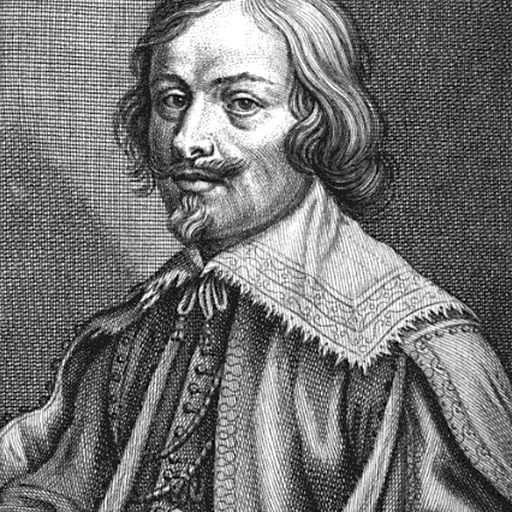
Jacques Callot was a baroque printmaker and draftsman from the Duchy of Lorraine.

 Holy Family at supper
 Restoration of the Aqueduct at Pisa
 Restoration of the Aqueduct at Pisa
 Square in Paris with Many Figures
 Square in Paris with Many Figures
 Horsemen Attacked by Robbers
 HOW WILL A COVERED PART BE CORRECTED?HOW WIKA A COVERED HEART DEED CORRECTED?
![Christ Walking on the Water [second plate], by Jacques Callot](https://artifactworldgallery.com/img/jacques-callot--christ-walking-on-the-water-second-plate--2069f3bfe4cb2126-w320.webp) Christ Walking on the Water [second plate]
Christ Walking on the Water [second plate]
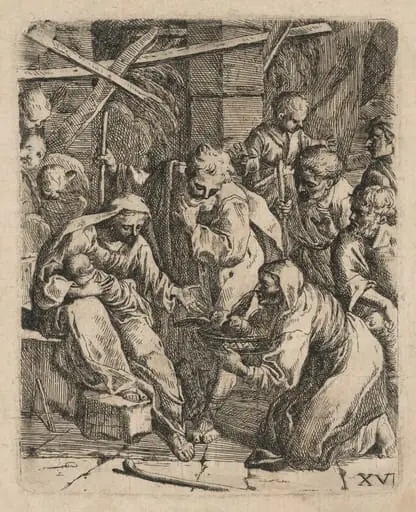 The Adoration of the Shepherds
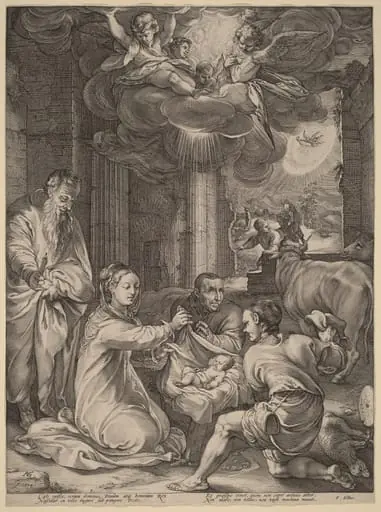 The Adoration of the Shepherds
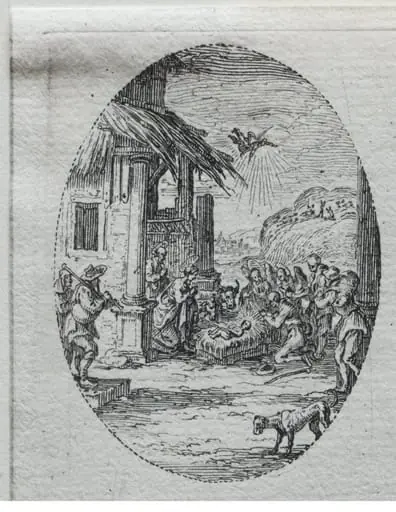 The Mysteries of the Passion: The Adoration of the Shepherds
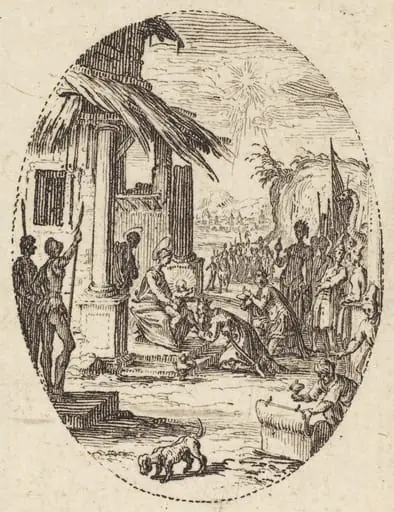 The Adoration of the Magi
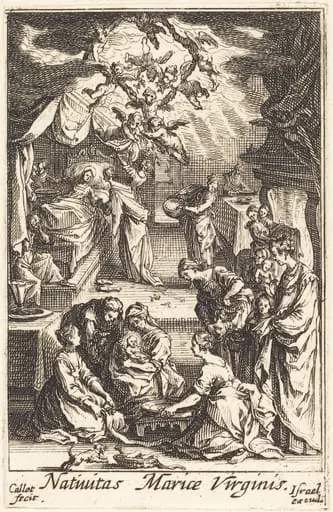 The Birth of the Virgin
 The Birth of the Virgin
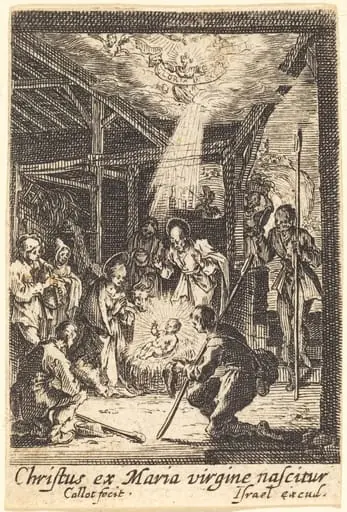 The Nativity
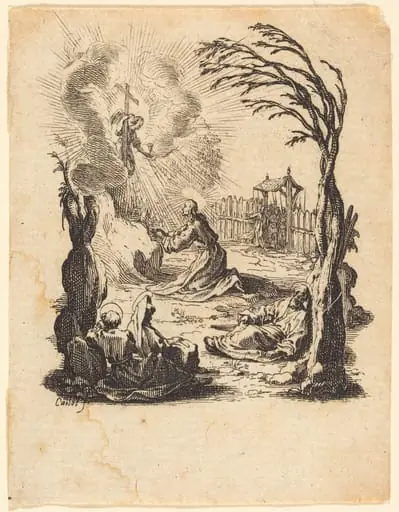 The Agony in the Garden
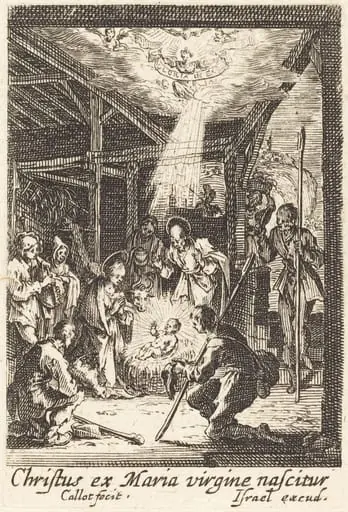 The Nativity
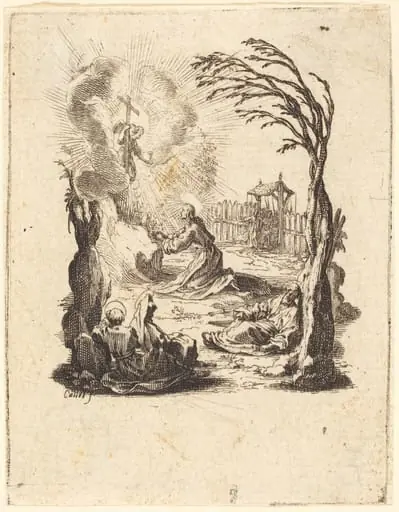 The Agony in the Garden
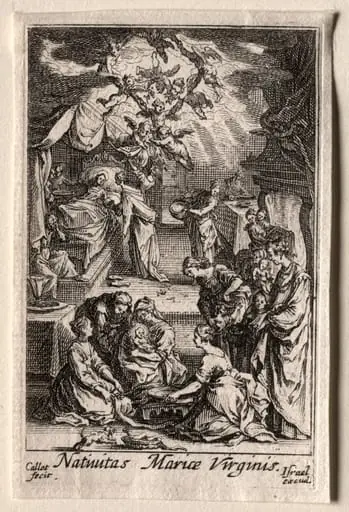 The Life of the Virgin: The Birth of the Virgin
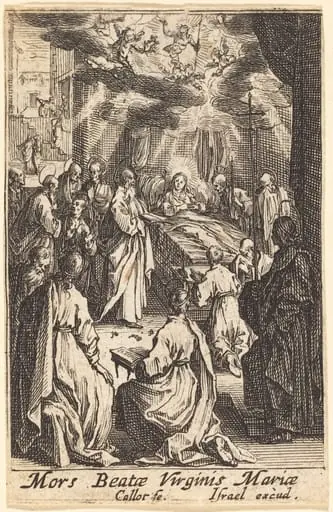 The Death of the Virgin