Artwork
The Betrayal
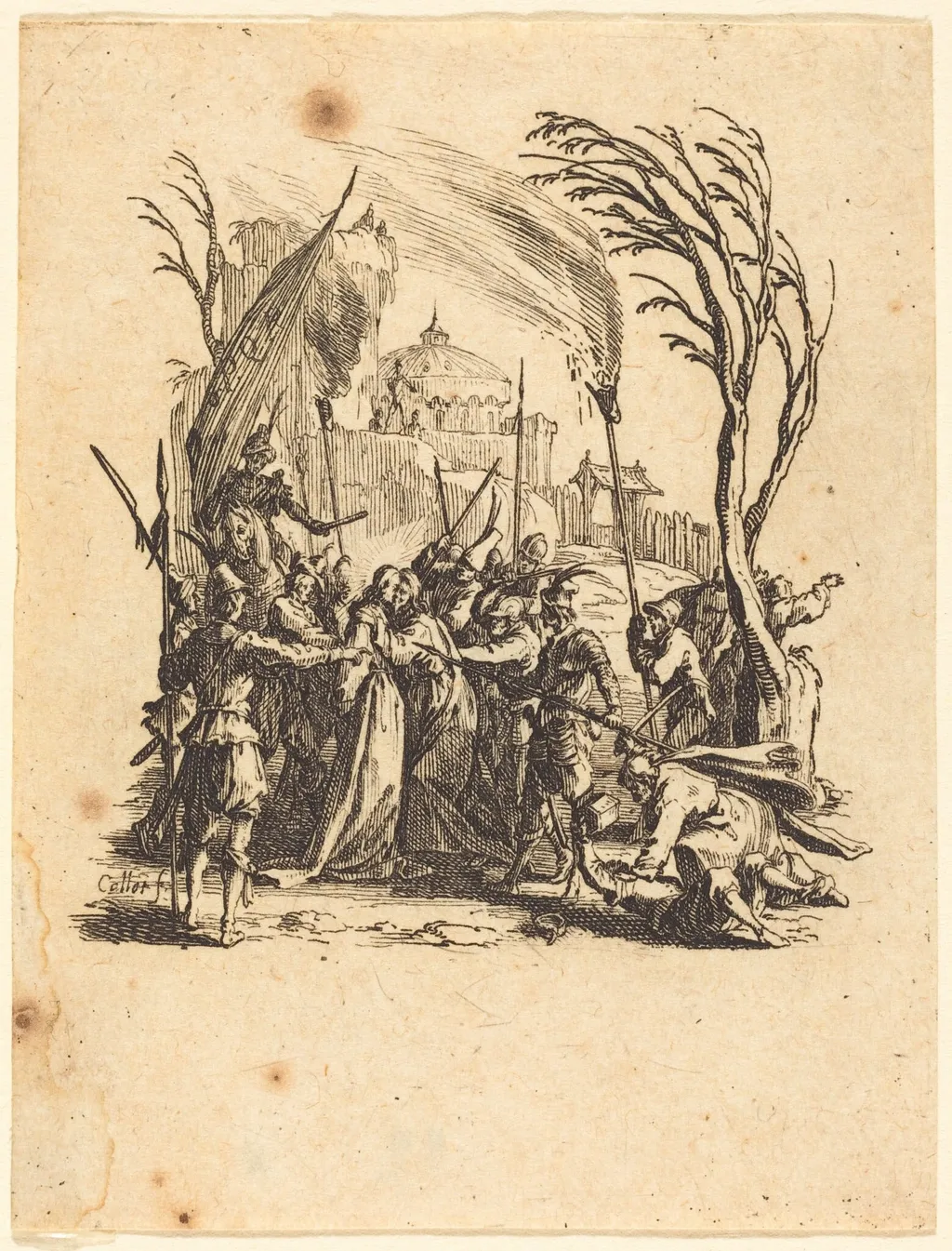
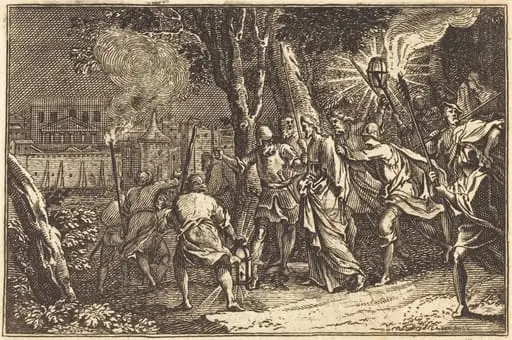
The Betrayal is an ink print by the Baroque artist Jacques Callot. It dates from 1624 and is held in the collection of the National Gallery of Art.
About this work
Overview
The Betrayal is an etching on laid paper created by Jacques Callot around 1624. It exemplifies the artist's technical skill and narrative focus as a printmaker from the Duchy of Lorraine.
Subject & Meaning
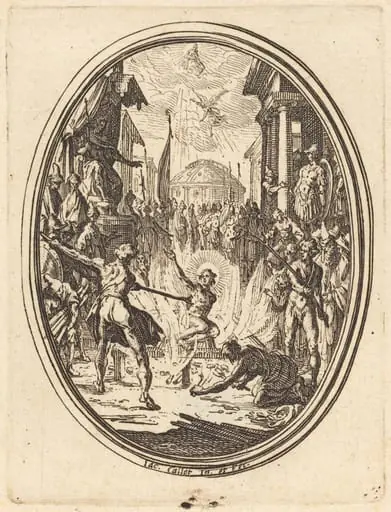
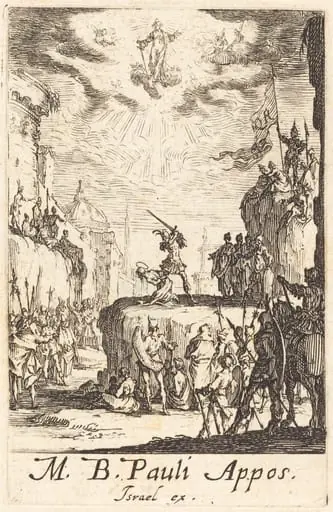
The etching depicts a tense scene of people in old-fashioned attire, some bearing flags or weapons, amidst a dramatic landscape with a domed building and swaying trees. The emotional expressions on the figures' faces suggest a narrative with deeper meaning.
Technique & Style
Callot employed sharp lines and shading to convey a sense of drama and crowding. The simplicity of the faces belies their emotional intensity, contributing to the overall narrative impact.
History & Provenance
As one of over 1,400 etchings by Callot, The Betrayal reflects the artist's extensive documentation of contemporary life, blending courtly, social, and religious themes.
Context
The work is characteristic of Baroque printmaking, with its detailed landscape background and focus on human interaction.
Artist & collection
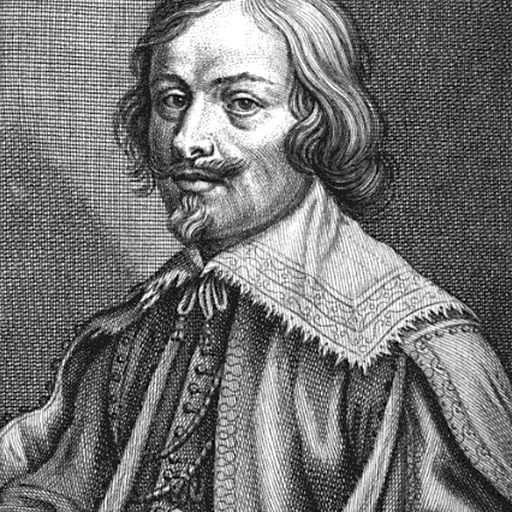
Artist
Jacques Callot was a baroque printmaker and draftsman from the Duchy of Lorraine.

 Holy Family at supper
 Restoration of the Aqueduct at Pisa
 Restoration of the Aqueduct at Pisa
 Square in Paris with Many Figures
 Square in Paris with Many Figures
 Horsemen Attacked by Robbers
 HOW WILL A COVERED PART BE CORRECTED?HOW WIKA A COVERED HEART DEED CORRECTED?
![Christ Walking on the Water [second plate], by Jacques Callot](https://artifactworldgallery.com/img/jacques-callot--christ-walking-on-the-water-second-plate--2069f3bfe4cb2126-w320.webp) Christ Walking on the Water [second plate]
Christ Walking on the Water [second plate]
![The Challenge [right], by Gabriel de Saint-Aubin](https://artifactworldgallery.com/img/gabriel-de-saint-aubin--the-challenge-right--75162e00e6876b27-w320.webp)