Artwork
The Combat of Avigliana
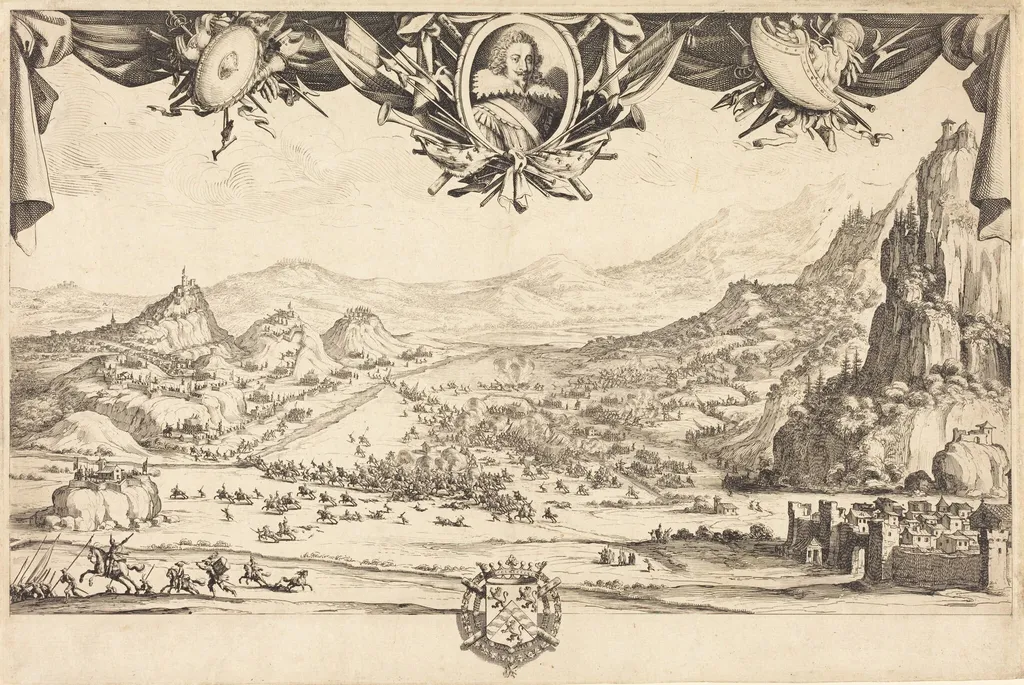
The Combat of Avigliana is an ink print by the Baroque artist Jacques Callot. It dates from 1631 and is held in the collection of the National Gallery of Art.
About this work
Overview
Jacques Callot, a French printmaker active in the early 17th century, produced an etching titled *The Combat of Avigliana* in 1631. Executed on laid paper, the work belongs to his prolific output of more than a thousand etched images that record contemporary events and everyday life.
Subject & Meaning
The image portrays a tumultuous battlefield set in a valley, where infantry and cavalry clash amid hills, villages, and a river that winds across the lower foreground. A decorative head in a frame crowns the composition, while fanciful winged figures hover at its margins, adding a mythic or allegorical layer to the scene.
Technique & Style
Callot employed a dense network of fine lines to render every soldier, horse, and architectural detail with remarkable clarity. The precision of his line work, achieved through careful etching of the copper plate, creates a complex visual narrative that was technically demanding for the period.
History & Provenance
Created during a period of intense military conflict in Europe, the print reflects Callot’s interest in documenting current wars. It was produced in the Duchy of Lorraine, where Callot worked, and later circulated among collectors of prints and military illustrations.
Context
The work fits within the Baroque tradition of dramatic, densely populated scenes, yet it also anticipates later developments in military topography. Callot’s inclusion of landscape elements and the juxtaposition of realistic combat with fantastical motifs illustrate the era’s blend of observation and imagination.
Artist & collection
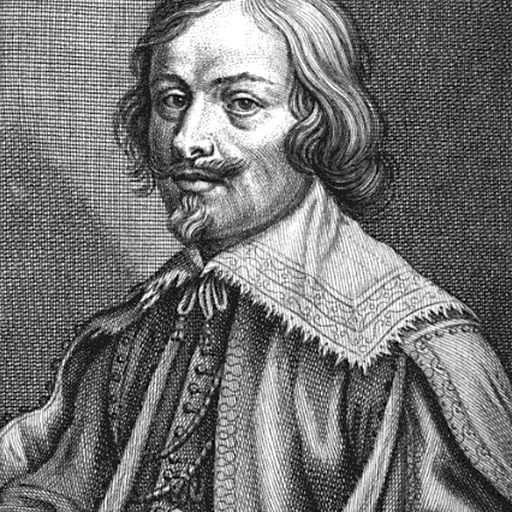
Artist
Jacques Callot was a baroque printmaker and draftsman from the Duchy of Lorraine.

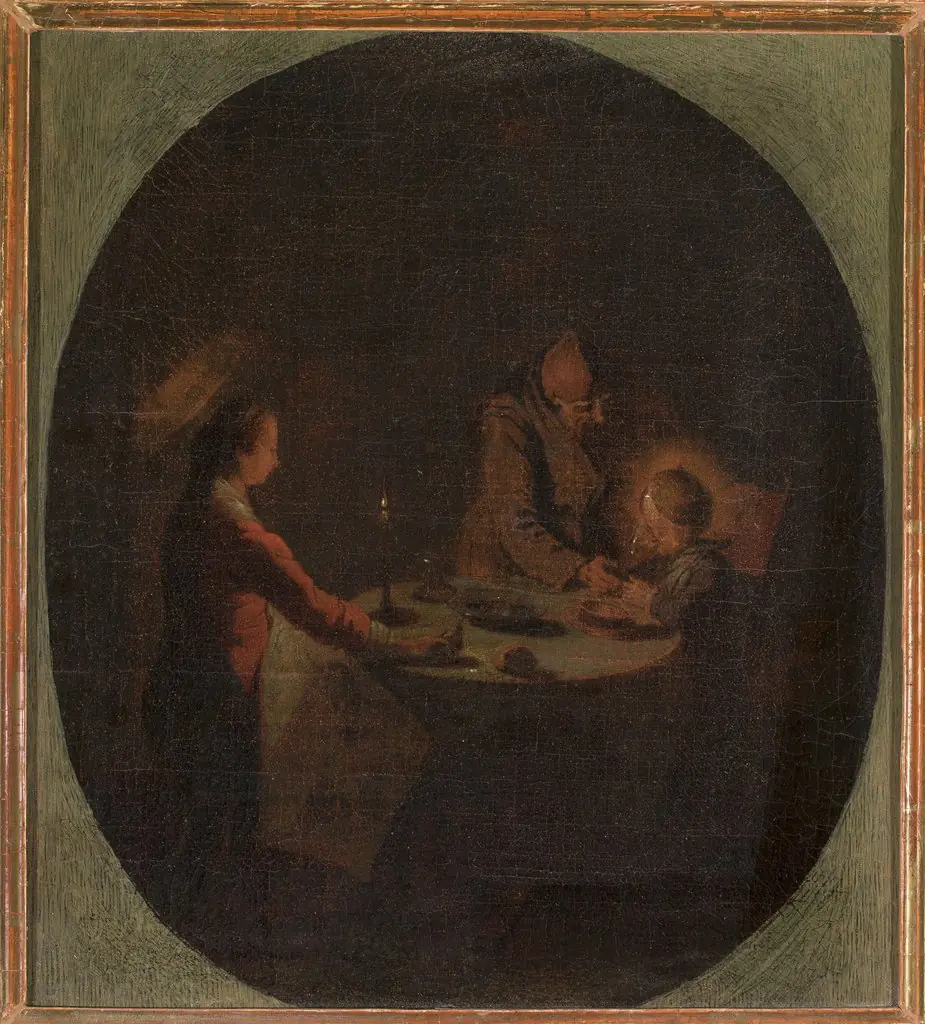 Holy Family at supper
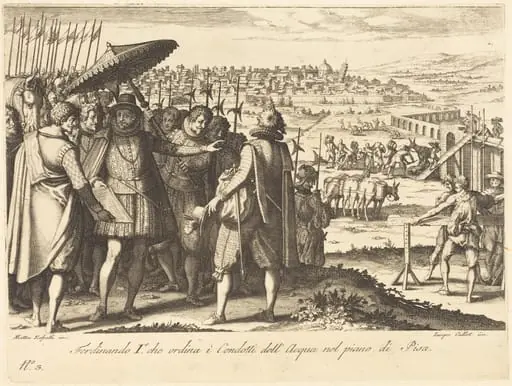 Restoration of the Aqueduct at Pisa
 Restoration of the Aqueduct at Pisa
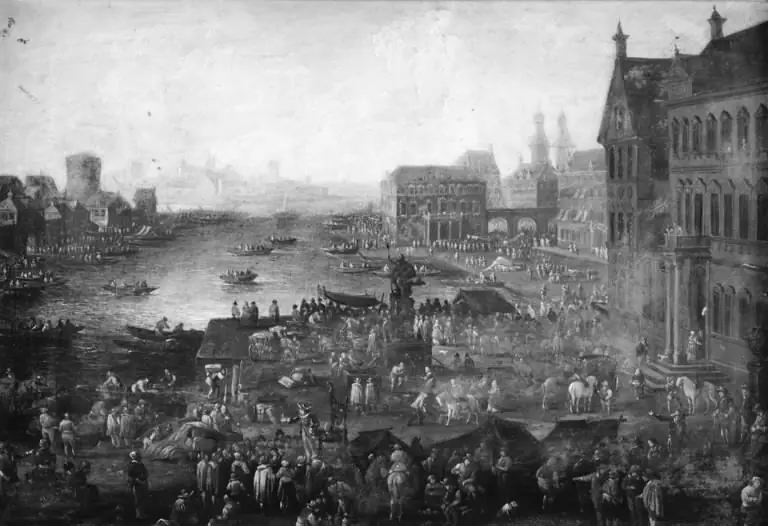 Square in Paris with Many Figures
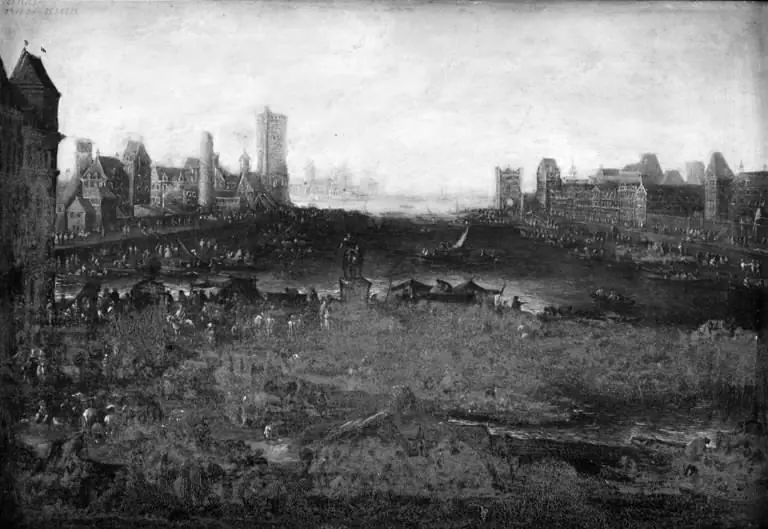 Square in Paris with Many Figures
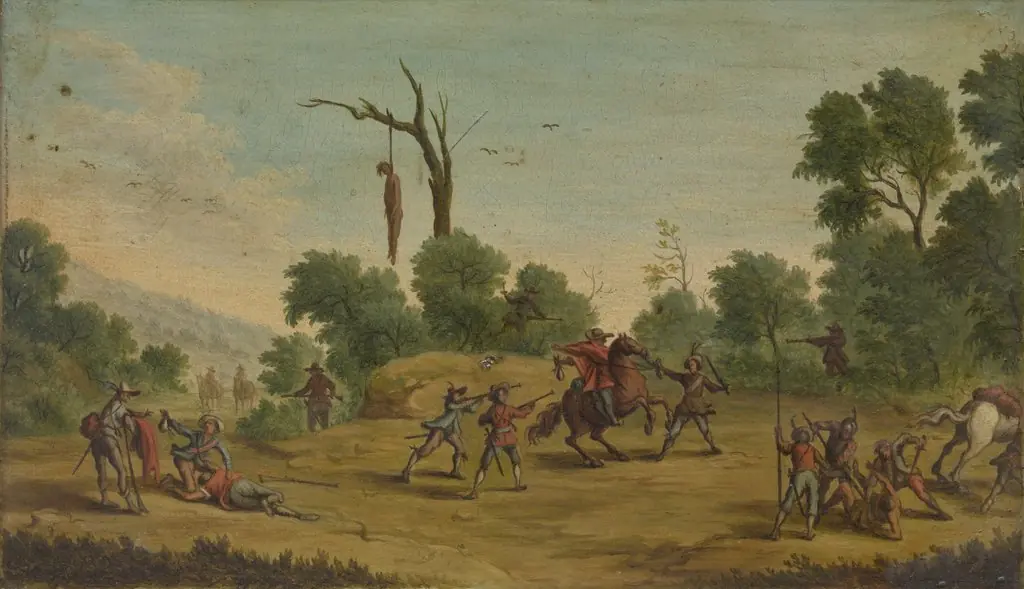 Horsemen Attacked by Robbers
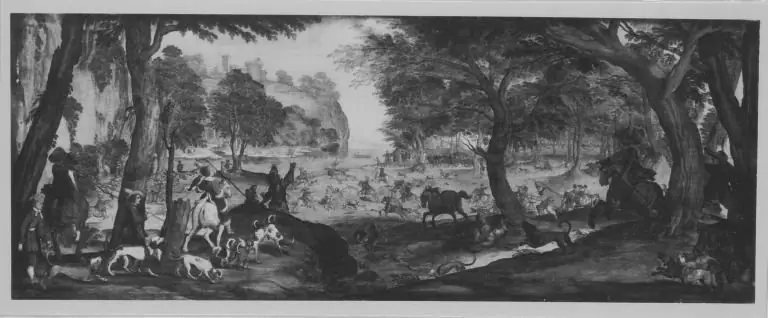 HOW WILL A COVERED PART BE CORRECTED?HOW WIKA A COVERED HEART DEED CORRECTED?
![Christ Walking on the Water [second plate], by Jacques Callot](https://artifactworldgallery.com/img/jacques-callot--christ-walking-on-the-water-second-plate--2069f3bfe4cb2126-w320.webp) Christ Walking on the Water [second plate]
Christ Walking on the Water [second plate]